Introduction
Charcoal infused bristle toothbrushes have become a hot trend in personal care aisles and eco-friendly online stores. Advertised as a smarter, cleaner way to brush, these brushes often pair charcoal bristles with bamboo handles for a sustainable edge. But do they truly deliver better oral health—or are they just another hype? Let’s unpack what’s driving their popularity and how bamboo toothbrushes fit into the bigger eco-friendly movement.
What Are Charcoal Infused Bristles?
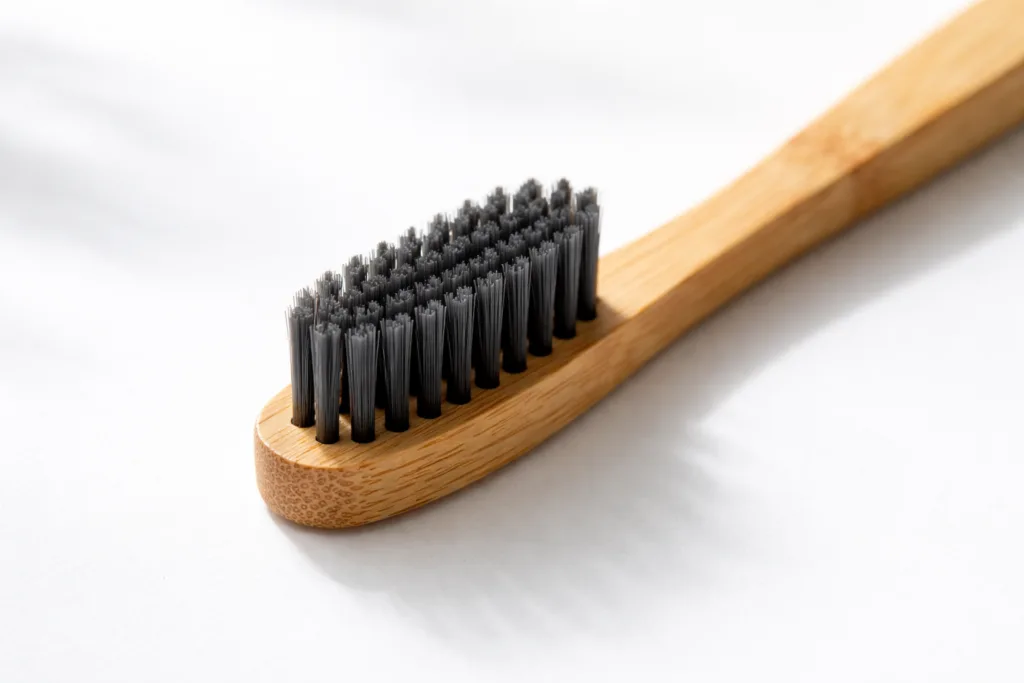
Charcoal infused bristles are nylon or hair filaments treated or coated with activated charcoal, usually made from coconut shells or bamboo. The idea is that charcoal’s porous structure can absorb impurities and neutralize bacteria as you brush. Traditional toothbrushes use plain nylon bristles, while some bamboo toothbrushes feature natural bristle alternatives. Charcoal bristles stand out for their bold black color and promise of extra cleaning power. Compared to untreated bristles, charcoal-infused ones are marketed as a step up—both for cleaning and aesthetics.
If you’re seeking bulk pricing or custom design for your oral care line, our bamboo toothbrushes manufacturer offers flexible options and fast samples.
Claims: Hype or Health Benefit?
- Whitening effects: Many brands claim charcoal bristles can lift surface stains from teeth, gently polishing for a whiter smile. Realistically, most scientific reviews find charcoal bristles may offer only minimal whitening, largely due to the mechanical action versus chemical effects. Charcoal particles are not abrasive enough to dramatically whiten teeth on their own.
- Antibacterial properties: Charcoal does have intrinsic anti-odor and moisture-absorbing properties. However, major dental organizations state that direct antibacterial effects in bristle form are likely negligible compared to regular brushing and toothpaste. You may see fewer odors in the bristles, but don’t expect clinical bacteria elimination.
- Oral hygiene improvement: Good oral hygiene comes more from effective brushing technique and regularity. Charcoal bristles might feel fresher, but peer-reviewed studies have yet to show significantly better plaque control or cavity prevention compared to standard bristles.
In short, many of the big claims lean toward promise over proof. Marketing outpaces independent dental research, so consumers should weigh these factors when choosing their brush.
Bamboo Toothbrushes & Charcoal Bristles: A Green Combination?
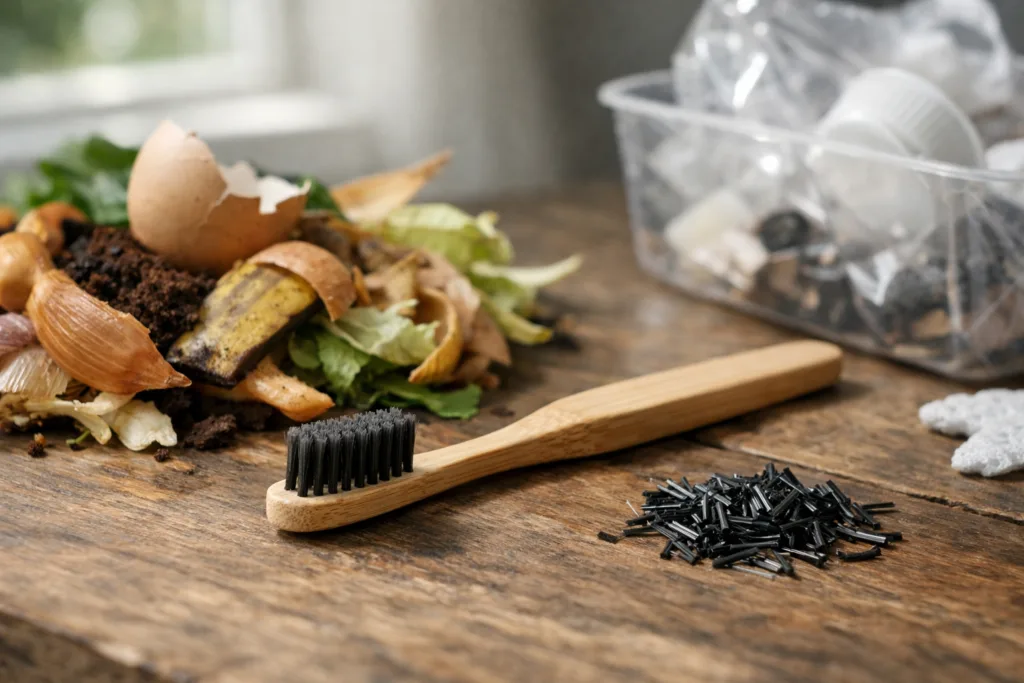
Bamboo toothbrushes—especially those with charcoal bristles—appeal strongly to eco-conscious shoppers. Bamboo grows rapidly, requires minimal pesticides, and is biodegradable, making bamboo handles a smart alternative to plastic. Charcoal bristles, however, are usually made from nylon mixed with activated carbon. While the handle breaks down naturally, the bristles generally need to be separated before composting. The overall footprint is still lighter than all-plastic brushes, but not perfectly zero-waste. According to industry practices at Bamboo Wood Art, mature bamboo is kiln-dried and cut with precision, which bolsters handle durability and smooth texture for daily use.
To further reduce microplastics in daily routines, some users pair bamboo toothbrushes with wooden soap dishes or avoid synthetic personal care items. For disposal tips, learn how to dispose of a bamboo toothbrush correctly to maximize its eco-friendly benefits.
Expert Opinions
Professional dental associations, like the American Dental Association (ADA), advise that most toothbrushes—charcoal or not—are safe when used gently and replaced regularly. Dentists warn that overly stiff or abrasive bristles, sometimes found in lower-quality charcoal brushes, may risk enamel wear and gum sensitivity. Journal reviews often point out that while some in-vitro studies suggest mild antibacterial action from charcoal, real-world benefits are less clear. Dental experts lean toward traditional brushing habits and fluoridated toothpaste as the gold standard for oral health, citing the lack of robust clinical trials for charcoal claims.
Pros and Cons for Consumers
- Advantages: Stylish design, fresh sensation after brushing, modest eco-friendly advantage (with bamboo handle), possible odor reduction in bristles, widely available in stores.
- Potential risks or drawbacks: Bristles may be less biodegradable than the handle, risk of abrasion if brushing too hard, premium pricing, lack of proven clinical benefit, some brushes contain microplastics in bristle blends.
For those managing household waste, switching to charcoal bristle bamboo toothbrushes can be part of a broader effort to avoid microplastics with wood and bamboo alternatives.

Charcoal Bristles, Bamboo Toothbrush
Charcoal bristles, bamboo toothbrush—when searched together—reveals a growing market of brushes combining sustainable bamboo handles with trendy black charcoal-infused bristles. Bamboo Wood Art sources mature-aged bamboo for strength and smoothness, then combines it with bristle options tailored to client requirements: soft for sensitive gums, medium for general cleaning, or charcoal-infused for buyers chasing a sleek, modern look. The focus stays on safety, ergonomics, and longevity—not just visual style.
For businesses launching a line of custom oral care or seeking wholesale bamboo products, it’s vital to consider not just the marketing story behind charcoal bristles, but the underlying material safety, consumer testing, and shelf durability. Bamboo and charcoal combinations walk the line between eco-innovation and consumer demand, with practical considerations outweighing hype.
Frequently Asked Questions
Do charcoal bristle toothbrushes whiten teeth?
Charcoal bristle toothbrushes may help remove some surface stains, but clinical whitening effects are limited compared to professional treatments or whitening toothpaste.
Are charcoal infused bristles safe for daily use?
Yes, as long as the bristles are soft and brushing is gentle, charcoal-infused toothbrushes can be safely used every day—just like regular toothbrushes.
Can I compost a bamboo toothbrush with charcoal bristles?
Only the bamboo handle is fully compostable; charcoal-infused nylon bristles should be removed before composting and disposed of with regular waste.
Do charcoal bristle brushes kill bacteria?
Charcoal can absorb odors and moisture, but dental professionals say it does not reliably kill oral bacteria beyond basic brushing and toothpaste use.
How often should I replace a charcoal bristle bamboo toothbrush?
Every 3 months is recommended, or sooner if the bristles become frayed—regardless of materials used.
Are bamboo toothbrushes with charcoal bristles better for the environment?
Bamboo handles cut down on plastic waste, but the charcoal nylon bristles should be responsibly discarded to maximize the eco-benefit.