Introduction
Many people spend hours every day working on laptops, often unaware that their posture can lead to persistent neck pain. Slouching towards the screen, setting the laptop too low, or working for too long without breaks are just a few examples of habits that strain the neck and shoulders. These issues are common among both students and professionals. Maintaining proper posture is not just about comfort—it prevents daily discomfort from turning into chronic pain or more severe musculoskeletal issues in the future. Understanding the impact of laptop elevation is the first crucial step toward healthier work habits.
Health Risks Associated with Poor Laptop Placement
Poorly placed laptops force users to hunch over or angle their necks awkwardly to see the screen, leading to muscle fatigue that builds up over time. Repetitive strain can cause symptoms ranging from stiffness and soreness to more serious conditions like text neck, tension headaches, and even herniated discs. Especially for remote workers and students, these problems can sneak up quietly and become recurring issues. Extended usage in suboptimal positions is not just uncomfortable—it can affect your productivity, mood, and even sleep quality.
If you need manufacturer expertise and customizable design options, explore our bamboo laptop table and lap desk manufacturing solutions.
The Importance of Proper Laptop Elevation
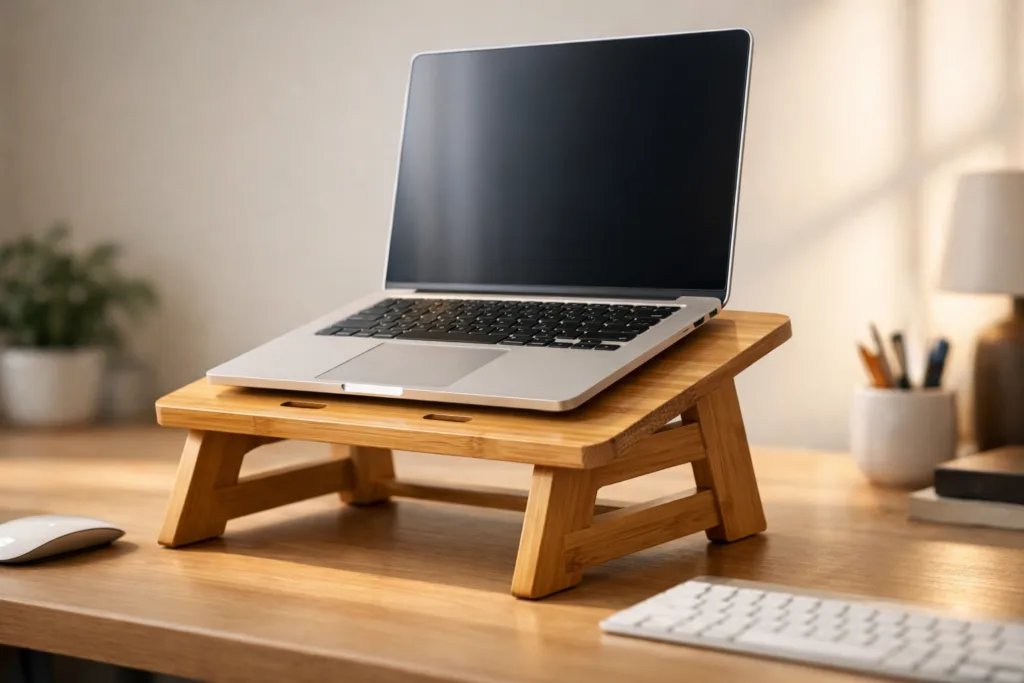
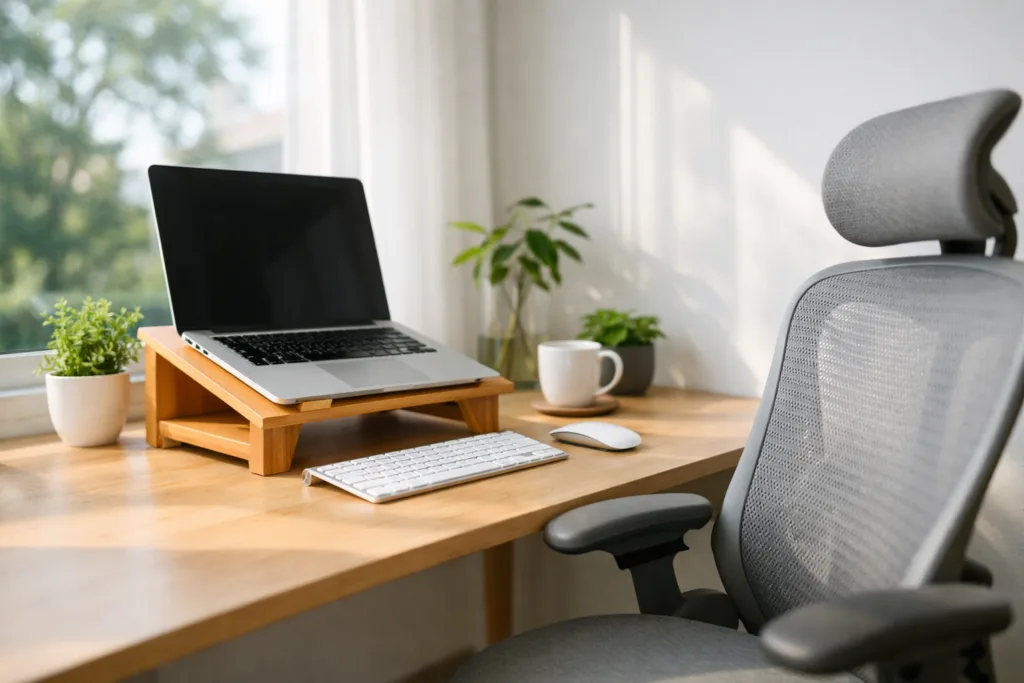
Raising your laptop to the right height means your eyes meet the top third of the screen without needing to tilt your head. This simple change keeps your neck in a neutral position, reducing the risk of neck strain. Ergonomics experts recommend adjusting the laptop so that your elbows rest at about 90 degrees on your work surface, and your wrists stay straight when typing. Adding an external keyboard and mouse—used in tandem with a well-designed stand—can help maintain this ergonomic alignment, offering both comfort and long-term neck health.
Choosing the Right Laptop Stand: Why Bamboo Wood?
Not all laptop stands are created equal. Bamboo wood laptop stands offer a natural aesthetic and blend well with modern home or office décor. Unlike plastic or metal, bamboo is lightweight, yet robust enough to support heavy laptops and endure regular movement. Bamboo’s eco-friendly reputation stems from its rapid renewable cycle and lower environmental impact during harvest and processing. Plus, bamboo stands are naturally moisture-resistant, which enhances their durability for daily use. For those seeking both functionality and environmental responsibility, bamboo wood stands are a clear choice.
How to Set Up Your Laptop with a Bamboo Wood Stand
Proper setup of your workspace is key to getting the full ergonomic benefit. Follow these steps to elevate your laptop the right way:
- Place your bamboo laptop stand on a stable, flat surface.
- Position it so the top of your screen is at or slightly below eye level.
- Use an external keyboard and mouse to keep your arms and wrists relaxed.
- Adjust screen tilt to minimize glare but keep your neck straight and shoulders relaxed.
Other ergonomic accessories, like monitor risers or footrests, can further enhance your comfort—especially if you’re working at a fixed desk for many hours. For a cost-effective home office, our ergonomic home office setup guide offers practical ideas on achieving comfort without overspending.
Maintenance Tips for Bamboo Wood Laptop Stands
Bamboo and wood materials are prized for their natural look, but they also require proper care. Wipe your stand regularly with a slightly damp cloth to remove dust, avoiding abrasive cleaners that can damage the finish. For deeper cleaning, a mild soap can be used, but never soak bamboo, as excess moisture may cause warping. Occasionally check hardware and joints to ensure stability. Well-made stands, such as those produced by Bamboo Wood Art, are often constructed with precision joinery and food-safe adhesives that enhance both safety and longevity.
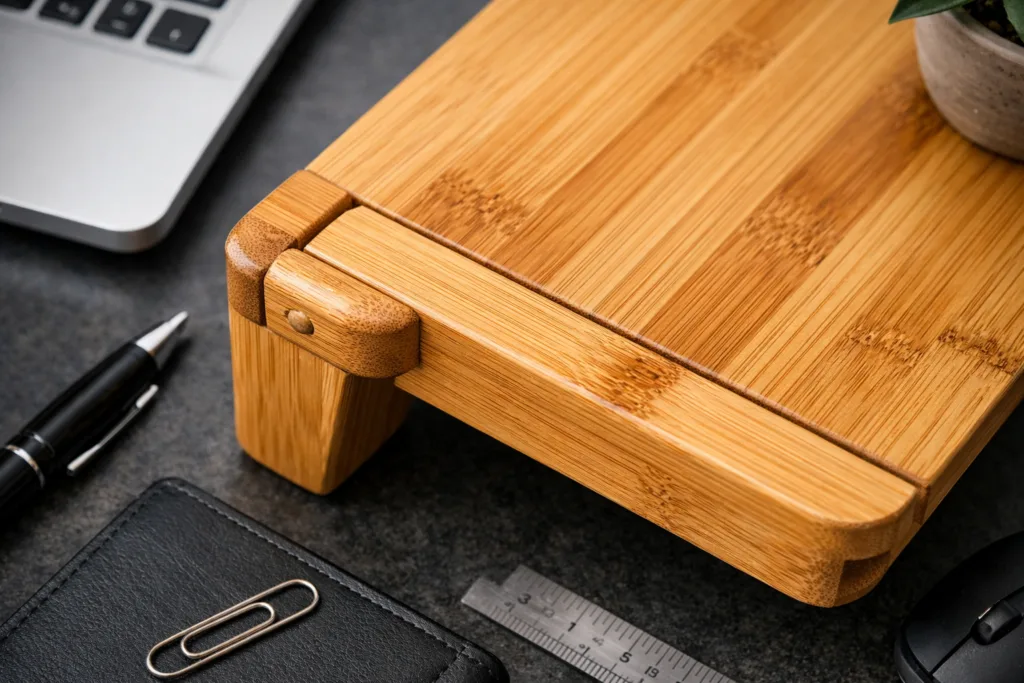
With basic routine maintenance, your bamboo wood stand will maintain its appearance and performance for years—an eco-friendly and stylish centerpiece for your healthy workspace.
Conclusion
Preventing neck pain with proper laptop elevation is a straightforward step that makes a world of difference. Upgrading your setup with a bamboo wood laptop stand not only safeguards your neck and back in the long run, but also elevates your overall work environment. Combining ergonomic practices, quality materials, and thoughtful daily habits, you can enjoy both comfort and productivity—one adjustment at a time.
Frequently Asked Questions
What is the best height for a laptop stand to prevent neck pain?
Your laptop screen should sit so the top third is level with your eyes when you sit upright, helping your neck stay relaxed and straight.
Do bamboo wood laptop stands hold up over time?
With simple care, bamboo stands are highly durable and resist bending or warping, making them more sustainable than most plastics and very competitive with metals.
Are bamboo wood laptop stands environmentally friendly?
Yes, bamboo is a fast-growing, renewable resource that requires minimal processing and chemical input, making it a green choice for eco-conscious users.
How do I clean a bamboo laptop stand?
Wipe the stand with a slightly damp cloth. Avoid soaking it and do not use harsh chemicals. Dry thoroughly to maintain finish and integrity.
Can a laptop stand really reduce neck pain?
Definitely—elevating your screen to eye level prevents awkward bending, greatly reducing muscle tension and neck discomfort from daily laptop use.
What other accessories improve laptop ergonomics?
External keyboards, mice, monitor risers, and supportive chairs help maintain proper posture for all-day comfort alongside a good laptop stand.