How Bamboo Trays Are Made: Behind-the-Scenes in Our Factory
Bamboo trays are celebrated for their elegance, durability, and sustainability—core values embraced by Bamboo Wood Art. In this comprehensive guide, we reveal the exacting bamboo tray production process inside our factory, from hand-selecting the raw bamboo to final packaging for export. Each step is engineered for quality, minimizing waste while maximizing product longevity, aesthetic appeal, and eco-friendliness.
The Journey Begins: Expert Bamboo Selection
Choosing the Perfect Moso Bamboo
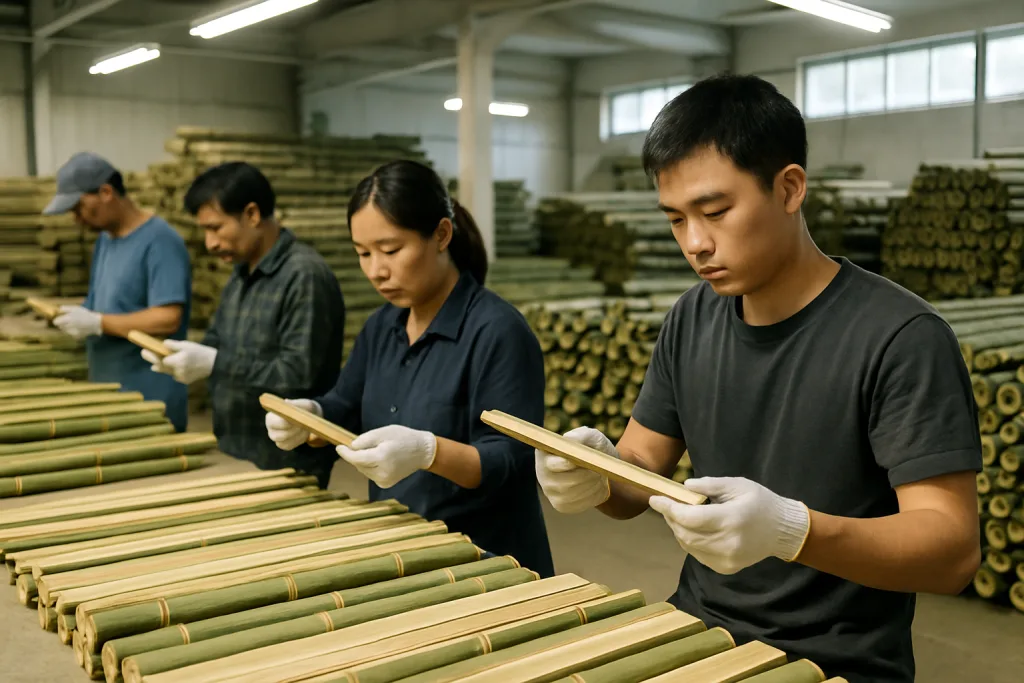
The first step in how bamboo trays are made is selecting top-grade moso bamboo. Known for its straight grain and strength, moso bamboo is ideal for crafting premium kitchenware. Our sourcing process involves:
- Harvesting sustainable, mature culms (5–6 years old)
- Ensuring FSC or PEFC certification for ethical forestry
- Maintaining a controlled moisture content (8–12%) to prevent warping
Slat Sorting and Quality Control
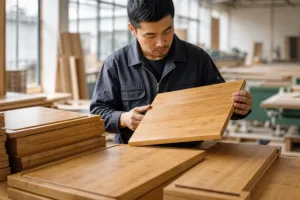
After harvesting, bamboo culms are split into slats. Workers meticulously sort each piece, discarding any with knots, cracks, or uneven color. This ensures only the finest raw material forms the foundation of every bamboo tray.
Processing Bamboo Slats: Conditioning and Treatment
Kiln Drying and Stabilization
Proper drying is key to how bamboo trays are made without warping or cracks. Slats are kiln dried at carefully controlled temperatures. We check for moisture content (8–12%) and apply anti-fungal treatments if needed. This step guarantees dimensional stability from production line to tabletop.
Anti-Warpage Strategies
For further stability, our engineers sometimes employ cross-lamination—layering slats in alternating grain direction. This structure resists warping and increases longevity, which is crucial for hospitality and retail settings.
Precision Cutting and Shaping
Miter Saws and Edge Profiling
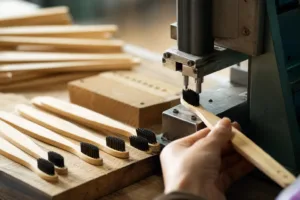
Selected bamboo slats pass through industrial miter saws for precise cutting. Our team uses:
- Automated straight cutting (±0.5mm tolerance)
- CNC routers for custom shapes and rounded corners
- Edge profiling tools for ergonomic grip and modern aesthetics
Finger-Jointing and Structural Joinery
Bamboo Wood Art employs advanced finger-jointing and mortise-and-tenon techniques to assemble frames or reinforce tray bases. These methods offer uncommon strength and seamless finishes, suitable for both robust serviceware and delicate décor trays.
Assembly: Laminating and Forming
Hot Press Lamination
How bamboo trays are made in our factory hinges on multi-layer lamination. Bamboo slats and, when needed, solid wood accents (oak, beech, walnut, ash) are joined with E0/E1 low-VOC adhesives. The assembly is pressed under heat and pressure for a flat, resilient surface.
Veneer Wrapping and Decorative Details
Some trays feature bamboo veneer or ply for unique patterns and premium finishes. Veneer wrapping also improves durability and expands design possibilities for branded displays or corporate gifting.
Detailed Surface Work: Sanding and Engraving
Sanding Sequence for Silky Finish
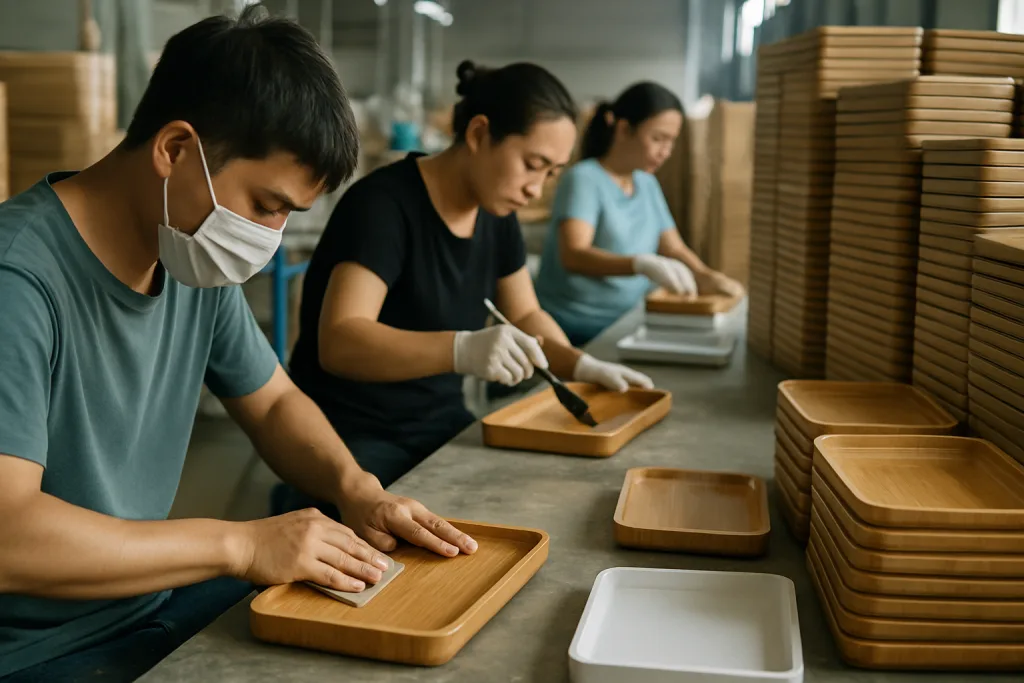
Each tray moves through a sanding sequence—grits 180, 240, and 320—creating a velvety smooth, splinter-free surface. Edges receive special attention for comfort and safety, a necessity in hospitality and home use.
CNC Engraving and Laser Carving
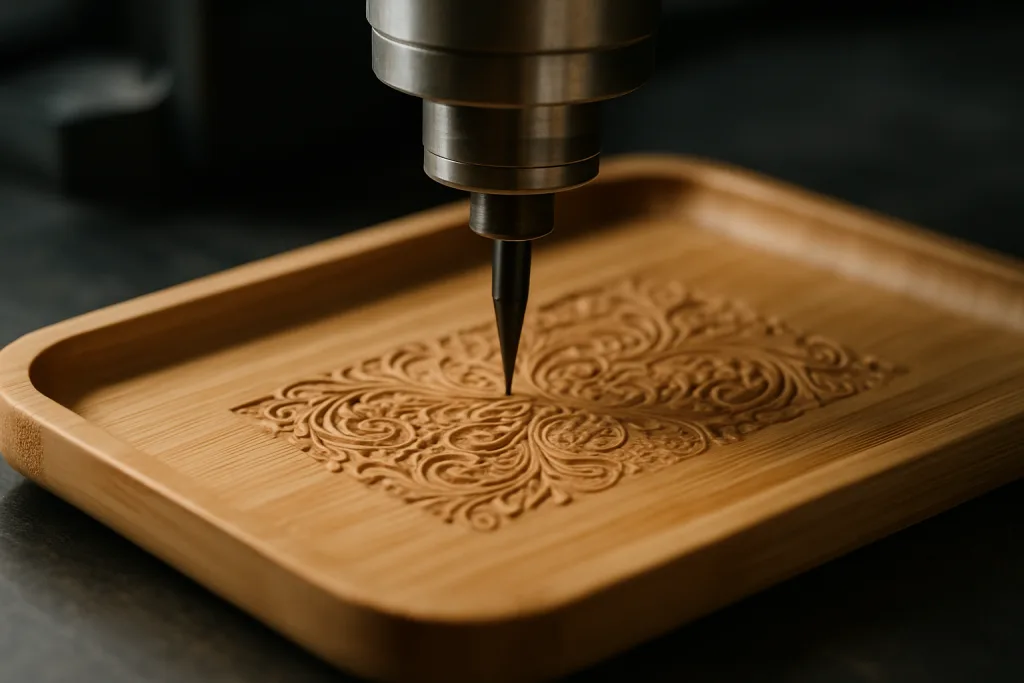
Bamboo Wood Art utilizes state-of-the-art CNC and laser engraving machines to add custom logos, patterns, and instructions. This technology ensures consistency and enables rapid design changes for OEM and ODM partners.
Finishing the Trays: Varnishes and Food Contact Coatings
Water-Based and Plant Oil Finishes
High-quality coating is essential in how bamboo trays are made, protecting against stains, moisture, and wear. Typical finishes include:
- Water-based varnish—durable and low-VOC for safe food contact
- Plant oils such as tung or linseed—enhancing grain and natural color
- UV-cured coatings—high resistance for heavy commercial use
Carbonized vs. Natural Bamboo
Carbonized bamboo, achieved through steam treatment, offers rich amber tones, while natural bamboo provides a lighter, modern aesthetic. Finishes are selected based on buyer preference, brand identity, and usage scenarios.
Robust Quality Controls and Compliance
Flatness, Adhesion, and Tolerance Checks
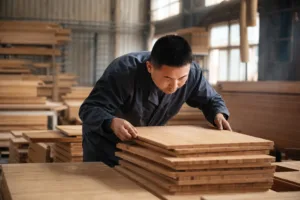
Every tray is verified for dimensional accuracy (±0.5mm), flatness, and secure adhesion. We perform random batch pull tests and visual inspections, ensuring hospitality-grade standards.
International Standards and Certifications
Our bamboo trays comply with FDA and LFGB food-contact regulations (FDA Packaging Standards), maintaining safe surfaces for kitchen and restaurant use. Bamboo Wood Art also ensures packaging robustness for export, supporting supply chain reliability worldwide.
Packaging for Export and Retail
Protective and Branded Packaging Solutions
Trays destined for retail, hospitality, or gifting are packaged in sturdy E-flute cartons, often with custom inserts or branded sleeves. Moisture barriers and impact protection safeguard against rough handling during international shipment.
Batch Coding and Traceability
Each carton features batch codes for traceability, supporting B2B partners and helping track inventory, quality, and reorders. Bamboo Wood Art’s packaging team ensures every unit meets export compliance and buyer requirements.
Comparative Table: Bamboo Tray Materials & Finishes
| Material/Finish | Properties | Best-Use Scenarios |
|---|---|---|
| Moso Bamboo (Natural) | Light, strong, contemporary look, rapid renewable | Home serving trays, minimalist décor |
| Moso Bamboo (Carbonized) | Rich color, increased hardness, elegant finish | Premium gifting, hospitality displays |
| Bamboo Veneer/Ply | Pattern versatility, enhanced durability | Retail display trays, customized branding |
| Solid Wood Accents | Aesthetic contrast, edge protection, longevity | Luxury serving ware, restaurant presentation |
| Water-Based Varnish | Food-safe, scratch-resistant, low-VOC | Kitchen trays, commercial use |
| Plant Oil Finish | Eco-friendly, accentuates bamboo grain | Eco-gift trays, organic product lines |
Applications and Buyer Guidance
Versatility of Bamboo Trays
Bamboo trays crafted in our factory effortlessly bridge culinary, décor, hospitality, and retail needs. From hotel room service and banqueting to minimalist home styling and branded displays, the options span both function and style.
Key Purchasing Considerations
When sourcing bamboo trays, consider material choices, finish, edge treatment, and compliance certifications. Bamboo Wood Art offers both OEM and ODM solutions, tailoring dimensions (custom: 150mm–600mm), minimum order quantities (typically 1,000+ units for OEM), and branding as required.
Business Outcomes
- Durability for high-turnover hospitality and retail environments
- Cost-efficient scalability for bulk procurement
- Sustainability stack—renewable resources, safe coatings, robust export packaging
How Bamboo Trays Are Made: Behind-the-Scenes in Our Factory
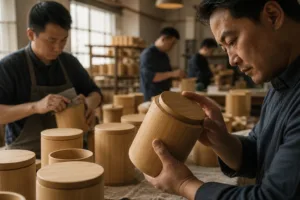
Every day, our workshop is a hive of activity—expert teams select the right bamboo, use precision machinery for cutting and shaping, then follow disciplined assembly, sanding, and finishing sequences. Our engineering and QC teams leverage modern technology (CNC, laser, automated presses) while upholding old-world standards of craftsmanship. Bamboo Wood Art’s commitment to eco-friendly processes results in trays that not only look beautiful but endure heavy use in demanding environments.
Environmental Commitment and Sustainable Practice
Responsible Sourcing and Forestry
We partner with suppliers who uphold FSC/PEFC standards (FSC certification), supporting well-managed forests and ethical supply chains. Even offcuts and trimmings are recycled or repurposed for smaller wares and energy generation.
Low-Impact Manufacturing
Modern hot-press and finishing lines minimize VOCs, energy use, and water discharge. Every process in how bamboo trays are made is engineered for efficiency—from kiln optimization to waste sorting.
Frequently Asked Questions
What makes moso bamboo ideal for tray production?
Moso bamboo offers a straight grain, high strength, and rapid renewability, making it perfect for durable, attractive serving trays.
How are bamboo trays kept from warping?
Controlled kiln drying, cross-lamination, and edge profiling ensure trays stay flat and dimensionally stable, even in humid conditions.
Are the finishes on bamboo trays safe for food contact?
Yes, Bamboo Wood Art uses water-based varnishes and coatings tested to FDA and LFGB standards for safe food interaction.
Can bamboo trays be customized with logos or designs?
Trays can be engraved and decorated with CNC and laser technology, enabling custom branding for corporate, retail, or hospitality use.
What is the typical MOQ for OEM bamboo trays?
Most OEM bamboo tray projects require a minimum order quantity of 1,000 units, depending on size and customization.
How does Bamboo Wood Art ensure sustainable production?
We source FSC/PEFC-certified bamboo, recycle production waste, and use low-VOC adhesives and finishes for minimal environmental impact.