Understanding Bamboo Board Cracking
Bamboo cutting boards are prized for their beauty, resilience, and eco-friendly appeal. Yet, cracking remains a common issue in kitchens, restaurants, and homes worldwide. Understanding the science behind bamboo board cracking is key to crafting products that last. Cracks typically develop due to changes in moisture, poor assembly, inappropriate material selection, or neglect in storage and care.
In this guide, you’ll learn how manufacturers like Bamboo Wood Art address cracking—at every stage from raw slat sorting to user after-care—by carefully controlling grain orientation, glue lines, moisture content, packaging, and storage protocols. Whether you’re sourcing bamboo boards for your brand, outfitting a hotel, or searching for the ideal kitchen work surface, these insights will help you demand (or deliver) anti-crack performance.
Grain Orientation: The Foundation of Anti-Crack Performance
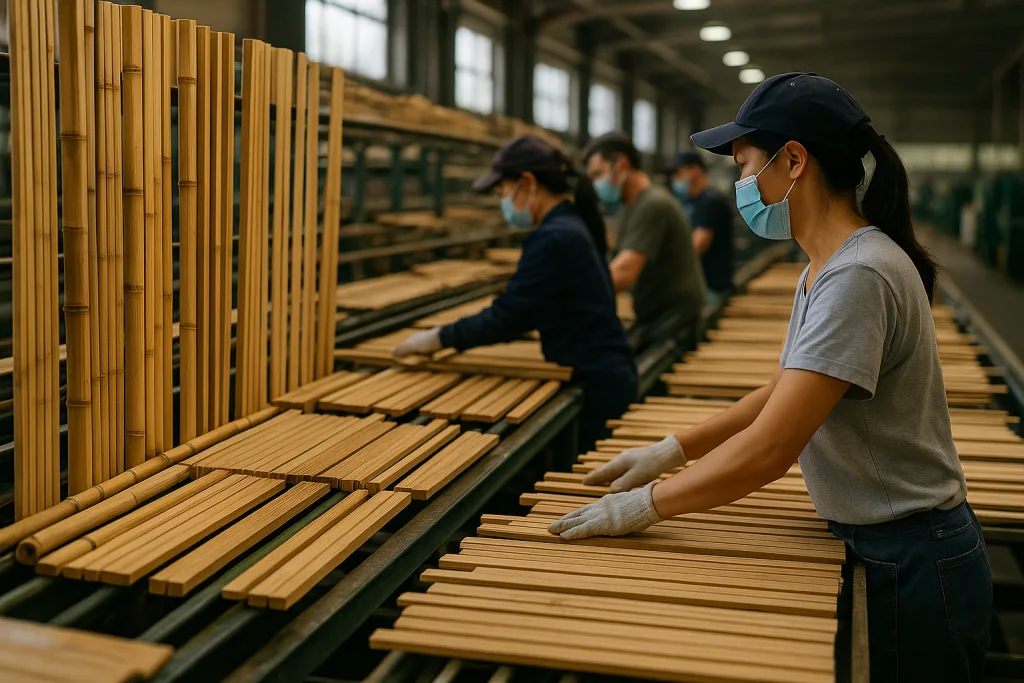
The orientation of bamboo strips—also called grain orientation—is critical to board durability. Boards made from misaligned strips tend to warp or crack as they expand and contract. Expert manufacturers sort and align slats by grain direction before laminating them together. There are three main approaches:
- Vertical grain: Thin strips are stood upright. This yields a fine, uniform surface, great for high-end chopping boards. Vertically aligned bamboo resists warping and controls surface checks.
- Horizontal grain: Wider strips are laid flat, showing off natural knuckles and patterns. Horizontal grain creates a bold look, but needs careful moisture and glue control to prevent surface splits.
- Cross-lamination: Layers alternate grain direction, similar to plywood. This dramatically improves dimensional stability by tightening internal tension and reducing crack risk.
Choosing the right orientation for each product depends on intended use. For commercial kitchens and frequent-wash cutting boards, cross-lamination is often recommended due to its superior anti-crack properties. The process also helps control thickness fluctuations and keeps the surface flatter.
Intelligent Glue Line Design
Glue lines—the seams where bamboo slats join—are the first defense against cracking and delamination. Modern factories, including Bamboo Wood Art, use industrial-grade adhesives engineered for flexibility and food safety. Here are key design factors:
- Low-VOC, E0 or E1 glues: These advanced resins not only meet global safety standards, but remain slightly elastic, so changes in humidity or minor impacts won’t tear the seams apart. This is critical for anti-crack bamboo cutting boards meant for export or professional use.
- Optimal glue coverage: Applying just the right amount—neither starved nor flooded—ensures a continuous, invisible bond. Too little leaves voids prone to opening up as moisture changes; too much can reduce strength or seep onto the surface.
- Finger-jointing and end-grain designs: Where two pieces meet end-to-end, finger joints or doweling provide much greater surface area for glue to grab. End-grain bamboo boards often use this method for their unique appearance and crack resistance.
After assembly, boards undergo a hot-press cure cycle, locking glue lines in place. Operators check for uniform squeeze-out and seamless joints—a telltale sign of a robust, anti-crack structure.
Moisture Content Targets and Conditioning
Bamboo, as a natural material, reacts quickly to changes in its moisture level. If it’s too wet or too dry when processed, problems show up months later. A stable moisture content—between 8% and 12%—is ideal for most climates and applications. Here’s how top-tier factories hit the target:
- Kiln drying: Fresh bamboo slats are dried in computer-controlled kilns. This ensures even moisture distribution within each piece and prevents surface cracking.
- Conditioning: Post-drying, slats are “rested” in a climate-controlled room. This acclimates the material to the final assembly environment, minimizing internal stress and warping risks in the finished board.
- Moisture checks: Technicians use pin meters to test each batch. Any piece outside the 8–12% range is reconditioned or discarded.
Getting this step right is essential, especially for export orders. Boards destined for dry or humid environments may require local acclimation (sometimes held for 48-72 hours) to ensure they arrive in perfect condition with minimal cracking risk.
Precision in CNC Machining and Edge Profiling
After lamination, boards are trimmed and machined to their final shape. Modern factories, like Bamboo Wood Art, use CNC routers and laser cutters for supreme accuracy. This minimizes stress points and allows for creative anti-crack touches:
- Rounded edges: Sharp corners can concentrate stress, leading to splits. Sanded or profiled edges distribute force and protect the board’s structure.
- Deep juice grooves: These must be cut with care. Rounded bases and smooth transitions prevent crack formation during cutting or washing.
- Engraving and branding: Done at correct depths, professional laser engraving will not weaken the face layer—a common cause of cracks in poorly made boards.
Once machined, boards undergo a multi-step sanding sequence—typically progressing through 180, 240, then 320 grit papers—for a silky surface that resists splintering.
Anti-Crack Finishing Systems
The finish on a bamboo board does more than add shine—it seals pores and guards against moisture swings, which drive most cracking incidents. Effective systems offer:
- Water-based polyurethane or UV-cured varnish: Eco-friendly and food-safe; these finishes form a tough, flexible film, protecting from spills, odor absorption, and surface checks. They also comply with international food-contact tests like FDA and LFGB standards.
- Plant-based oils (tung or linseed): Penetrating oils harden deep in the wood, adding water resistance while preserving natural feel—ideal for boards that get frequent maintenance.
Each board is inspected for uniform coverage, and edges are checked to ensure no bare spots remain—since these are where cracks often begin.
Warehouse and Storage SOPs for Anti-Crack Protection
Proper storage prevents premature cracking before a bamboo board ever reaches the user. Leading manufacturers and distributors follow strict SOPs (Standard Operating Procedures) in their warehouses:
- Climate control: Maintain steady temperature (18–25°C) and relative humidity (45–60%) to prevent boards from drying out or absorbing excess moisture.
- Flat stacking with airflow: Avoid stacking boards directly on the floor. Use pallets or racks to ensure air circulates on all sides, keeping moisture even across each board.
- Protect from direct sunlight: Sunlight causes rapid uneven drying, encouraging face cracks and warping. Store boards away from windows or with covers as needed.
- FIFO inventory rotation: Always ship oldest presses first to avoid long resting times, which can cause boards to adapt to the storage environment instead of the intended end-use climate.
- Packing moisture sachets for export: Silica gel or humidity-control packs are often added inside cartons to buffer against rapid climate changes during ocean or air transit.
- Pre-shipment QC: Inspect each batch visually for surface cracks, glue line integrity, and flatness before dispatch.
Bamboo Wood Art’s warehouse team uses a detailed SOP checklist—shared below—to uphold these standards:
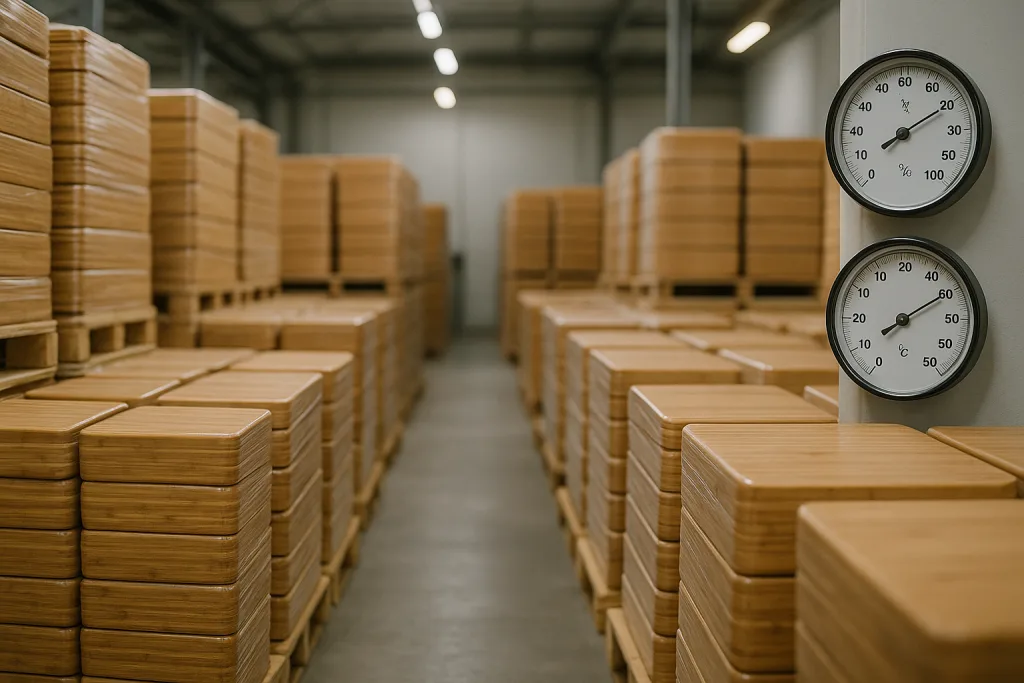
| Step | Action | Best Practice | Purpose |
|---|---|---|---|
| Climate | Monitor temp/RH | Log daily readings | Prevent moisture swing |
| Stacking | Use racks/pallets | Lay flat, allow airflow | Uniform drying |
| Sunlight | Shelter from sun | Cover windows/shelve back | Stop quick drying |
| FIFO | Rotate stock | Oldest boards out first | Tight quality age |
| Packing | Add desiccant | Seal cartons | Transit moisture control |
| QC | Inspect batch | Check flatness, cracks | Reject damage |
Anti-Crack Design for Bamboo Boards
Creating anti-crack bamboo cutting boards is as much art as science. It takes precision at every stage: engineering grain direction, using top-tier adhesives, locking in proper moisture levels, careful finishing, and even climate-conscious packaging. The core design principles can be distilled into several best practices:
- Cross-laminated layers for tension control and minimal warpage
- Certified, flexible glue systems that stand up to kitchen environments
- Moisture target of 8–12%, batch-tested pre-assembly
- Rounded, profiled edges and joints to spread impact forces
- Protective, food-safe finishes with full coverage, regularly re-oiled or conditioned as needed
- Robust packaging and humidity buffering on all shipping orders
Bamboo Wood Art’s production line embodies these, from bamboo forests through export crate—delivering anti-crack performance that lowers returns and maintains brand reputation.
After-Care Tips for Longevity and Crack Prevention
Even the best-made board can fail if neglected. Simple, routine after-care will extend its usable life and keep surfaces crack-free. Key steps include:
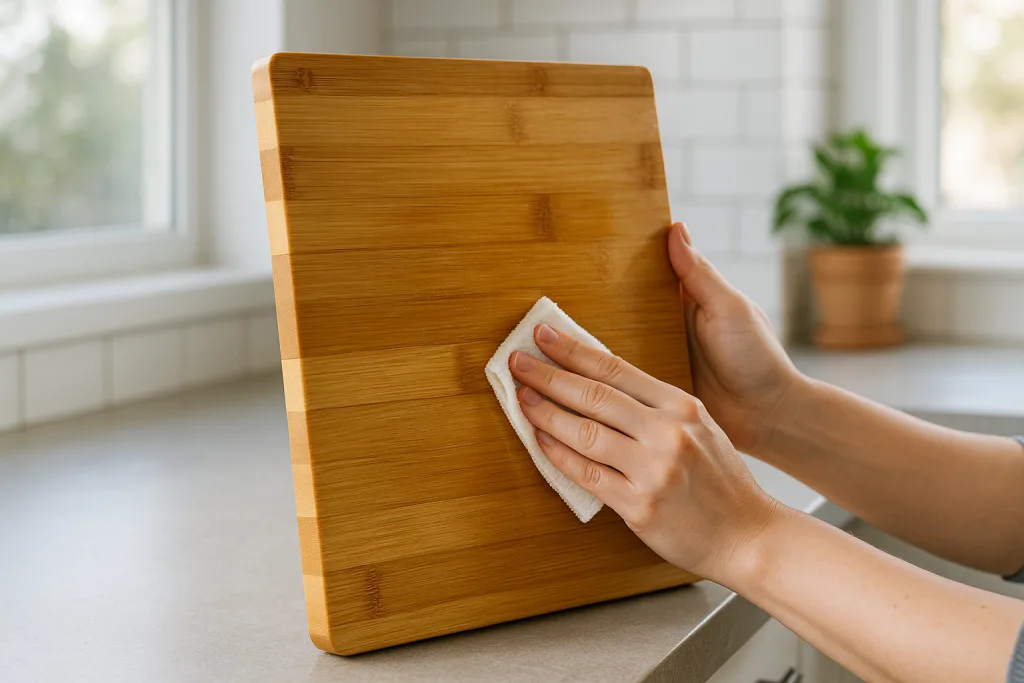
- Hand wash only, never soak: Submersion causes uneven swelling and drying, splitting the glue lines. Wipe clean and towel dry after use.
- Dry standing on edge: This allows air to circulate evenly around the board, reducing moisture imbalances that start cracks.
- Re-oil monthly with food-safe mineral or plant oil to replenish the protective layer and block out excess water uptake.
- Avoid high heat or near-heater storage: Rapid drying from nearby appliances can create surface and internal checks.
- Store in a stable environment: Kitchens with steady humidity and temperature keep boards in perfect balance.
Many brands include care cards with these details inside each box—a small investment that pays off in reduced warranty claims and happier end-users.
Comparing Bamboo Board Anti-Crack Solutions
Not all bamboo boards use the same strategies. The table below compares popular anti-crack methods for different material builds, finishes, and joinery approaches:
| Type | Core Feature | Best Use | Anti-Crack Score |
|---|---|---|---|
| Vertical Grain Solid | Slats upright, hot-pressed | Home chef, gifting | High |
| Cross-Laminated | Alternating grain | Restaurant, hotels | Very High |
| Horizontal Grain | Wide strips, single layer | Decor, serving | Medium |
| End-Grain Pattern | Short segments, finger-jointed | Pro chef, heavy cutting | Very High |
| Bamboo Veneer Ply | Thin bamboo over ply | Tabletop, display | Medium |
Restaurants and hospitality groups, in particular, benefit from cross-laminated or end-grain boards designed to withstand heavy, repeated cutting and frequent dishwashing.
Sustainability and Compliance: The Responsible Choice
Bamboo is valued not just for its performance, but also for its sustainability. Leading factories source FSC-certified Moso bamboo, ensuring responsible forest management and chain of custody. Glue and finishes must meet PEFC and E0/E1 low-formaldehyde standards to protect both workers and end-users. Many buyers also look for compliance with the FDA and LFGB requirements for food-contact products. By insisting on these certifications, brands demonstrate their commitment to both quality and environmental responsibility.
Integrating Anti-Crack Design into Product Development
For buyers developing custom or private-label bamboo cutting boards, early discussion about anti-crack strategies can save both time and money. Essential steps include:
- Specify grain orientation and glue strategy—ask for cross-lamination or end-grain assembly where possible.
- Request third-party moisture and formaldehyde test reports per batch.
- Approve sample finish and edge profiles for both aesthetics and durability.
- Demand packaging that includes climate buffers and care instructions.
- Insist on photo/QA documentation of warehouse SOPs if buying FOB or direct import.
Bamboo Wood Art collaborates closely at every stage, ensuring anti-crack features are built in—not just tacked on at the end.
Frequently Asked Questions
What causes bamboo boards to crack most often?
The main causes are rapid changes in moisture, poor grain alignment, low-quality glue, or improper storage and use. Avoid soaking or dishwashers, and always store boards in a stable environment.
How can I prevent my bamboo cutting board from cracking at home?
Hand wash only, dry standing on edge, and treat with food-safe mineral oil monthly. Keep the board away from direct heat or sunlight for best results.
What is the best grain orientation to resist cracking?
Cross-laminated and vertical grain designs offer the greatest resistance to cracking by balancing wood tension and minimizing warping under changing conditions.
Do certain finishes help reduce surface cracks?
Yes. Water-based varnish or plant oils seal the surface and keep moisture from entering or escaping too quickly, reducing surface and end-grain cracks.
What are industry SOPs for warehousing bamboo boards to avoid cracks?
Standard procedures include climate control, flat stacking with airflow, shielding from sunlight, humidity packet use for exports, and FIFO (first-in, first-out) rotation for uniform age.
Can cracked bamboo boards be repaired?
Minor cracks can sometimes be filled with wood glue and clamps, but large cracks or structural splits usually require board replacement for safety and hygiene reasons.