Repairing Scratches & Juice Groove Refresh
Wooden cutting boards are essential tools in any kitchen. Over time, scratches, dull juice grooves, and worn surfaces are inevitable. Learning to repair a wooden cutting board not only extends its life but also improves its safety and looks. This guide walks you through safe sanding grits, re-oiling steps, refreshing juice grooves and feet, key tools, and safety notes. You’ll also learn when it’s time to retire your board, keeping food-preparation safe and hygienic.
Assessing Board Condition: How Deep Is the Damage?
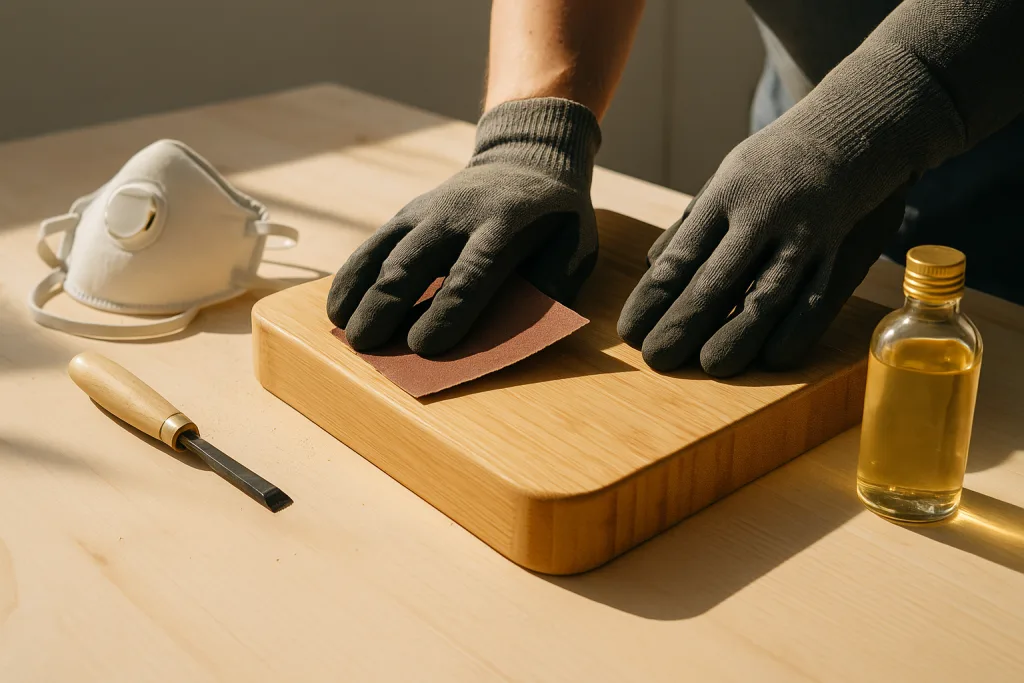
Begin by inspecting your cutting board in natural daylight. Look for deep scratches, warping, stains, and softened feet or dull juice grooves. Surface scratches are cosmetic, but deeper gouges can harbor bacteria. Check juice grooves for buildup and feet for looseness. If the board is cracked, warped, or has persistent stains that don’t sand out, it may be time to consider replacement.
Signs It’s Time to Restore vs. Retire
- Minor scratches: repairable with sanding and oil
- Deep gouges: restore if shallow, retire if through the board
- Loose or missing feet: can be replaced
- Warping or splitting: retire, as safety is compromised
Board Materials & Their Longevity
Moso bamboo, beech, oak, walnut, and ash are popular woods. Moso bamboo stands out for toughness and sustainability. Heavier woods like oak and walnut offer superior durability and attractive grain, while bamboo resists swelling and bacteria. With proper care, most boards last 3–7 years for home use and 2–5 years in hospitality settings.
Essential Tools & Safety for Board Repair
Preparation sets your repair up for success. Gather the following tools before you start:
- Sandpaper: 120, 180, 240, and 320 grit (food-safe)
- Orbital or hand sanders for larger boards
- Soft brush or vacuum for dust removal
- Food-grade mineral oil or plant-based oils (tung/linseed)
- Soft lint-free cloths
- Mask, gloves, and eye protection
- Wood glue and replacement feet (if required)
- Small chisel or groove scraper
Sand in a well-ventilated area. Always wear a dust mask. Bamboo Wood Art uses E0-E1 resins for low emissions and kiln-dried Moso bamboo with 8–12% moisture content for stable boards.
Safety Considerations
- Keep sanders below maximum RPM to avoid burning wood
- Dispose of oily rags safely—they can self-ignite
- Avoid using non-food-grade finishes
Step-by-Step: Sand and Refinish Board
Restoring a wooden cutting board starts with careful sanding. Follow these steps for safe, smooth results:
1. Cleaning
Wash the board with warm, soapy water. Let it dry for at least 8 hours. Moisture inside the wood can cause uneven sanding and may trap grit.
2. Sanding Sequence
- Begin with 120-grit sandpaper on deep scratches or heavily worn boards.
- Progress to 180, then 240 grit for smoothing.
- Finish with 320 grit for a fine, silky surface.
Sand evenly with the grain. For bamboo, cross-laminated boards need extra care at edges to prevent splintering. Use light pressure, and avoid rounding board corners beyond the original profile.
Sanding Table: Grit vs. Board Condition
| Grit | Best Use | Material Examples |
|---|---|---|
| 120 | Initial scratch removal | Bamboo, oak, walnut (heavy wear) |
| 180 | Smoothing scratches | Bamboo, beech |
| 240 | Finish sanding | Bamboo, ash |
| 320 | Silky finish | All boards, final step |
3. Dust & Debris Removal
Vacuum or brush away all dust. Wipe with a damp cloth, then let dry fully. Residual dust reduces finish quality.
Refreshing Juice Grooves & Board Feet
Juice grooves trap liquid and food debris. Over time, their edges dull and they may harbor stains. Feet help stabilize the board and protect countertops, but can loosen or wear away.
Restoring Juice Grooves
- Scrape out residue with a small chisel or groove scraper.
- Sand grooves with rolled 180-grit sandpaper or a precision sander.
- Finish with 240-grit in the groove for smoothness.
- Wipe grooves clean with a soft damp cloth.
Bamboo Wood Art uses CNC machines to ensure juice grooves are smooth and consistent with tight dimensional tolerances. Hand refinement restores similar precision at home.
Refreshing Board Feet
- Check feet for stability. Remove old glue or screws if loose.
- Replace with new rubber or bamboo feet. Use FDA-compliant food-safe adhesives.
- Let glue cure at least 4 hours before use.
Correct Re-Oiling Steps: Keeping Boards Safe & Beautiful
Sealing your board after sanding is critical. A well-oiled surface resists stains and bacteria. Choose food-grade mineral oil or plant-based oils for this job. Avoid cooking oils—they turn rancid.
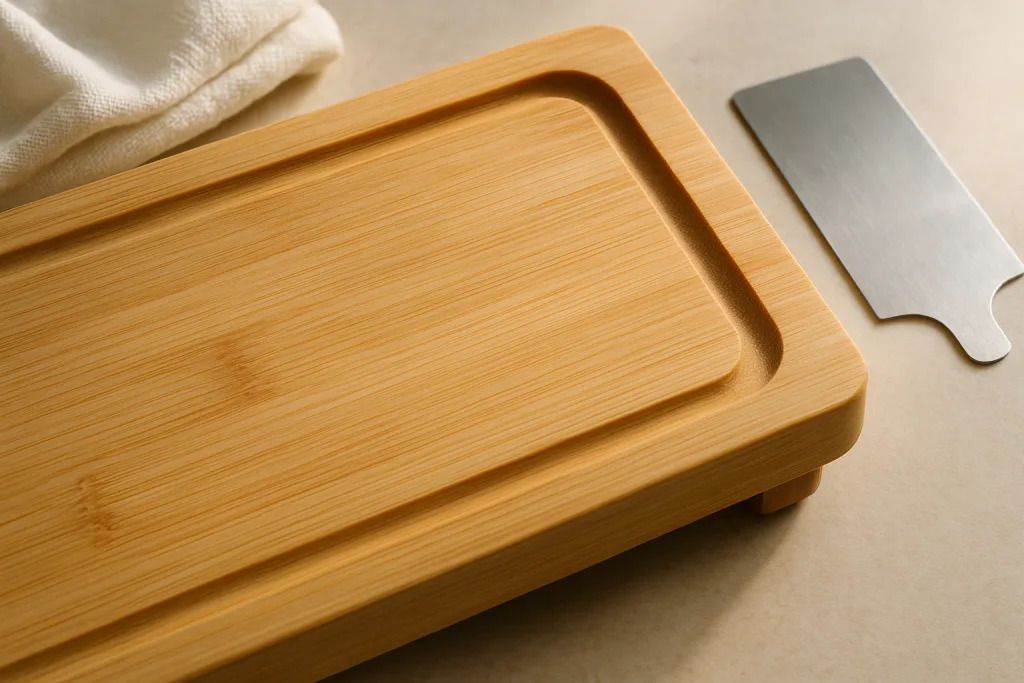
Re-Oiling Process
- Pour a small amount of oil onto the board
- Rub in with a lint-free cloth, following the grain
- Apply generous oil to the juice groove and board feet
- Let absorb for 2–4 hours before wiping excess
- Repeat for two coats; monthly for heavy-use boards
For hospitality and food-service boards, Bamboo Wood Art applies E0-compliant, LFGB/FDA-tested food-contact finishes, ensuring safety and regulatory compliance (FDA guidelines).
When to Retire a Cutting Board
Even with regular care, some boards reach the end of their service. Retiring a board prevents bacterial build-up and reduces risk of splinters. Consider retiring if:
- Cracks or splits are visible through the board
- Persistent odors remain despite deep cleaning
- Warping affects board stability
- Multiple deep gouges create uneven surface
- Loose feet cannot be repaired securely
Board Life Expectancy
High-quality boards typically last 3–7 years with routine maintenance. Commercial kitchens often cycle boards faster due to heavy use. Upgrading to a new board, especially those crafted by Bamboo Wood Art, ensures you maintain food safety and enjoy optimal cutting performance.
Best Materials for Longevity & Easy Repair
The choice of wood affects maintenance ease and lifespan. Moso bamboo is a leader for its strength, sustainability, and resistance to swelling. Oak and walnut boards feature tight grain that sands smoothly and absorbs oil evenly. Bamboo Wood Art sources FSC and PEFC-certified woods, ensuring eco-friendly options for bulk buyers, hotels, and retailers.
Comparative Material Table
| Material | Durability | Best Use |
|---|---|---|
| Moso Bamboo | High | Kitchen, hospitality, gifting, heavy use |
| Oak | High | Premium home, restaurant |
| Walnut | Very High | Fine dining, designer gifting |
| Beech | Medium | Budget, light use |
| Ash | Medium | Decorative, light functional boards |
Sourcing, Sustainability & Quality Checks
Quality restoration begins with responsible material selection. Boards manufactured by Bamboo Wood Art feature kiln-dried woods, layered cross-laminations to prevent warping, and tight flatness tolerances. Each board passes adhesion and finish purity tests before shipment. For export, packaging uses reinforced cardboard and shrink wrapping to prevent moisture exposure during transit.
Compliance and Traceability
- FSC/PEFC certification for wood sourcing
- Food-contact finishes tested to LFGB/FDA standards
- E0-E1 formaldehyde emissions for healthier indoor air
Sustainability and craftsmanship remain central at Bamboo Wood Art, supporting OEM/ODM clients with reliable supply for hospitality, retail, and branding projects.
Buyer Guidance: Board Selection, Restoration Value, and B2B Service
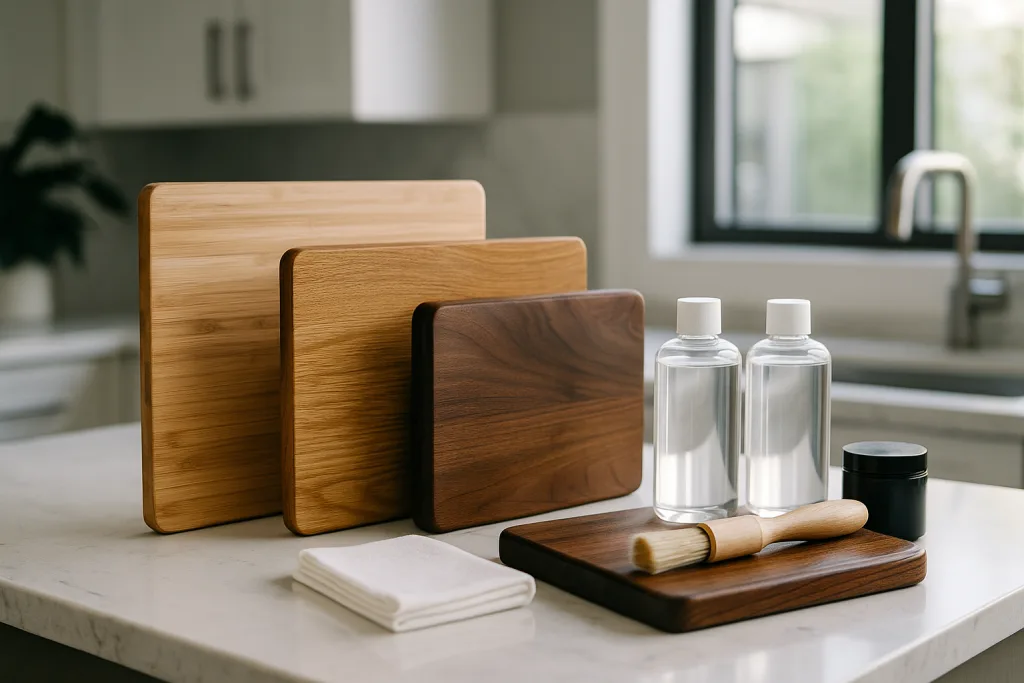
Choosing the right board means balancing repair ease, durability, and sustainability. For hotels, restaurants, and group buyers, prioritize Moso bamboo or solid oak. These materials simplify maintenance and offer long product life. Consider the restoration cycle—regular sanding, re-oiling, and groove refresh will keep boards looking and performing their best. For bulk orders and branding needs, Bamboo Wood Art’s manufacturing expertise in CNC-cutting, laser engraving, and precision finishing ensures boards perform well in even the most demanding professional kitchens.
Expert Takeaway
Boards crafted with kiln-dried Moso bamboo and E0-compliant finishes stand up to repeated restoration, reducing cost and waste over time.
Frequently Asked Questions
What grit sandpaper should I use to repair wooden cutting board scratches?
Start with 120-grit for rough scratches, then move to 180, 240, and finish with 320-grit for a smooth surface.
How do I safely refresh juice grooves on my board?
Scoop debris with a small chisel, sand with 180 and 240 grit, and wipe clean for smooth, sanitary grooves.
Which oil is safest for re-oiling my board?
Use food-grade mineral oil or plant-based tung oil; avoid cooking oils, which can go rancid and attract bacteria.
When is it time to retire a wooden cutting board?
Retire the board if it’s cracked, warped, deeply gouged, or if persistent odors do not wash out.
Can I repair loose or missing board feet myself?
Yes, remove old feet, clean residue, and use FDA-compliant adhesive to attach new rubber or bamboo feet securely.
How often should I sand and refinish my cutting board?
Sand and refinish boards every six months for regular use, or monthly for heavy-use commercial boards.