Understanding Warping, Cupping & Cracking
Wood and bamboo boards bring warmth and style to kitchens and dining rooms. Yet, these boards sometimes warp, cup, or crack. This happens when too much moisture, poor handling, or incorrect finishes cause stress in the material’s fibers. To fix or prevent these issues, you first need to understand how and why wood deforms.
Core Causes: Moisture Gradients and Their Effects
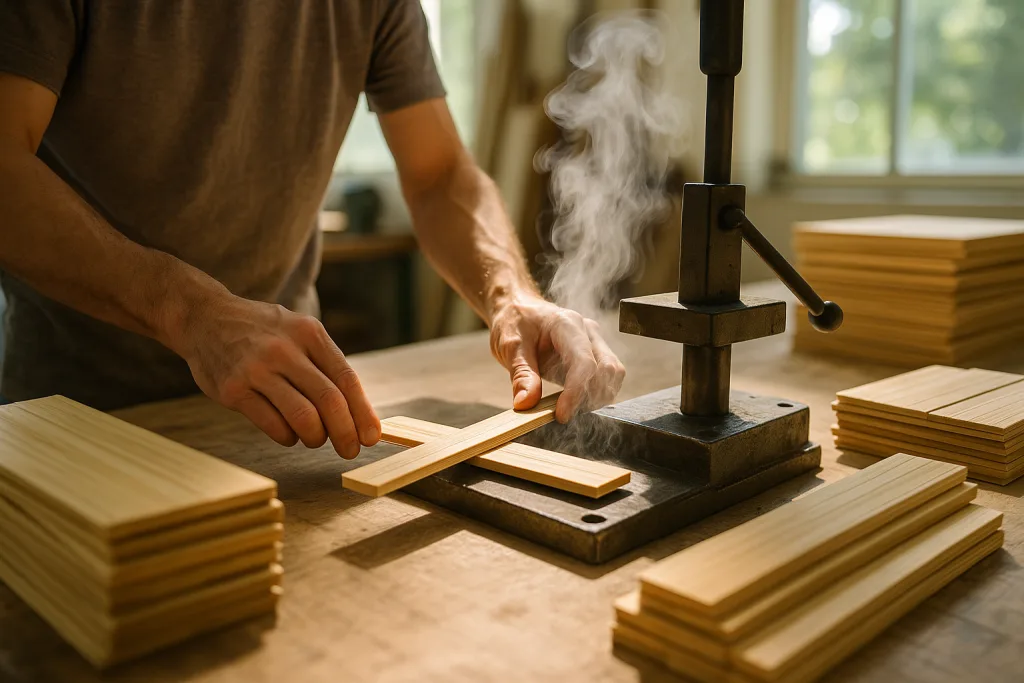
Wood and bamboo change shape with moisture. When one side gains or loses water faster than the other, the result is a warped cutting board or a cupped serving tray. Natural materials like Moso bamboo and solid woods (oak, ash, walnut) expand and shrink across their width—not length—when humidity shifts. That’s why controlling moisture is the first line of defense.
- Slow drying: Sudden changes can crack boards. Stable, slow drying preserves structure.
- Moisture content: Target 8-12% for indoor boards after kiln drying and conditioning, ideal for most home and hospitality settings.
- Finishing: Unfinished or unevenly finished boards absorb water unevenly. Always finish both sides with water-based or plant-oil coatings.
Common Triggers in the Field
- Placing wet boards flat on cold counters traps moisture on one side.
- Storing boards upright, in direct sunlight, or near heat sources creates uneven drying.
- Failing to oil or seal both surfaces lets water enter freely, undoing kiln-dried balance.
Bamboo vs. Wood Boards: Resistance, Risks & Fixes
Bamboo has natural anti-warp properties due to its fiber structure and cross-lamination. Moso bamboo, used by leading suppliers like Bamboo Wood Art, resists cupping and splitting better than many hardwoods. However, solid woods—especially wide, single-slab boards—are more prone to movement if not stabilized or joined correctly.
| Material | Warp Resistance | Moisture Target | Best Uses |
|---|---|---|---|
| Moso bamboo (laminated) | High | 8-10% | Kitchen boards, trays, décor panels |
| Oak, Ash, Beech (solid) | Medium | 8-12% | Cutting boards, furniture |
| Walnut (solid/laminated) | Medium | 8-10% | Premium kitchenware, gift boxes |
| Bamboo veneer/ply | Very High | 6-9% | Retail displays, paneling |
Construction & Joinery Techniques that Matter
- Finger-jointed edges and cross-lamination block internal stress and prevent cupping.
- Mortise-and-tenon and dowel joinery lock joints in place, reducing movement.
- CNC precision and hot-press lamination keep tolerances tight for flatness control.
Finishing: The Real Shield Against Cupping and Cracking
Quality finishing is more than just looks. Water-based varnishes, UV-cured topcoats, or food-contact plant oils (like tung or linseed) create a moisture barrier. The key is to apply the finish evenly to both sides and all edges. Bamboo Wood Art always double-coats OEM/ODM boards for balanced protection, using FDA/LFGB-compliant finishes when food contact is required.
Recommended Finishes Based on Application
| Application | Finish | Notes |
|---|---|---|
| Cutting boards | Food-grade mineral oil | Apply monthly for home use |
| Serving/décor | Water-based varnish | Low VOC, resists stains |
| Hospitality serviceware | UV topcoat | High scratch resistance |
Warped Cutting Board Fix & Prevent Cupping Board: Step-by-Step Guide
What if your board has already warped or cupped? Don’t toss it out. Many boards can be rescued. Here’s how to triage the problem and fix it for good.
Quick Triage: Identify the Deformation
- Check flatness: Lay the board on a flat surface. Rocking means a twist; an arch signals cupping.
- Assess moisture: Is one side damp or discolored? That’s where the water went in or escaped.
- Look for cracks: Edge or surface splits may need glue or replacement if deep.
Rescue Flowchart: Fixing a Warped or Cupped Board
- For mild warping (under 5mm bow): Lay the board with the concave side down. Mist the bowed face lightly with water; place a slightly damp (not soaked) towel over it. Weigh it down with books for 12–24 hours. Check progress—repeat if needed.
- If dry climate caused cupping: Place in a humid spot, upright, for several days. Often, humidity alone reverses minor curves. Avoid over-wetting, which can cause new cracks.
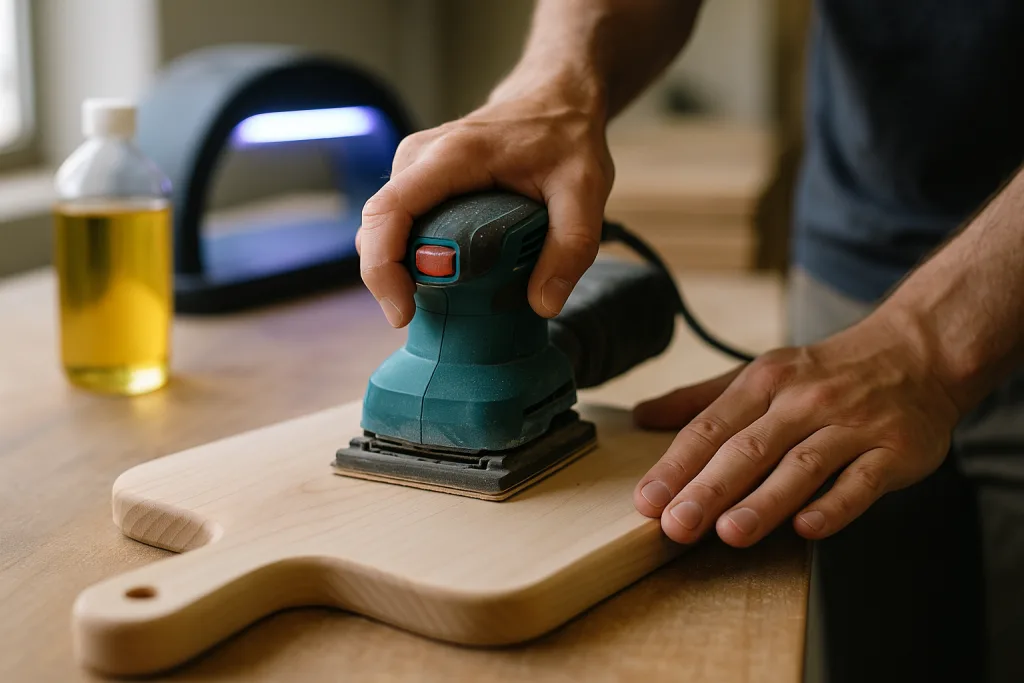
- For deep cracks: Clean splits, inject wood glue, clamp tightly, and allow to cure per instructions. Sand flush, refinish both sides with matching oil or varnish.
- If board is permanently deformed or structurally unstable: Replace for safety. Review warranty terms if purchased from a supplier offering protection.
Professional Restoration Options
For valuable or heavily branded pieces (like in horeca, gifts, or retail displays), consider professional resurfacing. Machine sanding (180→240→320 grit) or flattening with CNC may restore surface evenness. Finish with the appropriate food-grade coating.
Storage Orientation & Everyday Board Care
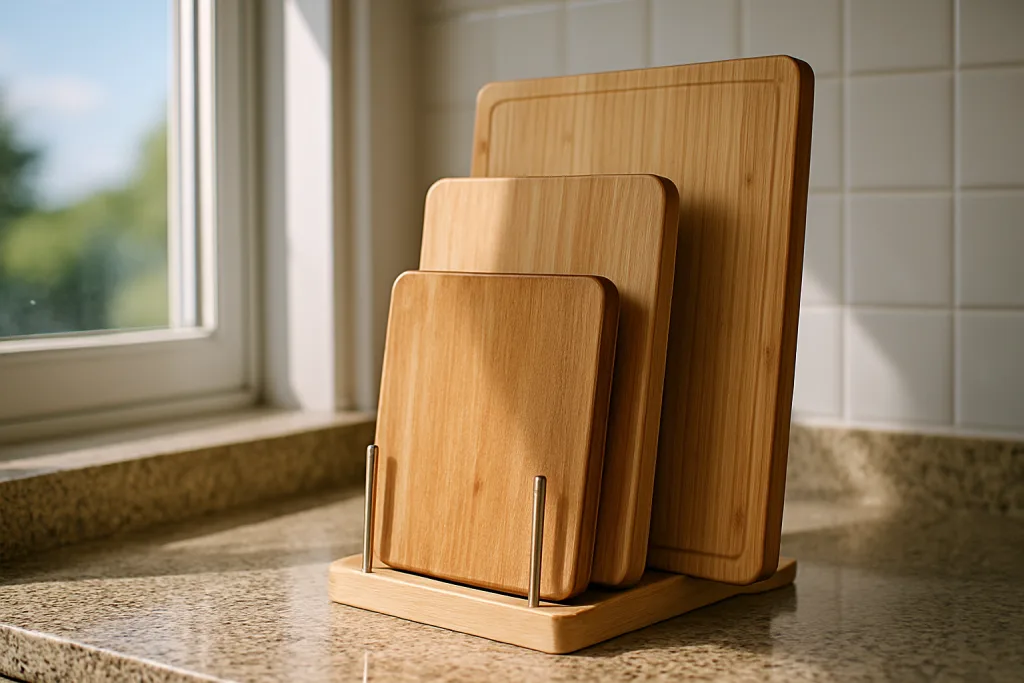
Simple habits dramatically cut the risk of warping and cupping. Store boards upright in a rack with room for air flow on all sides. Never leave wood or bamboo boards soaking in water or standing in puddles. After every use, dry thoroughly and re-oil if the finish looks dull, especially for home kitchen applications.
Protective Storage Tips
- Keep boards away from heaters and direct sunlight.
- Use felt pads or racks to prevent edge contact and moisture build-up.
- Maintain room humidity (ideally 40–60%) in storage and display areas for best long-term results.
Designing Boards for Durability: Manufacturer Insights
At the manufacturing level, board stability starts with expert material selection, advanced processing, and rigorous inspection. Bamboo Wood Art relies on tightly controlled kiln-drying, edge-gluing with low-VOC E0-E1 resins, and face-grain lamination to keep tolerances within ±1.5mm per meter. All panels are checked for flatness, glued tenoned slats, and corner integrity before moving to finishing and packaging. This minimizes returns and ensures client confidence for OEM/ODM orders across home, hospitality, and gifting categories.
Technical Checklist for Dimensional Stability
- Moisture conditioning to 8–12% for all core and surface materials
- Class A or FSC-certified slats sorted for color and grain match
- Laminate hot-press process with cross-grained layers
- Edge and corner profiling for chip resistance
- Flatness control and expanded QC after finishing
Quality, Compliance & Warranty Language
Reliable board makers provide warranties that reflect an understanding of wood’s natural traits. Expect warranty coverage for manufacturing defects, like glue failure or severe warpage, under normal use conditions and storage. Claims rarely cover issues caused by misuse (like dishwasher damage or soaking), but responsible businesses—such as Bamboo Wood Art—include clear care instructions and fair replacement or repair terms for B2B buyers.
Sample Warranty Features
- Coverage period: 6–24 months after delivery, depending on application
- Covered: Delamination, excessive warping (>5mm/m), finish failure under normal use
- Not covered: Abuse, soaking, improper storage, chemical exposure
- Proof needed: Photos, invoice, batch code for traceability
Expert takeaway:
Prevention starts at the factory, but careful use and storage by buyers ensure boards stay flat and beautiful for years. Invest in both sides—a balanced finish and smart care—so warp, cup, and crack repairs are rarely needed.
Warping, Cupping & Cracking: Root Causes & Fixes
The warping, cupping, and cracking of wood boards stem mainly from uneven moisture exposure, poor finishing, and rough storage. Choosing stabilized materials, applying balanced coatings, and following best practices during everyday use greatly reduce these risks. For existing issues, tailor your fix to the deformation: gentle humidity corrections for mild warping, glue repairs for cracks, and full refinishing for professional restorations. Responsible suppliers—including Bamboo Wood Art—back up their boards with compliant finishes, process precision, and warranty support. Together, these steps keep kitchenware, décor, and hospitality supplies looking sharp and lasting longer.
Frequently Asked Questions
What causes a cutting board to warp or cup?
Warping and cupping usually occur when one side of the board absorbs or loses moisture faster than the other, causing uneven swelling or shrinking.
How can I fix a warped cutting board at home?
Lightly mist the concave side and weigh the board flat for 12–24 hours. For stubborn warps, gradual humidity adjustment can help restore shape.
Does finishing both sides really prevent cupping?
Yes, sealing both sides and edges of a board creates a balanced moisture barrier, significantly reducing the risk of cupping or warping.
What is the best way to store cutting boards?
Store them upright in a rack with air circulation on all sides, and keep them away from direct sunlight and heat sources to maintain flatness.
Should boards be replaced if they crack?
Shallow surface cracks can be glued and refinished, but deep splits or structural failures usually require the board to be replaced for safety and hygiene.
What does a typical board warranty cover?
Most warranties cover major defects, such as delamination or excessive warping due to manufacturing, but not issues from improper use or storage.