Best Wooden Salad Bowls: Seasoning & Stain Control
Wooden salad bowls bring warmth and style to any table, but proper care keeps them beautiful for years. This guide covers everything you need to know—seasoning methods, oil choice, stain control, and bundle ideas to match bowls with servers and care kits. Whether you’re a restaurant buyer, home chef, or gifting specialist, you’ll find practical steps to protect your investment.
Choosing the Right Wooden Salad Bowl

Not all wooden salad bowls are created equal. Quality depends on the wood type, construction, and finish. Popular woods include walnut, beech, ash, oak, and bamboo. Manufacturers like Bamboo Wood Art source sustainable woods and offer bowls crafted to precise standards—kiln-dried to 8–12% moisture content for stability, with warpage control and fine edge profiling.
Solid Wood vs. Bamboo Salad Bowls
| Material | Properties | Best Use |
|---|---|---|
| Solid Oak | Dense, hard, rustic look | Hearty salads, traditional settings |
| Bamboo Ply | Sustainable, light, tight grain | Modern décor, eco-friendly events |
| Walnut | Rich color, smooth finish | Upscale dining, gifting |
| Bamboo Veneer | Decorative, moisture stable | Hospitality, restaurant use |
| Beech/Ash | Pale tones, fine grain | Casual kitchens, daily use |
Manufacturing Standards Matter
High-quality bowls are shaped using CNC machining for dimensional consistency, edge smoothness, and a gentle profile. After shaping, artisans sand each bowl in sequences (180, 240, then 320 grit) for a glassy feel. Surface finish—either plant oil or low-VOC varnish—enhances durability and food safety. Leading brands like Bamboo Wood Art comply with FDA and LFGB food-contact guidelines for every piece.
How to Season a Wooden Salad Bowl
Seasoning means protecting the bowl with food-safe oil. This blocks stains, reduces odors, and prevents cracking. The right oil soaks into the grain, shielding the wood from dressing acids and moisture. Proper seasoning extends a bowl’s life and preserves its beauty.
Best Oils for Seasoning Wooden Salad Bowls
- Tung Oil: Durable, waterproof, resistant to food acids.
- Pure Mineral Oil: Easy to apply, inexpensive, food-safe.
- Raw Linseed Oil: Penetrates deeply, but dries slowly.
- Beeswax: Often blended with oil for added sheen.
Seasoning Steps
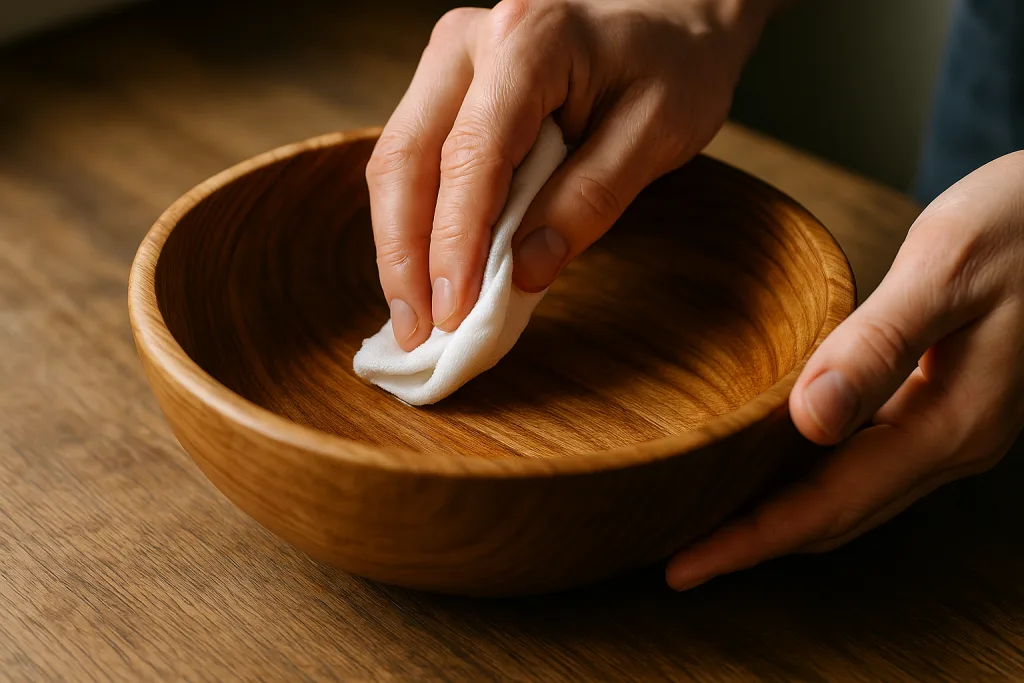
- Start with a clean, dry bowl.
- Drizzle a small amount of oil on a soft cloth.
- Rub oil over every surface, inside and out, following the wood grain.
- Wait ten minutes, then wipe away excess.
- Let the bowl cure in a dry place for 8–12 hours before first use.
Dressing Acidity: Its Impact on Wooden Bowls
Vinegar and citrus dressings taste bright, but harsh acids can attack raw wood. A well-seasoned bowl shrugs off stains and moisture, preserving both color and strength. Without seasoning, acids may cause dull spots or warping. Always apply oil before serving acidic salads, and avoid soaking bowls for long periods.
Quick Tips to Minimize Acid Damage
- Mix dressings in a separate bowl, then toss in the wooden bowl.
- Wipe out acidic residue promptly after serving.
- Touch up with oil after heavy-use events to replenish the finish.
Expert Takeaway: “Regular seasoning creates a natural shield, letting your wooden salad bowl stand up to daily meals and tangy flavors.”
Stain Mitigation: Keeping Your Salad Bowl Spot-Free
Wooden bowls are prone to stains from beets, balsamic vinegar, and tomato-based dressings. With the right preventive measures, you can keep bowls looking fresh, even after hundreds of uses. Stain mitigation relies on a quality oil barrier, mindful cleaning, and occasional light refinishing.
Common Stains and Their Remedies
| Stain Source | Prevention | Removal |
|---|---|---|
| Beet Juice | Apply oil regularly | Lemon juice + salt scrub |
| Balsamic Vinegar | Season before use | Baking soda paste |
| Tomato | Wipe immediately | Non-abrasive cleaner, light sanding |
| Herb Oils | Use wax/oil blend | Soap + warm water |
| Citrus | Keep bowl dry | Damp cloth, re-oil |
Refinishing for Deeper Stains
For stubborn or aged marks, gently sand the affected area with fine grit sandpaper (240 or finer), then reapply oil. This restores the bowl’s surface while preserving the finish. Bamboo Wood Art recommends regular inspection and care—especially for busy hospitality venues.
Storage: How to Keep Wooden Salad Bowls Safe
Proper storage prevents damage from moisture, heat, and pests. Never leave wooden bowls near a direct heat source or soaking in water. Always let them air dry fully before putting away. Stack bowls with a layer of cloth between each to avoid scratching, especially in commercial kitchens. Store in a cool, dry spot to keep the finish in prime condition.
Environmental Factors to Consider
- Humidity: Keep relative humidity between 40–60% to avoid cracking.
- Sunlight: Prolonged exposure can fade the finish—store in shaded areas.
- Airflow: Good ventilation prevents odors and mildew.
Bundle Recommendations: Servers, Bowl, and Care Kit
Wooden salad bowls shine when paired with matching accessories. Choose servers made from compatible wood or bamboo for a unified look. Consider bundles that include bowls, servers, and a care kit with oil and cloth. These packages simplify maintenance—ideal for restaurant managers, gift buyers, or kitchen enthusiasts.
Smart Bundle Ideas
- Bowl + Server Set: Choose a style and finish that matches your décor.
- Bowl + Care Kit: Includes food-safe oil and premium cleaning cloth.
- Bowl + Server + Care: Complete package for home or hospitality.
Expert Tip: “Try Bamboo Wood Art for handcrafted bowls and modular serving bundles—crafted with care, precision, and a responsible footprint.”
Wooden Salad Bowl Care: Oil, Cleaning, and Longevity
Continual care is the best way to preserve your wooden salad bowl. Focus on regular oiling, mindful washing, and protective storage. Avoid dishwashers and harsh detergents, as they strip the finish and dry the wood. Use lukewarm water, mild soap, and soft sponges for everyday cleaning.
Routine Care Checklist
- Wipe bowls after use—never soak them.
- Re-oil monthly or after heavy service.
- Inspect for cracks, and sand lightly if needed.
- Store in a dry cupboard, away from heat sources.
Material Science: Why Wood and Bamboo Excel
Wood and bamboo offer unbeatable properties for salad bowls. They feel comfortable to hold, absorb gentle seasoning, and age gracefully. Moso bamboo, used in high-end bowls, is tough and sustainable. Its fibers resist warping and swelling—even after many washes. Kiln drying ensures long-term stability, with final bowl moisture around 10%. Modern lamination and joinery techniques, like finger-jointing and cross-lamination, keep bowls smooth and crack-free.
Bamboo vs. Classic Hardwoods
- Bamboo: Fast-growing, carbon-storing, tight grain for food safety.
- Walnut/Cherry: Rich color, high-end appeal, heavy and dense.
- Beech/Ash: Neutral color, everyday use, more affordable.
Compliance, Sustainability, and Quality Assurance
Top-tier wooden salad bowls meet strict environmental and food safety standards. Look for FSC or PEFC certifications to ensure responsible sourcing. Manufacturers like Bamboo Wood Art conduct moisture checks, adhesion tests, and dimensional tolerance inspections before export. Attention to packaging durability prevents damage during shipping, even at scale.
Key Compliance Insight
Ensure food-contact coatings meet FDA and LFGB standards. Water-based, UV, or plant oil finishes produce safe and eco-friendly bowls for any food service or gifting scenario.
Best Wooden Salad Bowls: Seasoning & Stain Control
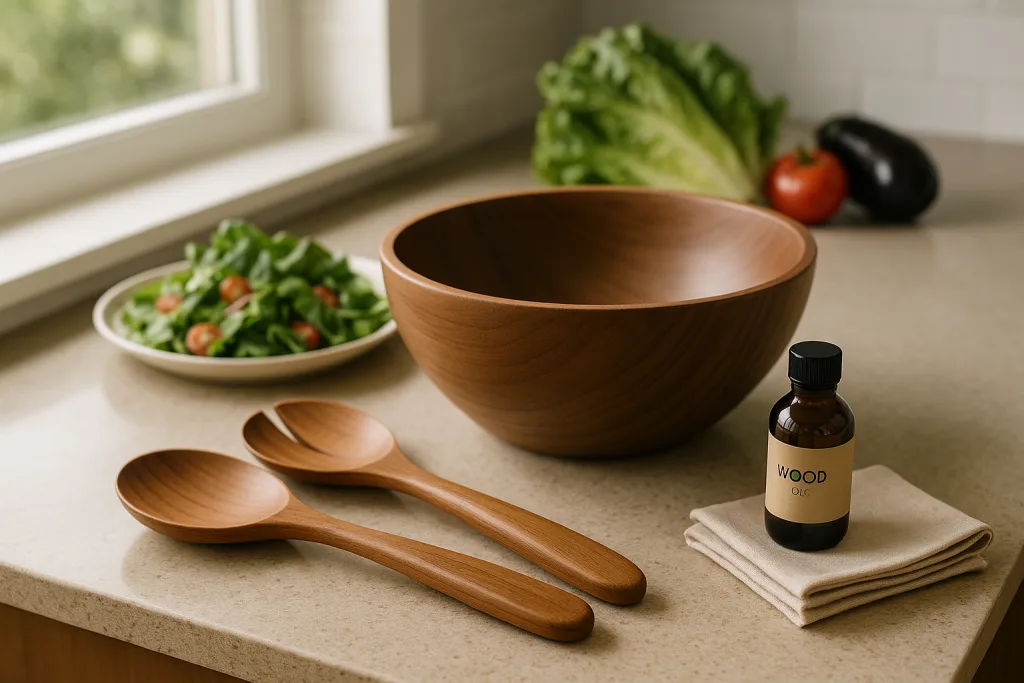
The secret to maintaining the best wooden salad bowls lies in thoughtful care. Season with the right oil, wipe away corrosive dressings, and store in ideal conditions. Select bowls from trusted suppliers like Bamboo Wood Art to guarantee craftsmanship, sustainability, and compliance.
Frequently Asked Questions
How often should I oil my wooden salad bowl?
Oil your wooden salad bowl at least once a month or after frequent use to maintain its protective finish and prevent stains or cracks.
Which oil is best for seasoning wooden salad bowls?
Tung oil, pure mineral oil, and raw linseed oil all work well; always choose a food-safe oil for seasoning your bowl.
Can I put my wooden salad bowl in the dishwasher?
No, dishwashers can damage wooden salad bowls by stripping the finish and causing warping or cracking; wash by hand instead.
How do I remove dark stains from my wooden salad bowl?
Use lemon juice and salt for light stains or gently sand with fine grit paper for deeper marks, followed by re-oiling the bowl.
Are bamboo salad bowls as durable as hardwood bowls?
Yes, high-quality bamboo salad bowls are durable, moisture-resistant, and sustainably sourced, often matching or exceeding hardwood performance.
What should I include in a salad bowl care kit?
A salad bowl care kit should contain food-safe oil, a soft cloth, and simple instructions for cleaning and regular maintenance.