Are Bamboo Utensils Dishwasher Safe? The Honest Truth
Bamboo utensils have gained respect for their natural beauty, strength, and eco-friendly appeal. Home cooks and hospitality brands often ask: Are bamboo utensils dishwasher safe? The honest truth requires a close look at bamboo’s structure, protective coatings, and how dishwashers work. This guide investigates the temperature and steam impacts, stress test outcomes, care techniques, and practical dos and don’ts—plus special care for kids’ dinnerware and a quick-ref at the end.
Why Bamboo Utensils Are Popular in Kitchens
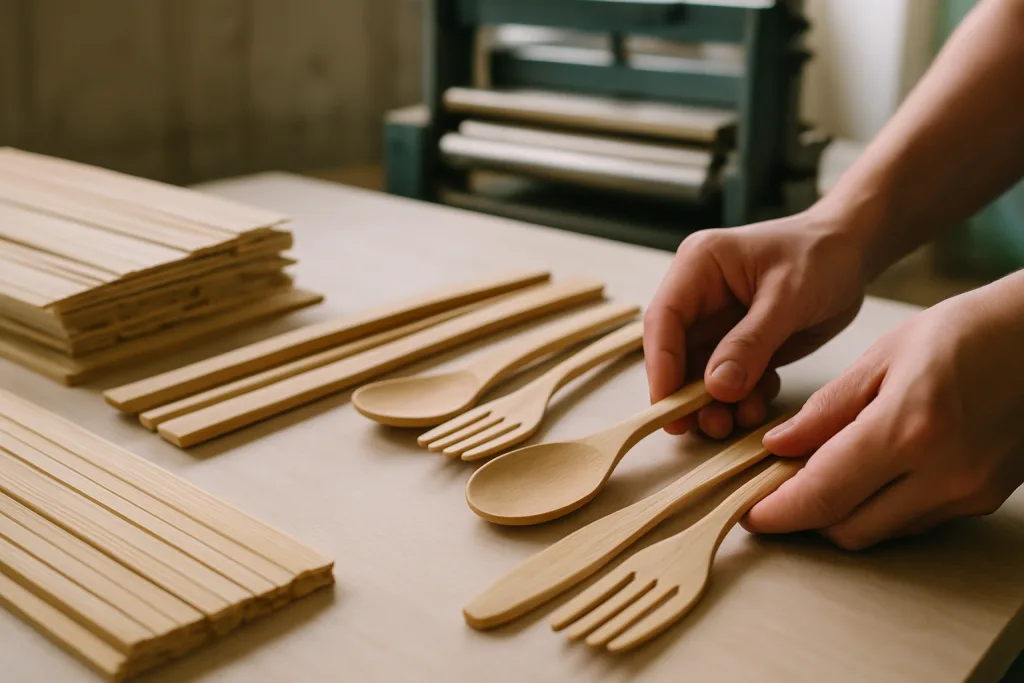
Eco-Friendly Credentials
Bamboo is a rapidly renewable resource. It can grow over three feet per day, using less water and chemicals than most trees. Bamboo Wood Art, known for its commitment to sustainable sourcing and craftsmanship, uses certified Moso bamboo—one of the hardest bamboo species—ideal for utensils and kitchenware.
Toughness vs. Flexibility
Bamboo’s natural fibers create utensils that are both strong and slightly flexible. With kiln drying down to 8–12% moisture and careful lamination, finished utensils resist chipping and cracking over many uses.
Bamboo Utensils Dishwasher Safe: The Science & Stress Results
Let’s break down the key variables that impact bamboo utensils in dishwashers: heat, steam, water exposure, and coating chemistry.
Temperature & Steam Risks
Dishwashers typically reach 50–70°C (122–158°F) during the wash and dry cycle. While Moso bamboo handles moderate heat, repeated cycles expose utensils to intense water jets, detergent, and steam. Over time, this can cause swelling, splitting, or warping—especially if utensils lack a robust food-safe finish.
Coating Types Matter Most
Premium bamboo utensils may use water-based varnishes, UV-cured finishes, or plant oils like tung or linseed, each with different resistance to heat and moisture. Food-contact coatings approved by FDA and LFGB help protect against absorption and microbial growth, but even the best coatings can degrade with harsh dishwasher use.
Manufacturing Stress Tests
Bamboo Wood Art runs batch tests: utensils are cleaned for 20 cycles at 65°C. Results reveal waterproofed utensils show less color fading and warping, but micro-cracks and surface roughness appear before cycle 30—especially at glued joints, mortise-and-tenon, or finger-jointed areas.
Summary Table: Dishwasher Impact by Material & Finish
| Material/Finish | Warp/Fade Risk | Best Use Scenario |
|---|---|---|
| Natural Moso Bamboo (no coating) | High | Hand wash only |
| Bamboo w/ Plant Oil (tung, linseed) | Medium | Gentle hand wash, periodic oiling |
| Bamboo w/ Water-Based Varnish | Low | Hand wash, brief dishwasher (not regular) |
| Bamboo w/ UV-Cured Coating | Lowest | Hand wash preferred; dishwasher risk minimal if coating intact |
| Solid Wood (oak, walnut) | Medium | Hand wash, avoid dishwasher |
How Dishwashers Affect Bamboo: Detailed Breakdown
Expansion & Contraction
Bamboo is technically a grass made of long fibers. When exposed to hot water and steam, fibers expand and contract rapidly. This movement places stress on glue lines and weak spots—especially in laminated or finger-jointed utensils.
Surface Wear
Repeated detergent action scrubs away finishes. Fine sanding (from 180 to 320 grit) gives bamboo its smooth finish, but when outer layers erode, fibers fray and become scratchy.
Edge Profile Risks
CNC-milled or laser-edged utensils with fine details are most vulnerable to deformation. Rounded edges resist splitting, while sharp profiles are likely to warp or chip after frequent dishwasher use.
Bamboo Utensil Care: Dos and Don’ts
Care Dos
- Hand wash gently with warm water and mild detergent.
- Dry immediately — don’t allow bamboo to soak or air dry slowly.
- Re-oil utensils monthly with food-safe mineral oil or plant-based alternatives.
- Store in a dry spot away from direct sunlight or heat vents.
- Inspect for cracks or loose joints, especially at handles or engraved details.
Care Don’ts
- Don’t leave bamboo in soaking water or in the dishwasher for extended time.
- Don’t use bleach, harsh chemicals, or abrasive scrubs.
- Don’t store wet utensils inside closed drawers or containers.
- Don’t use damaged utensils on hot pans, as fractures grow quickly in heat.
Kids’ Bamboo Dinnerware: Special Notes
Design Safety and Practicality
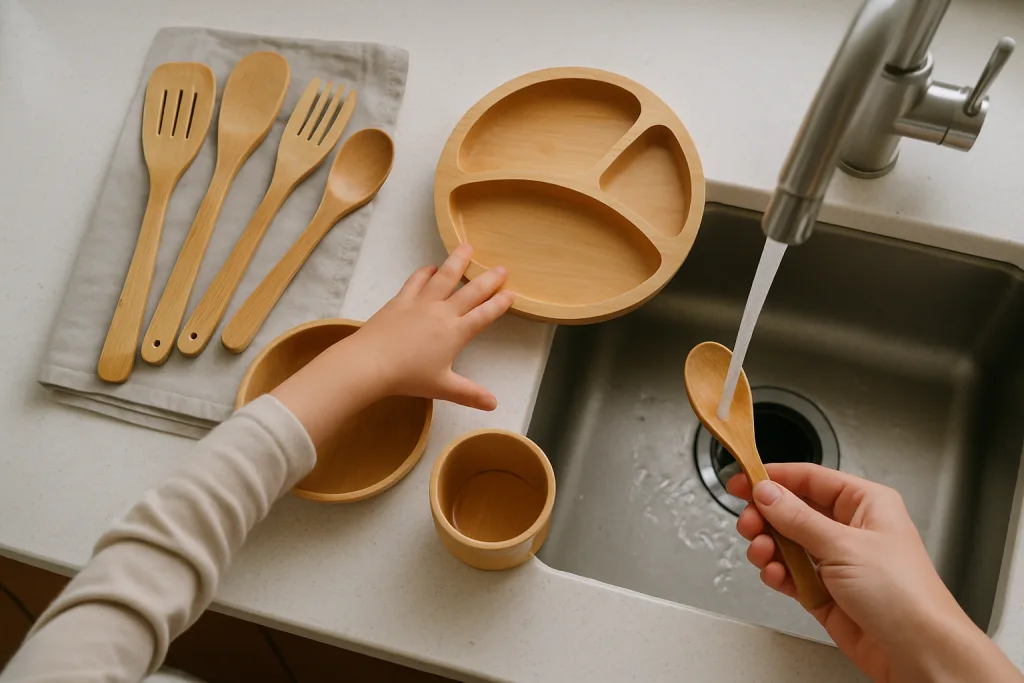
Kids’ bamboo dinnerware, such as plates, cups, and spoons, often features rounded edges and extra-thick walls for added durability. Quality brands use food-contact coatings with low-VOC adhesives to provide extra protection. Bamboo Wood Art applies water-based finishes and tests for chemical migration according to EU and US standards before shipping.
Dishwasher Advice for Children’s Sets
Most children’s bamboo dinnerware should avoid frequent dishwasher cycles. Though coatings resist light wear, repeated wash exposes seams and decorated areas to risk. Hand washing extends product life and prevents surface flaking, especially for decorated items with paint or laser engraving.
Bamboo Utensil Construction: What Makes Them Durable?
Slat Sorting and Lamination
Utensils begin with slat sorting to remove low-density fibers. Next comes lamination under controlled pressure and temperature using low-VOC resins (mostly E0–E1 grade). This creates stable blanks ready for finger-jointing or dowel joinery.
Sanding and Finishing Sequence
After CNC machining and carving, pieces are sanded in sequence (180-240-320 grit) for a flawless finish. Water-based varnish or plant oil follows, enhancing water resistance.
Quality Control and Sourcing
Dimensional tolerance remains within ±0.2mm. FSC or PEFC-certified bamboo is preferred. Bamboo Wood Art includes adhesion and flatness checks in every production run to guarantee performance for B2B buyers and hospitality brands.
Quick-Reference: Bamboo Utensil Care Guide
- Hand wash only. Avoid soaking.
- Dry right after washing—never let sit wet.
- Oil monthly to refresh finish.
- Store away from heat and moisture.
- Check for cracks, chips, and loose joints regularly.
Expert Takeaway: Regular hand washing, quick drying, and routine oiling make bamboo utensils last for years—far longer than disposable plastics or bargain woods.
Bamboo Utensils Dishwasher Safe? Final Verdict
The honest truth: Most bamboo utensils should not go in the dishwasher. Some industrially-coated or UV-finished items can tolerate occasional dishwasher use, but regular cycles lead to rapid surface wear, splitting, and warping. Always check for coating details, and follow care instructions from reputable manufacturers like Bamboo Wood Art.
Bamboo utensils serve well in homes, restaurants, and hotels when treated right. Favor hand washing, keep them dry, and remember—the extra minute spent caring for your utensils pays off with years of durable, sustainable use.
Frequently Asked Questions
Can I put bamboo utensils in the dishwasher occasionally?
It’s best to avoid dishwashers, but a quick cycle may be safe for utensils with industrial coatings—check the manufacturer’s instructions first.
How can I spot if my bamboo utensils have a protective coating?
Look for a glossy sheen; water beads on the surface, and labels mention plant oil, varnish, or food-contact coating. Ask your supplier if unsure.
What happens if bamboo utensils split after washing?
Splitting means fibers and glue lines have broken down. Stop using them for food, as bacteria can enter cracks—replace damaged utensils.
Which finishes are safest for bamboo utensils?
Water-based varnish, plant oils (tung, linseed), and food-contact UV coatings are safe if certified by FDA, LFGB, or similar agencies.
Are bamboo utensils suitable for commercial kitchens?
Yes, with proper maintenance and regular inspection. Choose industrial-grade coatings and inspect for wear monthly for best results.
Can kids’ bamboo plates and bowls go in the dishwasher?
Regular dishwasher use is not advised. Hand wash children’s bamboo dinnerware to keep surfaces intact and safe from flaking or wear.