Understanding Wooden Knife Blocks: Venting & Hygiene
Wooden knife blocks serve as the backbone of many kitchens, keeping blades sharp, safely stored, and within easy reach. But beneath their polished surface lies a critical aspect often overlooked: hygiene. Safe storage depends on the design, material, finishing, and most importantly, how well a knife block manages airflow and moisture. In this in-depth guide, discover how vent channels, slot geometry, coatings, and everyday care routines shape the hygiene of wooden knife blocks for homes, restaurants, and commercial kitchens alike.
The Role of Ventilation in Wooden Knife Block Hygiene

Moisture is wood’s silent adversary. When trapped inside knife block slots, it creates a breeding ground for bacteria and mold. That’s why well-ventilated knife blocks are crucial for long-term hygiene and blade care. Leading manufacturers use strategic vent channels at the base and sides of blocks, promoting airflow and faster drying after each wash. Effective venting minimizes odors, reduces microbial growth, and extends the life of both the block and your cutlery.
Why Vent Channels Matter
Knife blocks with no venting can trap moisture and food particles that linger on knives after cleaning. By integrating longitudinal grooves or CNC-machined vents, brands like Bamboo Wood Art enhance airflow dramatically. Studies show that wood blocks with multiple 4–6 mm air slots along the bottom reduce internal humidity by up to 30%, compared to solid blocks.
Examples of Venting Approaches
- Curved or slanted base vents for swift drainage
- Lateral slots between knife positions
- Laser-engraved patterned openings for both style and function
Common Pitfalls
Poorly vented knife blocks often warp or crack due to moisture build-up. Mold and odors become persistent. Home cooks and commercial chefs risk cross-contamination if knives don’t dry fully between uses. Choosing designs with open, visible venting is paramount for hygiene.
Moisture Control Strategies in Knife Block Design
Controlling moisture starts with the wood selection, extends to manufacturing, and finishes with innovative design. Knife blocks crafted from kiln-dried moso bamboo, solid beech, or European oak typically achieve stable moisture content of 8–12%, limiting shrinkage and swelling. Advanced manufacturers manage moisture with cross-laminated slats and specific joinery techniques, ensuring dimensional stability.
Design Techniques for Dryness
- Angled slots to channel droplets downward
- Anti-warp doweling or mortise-and-tenon assemblies
- Raised rubber feet to lift the block off wet countertops
Material Selection and Its Impact
| Material | Properties | Best Hygiene Use |
|---|---|---|
| Moso Bamboo | Low porosity, fast drying, antimicrobial | High-traffic kitchens, commercial settings |
| Solid Beech | Stable grain, easy to clean, tight joints | Home kitchens, classic knife blocks |
| Walnut/Oak | Dense, resistant to swelling | Premium brands, boutique culinary |
| Bamboo Veneer | Lightweight, cost-effective, smooth finish | OEM/ODM for hotels, restaurants |
Finish Selection for Hygiene
The type of surface finish can determine the cleaning ease and resistance to water absorption. Food-grade coatings, such as low-VOC water-based varnish, natural plant oils (like tung or linseed), and E0/E1 compliant resins, create a barrier against liquids and stains. At Bamboo Wood Art, all exposed surfaces are sealed in a multi-step process—typically 180→240→320 grit sanding, then one or two coats of varnish or oil—to ensure smooth, impervious edges.
Slot Geometry: Key to Hygiene and Usability
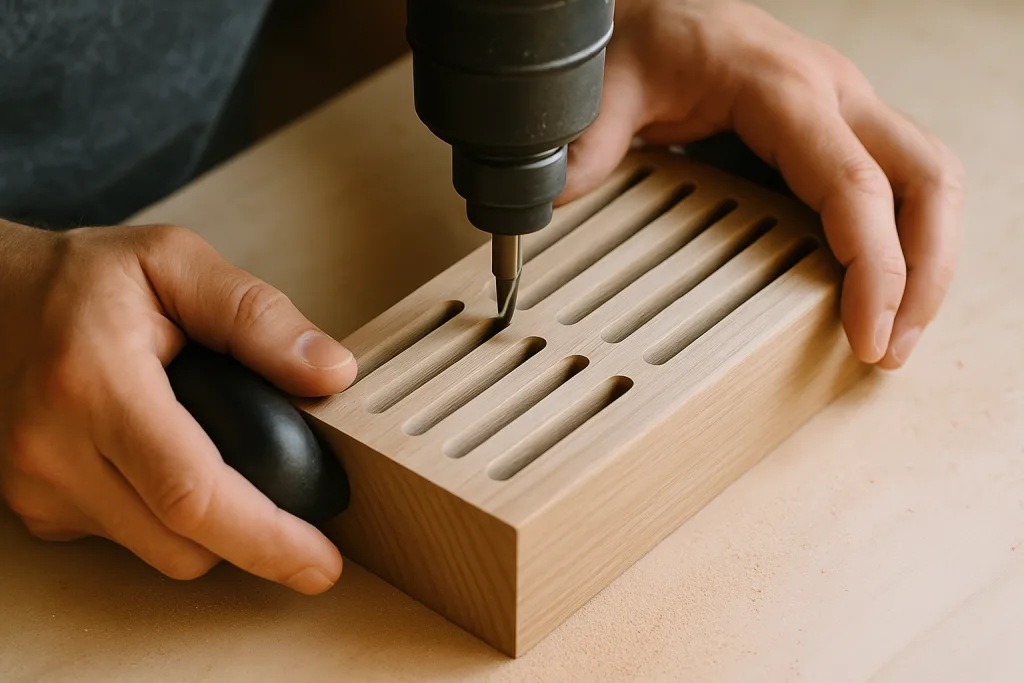
The internal shape of each slot has a direct impact on hygiene. Narrow, deep grooves can trap moisture and crumbs. Modern designs use wider, gently tapered slots and rounded bottoms, reducing surface area for water retention. Laser-guided CNC machining creates precise, burr-free edges, minimizing food catch points.
Smart Slot Designs
- Contoured openings for easy knife removal
- Broad, shallow slots for chef’s knives and cleavers
- Dedicated, micro-vented slots for paring knives and boning blades
Cleaning Access
Knife blocks with modular, pull-apart panels are rising in popularity. Some include removable brush inserts or magnetic strips for complete cleaning. This innovation stems from feedback in hospitality settings, where time and hygiene are at a premium.
Cleaning Routines for Wooden Knife Blocks
Even the best-designed knife block needs regular cleaning to keep it hygienic. Without routine care, blocks can collect dirt, food residue, and moisture, leading to bacterial growth.
Basic Cleaning Steps
- Remove all knives and shake the block upside down over a trash bin to dislodge crumbs.
- Use a thin brush or compressed air to clean inside each slot.
- Wipe exteriors with a damp, not wet, cloth—avoid soaking the wood.
- Let the block air dry upside down for at least one hour before reinserting knives.
Deep Cleaning Tips
For an in-depth clean, use a mild vinegar solution (one part vinegar to four parts water). Rinse lightly, then ensure thorough drying. Never place wooden knife blocks in a dishwasher or soak them in water, as this will destroy protective finishes and joints.
Restaurant Insights
Pro tip: In high-turnover commercial kitchens, schedule monthly deep-cleaning and weekly slot air-drying to comply with food safety standards.
Choosing the Right Finish: Balancing Aesthetics and Hygiene
Finish selection shapes both how a knife block ages and how well it resists dirt and water. Popular choices include water-based lacquers (clear, non-toxic), plant-based oils, and UV-cured topcoats. Food-contact coatings meet FDA and LFGB requirements, ensuring surfaces won’t harbor off-flavors or unsafe residues.
Bamboo vs. Hardwood Finishes
- Bamboo: Carbonized (heat-treated) finishes offer richer tones, greater moisture resistance, and showcase the manufacturer’s attention to environmental impacts.
- Hardwoods: Standard plant oil or UV varnish sealers provide robust long-term protection and accentuate natural grain.
Signs of Finish Failure
Peeling, dullness, or rough patches signal that it’s time to refinish or replace your knife block to maintain hygiene standards. Reliable B2B suppliers like Bamboo Wood Art offer periodic batch testing and custom finish options for OEM/ODM buyers, ensuring uniform quality control.
Warranty Care Inserts: Maximizing Product Lifecycle
High-quality wooden knife blocks often ship with printed care inserts or QR-code guides. These resources educate users on proper cleaning routines, acceptable detergents, finish maintenance, and drying practices. The best OEM/ODM partners include warranty or lifespan extension plans—supporting hospitality brands who depend on safe, durable equipment.
Care Instructions You Can Expect
- Periodic surface re-oiling guides
- Contact details for replacement parts
- QR links for video demonstrations
Warranty Best Practices for Businesses
For restaurant and hotel projects, seek suppliers providing documented care protocols—helpful for staff training and health code compliance. Trusted sources like Bamboo Wood Art offer tailored inserts that blend design with best-practice maintenance tips.
Commercial Applications: Hygiene Standards in Restaurants & Hospitality
In foodservice, guest safety and efficiency take center stage. Commercial knife blocks must not only look elegant on display but also meet strict health codes. Hygienic knife block design—vented bases, CNC-machined slots, sealed finishes, and quick-clean panels—enables operators to pass inspections and reduce replacement costs. Bulk buyers can request FSC/PEFC-sourced bamboo or specific joinery for added stability and durability.
Choosing the Right Partner
Work with established manufacturers offering trackable batch production, food-contact test certifications (like FDA or LFGB), and robust export packaging. Bulk orders benefit from consistent slot geometry and surface finish verification. For B2B clients, the ability to include logo engraving and tailored care inserts transforms wooden knife blocks into long-lasting, branded assets.
Wooden Knife Blocks: Venting & Hygiene
Wooden knife block hygiene extends beyond simple aesthetics. The best blocks marry precise vent channel design, stable moisture control, functional slot geometry, and food-safe finishes—all supported by clear care instructions and robust warranties. From sourcing FSC-certified moso bamboo to applying low-VOC finishes and verifying every slot’s dimension, manufacturers like Bamboo Wood Art set new standards in cleanliness and craftsmanship. Combined, these factors produce blocks that look sharp, protect blades, and keep kitchens safe—whether in a busy restaurant or at home.
Frequently Asked Questions
How often should I clean my wooden knife block?
You should clean your wooden knife block every two to four weeks, removing debris from slots and wiping all surfaces; deep clean monthly for best hygiene.
Can I wash a wooden knife block in the dishwasher?
No, dishwasher heat and water will damage the wood, finishes, and glued joins; always clean wooden knife blocks by hand and air dry thoroughly.
What’s the safest finish for food-contact knife blocks?
Safe options include water-based varnishes, plant oils like tung or linseed, and finishes compliant with FDA or LFGB food-contact standards.
Why is venting important in knife block design?
Venting allows air to circulate inside the block, reducing moisture buildup, preventing mold, and improving overall hygiene over time.
How can I prevent mold inside my knife block?
Always dry knives completely before storage, use blocks with vent slots, and clean slots regularly to discourage mold growth and odors.
What material is best for hygienic wooden knife blocks?
Moso bamboo and solid beech are popular for their stability, antimicrobial traits, and fast drying, making them ideal for hygienic knife blocks.