Solid Wood vs Laminated for Kitchenware
Choosing between solid wood and laminated board is crucial in kitchenware design. The right material affects strength, stability, food safety, long-term value, and even your brand message. Understanding the differences can save you time, money, and headaches—while helping your business deliver high-quality, durable products.
Understanding Solid Wood and Laminated Board
Solid wood refers to single, unjoined pieces of timber, such as beech, oak, ash, or walnut. These are cut directly from logs, then dried and finished. Laminated boards, sometimes called engineered or glued wood, are made by gluing together multiple thin wood slats, veneers, or boards, often crossing grain direction for better strength and stability. Moso bamboo boards and birch plywood are typical examples seen in kitchenware and food displays.
Strength, Weight, and Dimensional Stability
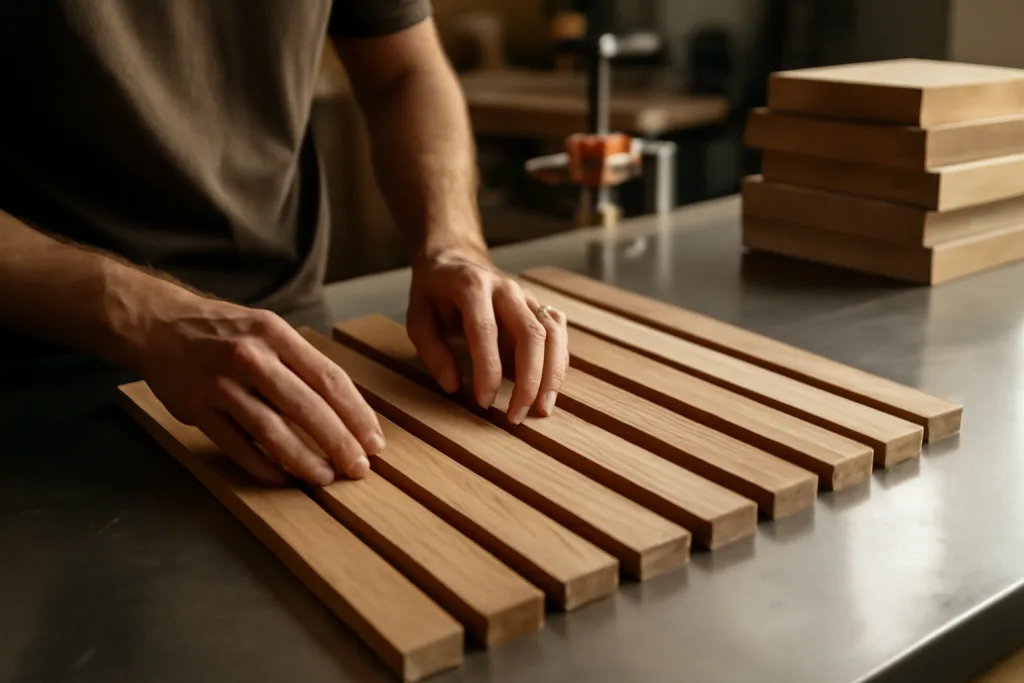
One of the biggest debates in the solid wood vs laminated board conversation is strength versus stability. Solid woods, especially dense species like oak and walnut, excel in compressive and tensile strength. This makes them popular for chopping boards, cutting blocks, and sturdy trays. However, they are sensitive to changes in humidity and temperature. Over time, solid wood can warp, crack, or cup if not properly kiln-dried (target moisture content: 8–12%).
Laminated boards solve many stability issues. By gluing thin layers in alternating directions, engineers reduce the impact of wood movement. Cross-lamination in bamboo or plywood keeps panels flat and resists warping, even in steamy kitchens or under hot service platters. The weight of laminated boards depends on the core: core-ply with lighter wood offers a lightweight feel, while full-edge lamination (as in end-grain blocks) produces a hefty, professional touch.
Material Properties Table
| Material | Strength | Stability | Weight | Repairability | Possible Uses |
|---|---|---|---|---|---|
| Solid Wood (Oak, Beech, Walnut) | Very high | Moderate | Heavy | Excellent | Chopping boards, trays, handles |
| Laminated Board (Bamboo, Ply) | High | Excellent | Varies | Good | Serveware, bread boards, utensils |
| Laminated Veneer (MDF/Birch Core) | Moderate | Excellent | Light-Medium | Fair | Panels, displays, backing |
Adhesives, Food Safety, and E0/E1 Compliance
When considering kitchenware—especially products for food prep or food contact—adhesive choice matters. Laminated boards use resins to bond layers. The best manufacturers, like Bamboo Wood Art, specify low-emission adhesives meeting E0 or E1 standards. E0 refers to the strictest threshold for formaldehyde emissions, making it ideal for health-focused brands and export compliance (learn more about E0/E1 standards).
Is laminated wood food safe? That depends on the combination of adhesives, finishes, and intended use. Industrial food-contact products require adhesives locked inside multi-layer construction, and end grain is sealed under food-grade, low-VOC coatings—such as water-based varnishes or plant oils (like tung or linseed). This limits potential migration of compounds. For peace of mind, look for products tested under FDA or LFGB regulations.
How Manufacturers Ensure Food Safety
- Kiln drying and precision joinery limit gaps that might trap bacteria.
- Hot-press lamination tightly seals adhesive lines inside the core.
- Finishing with food-contact coatings (water-based, oil, or UV-cured varnish).
- Regular adhesion and migration testing by third-party labs.
- Choosing FSC or PEFC-certified woods for traceable, responsible sourcing.
Expert Takeaway: For high-turnover hospitality, food-safe laminated bamboo or cross-laminated beech offers long-term flatness, easy maintenance, and eco-friendly appeal.
Solid Wood vs Laminated for Kitchenware
Now, let’s focus on the main theme: where does each material win? Solid wood gives a sense of premium craft and natural variety. Each board has unique grain. Repairability is excellent—you can sand and refinish solid pieces many times. However, swelling, shrinkage, and splitting can occur, especially in humid kitchens or after repeated soaking.
Laminated boards shine in busy, high-wear environments. Their cross-grain or veneered construction resists movement, so boards stay flat year after year. Brands serving volume markets—like hotel buffets or restaurant chains—prefer laminated for its consistency. It’s easier to make large panels and complex shapes using CNC machines, as glue lines limit splitting at thin extremities. OEMs like Bamboo Wood Art leverage precision lamination, advanced edge profiling, and automated sanding sequences (180→240→320 grit) to deliver sleek, robust kitchenware ready for retail or B2B programs.
When to Choose Each Material?
- Solid Wood: Small-batch, luxury, or artisanal lines where unique look and custom finishes are prized.
- Laminated Board: High-volume, uniform products; moisture-prone locations; branding that emphasizes sustainability or technical performance.
Cost: Upfront, Maintenance, Total Value
Cost varies by region, species, thickness, and finish. Solid wood materials—especially from slow-grown European or North American forests—are more expensive per unit due to limited yield and longer drying (4–8 weeks). Laminated board can be engineered to make use of fast-growing species (like Moso bamboo), offcuts, or thinner slats, dramatically improving raw material utilization.
Production is streamlined with lamination. Automated presses, finger-jointing, and even waste slat recovery minimize labor and optimize costs, especially at higher minimum order quantities (MOQs). For businesses, this brings shorter lead times and better price predictability. Over the product life cycle, laminated kitchenware may be replaced less often, due to better resistance to warping, and more consistent appearance across batches.
Repairability and Longevity
Repairability is a strong suit for solid wood. Scratches and stains can be sanded down and resealed, making these boards ideal for applications where appearance must be kept flawless with little waste. Over time, thicker solid boards may develop character that owners cherish.
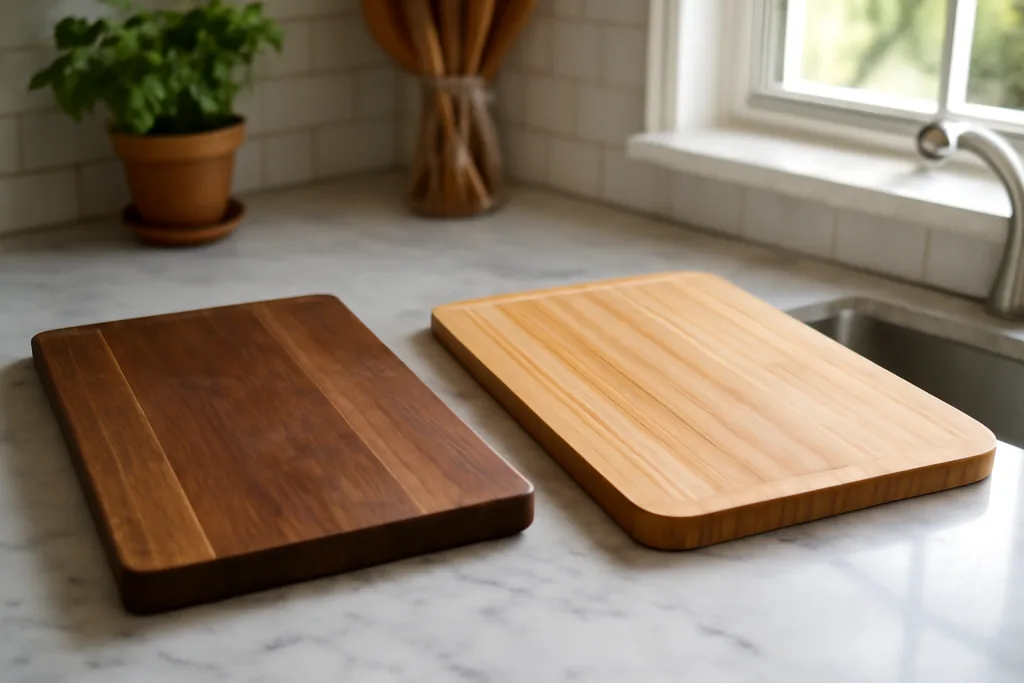
Laminated boards, while tough, have modest repair limits. Sanding too deeply risks exposing adhesive joints or breaking through veneer. However, well-made laminated bamboo or cross-laminated beech will withstand hundreds of cycles of use in professional kitchens, lasting years before replacement is required. Edge wear, if it occurs, can sometimes be disguised with matching plant oils.
Sustainability and Sourcing
Bamboo Wood Art and leading OEMs prioritize sustainable sourcing: FSC and PEFC-certified woods, with full chain-of-custody documentation. Laminated products maximize resource efficiency by using smaller slats, veneers, and previously less-usable cuts. Fast-growing bamboo is a low-footprint, renewable choice, especially for eco-conscious brands or green hospitality projects.
Additionally, cold or hot lamination can use adhesives with very low VOC emissions, supporting LEED and BREEAM green building standards. Export-ready packaging is robust and designed for drop resistance, minimizing damage in transit.
Finish Options and Surface Treatments
Solid wood and laminated kitchenware both perform best when finished with durable, food-safe coatings. Common options include clear water-based varnish, natural plant oils (tung, linseed), or advanced UV-cured finishes for professional-grade wear resistance. Some clients request laser engraving or CNC-carved branding on serving boards, which is more easily customized on laminated boards due to their uniformity and reduced risk of splintering along wild grain directions.
- Water-based varnish: Transparent, low-odor, resists stains, suitable for food contact (when certified).
- Plant oil finish: Deepens grain, renews with reapplication, offers a more natural look.
- UV-cured: Fast to apply, very durable, found in commercial serviceware.
Which Material for Which Application?
Your choice should match not just look or cost, but application performance. For chef-grade cutting boards, solid end-grain walnut or beech offers knife-friendly texture and luxury feel. For hotel breakfast buffets or retail cheese boards, laminated bamboo or beech provides affordable elegance, easy cleaning, and years of service without cupping.
In summary, solid wood projects prestige, easy repair, and distinctive grain. Laminated boards bring technical excellence, low maintenance, and scale economics. Crafted with precise adhesives, finishes, and joinery, both offer benefits—it’s about business goals, usage, and customer preference.
Frequently Asked Questions
Is laminated wood food safe for kitchenware?
Laminated wood is safe for food use if bonded with E0/E1-rated adhesives and sealed with certified food-contact finishes, minimizing any migration risk.
Does solid wood last longer than laminated boards?
Solid wood can last decades with care and refinishing, but laminated boards remain stable and attractive under heavy, humid use, minimizing warping risk.
Which is heavier, solid wood or laminated kitchenware?
Solid wood items tend to be heavier, especially in hardwoods; laminated boards can be engineered for lighter but stable builds based on core and thickness.
Are laminated kitchen boards more sustainable?
Laminated boards often use fast-growing species or recovered slats, maximizing resource use and supporting green certification like FSC or PEFC.
Can you repair deep scratches in laminated kitchenware?
Superficial scratches can be buffed out, but deep sanding may expose glue lines; solid wood is easier to refinish completely without damage risk.
What are E0 and E1 adhesives, and why do they matter?
E0 and E1 rates indicate very low formaldehyde emissions, ensuring health and food safety—essential for kitchenware used in restaurants or homes.