Bed Trays with Folding Legs: Hinge Durability & Load
In bedrooms, hotels, and hospitals, bed trays with folding legs offer convenience and style. These trays are often made with bamboo or solid wood, pairing elegance with everyday practicality. But beneath the surface, their true value lies in smart design—especially when it comes to hinge durability, load capacity, and safe handling. In this guide, we reveal how crafted details and robust manufacturing make all the difference, from hinge selection and load testing to flawless packaging for global delivery.
Why Choose a Folding Bamboo Bed Tray?
Bamboo bed trays stand out for their sustainable material, warmth, and visual appeal. Bamboo grows fast, absorbs carbon, and offers tough fibers for strong, lightweight structures. When engineered correctly, bamboo trays with folding legs balance environmental values and commercial needs. But what makes a great bamboo bed tray? It comes down to selecting the right hinges, joining methods, and finishing touches.
Key Components: Hinges, Legs, and Load Distribution
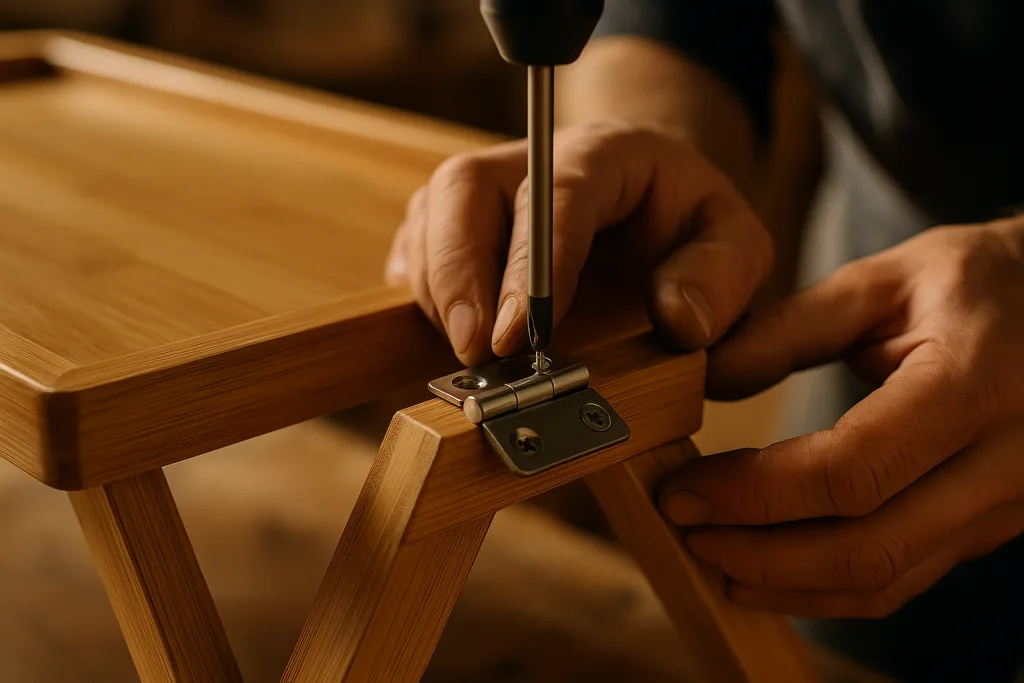
The hinges of a folding bamboo tray define both its usability and lifespan. High-cycle, rust-resistant hinges, often made from stainless steel or solid brass, are standard. But quality is more than just metal type. Hinge design must spread stress across the leg joint, resisting not only load but also repeated opening and closing—typically tested to over 10,000 cycles. Proper hinge placement helps prevent tray wobble and accidental collapse, key for safe in-bed use.
Main Types of Hinges for Bed Trays
- Concealed hinges: Hidden for a cleaner look, these reduce snag hazards but need precise CNC machining for fit.
- Surface-mounted hinges: Exposed but easy to inspect and replace, often paired with reinforced bamboo or hardwood support blocks.
- Friction hinges: Offer set angles and lower risk of accidental closing; ideal for trays handling laptops or small appliances.
Leg Joint Design and Secure Fixings
Tray legs bear the load. Using Moso bamboo—recognized for fiber strength and low shrinkage—improves durability. Manufacturers may opt for cross-laminated bamboo strips to boost stability. Key joinery includes dowel-insert reinforcements and hardwood backing for screw anchoring. Leg ends are often rounded and rubber-padded to prevent slipping on bedsheets.
Material Choices: Bamboo vs. Solid Wood and Hybrids
Choosing the tray’s main material impacts everything from strength to style. Bamboo and wood each bring unique benefits. The table below compares popular options for bed trays with folding legs:
| Material | Key Properties | Recommended Applications |
|---|---|---|
| Moso Bamboo (solid/laminated) | Lightweight, compressive strength >80 MPa, 8–12% moisture, sustainable | Premium home use, hotels, food-safe trays |
| Beech/Oak Wood | Strong, dense (700–800 kg/m³), classic look, less warp-prone | Upscale dining, heavier loads, corporate gifting |
| Bamboo Plywood/Veneer | Stable, customizable thickness, eco-friendly, CNC-friendly | OEM/retail, painted/engraved designs, displays |
Finishing Touches that Matter
Quality finishing protects trays from stains and moisture. Many makers, like Bamboo Wood Art, use E0/E1 grade adhesives for lower VOC (volatile organic compound) emissions. Finishes range from food-safe plant oils to water-based UV lacquers, aiming for smooth touch (achieved through sanding up to 320-grit) and long-term hygiene.
Bed Trays with Folding Legs: Hinge Durability & Load
Hinge durability and load tolerance are the heart of a functional folding tray. Every hinge must withstand daily repeated movements. Manufacturing R&D invests in joint optimization and material overlays for critical wear areas, using testing rigs to mimic real usage. The best trays handle loads of 5-10 kg (laptops, breakfast, books) and maintain flatness under weight.
Load and Cycle Testing Protocols
- Cycle Testing: Hinges are flexed over 10,000 times with at least 6–8 kg atop the tray, simulating years of use.
- Angle Resilience: Legs are locked at standard height (20–28 cm off the bed), checked for safe, stable splay (12–20°) to avoid tip-overs.
- Impact Drop Test: A tray loaded with 7 kg is dropped 20 cm onto a firm surface; joints, hinges, and tray bed are examined for cracks or looseness.
- Flatness & Warp: After extended loading, tray flatness is verified—max 2 mm deviation—to prevent items from sliding during use.
Leading brands like Bamboo Wood Art integrate moisture conditioning and cross-lamination techniques to keep bamboo trays dimensionally stable across climates. All trays must pass adhesion and fastener pull-out checks before leaving the factory.
Safe Angles and Ergonomics for Bed Tray Design
Comfort and safety matter as much as load. Tray legs are set at specific outward angles—typically 12 to 20 degrees—to ensure stability on uneven bedding. Handle cutouts are rounded and sanded (180→240→320 grit) for comfort. Edges receive a 2–3 mm radius for safer handling.
Preventing Accidental Collapse
- Use of detent or friction hinges to hold legs in open/closed positions.
- Secondary locking bolts or snap-on braces on commercial or hospital trays.
- Non-slip pads fixed to leg bases guard against skidding on smooth sheets and duvets.
User-Friendly Height and Surface Design
Standard heights range from 20–28 cm, suitable for most beds. Surface coatings are food-contact certified where relevant (FDA guidelines), making these trays safe for serving. Ventilation holes or carved handles prevent food steam buildup.
OEM/ODM Considerations: Custom Folding Bamboo Tray Production
Businesses and hospitality brands seeking OEM trays expect more than aesthetics. Core requirements include:
- Material Sourcing: FSC or PEFC-certified bamboo/wood for eco-conscious projects.
- Precision Fabrication: CNC-cut slots for hinges and dowels, tolerance control within ±0.5 mm.
- Custom Branding: Options for laser-engraved logos or UV-printed artwork.
- B2B Scaling: Flexible MOQ (minimum order quantity), robust packaging, and just-in-time delivery capabilities.
Bamboo Wood Art is noted for combining large-scale production with artisan detail, ensuring trays excel in both hospitality and retail settings.
Finishing, Quality Checks & Global Packaging Solutions
Finishing stages matter. Multiple sanding steps (often 180, 240, then 320 grit) yield a silky surface. Food-contact trays receive an extra step: water-based or plant oil coating that seals but lets bamboo breathe. Quality inspectors check flatness, edge profiling, and fastener tightness. Defective pieces are separated after batch inspection—another nod to robust process control.
Packaging to Prevent Transit Damage
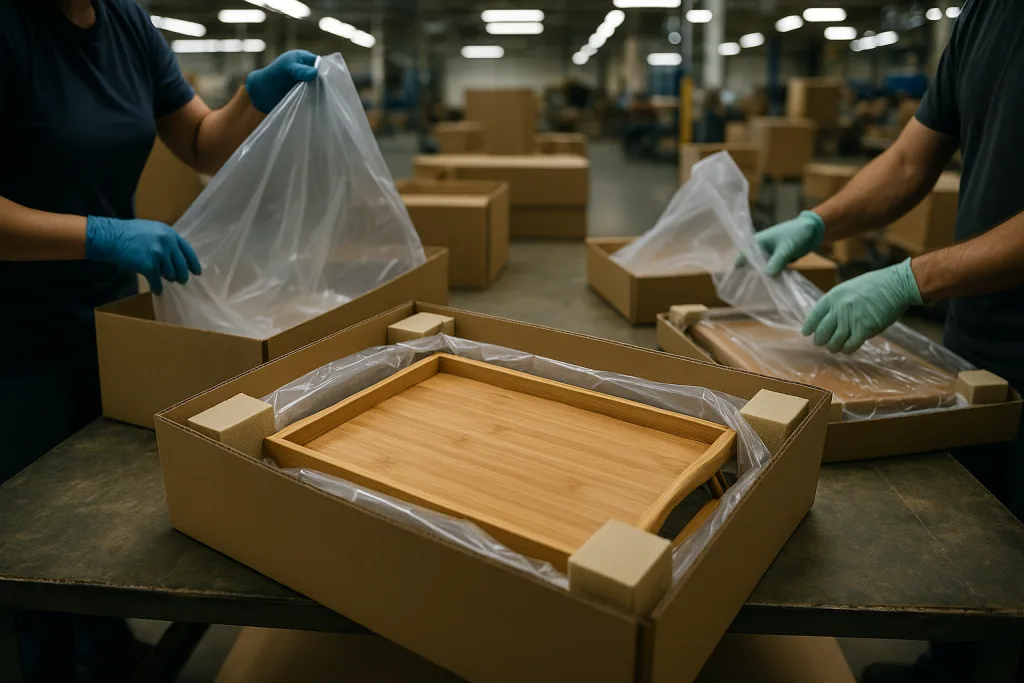
Global shipment demands resilient packaging. Typical solutions include:
- Cushioned sleeves or foam inserts to protect hinges from hard knocks en route.
- Double-wall corrugated cartons, with trays fully folded to minimize shipping volume.
- Moisture barriers and desiccant packs inside export boxes, crucial for humid or long-haul routes.
- Edge guards plus clear tray-handling pictograms to reduce mishandling in distribution centers.
Key export markets demand drop-tested and crush-resistant cartons, ensuring trays look flawless on arrival—ready for guest rooms, showrooms, or direct-to-consumer gifting.
Top Use Scenarios for Bed Trays with Folding Legs
Beyond the home, folding bamboo trays deliver value for hotels, hospitals, and corporate settings. Some key uses:
- Breakfast in bed—serving food or drinks safely atop delicate fabrics.
- Mobile workstations—supporting laptops, tablets, and paperwork for remote workers.
- Guest amenities—offering high-end service in boutique hotel suites.
- Branded gifting—customized trays enhancing client loyalty and brand presence.
- Healthcare trays—lightweight, hygienic, and easy to sanitize between uses.
The blend of function, form, and sustainability sets folding bamboo trays apart.
Choosing the Right Folding Bamboo Tray: A Quick Checklist
- Check for certified bamboo (FSC/PEFC) and food-safe coatings.
- Confirm hinge and joint durability—look for testing stats or manufacturer warranties.
- Assess load rating, especially for commercial or multi-user environments.
- Review packaging specs for global shipment if buying in bulk.
- Request samples with full finishing and brand-building touches—laser engraving, custom cutouts, or premium boxes.
Expert Takeaway: “Investing in engineering-tested, sustainably finished trays means fewer returns and higher client satisfaction—whether for home, hotel, or corporate gifting.”
Frequently Asked Questions
How much weight can a folding bamboo bed tray support?
Most quality bamboo bed trays support 5-10 kg, enough for meals, books, or small devices, thanks to reinforced hinges and strong joinery.
What type of hinges are best for folding leg trays?
Stainless steel or brass friction hinges are ideal, as they resist rust and hold legs securely, even after thousands of open-close cycles.
How are bamboo trays tested for durability?
Manufacturers use cycle tests (10,000+ openings), load tests, and drop tests to simulate years of daily use before shipping trays to customers.
Is bamboo better than wood for folding trays?
Bamboo is often lighter, sustainable, and just as strong as hardwood, making it a smart choice for folding trays with frequent use.
How can I prevent hinges from loosening over time?
Select trays with reinforced joint blocks and consider retightening screws annually, especially with frequent commercial or hotel use.
What packaging protects folding trays during shipping?
Foam inserts, double-wall cartons, and moisture barriers help keep bamboo trays safe from damage during long transit journeys.