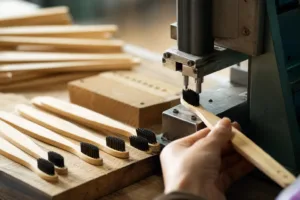
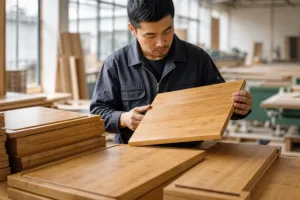
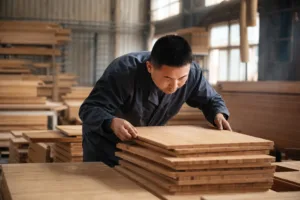
Stunning First Impressions: The Power of Custom Bamboo Serviceware
Your café’s atmosphere is not just shaped by décor and lighting—it extends to every detail your guests touch. Branded bamboo trays and menu boards capture attention, elevate presentation, and reinforce your café’s identity from the very first glance. More than simple serving pieces, they become tactile brand ambassadors that connect sustainability, utility, and visual appeal.
Demand for bamboo trays and menu holders is rising, with hospitality brands valuing durability, eco-friendliness, and customizable design. Integrating your logo or artwork through laser engraving, CNC carving, or premium print finishes makes each tray or menu clip an extension of your story. High-quality manufacturing ensures these branding touches endure daily cleaning and heavy service.
The Art & Science of Bamboo Tray Branding
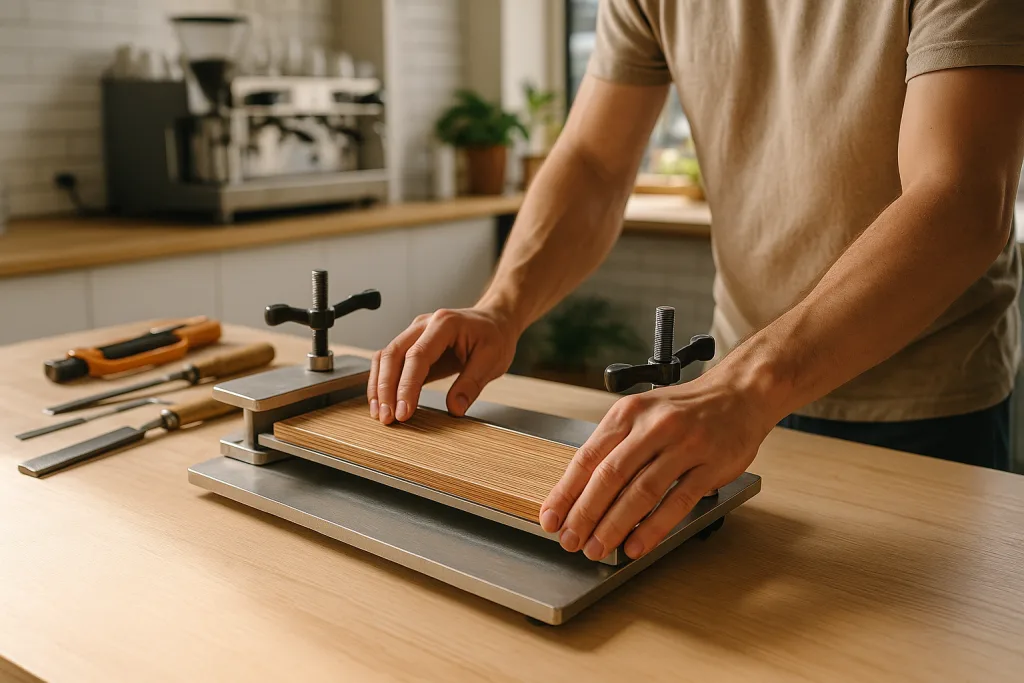
Every branded bamboo tray starts with careful material selection. Moso bamboo, prized for its strength and fine, uniform grain, is the industry standard. It undergoes kiln drying to reach 8–12% moisture, ensuring stability and limiting warping under busy café conditions. Manufacturers like Bamboo Wood Art rely on precision lamination—slats are sorted by grain and color, then bonded with low-VOC E1-rated adhesives for a premium finish and food safety.
Logo placements offer flexibility. Laser engraving is popular for crisp, permanent detail on tray corners or across menu board faces. For a bold effect, CNC carving adds tactile depth. Color printing and branding badges let you highlight your logo in vibrant or minimalist styles. Placement matters: top edges for subtlety, center for boldness, or side rails for discreet elegance.
Finish Matters: Durability and Cleaning Endurance
Cafés demand serviceware that handles daily wear, repeated washing, and contact with food and liquids. Industry best practice uses food-safe, water-based varnish or UV-cured coatings, tested for 500+ cleaning cycles without loss of logo fidelity or surface integrity. Alternate finishes include plant oils—such as tung or linseed—for a natural sheen, though these require more regular upkeep. For premium longevity, finishes are applied in multiple coats, each sanded between with grits from 180 to 320 for a silky, resistant surface.
Comparative Table: Branded Tray & Menu Board Materials
| Material Type | Main Properties | Best Uses | Finish Options | Durability |
|---|---|---|---|---|
| Moso Bamboo Solid | Dense, sustainable, warp-resistant | Trays, menu holders, signage clips | UV/water-based varnish, laser engraving | 500+ cleaning cycles |
| Bamboo Veneer Ply | Stable, lighter, cost-effective | Menu boards, clip-on signage | Color print, oil finish | 300–400 cycles |
| Beech/Oak (Insert) | Strong, classic grain, heavier | Prestige tray inlays, clips | Oil/varnish, inlaid badge | 400–500 cycles |
| Cross-laminated Bamboo | Maximal flatness, anti-warp | Large-format menu boards | UV finish, deep engraving | 600+ cycles |
Branding Your Café with Bamboo Trays & Menu Boards
Choosing the right branded bamboo serviceware is an investment in your café’s identity. Trays and menu holders set the aesthetic tone for guests—whether you aim for modern minimalism, rustic warmth, or bold urban chic. Bamboo’s tactile grain and renewable source signal a commitment to sustainability, which today’s diners value.
Menu boards and trays offer ample space for creative logo placement. Some cafés opt for understated edge engraving, while others favor full-surface brand art. Add-ons like branded menu clips or laser-cut signage let you highlight upsell opportunities, such as daily specials or featured desserts. Bamboo Wood Art provides OEM/ODM flexibility, allowing your brand expression to come alive through intricate joinery, custom inlay, or even two-tone color accents to match your visual theme.
Popular Logo Placement Strategies
- Corner Engraving: Neat, subtle, ideal for minimalist cafés.
- Centerpiece Branding: Large format logo, suits bold and modern spaces.
- Edge or Rail Markings: Understated; blends into the tray silhouette.
- Clip-On Menu Signage: Highlights up-sell info or café values at eye level.
Finish Choices & Maintenance Tips
- Choose water-based or UV-cured varnish for maximum durability and safe food contact.
- Opt for natural plant oil if you prefer a matte, organic look—just plan biannual re-oiling for optimal performance.
- Test logo placement under cleaning cycles to ensure no color bleed or fading after 500 washes.
- Use edge rounding and fine sanding to reduce snag risk and deliver a premium hand-feel.
Logo Application Techniques for Maximum Impact
The method you choose should balance visual style, touch, durability, and budget.
Laser Engraving
Precise and permanent, laser engraving uses focused beams to etch your logo directly onto bamboo surfaces. This technique maintains sharp lines under heavy cleaning. Depth can be tailored—deeper grooves for emphasis, lighter etching for subtlety. CAFÉ owners often select dark carbonized bamboo as an engraving base for enhanced contrast.
CNC Carving
CNC (computer numerically controlled) carving machinery enables 3D effects and layered branding. Panels pass through sanding, then routers carve designs down to 3–5mm depths. CNC work is featured on menu boards or trays where tactile branding matters and high-end perception is needed.
Eco-Friendly Print Transfer
For full-color logos or graphics, eco-safe UV print or food-safe decal transfer can bond vivid images to you tray or board. Multiple coats of varnish lock in the print beneath a protective surface. This is best reserved for light-use items or for menu signage, rather than high-abrasion trays.
Finishing Touches: Edges, Joinery, and Custom Add-ons
Great bamboo trays and menu holders stand out through build quality. Mortise-and-tenon or concealed dowels ensure lasting joints. Edge profiling—round, chamfered, or custom shapes—boosts both comfort and looks. Bamboo Wood Art employs multi-stage sanding, progressing from 180 to 320 grit to remove splinters and deliver a glass-smooth feel.
For the exhibition of specials or barista picks, consider integrated menu card slots, magnetic clips, or removable signage. These details help boost average ticket size and streamline service. Some brands employ double-sided menu boards: one side for daily menus, the other showcasing desserts or beverages. This practical innovation cuts paper waste and lets servers upsell naturally.
Quality & Safety Certifications
Leading suppliers source FSC-certified bamboo and use adhesives complying with E0/E1 emission standards for good indoor air quality. If trays come into direct food contact, verify that finishes are FDA or LFGB compliant for peace of mind. Accurate joinery limits gaps where moisture collects, fighting warping and microbial growth.
Optimizing Café Photography with Branded Bamboo Displays
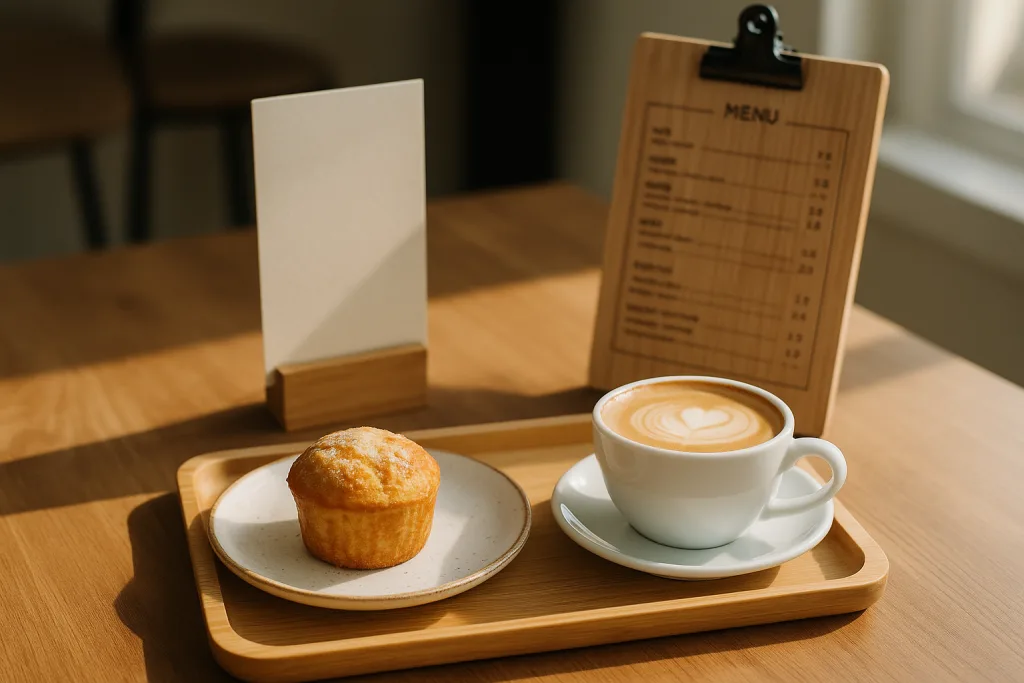
Sharing your artistry on social feeds drives foot traffic. A smart café photo setup elevates your brand and makes every post count. Arrange drinks, pastries, and menu boards on clean, well-lit bamboo trays. Natural side lighting works best—use a wide aperture (f2.8–f4) for soft focus backgrounds. Angle trays or boards diagonally to guide the viewer’s eye toward your logo. Add props like linen napkins or small vases for inviting lifestyle shots. Shot with purpose, your bamboo branding will naturally draw online followers and guests alike.
Expert Takeaway: “Thoughtful logo placement and durable finishes are key to lasting, high-impact bamboo branding in the café scene. Regular cleaning tests, attention to edge finishing, and integration of up-sell signage transform simple trays and menu holders into memorable brand touchpoints.”
Upselling with Branded Menu Clips & Signage
Functional add-ons like bamboo menu clips and signage offer more ways to express your brand—and increase sales. Laser-etched arrow clips or platter tags draw instant attention to featured products like pastries or signature drinks. Consistent use of your logo keeps branding cohesive across every customer interaction. Menu clips also make it easier to update specials or seasonal items without reprinting full boards or sheets, saving cost and reducing waste.
Practical Sourcing & Specification Tips
When ordering branded bamboo trays or menu holders for your café, share your design files in vector format (DXF, AI, PDF) for clean, sharp results. Specify your preferred bamboo type (e.g., natural, carbonized, cross-laminated) and your finish preference (varnish or plant oil). Discuss dimensional tolerances—Bamboo Wood Art, for example, maintains ±0.5mm for flatness and fit. For export or multi-location rollouts, request robust shrink or carton packaging for transit protection.
Consider minimum order quantities (MOQs), which typically start at 50 units but can be customized for large chains. Lead time for custom branded products ranges from 25 to 45 days, including sampling, logo mockups, and approval processes.
Comparing Bamboo Menu Holders & Tray Branding Options
Before choosing, weigh the pros and cons of each branding method. Laser engraving excels in durability, especially for high-use trays that undergo regular washing. CNC carving impresses with its physical depth and premium feel but can cost more. UV print offers brilliant color reproduction for signage and light-use boards; however, frequent washing may fade the print over time.
Summary Table: Branding Methods & Performance
| Branding Method | Visual Effect | Cleaning Durability | Best For |
|---|---|---|---|
| Laser Engraving | Crisp, precise lines (mono-color, textured) | Excellent (no fading after 500+ cycles) | Trays, menu boards, clips |
| CNC Carving | 3D texture, premium look | Very Good (holds up with deep finishes) | Prestige menu boards, tray inlays |
| UV Print | Full color, vibrant, photo effects | Fair (best for signage, less on trays) | Display boards, up-sell signs |
Bamboo Tray Branding for Upscale Identity
Bamboo tray branding enhances perceived value and guest loyalty. Whether you run a local patisserie or a high-volume café, consistent branded serviceware shows pride in presentation. A thoughtful blend of logo placement, durable finish, and practical signage options leads to more repeat customers and higher check averages. When ordering from skilled manufacturers like Bamboo Wood Art, you unlock design support, reliable quality control, and sturdy B2B fulfillment with sustainability in mind.
Case Example: Café Rollout Success
One boutique coffee chain introduced cross-laminated bamboo menu boards with double corner engraving and custom metal clips. After six months, boards showed no logo wear despite daily wiping. Upsell signage—neatly clipped with branded bamboo arrows—helped push specialty pastries, resulting in a 14% rise in dessert sales. Social posts showcasing their branded serviceware attracted new customers seeking quality and eco-friendly values.
Frequently Asked Questions
How do I clean branded bamboo trays without damaging the logo?
Use a damp cloth and mild detergent. Most laser-engraved or varnished logos with quality finishes withstand regular wiping and light dishwashing.
Which logo application method lasts longest for café use?
Laser engraving endures best. Its etching resists fading and abrasion through frequent cleaning cycles, making it ideal for high-traffic trays and menu holders.
Can I use colored branding or full-color logos on bamboo trays?
Yes. UV printing and food-safe decals allow for bright colors and detailed graphics, especially suited for menu boards and signage. On trays, use durable clear topcoats for protection.
What bamboo finishes are safest for food contact?
Water-based varnish and plant-derived oils (like tung or linseed) are food-safe choices commonly used on serving trays. Confirm FDA or LFGB compliance for your market.
How low can minimum order quantities (MOQs) be for custom trays?
MOQs typically start at 50 units, but some manufacturers like Bamboo Wood Art may offer flexibility for larger chain rollouts or sample runs before full orders.
What’s the lead time for branded bamboo tray or menu board production?
Lead times for branded bamboo café pieces usually range from 25 to 45 days, including artwork approval and finishing stages.