Getting Started: Exporting Wooden Goods
Exporting wooden goods is a gateway to international markets, but it comes with unique rules. Understanding the correct HS codes (Harmonized System codes) for your wooden products, meeting ISPM-15 requirements for pallets and crates, and gathering flawless documentation are vital steps. These rules protect global forests from pests and help you avoid customs delays or fines. Whether you make kitchen boards, decorative frames, or supply finished parts to hospitality brands, this guide will walk you through every compliance detail you need.
Exporting Wooden Goods: HS Codes & ISPM-15
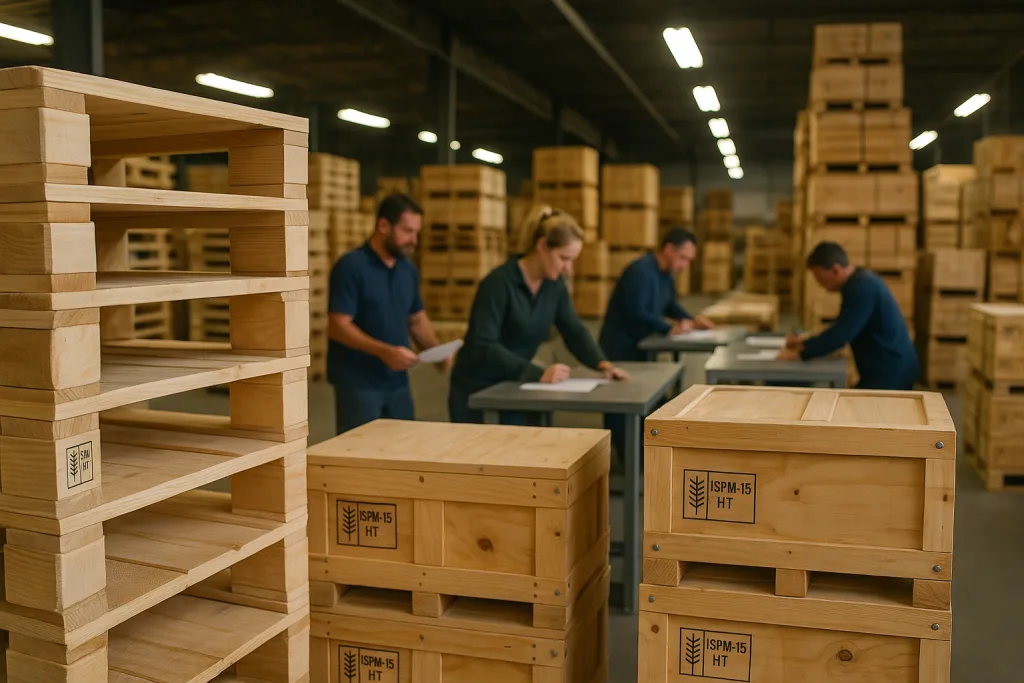
Every wooden export starts with two pillars: classifying your product for the correct HS code and meeting ISPM-15 for any packaging wood. The right codes drive your duty costs, entry eligibility, and paperwork. ISPM-15 prevents the spread of forest pests through treated packaging. Together, these rules form the backbone of legal and efficient wood product shipments worldwide.
Why HS Codes Matter
The Harmonized System (HS) code is a six-digit number used by customs offices around the world to identify every product. For wooden goods, using an inaccurate code can result in customs holds, wrong tariffs, or even seizures. Avoid surprises by learning HS code basics and how they apply to your products.
What is ISPM-15?
ISPM-15 stands for International Standards for Phytosanitary Measures No. 15. It’s a global rule requiring all solid wood packaging—like pallets, crates, and dunnage—to be heat treated and stamped before exporting. This protocol kills insects and diseases that can travel on wood, keeping native forests safe. Non-compliant shipments may be rejected or destroyed at foreign ports.
HS Code Examples for Common Wooden Products
Using the proper HS code ensures a smooth journey through customs. Here are key categories for typical wooden exports handled by manufacturers like Bamboo Wood Art, including boards, utensils, frames, and more.
| Product Type | HS Code (6 digit) | Use Examples | Main Duty Factors |
|---|---|---|---|
| Cutting Boards | 4419.00 | Kitchenware (bamboo, wood, acacia) | Purpose (household), finish |
| Serving Trays | 4419.00 | Café, hotel, home trays | Shape, finish, intended use |
| Utensils (spoons, spatulas) | 4419.00 | Kitchen tools, gifts | Food-contact safety, finish |
| Photo Frames | 4414.00 | Décor, retail, gifting | Material, adornment |
| Bamboo Panels & Boards | 4412.99 | Furniture, displays, slats | Layer type, glue, density |
| Packaging Boxes | 4415.20 | Gift, wine, display cases | Joinery, finish |
| Pallets, Crates | 4415.20 | Shipping support | Certification (ISPM-15) |
Tips for Assigning Your Product’s HS Code
- Material first: Bamboo, solid wood, wood composite, and veneer can change classification.
- Function counts: Serving, storage, or decorative use may mean different codes.
- Ask for a Binding Ruling: Some countries allow exporters to request a legal decision for precise code assignments.
- Double-check with customs brokers: They can guide you on current code updates and country-specific rules.
Duty Estimation Basics
Once you’ve identified your product’s HS code, estimate duties by checking the import country’s tariff schedule. Many wood kitchenwares (4419.00) enter the US and EU at around 3–5% duty, but rates climb for unfinished or exotic items. Trade agreements or GSP status may lower some duties. Always use the export price including product and shipping (CIF value) as your calculation base.
ISPM-15 for Export Pallets & Crates
Wooden goods often travel on solid wood pallets or inside crates. If these supports are untreated, they may carry harmful pests across borders. That’s why ISPM-15 rules exist. Only pallets and crates stamped with the official HT (heat treatment) or MB (methyl bromide fumigation) marks are accepted internationally. Without them, your shipment can be rejected or destroyed.
When ISPM-15 Applies
- All new or reused solid wood packaging (pallets, crates, dunnage) thick enough to hold nails.
- Except: Plywood, OSB, MDF, paper-based products, and all-bamboo pallets (unless mixed with solid wood).
- Heat treatment (HT) is the global norm: wood is heated to 56°C at core for 30+ minutes, often in a computerized kiln.
- After treatment, pallets are permanently marked on two opposite sides with the ISPM-15 certification stamp showing country code, producer code, and HT/MB process.
Bamboo Wood Art’s Approach
Many of Bamboo Wood Art’s clients choose all-bamboo or plywood packaging, exempt from ISPM-15, for eco-friendly export. For mixed shipments, our team arranges certified ISPM-15 stamped pallets to meet requirements in the US, EU, Middle East, and Asia-Pacific—backed by documented treatment logs and clear labeling.
Export Packing Lists & Document Essentials
Accurate paperwork keeps customs clearance smooth and avoids costly holds. Every export case for wooden goods (from serving boards to hotel trays) should include the following documents:
- Packing List: Details every item, its dimensions, net/gross weight, and packaging counts.
- Commercial Invoice: Breakdown of each item’s code, country of origin, and declared value.
- Bill of Lading/Airway Bill: Transport contract for sea or air shipment.
- ISPM-15 Certificate: For any solid wood pallets or crates; includes stamp reference and treatment details.
- Certificate of Origin (COO): Verifies where the goods were manufactured—vital for duty preference or trade programs.
- Fumigation Certificate: In rare cases, required by some markets for additional pest assurance.
How to Prepare a Winning Packing List
- Use clear line descriptions: “Bamboo Cutting Board, 30x20x1.5cm, oiled finish” instead of just “board.”
- Include all inner and master carton data for logistics accuracy.
- Align units (pcs/ctn), weights, and volumes precisely with your invoice and shipping documents.
- Reference HS codes beside each product for customs clarity.
Country of Origin (COO) & Trade Preferences
Your Certificate of Origin plays a big role in customs treatment and tariff calculation. It states where each product is made. Different countries or trade programs offer reduced duties based on COO. For instance, wooden tableware made in Vietnam or China may access GSP (Generalized System of Preferences) pricing in the EU or US if the right form is attached. COO must be signed by an approved chamber or export office.
Practical Examples
- US importers: COO documentation lowers risk of anti-dumping duties for boards.
- EU buyers: GSP Form A lowers standard tariff for many countries of manufacture.
- Retail: Branded labeling with country and FSC/PEFC symbols assures chain-of-custody credibility.
Compliance Check: Avoiding Costly Export Mistakes
Customs compliance is meticulous work. Here are common trouble spots to watch for when exporting wooden products:
- Wrong HS code: Leads to incorrect tariffs and clearance delays.
- Pallets/crates lack ISPM-15 stamp: Shipment may be returned or destroyed on arrival.
- Packing list/invoice errors: Mismatched quantities or weights invite inspection.
- Poor packaging: Fragile frames or trays may be damaged in transit without engineered export packaging.
- No food-contact certificate: Exporting treated boards or utensils to the EU/US often demands FDA or LFGB compatibility proof.
Action: Create a Compliance Pack
As a best practice, always compile a “Compliance Pack” before shipping. This folder should include:
- HS code list for all items
- ISPM-15 certification (with stamped pallet/crate photos if possible)
- Packing list & commercial invoice
- Certificate of origin (COO)
- Any food-contact test or safety certificates for relevant items
Ask your supplier—like Bamboo Wood Art—to provide digital compliance packs for each shipment, ensuring quick customs clearance and reduced risk at every stage.
Material & Finish Choices: Export-Ready Quality
The export journey begins at the factory. Material and finish selection have direct effects on compliance, durability, and market preference. Here’s how manufacturing details shape your final shipment:
Materials and Engineered Strength
- Moso Bamboo: Most sustainable, used for boards, trays, and décor; 8–12% moisture content via precise kiln drying prevents warping in international transit.
- Solid Beech, Oak, Ash: Durable, classic woods for frames and kitchenware; may require ISPM-15 treatment for exports if unmilled.
- Bamboo Veneer/Ply: Lightweight, stable, exempt from ISPM-15, ideal for custom packaging and hotelware.
Robust joinery, such as finger-jointing, mortise-and-tenon, or doweling, is chosen based on load factors. CNC machining delivers precise fits and branding opportunities. Advanced finishing—water-based varnish, UV coatings, or plant oils—ensures food-safety and long shelf life. Only E0/E1 resins and low-VOC varnishes pass strict export standards in the EU and US. Sanding sequences (from 180–320 grit) give a professional feel and appearance.
Packaging Science
- Multi-wall corrugated cartons tested for stacking and drop protection.
- Moisture barriers when shipping to wet or humid climates.
- Custom foam or insert options for delicate décor and frames.
- Barcode and clear labeling for each carton, from pallet to shelf.
Your Roadmap to Export Success
Unlocking global markets demands more than great wooden products. Ensure that HS codes are carefully matched for each item, ISPM-15 is arranged for wood packaging, and your documentation is error-free. Rely on suppliers with direct manufacturing and export experience, like Bamboo Wood Art, to co-create compliance packs and shipment solutions. This foundation keeps goods flowing and protects your bottom line.
Takeaway: Meticulous attention to compliance—right down to the finish, label, and pack list—lets your products arrive ready for new markets. Don’t wait for customs to flag an error; address every rule, every time.
Frequently Asked Questions
What is the HS code for wooden kitchen boards and utensils?
Most wooden kitchen boards and utensils use HS code 4419.00, which covers tableware and kitchenware made of wood or bamboo. Check with customs brokers for updates and variations by country.
When is ISPM-15 certification required for shipment?
ISPM-15 certification applies to all solid wood packaging such as pallets and crates used for international shipping, except for plywood, particle board, MDF, and all-bamboo pallets.
How can I ensure duty rates are calculated right for my wooden goods?
First, classify products with an accurate HS code. Then, check the destination country’s tariff schedule for the relevant category and apply any eligible trade preferences or agreements.
Do bamboo pallets need ISPM-15 treatment?
Pure bamboo pallets are generally exempt from ISPM-15, but if mixed with solid wood, the whole unit must be treated and stamped.
What documents are critical for wooden goods export?
You’ll need a packing list, commercial invoice, bill of lading, ISPM-15 certificate for wood packaging, and a certificate of origin. Food-contact certificates are needed for some products.
What is a compliance pack for wooden product exports?
A compliance pack is a set of essential documents—HS codes, invoices, ISPM-15 certificates, COO, and safety test reports—organized to ensure smooth customs clearance and reduce risk.