Introduction
Bamboo serving trays are beloved for their elegant natural aesthetic, lightweight structure, and eco-conscious appeal. Yet, without the right surface finish, even the most beautifully crafted tray can fall short in durability or food safety. In this guide, we explore the best bamboo tray finishes—from lacquer coatings to carbonized surfaces and food-grade treatments—each tailored for specific usage and design goals.
Understanding Bamboo’s Surface Behavior
Bamboo is a fast-growing, fibrous material with unique structural properties. It is naturally porous, susceptible to moisture absorption, and reactive to temperature changes. These factors make surface finishing essential for protection, usability, and enhanced visual appeal.
Lacquer Bamboo Tray Finish
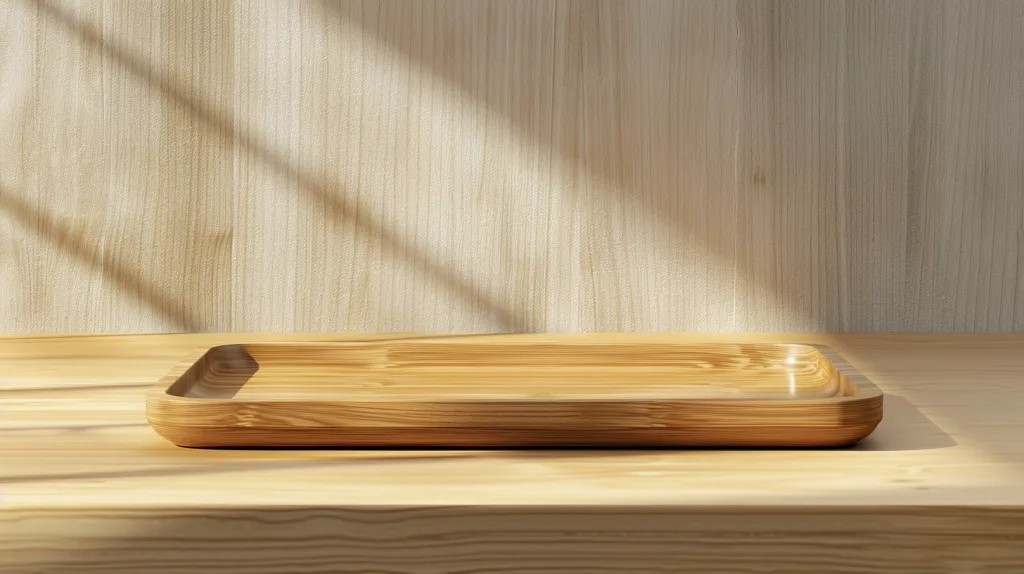
Lacquer, one of the most common bamboo finishes, involves applying multiple layers of varnish that cure into a hard, protective shell.
Pros:
- Glossy or matte appearance options
- High durability and scratch resistance
- Water and oil repellency
Cons:
- Can crack or peel if improperly applied
- May require VOC-safe formulations for food contact
Ideal Use: High-end decorative trays or daily-use trays requiring frequent cleaning.
Carbonized Bamboo Finish
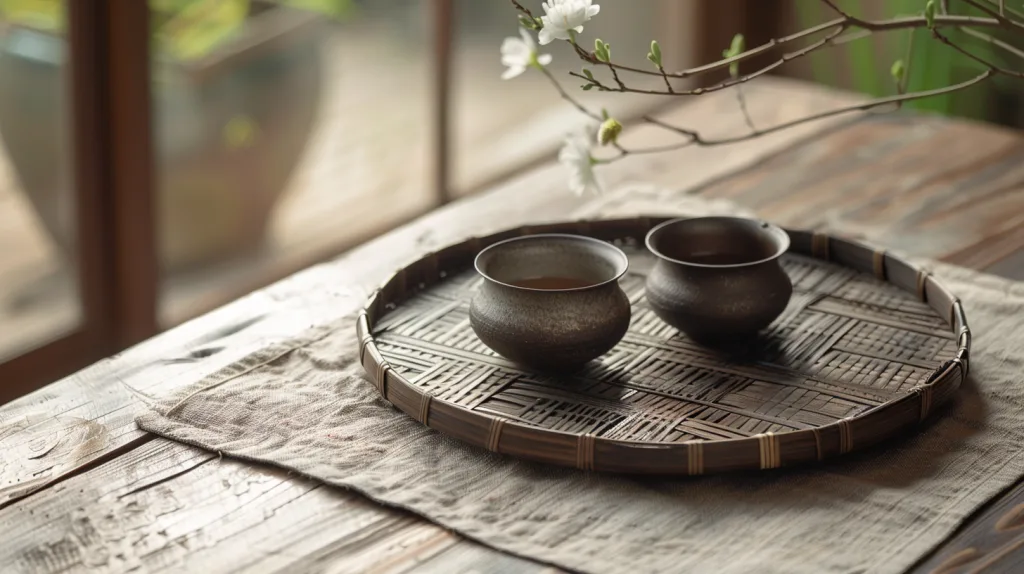
Carbonization involves heat-treating bamboo to darken its color and improve dimensional stability.
Pros:
- Rich, dark brown hues without chemical dyes
- Naturally anti-fungal and more water-resistant
- Enhances grain visibility for a rustic look
Cons:
- Slight reduction in bamboo’s tensile strength
- Requires post-treatment to seal the surface
Ideal Use: Rustic-style trays, tea trays, and eco-themed product lines.
Food-Safe Coatings for Bamboo Trays
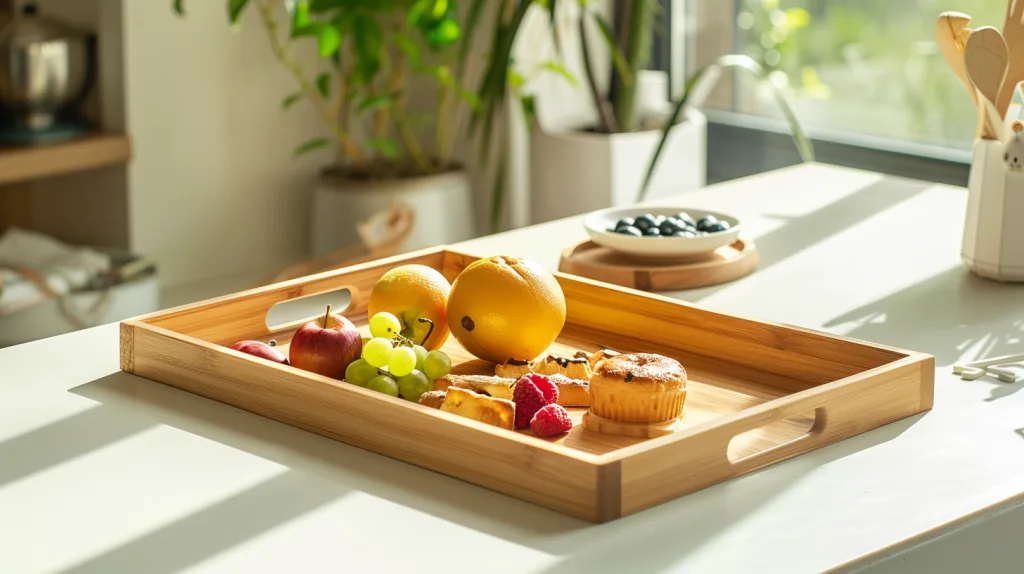
When bamboo trays are intended to carry food or beverages, finishes must meet food safety standards (FDA, LFGB, etc.).
Common Options:
- Water-based polyurethane: Durable, low-VOC, and easy to apply.
- UV-cured coatings: Hard-wearing, fast-curing, and often used in factory settings.
- Natural oils and waxes: Beeswax, mineral oil, or linseed oil for low-impact finishes.
Best Practices:
- Always test coatings for migration and safety compliance.
- Reapply oils periodically for long-term maintenance.
Ideal Use: Serving trays, charcuterie boards, breakfast trays.
Hybrid Finishes and Mixed Techniques
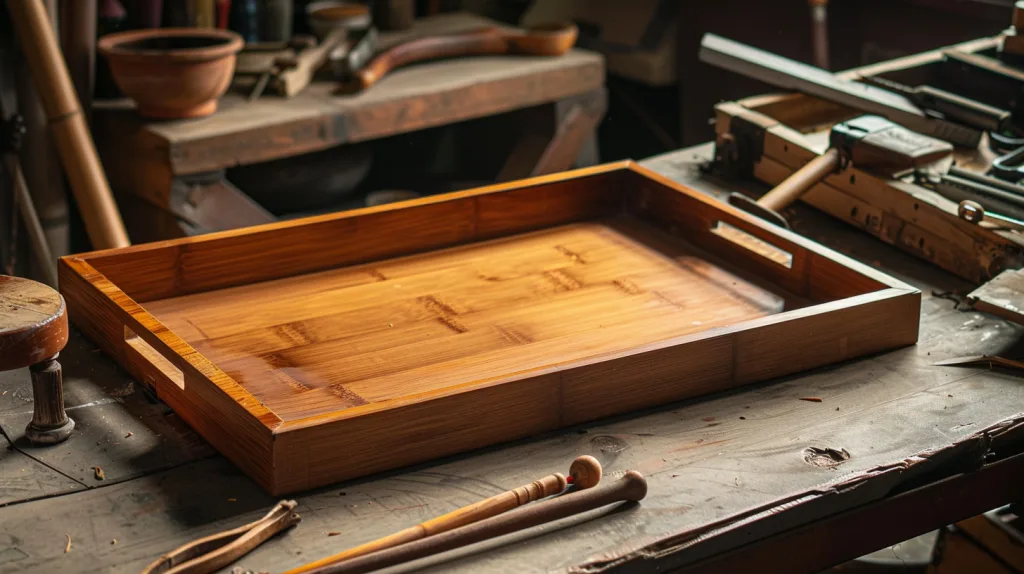
Combining finishes can yield beautiful, resilient results. For example:
- Carbonized bamboo sealed with food-safe lacquer
- Oil-treated trays finished with a light wax layer
These combinations enhance both performance and aesthetic customization.
Comparative Table of Bamboo Tray Finishes
| Finish Type | Appearance | Durability | Food Safe | Maintenance |
|---|---|---|---|---|
| Lacquer | Glossy/Matte | High | Conditional | Low |
| Carbonized | Dark Rustic | Medium | Yes | Medium |
| Water-based PU | Clear/Natural | High | Yes | Low |
| Natural Oils | Matte/Soft Sheen | Medium | Yes | Regular Reapply |
| UV Coating | Clear/Glossy | Very High | Yes | Very Low |
Environmental Considerations
At Bamboo Wood Art, we prioritize coatings that are:
- Low-VOC and water-based
- Biodegradable or recyclable
- Aligned with FSC and food contact certifications
Conclusion
The best bamboo tray finish balances functionality, aesthetics, and safety. Whether you prefer the bold look of carbonization or the sleek durability of lacquer, choosing the right coating enhances your product’s lifespan and appeal. For custom bamboo tray production with expert finishing techniques, contact Bamboo Wood Art today.
FAQ
What is the most durable bamboo tray finish?
UV-cured coatings and high-quality lacquer finishes provide top-tier durability.
Is carbonized bamboo safe for food trays?
Yes, especially when sealed with a food-safe topcoat.
Can I use olive oil to finish a bamboo tray?
While natural, olive oil can go rancid—use mineral or linseed oil instead.
Are lacquer bamboo trays dishwasher safe?
Not typically—handwashing is recommended to preserve the finish.
How often should I reapply oil on a bamboo tray?
Every 1–2 months depending on usage and wash frequency.
What finish gives bamboo trays a rustic look?
Carbonization offers a rich, dark, and naturally rustic aesthetic.