End-Grain vs Edge-Grain (Wood Edition)
Choosing the right wood grain for your cutting board or butcher block affects daily kitchen use, knife performance, and long-term durability. Many buyers face a choice: end-grain or edge-grain? Both designs look similar from a distance, but their construction, benefits, and costs differ sharply. This guide breaks down structural diagrams, knife retention factors, self-healing claims, trade-offs in price and performance, plus a practical maintenance schedule for lasting results.
Understanding Wood Grain Anatomy: End-Grain and Edge-Grain Explained
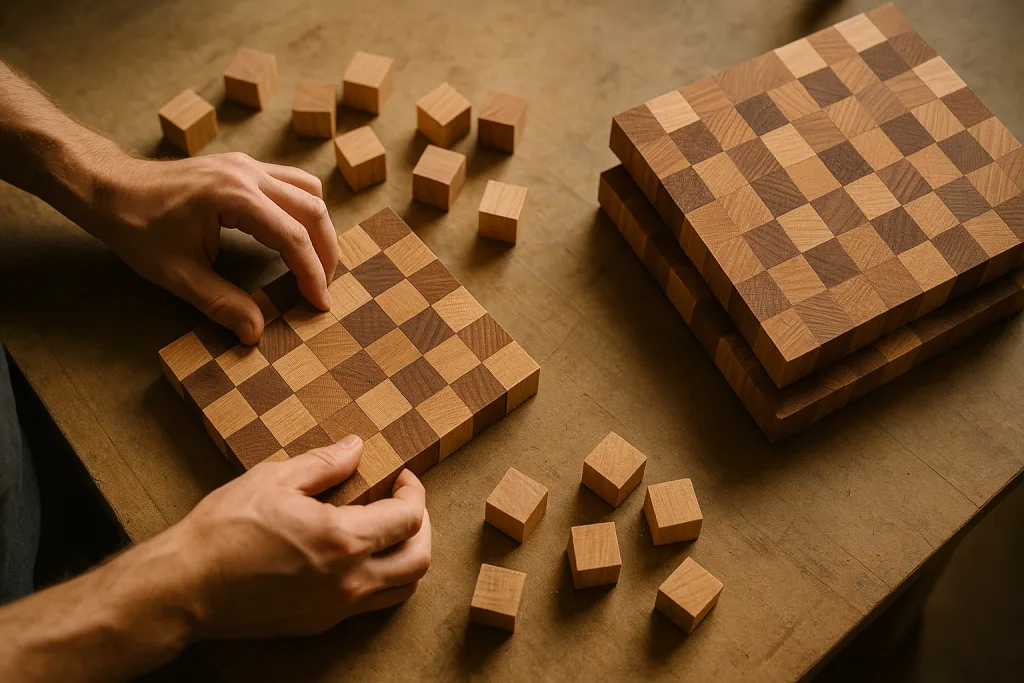
Wood grain refers to the direction wood fibers run in a board. “End-grain” means the board’s surface shows the ends of these fibers, while “edge-grain” exposes the side edges. Grain direction drives board strength, wear resistance, and surface behavior under heavy cutting. Let’s look deeper at the construction of each type.
End-Grain Structural Diagram
End-grain boards comprise wood blocks stacked so their cut ends form the top surface. Picture chopping a log into cubes, then arranging these cubes so you see the rings and fiber ends. This surface feels soft to knife blades and often features a checkerboard pattern. Bamboo Wood Art uses Moso bamboo, oak, beech, ash, and walnut for premium end-grain boards. Each block is kiln-dried for 8–12% moisture content to minimize warping before lamination with low-VOC adhesive systems.
Edge-Grain Structural Diagram
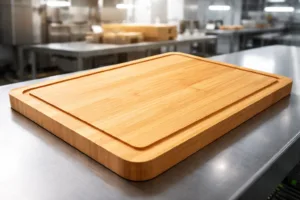
Edge-grain boards display the long, narrow sides of wood slats. Manufacturers glue strips side by side, assembling the board so fiber lines run along the length. The edge-grain layout provides a straight, linear look and gives a firmer feel under knives. Bamboo, maple, and beech are common choices. Bamboo Wood Art sorts and conditions slats for uniform width and color, then presses them with water-based glue and sands all edges smooth.
Knife Edge Retention: Fact vs. Fiction
The way a cutting surface “treats” knife blades matters for cooks and chefs. End-grain claims to preserve knife edges longer because fibers part and reclose with cuts. Edge-grain offers a harder cutting surface, so it can dull blades slightly faster. However, material density (oak vs. bamboo vs. walnut) and finish play major roles.
End-Grain: The Self-Healing Myth
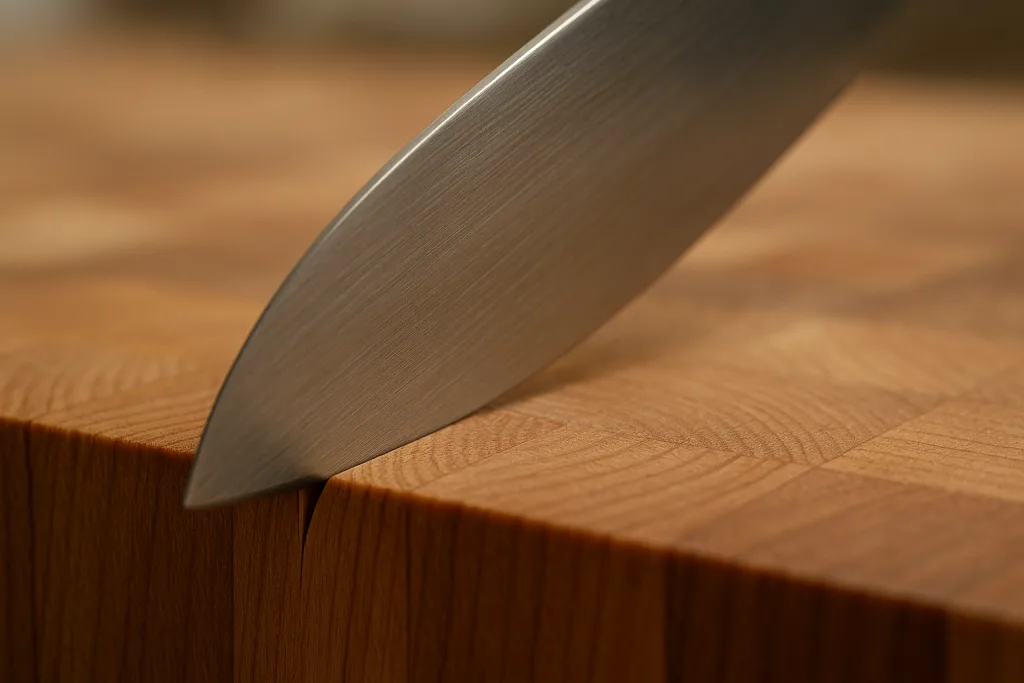
End-grain boards act like tiny wood brushes. When sliced, fibers split under the blade, then spring back. This gives the board a “self-healing” reputation. Still, deep gouges or repeated slicing in the same spot will leave marks over time. End-grain resists surface scarring better than edge-grain, but perfection fades if maintenance lags or humidity swings wildly.
Edge-Grain: Tough but Less Forgiving
Edge-grain cutting boards provide a sturdier feel and resist denting. Their fibers run horizontally, so knife cuts slice across rows instead of down into ends. This can leave more visible scars and wears knives down a little quicker. Chefs may choose edge-grain for heavy-duty kitchen prep or when budget outweighs knife longevity.
Butcher Block Advantages: Utility Meets Craftsmanship
Butcher blocks—large, thick cutting boards—usually use edge-grain or end-grain wood for main surfaces. End-grain butcher blocks attract professional kitchens for self-healing performance and gentle blade touch. Edge-grain blocks excel for mass production, lower cost, and lighter weight. Bamboo Wood Art supplies both, with options for mortise-and-tenon joinery and custom CNC edge profiles.
- End-Grain Butcher Blocks: Quieter chopping, better knife edge retention, elegant checker patterns, higher density (heavier, less prone to sliding).
- Edge-Grain Butcher Blocks: Simpler appearance, lighter/more portable, easier to manufacture in bulk, often cheaper.
Weight, Price, and Durability: What You Give vs. What You Get
Trade-offs shape purchase decisions when choosing between end-grain and edge-grain boards. End-grain boards require more material and time to construct. Each block must be cut, sorted, and precisely joined, driving up cost and shipping weight. Edge-grain boards make efficient use of longer slats, trimming labor and base wood volume. Consider these factors before investing:
| Grain Type | Typical Weight (lbs) | Knife Retention | Self-Healing Claims | Average Price ($) | Best Use |
|---|---|---|---|---|---|
| End-Grain | 6–12 | Excellent | Moderate/True | 80–200 | Chefs, high-traffic kitchens |
| Edge-Grain | 4–9 | Good | Limited | 40–120 | Everyday home use, catering |
End-Grain vs Edge-Grain Cutting Board
The heart of the debate centers on what each board actually does best. End-grain cutting boards please customers who care about knife protection, luxury feel, and unique appearance. Edge-grain designs work well for kitchens preparing food for many, especially where cost and easy cleaning count most.
Structural Differences and Use Cases
- End-grain boards: Individual blocks, vertical fiber orientation, checkerboard/brickwork style
- Edge-grain boards: Parallel slats, horizontal fiber orientation, simple striped or solid face
Knife Performance & Longevity
End-grain cuts promote knife longevity thanks to fiber separation. Edge-grain boards can dull knives faster, but respond well to regular sanding and oiling.
Maintenance
Both board types benefit from regular care. Owners should follow a maintenance schedule to prevent warping, splitting, or excessive wear.
Maintenance Schedule: Keep Boards Looking and Working Like New
Maintenance habits determine how long your board lasts. Below is a schedule adapted from manufacturer standards and Bamboo Wood Art’s B2B guidance for home and hospitality clients.
| Activity | Frequency | Details | Applies to |
|---|---|---|---|
| Cleaning | After each use | Hand wash, mild soap; never soak | Both |
| Drying | After cleaning | Towel dry, air until fully dry | Both |
| Oiling | Monthly/biweekly | Food-safe mineral or plant oil | Both |
| Sanding | Yearly/as needed | 180→240→320 grit; lighten marks | Both |
| Conditioning | Monthly | Wax blend for protection | Both |
| Edge Resealing | Yearly/as needed | Check for splits, reseal with oil/wax | End-Grain |
Materials and Manufacturing: How Grain Choices Shape Performance
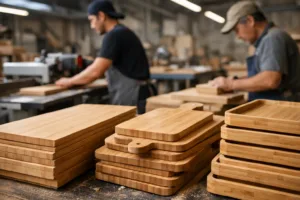
Bamboo Wood Art sources FSC-certified Moso bamboo, along with sustainably managed oak, beech, ash, and walnut. End-grain boards start with kiln-dried blocks sorted for color and density, then finger-jointed to lock pieces together with strength. Edge-grain boards use longer slats, hot pressed with E0-E1 adhesives and water-based finishing to ensure food contact safety (FDA & LFGB). CNC machining creates precise edges, while laser engraving offers custom branding for hospitality and corporate gifts. Both options meet strict flatness and dimensional tolerances to resist warping. Finished boards receive a food-safe coating—plant oil, UV varnish, or wax blend—to lock out moisture and reduce bacterial risk.
Finish Options and Compliance: Beyond Aesthetics
Wood finish affects board protection and look. Water-based varnishes, plant oils (like tung or linseed), and food-safe waxes are popular. Bamboo Wood Art applies options to match end-grain or edge-grain needs, balancing sheen, slip resistance, and VOC emissions. All boards aimed for hospitality or export pass food-contact tests, and ship in robust packaging to avoid transit damage.
Applications for Home, Hospitality, and Retail
Cutting boards and butcher blocks serve multiple roles. End-grain boards fit upscale kitchens, chef stations, and custom gifting. Their rich patterns and weight add presence to counter displays or food service shows. Edge-grain boards excel in busy restaurants, hotels, catering setups, or retail racks where durability and cost matter most. Branded laser-engraved boards by Bamboo Wood Art also work as eye-catching retail displays or promotional gifts for food events.
- Kitchen prep stations—cut, chop, and dice with confidence
- Restaurant and hotel serviceware—reliable, hygienic, and elegant
- Corporate gifting or branded promo—custom sizes and laser logo options
- Retail displays—easy to clean, sturdy for frequent use
Buyer’s Guide: When Should You Choose End-Grain vs Edge-Grain?
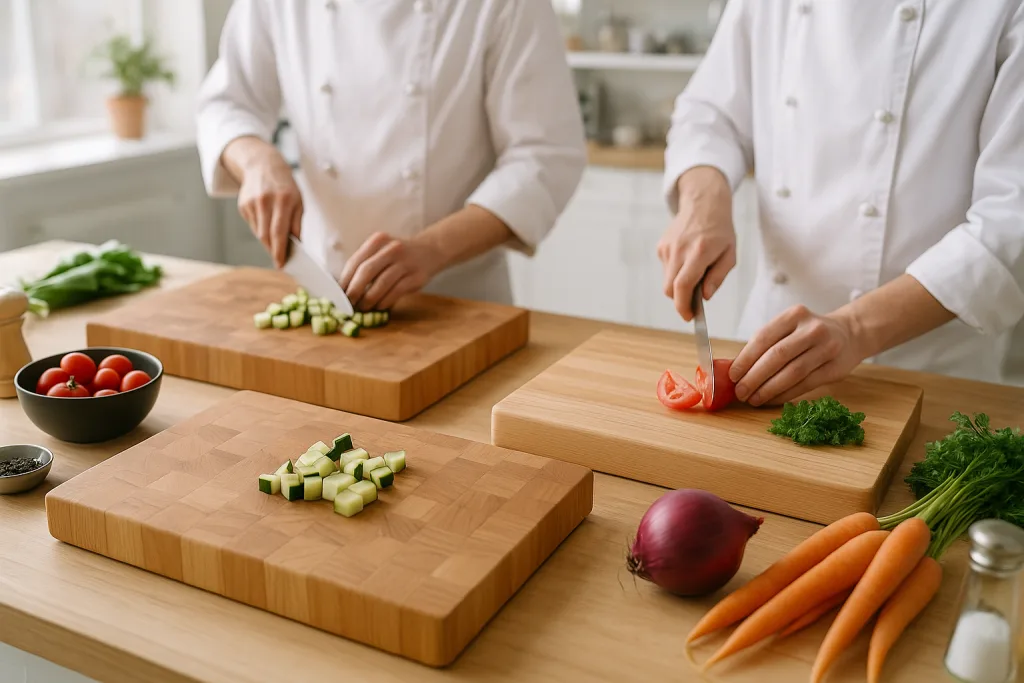
Your decision depends on priorities. If you value knife care, self-healing, and premium craftsmanship, choose end-grain—especially for professional or showcase kitchens. If cost, portability, and quick cleaning rank higher, edge-grain suits most homes and mass catering.
- For chefs and enthusiasts: Pay for end-grain—knives last longer and surfaces heal better.
- For large kitchens and fast-paced service: Pick edge-grain—easy upkeep, lower price, lighter boards.
- For gifting or branding: Both can be customized with CNC or laser engraving; Bamboo Wood Art offers full OEM/ODM services.
Expert Takeaway: “The best board is one you’ll care for often. Grain direction matters—but care matters just as much.”
Frequently Asked Questions
What is the main difference between end-grain and edge-grain cutting boards?
End-grain boards show the cut ends of wood fibers, which split and reclose, while edge-grain boards display the fiber sides. This affects knife performance, durability, and board appearance.
Are end-grain boards really self-healing?
End-grain surfaces do reclose after shallow cuts, which helps hide knife marks. Deep cuts or repeated use can damage any board, so maintenance remains important.
Will my knives last longer on an end-grain board?
End-grain boards are gentler on knife edges. Their fibers split rather than crush, reducing blade dulling compared to edge-grain options.
Is bamboo a good choice for edge-grain or end-grain boards?
Moso bamboo provides a dense, sustainable wood for either grain style. It resists moisture, warping, and bacteria, making it ideal for kitchen boards.
How often should I oil my wood cutting board?
Oiling every month, or biweekly in busy kitchens, keeps both end-grain and edge-grain boards safe and prevents cracking or warping.
Which is better for professional kitchens: end-grain or edge-grain?
End-grain boards suit chef stations where knife longevity and presentation count. Edge-grain works well in high-volume restaurants for easier upkeep and cost control.