Introduction
When sourcing bamboo and wood products, understanding the choice between factory direct suppliers and trading companies is essential. The route you take directly impacts pricing, quality, reliability, and ultimately, your brand reputation. This guide explores factory direct vs. trading company: which should you choose? (sourcing guide) to help you make a well-informed decision in the bamboo sector, drawing on real manufacturing expertise.
What is a Factory Direct Source?
Definition and Explanation
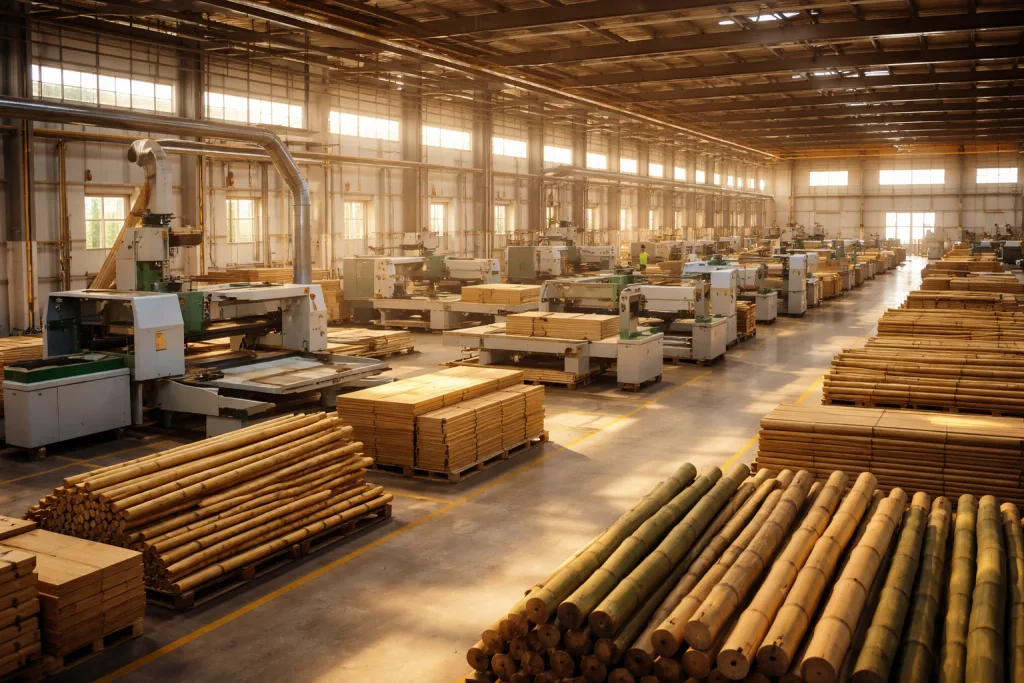
A factory direct source means purchasing products straight from the manufacturer who actually makes the goods. There is no intermediary. This method lets buyers tap into the factory’s production lines—ideal for bamboo kitchenware, home décor, and personalized items designed to your specifications.
How Factory Direct Sourcing Works for Bamboo Products
In bamboo sourcing, factory direct means engaging with suppliers who manage everything from raw bamboo processing to finishing, all under one roof. Many quality-focused factories, like those producing cutting boards or trays, invest in advanced drying techniques and food-safe adhesives to ensure long-lasting products.
You can also learn more about the process in How to Source Bamboo Products from China: A Beginner’s Guide.
What is a Trading Company?
Definition of a Trading Company
Trading companies serve as middlemen between overseas buyers and manufacturers. They source, consolidate, and inspect goods, offering one-stop solutions. Often, they represent several factories and product categories.
The Role of Trading Companies in Bamboo Product Sourcing
Trading companies are common in the bamboo industry due to regional factory specialization. They can combine mixed orders, match buyers with suitable factories, and manage logistics—especially valuable for businesses buying smaller quantities or seeking one contact for diverse products.
Key Differences Between Factory Direct and Trading Company Sourcing
Pricing Comparison
Factory direct sourcing typically offers lower prices since no intermediary is marking up costs. However, some factories require higher minimum order quantities (MOQs), making them less accessible to smaller buyers.
Transparency and Supply Chain
Factories provide direct insight into materials, production schedules, and working conditions. Trading companies may obscure the origin of goods, but sometimes offer more transparent communication if language barriers exist.
For those prioritizing supply chain clarity, Responsible Sourcing: Species & Regions is a must-read.
Quality Assurance for Bamboo and Wood Products
Direct factories tend to exercise more control over quality standards, such as wood grading or moisture content checks. For instance, Bamboo Wood Art reviews raw bamboo age, kiln-drying technique, and adhesive formulation to ensure consistency—a practice less common in trading company procurements.
Customization Options
Customization—logos, special sizes, unique finishes—is often easier and more economical directly through factories. Trading companies might accommodate such requests but could lack real-time design feedback.

Pros and Cons
Advantages of Dealing Directly with Bamboo Factories
- Lower unit pricing, especially for bulk orders
- Greater transparency and influence over quality
- Faster troubleshooting and real-time design adjustments
- Ability to build long-term supply chain partnerships
Benefits of Working with Trading Companies
- Easier communication, especially for first-time buyers
- Sourcing flexibility—mixing different product types or small batches
- Logistics handling, sample consolidation, and after-sales support
Potential Challenges of Both Approaches
- Factories may have high MOQs, slow to respond, or lack export service experience
- Trading companies sometimes add extra margins, give less production transparency, or switch suppliers without notice
How to Decide What’s Best for Your Business
Evaluating Your Needs (Volume, Quality, Customization)
Start by identifying your volume—are you ordering container loads, or only a few hundred pieces? Consider your branding needs: do you require custom engravings or special packaging? Finally, set your quality baseline based on the intended customer and use case.
For OEM/ODM branding, review OEM/ODM for Wood Branding.
Assessing Supplier Reliability in the Bamboo Sector
Check certifications like FSC, PEFC, or BSCI. Request product samples and recent test reports. Establish clear communication of your required standards, whether for cutting boards, utensils, or furniture accessories.
Many buyers also consult FAQs for Wooden Buyers to set expectations around MOQs and lead times.
Tips for Safe Sourcing Decisions
- Request a video tour or live video call from the factory floor
- Use third-party inspection agents to verify quality and shipping readiness
- Start with smaller trial orders if possible, before scaling up
Factory Direct vs. Trading Company: Which Should You Choose? (Sourcing Guide)
The best option depends on your unique goals. Businesses focused on innovation, large custom runs, and supply chain visibility often prefer factory direct. Those prioritizing ease, variety, and smaller volume—especially when starting in bamboo sourcing—may choose trading companies as a stepping stone. Both have value if you select verified, reputable partners and maintain clear, written agreements. Advancing in the bamboo sector means reassessing your needs as your business grows.
Conclusion
Sourcing bamboo and wood products is rarely one-size-fits-all. Direct factory sourcing offers cost savings, deeper insights, and better customization, while trading companies bring flexibility, convenience, and lower entry barriers. As production techniques, export rules, and market trends shift, regularly weigh your priorities and re-evaluate partnerships. Whichever path you choose, prioritize transparency, sample testing, and mutual communication for long-term success.
Frequently Asked Questions
What are the typical minimum order quantities (MOQs) for factory direct bamboo sourcing?
Most factories set MOQs between 500 to 2,000 pieces per SKU, but some accept lower quantities for standard items or trial orders.
How can I verify whether a supplier is a real factory or a trading company?
Ask for detailed manufacturing licenses, factory visit videos, or use third-party verification services. Match product certificates with the company’s legal name and location.
Is there a risk of lower quality when buying from trading companies?
It depends. Some trading companies uphold strict quality control, but others may alternate between suppliers, causing product variation. Testing samples is crucial.
Which option is better for custom-designed bamboo trays or cutlery sets?
Factory direct is usually more receptive to customization and technical feedback, making them a better fit for original designs or branding-focused projects.
Can trading companies assist with logistics and mixed containers?
Yes, trading companies frequently handle mixed orders, shipment aggregation, and export documentation—helpful for buyers sourcing various product types.
What certifications should bamboo factories and trading firms have for international sourcing?
Look for FSC, PEFC, ISO, and BSCI—these reflect process safety, legal sourcing, and responsible manufacturing. Demand documentation with each shipment.