Understanding Food-Safe Finishes for Wood
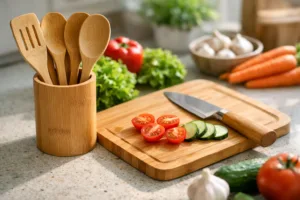
Wooden kitchenware—cutting boards, utensils, serving trays—brings warmth and function to every home or hospitality space. But without the right finish, wood can absorb moisture, take on stains, or even crack. A proper food-safe finish keeps wood safe, attractive, and ready for daily use.
In this guide, we’ll compare four top choices: mineral oil, beeswax, hardwax oils, and water-based lacquers. We’ll also highlight when to avoid nut oils, discuss migration risks, and share expert tips from manufacturing leaders like Bamboo Wood Art. Whether you run a restaurant, manage retail displays, or select components for custom kitchenware, you’ll learn how finish selection shapes durability, safety, and cleanability.
What Makes a Finish Food-Safe?
A finish qualifies as food-safe when it doesn’t leach harmful chemicals, withstands repeated cleaning, and resists moisture and bacteria. Compliance matters. International regulations like FDA (U.S.) or LFGB (Germany) require finishes on items that contact food directly to meet strict migration limits—meaning any trace substances from the coating must remain well below levels that could impact health.
Finishes fall into two broad categories: penetrating oils and surface coatings. Penetrating oils soak into wood fibers, offering a subtle, hand-rubbed sheen. Surface coatings—like water-based lacquer—form a clear protective film on top. The best choice depends on the use case, re-coating habits, and your need for durability versus natural feel.
Typical Applications
- Cutting boards – bamboo, oak, beech
- Serving utensils – spatulas, spoons
- Serving trays & display boxes – often bamboo ply or Moso bamboo
- Hotel/restaurant serviceware – durable, water-resistant finishes preferred
Manufacturing Fundamentals
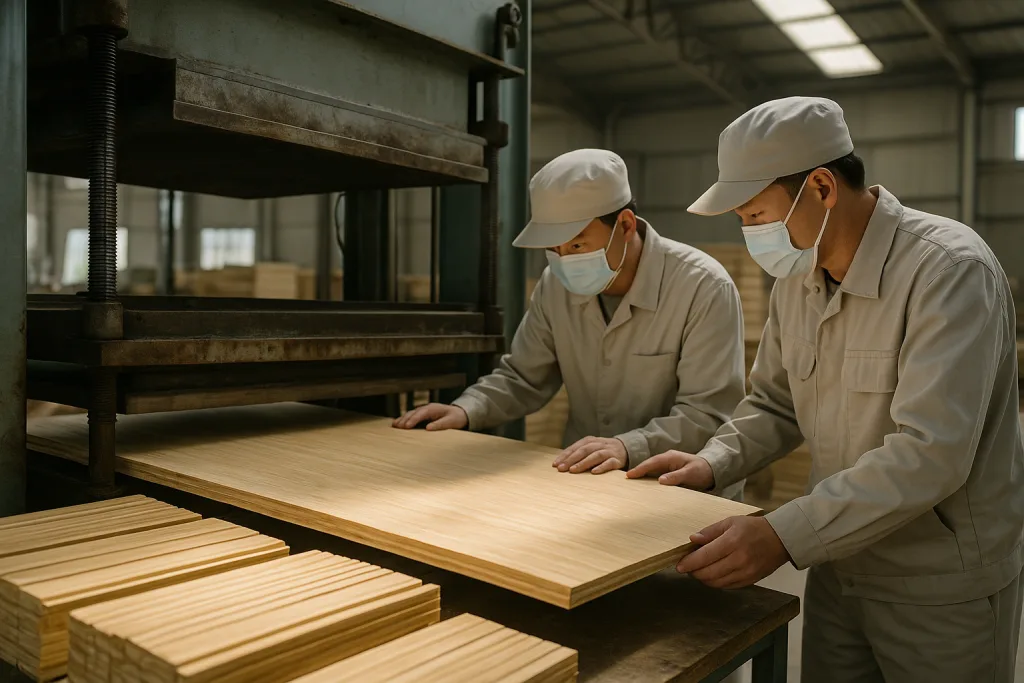
Before finishing, wood must be well-prepared. Bamboo Wood Art, for example, kiln dries material to 8–12% moisture content, reducing warping. Typical process: slat sorting, hot-press lamination, CNC machining, 180→240→320-grit sanding, and edge rounding. Once ready, surface finishes are applied under controlled conditions, often with tension and adhesion checks.
Mineral Oil: Affordable, Simple, and Reliable
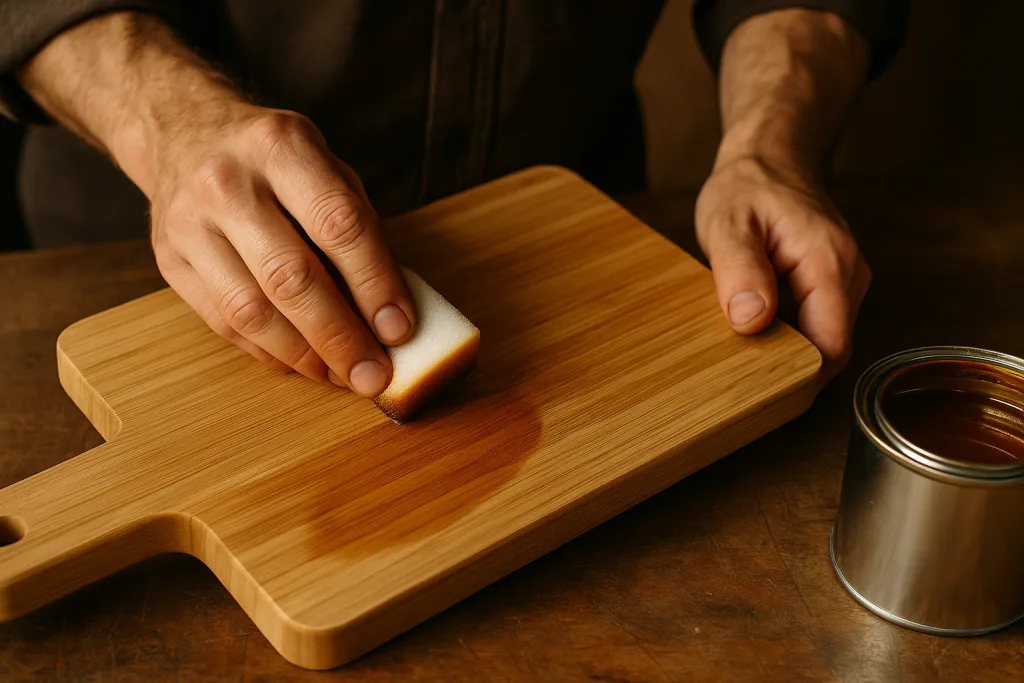
Mineral oil is a classic food-safe finish for wood. It’s tasteless, odorless, and non-toxic. When applied to boards or utensils, it seeps deep into wood fibers, enhancing grain and color without changing texture. It doesn’t cure or harden—meaning it can wash away over time and needs regular reapplication.
- Feel – Natural matte, retains wood’s tactile warmth
- Durability – Moderate; prone to wear-off, especially after frequent washing
- Re-coat Interval – Every 1–3 months depending on usage
- Migration – No harmful migration; passes worldwide food-contact regulations
Mineral oil works well for everyday boards and tools. It’s especially favored for bamboo cutting boards, letting bamboo’s tight grain shine through. It’s widely available, cost-effective, and safe for all business types.
Beeswax: Enhancing Protection with Natural Appeal
Beeswax is often blended with mineral oil to create a richer, more water-repellent finish. It’s harvested from honeycombs, then melted and buffed into wood. Beeswax forms a subtle film that resists stains and minor scratches, making it an excellent choice for display or high-touch pieces.
- Feel – Silky, slightly waxy texture; increases resistance to water
- Durability – Better than mineral oil alone; can last 2–4 months
- Re-coat Interval – Every 2–3 months or as needed
- Migration – Beeswax itself is inert; FDA approved for direct food contact
For boards that double as serving trays or gift boxes, beeswax finish adds visual appeal. Like mineral oil, beeswax doesn’t cure into a hard surface, so reapplication is essential to maintain sheen and protection. Always use pure, filtered beeswax to avoid residues or scents.
Hardwax Oils: Modern Blend of Durability and Touch
Hardwax oils mix natural plant oils—typically tung or linseed—with microcrystalline waxes and driers. The blend penetrates wood, then cures to a tough, water-resistant surface. Leading formulas are low-VOC and certified by food-safety standards, making them popular in commercial settings.
- Feel – Satin to matte; highlights grain with a smooth touch
- Durability – High; resists abrasion, moisture, and stains
- Re-coat Interval – Once a year or as needed
- Migration – Minimal; reputable brands disclose migration test data
Hardwax oil is ideal for heavy-use boards, hospitality supplies, and furniture parts subject to frequent handling. Bamboo Wood Art often recommends hardwax oils for products destined for restaurants, hotels, or corporate gifting. They meet E0-E1 formaldehyde emission standards, offer a balance of strength and authenticity, and rarely need touch-ups.
How Hardwax Oils Are Applied
- Wood sanded through 320-grit for smoothness
- Finish brushed or wiped in coats; allowed to cure (overnight recommended)
- Optional buffing for extra gloss
Migration and Safety
Certified hardwax oils undergo lab testing for chemical migration. European suppliers often meet EN 71-3 (toy safety) for peace of mind. Always check product documentation before bulk sourcing for food-contact applications.
Water-Based Lacquers: Professional-Grade Surface Protection
Water-based lacquers provide a clear, durable topcoat. These finishes are sprayed or brushed on in thin layers, then cured under UV lights or air-dried. They seal the wood fully, guarding against water, stains, and rough handling—perfect for restaurant serviceware or retail displays.
- Feel – Glass-like, can be glossy or matte; may conceal natural wood texture
- Durability – Very high; lasts years if undamaged
- Re-coat Interval – Rare; only after surface breakdown
- Migration – Low, but always verify finishes carry FDA/LFGB compliance for food-contact
Water-based finishes use low-VOC resins, offering sustainability and indoor air safety benefits. Bamboo Wood Art favors UV-cured lacquer on display panels and gift boxes for added scratch resistance and export packaging robustness. For direct food-surface items, ensure the finish is food-contact certified—not all lacquers qualify.
Application Process
- Surface wiped clean and dust-free
- Lacquer sprayed or brushed evenly
- UV or air drying under controlled humidity (preventing moisture entrapment)
- Quality check for adhesion, flatness, and haze
Comparing Food-Safe Wood Finishes: At a Glance
| Finish Type | Feel | Durability | Re-Coat Interval | Best Uses | Migrations |
|---|---|---|---|---|---|
| Mineral Oil | Natural, matte | Moderate | 1–3 months | Boards, utensils | None |
| Beeswax | Silky, waxy | Good | 2–4 months | Display trays, serving tools | None |
| Hardwax Oil | Satin, smooth | High | Yearly | High-traffic boards, hospitality | Minimal; ensure certification |
| Water-Based Lacquer | Glossy/matte, sealed | Very high | Rare | Serviceware, displays | Low; only certified finishes |
Mineral Oil vs Hardwax Oil: Which Should You Choose?
The decision between mineral oil and hardwax oil depends largely on your priorities and use case.
- Mineral Oil — Best for traditional home boards and utensils where frequent upkeep is manageable. Provides pure, natural protection at a lower cost. Needs more regular reapplication, especially for bamboo boards or items used daily.
- Hardwax Oil — Suited for hospitality, restaurant, or premium trays/servingware where longer intervals and higher resistance are needed. It’s more expensive up front but reduces labor and replacement costs, and is favored on engineered wood and bamboo ply.
For B2B buyers and sourcing managers, review finishing certifications and migration test results with your supplier, such as Bamboo Wood Art. Ask for sample pieces with both finishes and test feel and resistance under real conditions.
Migration Considerations: Safety Beyond the Surface
Migration refers to any transfer of chemicals from the finish into food. Responsible manufacturers select low-VOC resins, filtered base oils, and documentation to prove compliance. Always request certificates for FDA/LFGB or EN 71-3 standards if buying in bulk for direct food-contact products. Finish migration risks increase if surfaces chip, are not cured fully, or use uncertified ingredients. Regular reapplication helps reduce risk for oils and waxes.
When NOT to Use Nut Oils
Nut oils—like walnut or almond—were once common for wood finishing, but they pose allergy risks and can turn rancid over time. While they add shine, avoid them for any woodware contacting food: chopping boards, utensils, or trays used in restaurants and public spaces. If manufacturing for retail or hospitality, always use finishes clear of nut allergens. Stick to mineral oil, pure beeswax, hardwax oils (plant-based), or certified lacquers.
Potential Issues with Nut Oils
- Allergy hazards for users
- Faster spoilage and unpleasant odors
- Unpredictable migration rates
Specialty Finishes for Bamboo and Solid Woods
Bamboo’s density and low porosity are ideal for food contact. Moso bamboo, after kiln drying and precision machining, accepts mineral oil or hardwax oils beautifully. Bamboo Wood Art uses lamination, cross-linking adhesives, and strict moisture control to ensure warp-free panels. Solid woods—such as oak, walnut, beech—require more careful sanding and sometimes joinery like finger-jointing or dowel connections for strength. For all types, finishes should be compatible with the manufacturing process and the specific application.
Export Considerations
For export, packaging needs to withstand humidity, temperature swings, and shock. Food-safe finishes help maintain appearance from factory to installation. Bamboo Wood Art uses robust, FSC-certified packaging, moisture indicators, and post-finish quality checks for every shipment.
Food-Safe Finishes for Wood Explained
Choosing the right wood finish transforms your bamboo and wood kitchenware from vulnerable to reliable. Mineral oil and beeswax keep tradition alive, ideal for display and frequent care. Hardwax oils deliver modern durability, especially for commercial spaces, while water-based lacquers lock down surfaces for maximum protection and cleanability. Avoid nut oils for direct food-contact. When sourcing, always demand safety documentation and run real-world usage tests before bulk buying. Quality finishes—plus careful manufacturing and packaging—guarantee customer satisfaction and compliance for every B2B order, whether for home, hospitality, or display.
Care Tips for Finished Wood Boards and Utensils
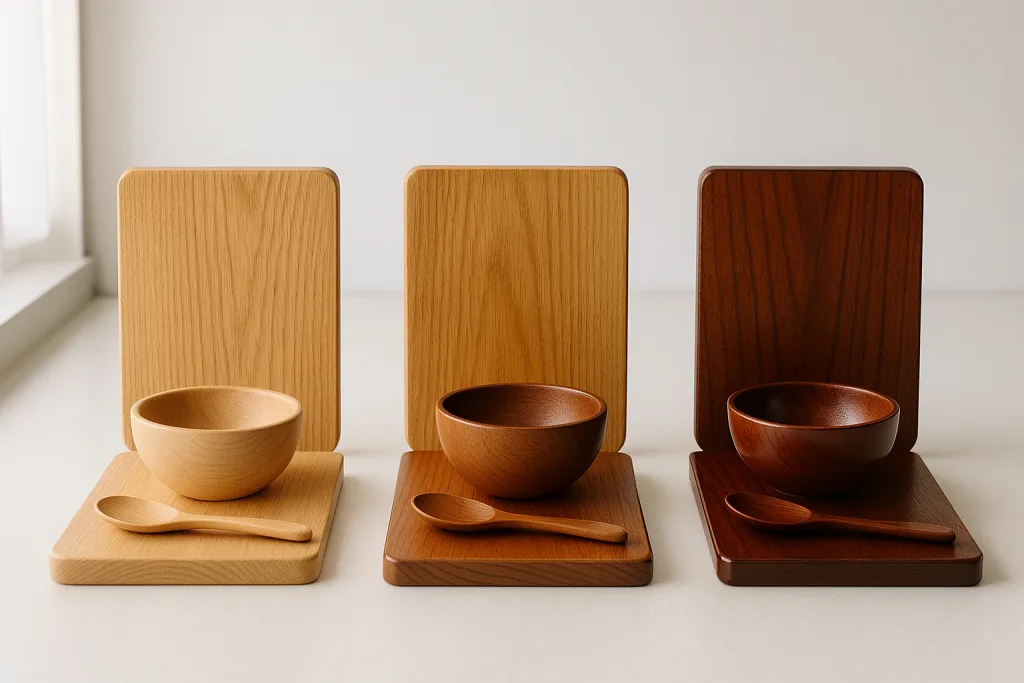
Best Practices
- Hand wash with mild soap; avoid soaking
- Dry promptly after washing
- Re-oil or wax as soon as surface looks dull or dry
- Never use harsh chemicals or put in dishwasher
Proper care keeps your food-safe finish working effectively, reduces migration risks, and extends the beauty and life of your woodware.
Frequently Asked Questions
What is the safest finish for a cutting board?
Mineral oil is the safest and simplest finish for cutting boards. It passes all food safety tests, doesn’t go rancid, and is easy to reapply regularly.
Is hardwax oil safe for utensils and boards?
Certified hardwax oils are safe for food contact when tested for migration limits. Always check the product’s certification before use.
Can I use vegetable or nut oil to treat wood?
Avoid vegetable and nut oils for direct food-contact items. They can cause allergies and spoil, risking both health and product integrity.
How often should I reapply wood finishes?
Reapply mineral oil or beeswax every 1-3 months for best protection. Hardwax oils and lacquers may last a year or more with normal use.
What finish offers the most water resistance?
Water-based lacquers and certified hardwax oils provide top water resistance. Lacquers seal the surface, while hardwax oils penetrate and cure.
Are bamboo boards different from solid wood in finish needs?
Bamboo boards accept mineral oil or hardwax oil easily, due to their density and stability. Solid wood calls for extra sanding and may benefit from more durable finishes.