Understanding Food-Safe Finishes: Oil-Wax and Water-Based Lacquer
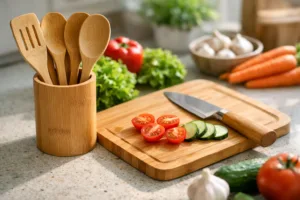
Bamboo has become a premium material of choice for kitchen boards, serving trays, and utensils. To keep these products safe for food contact, manufacturers apply specific finishes. The most popular options are oil-wax blends and water-based lacquer. Choosing the right bamboo food safe finish affects durability, tactile feel, stain resistance, and ongoing care—all critical for hospitality, retail, and home use.
Bamboo Food Safe Finish: Chemistry and Performance
A food-safe finish forms a barrier that protects bamboo from moisture, stains, and odor absorption. Both oil-wax and water-based lacquer meet safety standards for food contact, such as FDA regulations and LFGB requirements. Bamboo Wood Art sources sustainable Moso bamboo and solid woods, ensuring all coatings are low-VOC and free from harmful solvents.
Oil-Wax Blends: Natural Penetration and Easy Repair
Oil-wax finishes for bamboo use plant oils like tung, linseed, or mineral oil blended with beeswax or carnauba wax. These soak deep into bamboo fibers and accentuate the natural grain. Once cured, they create a breathable layer that resists water spots and retains a warm touch—ideal for cutting boards and trays.
- Averages 8–12% wood moisture for proper finish penetration
- Cured oil offers easy, spot maintenance with reapplication
- Most show low sheen and enhance organic tactile feel
Water-Based Lacquer: Surface Seal and Stain Resistance
Water-based lacquer is a clear, synthetic coating. It sits on top of the bamboo, forming a tough, protective shell. Many lacquer formulations are UV-cured for rapid drying and extra hardness. They block stains, repel odors, and deliver lasting clarity. Bamboo Wood Art uses low-VOC, E0–E1 grade resins to comply with global safety and export standards.
- Protects against food acids, wine, tea, and spice stains
- Offers a smooth, glossy or matte finish—no odor
- Clean-up is simple with a damp cloth
Comparing Oil-Wax vs Water-Based Lacquer Bamboo Finishes
The choice between oil and lacquer for bamboo boards comes down to handling, maintenance, and use environment. This table highlights the differences:
| Property | Oil-Wax Finish | Water-Based Lacquer |
|---|---|---|
| Tactile Feel | Warm, natural, grips knives | Smooth, glassy, easy to wipe |
| Stain Resistance | Moderate; needs reapplication | High; resistant to most kitchen stains |
| Odor Control | Absorbs scents over time | Blocks odor absorption |
| Maintenance | Needs regular oiling | Wipe-clean; rare refinishing |
| Food Safety | Natural, food-safe | Certified food-safe coatings |
| Durability | Good for daily use, not for soaking | Excellent; resists scratches and dings |
| Typical Uses | Cutting boards, serving trays | Display trays, hotel/restaurant serviceware |
The Chemistry of Bamboo Finishing
Both oil-wax and water-based lacquer form molecular barriers. Oil-wax penetrates bamboo cells and polymerizes, reinforcing fibers. Beeswax molecules coat the surface, while enhancing slip resistance. In contrast, water-based lacquer uses acrylic or polyurethane polymers. Once applied, these crosslink in a thin film over the bamboo and seal it against liquids and kitchen acids.
Food-contact safety is critical. Bamboo Wood Art’s coatings use FDA and LFGB-compliant formulas, tested for leaching and migration. Each batch passes adhesion checks, flatness controls, and moisture inspections before shipping.
Odor and Stain Resistance in Hospitality Settings
Bamboo trays and boards in restaurants face repeated contact with spices, oils, and aromatic foods. Oil-wax finishes may develop scent over time, needing regular maintenance. Water-based lacquer blocks most food and beverage odors. This makes lacquered bamboo ideal for buffet displays or hectic hotel service areas where rapid cleaning is essential.
Texture, Grip, and Knife Comfort
Cooks value boards with a natural feel that grips knife edges without dulling them. Oil-wax on bamboo delivers this organic texture. Lacquered surfaces, while sleek and non-porous, may be slippery for some chefs. For prep stations, kitchens often choose oiled finishes; for public serving trays, lacquer wins for appearance and washability.
Application: How Are Food-Safe Finishes Applied?
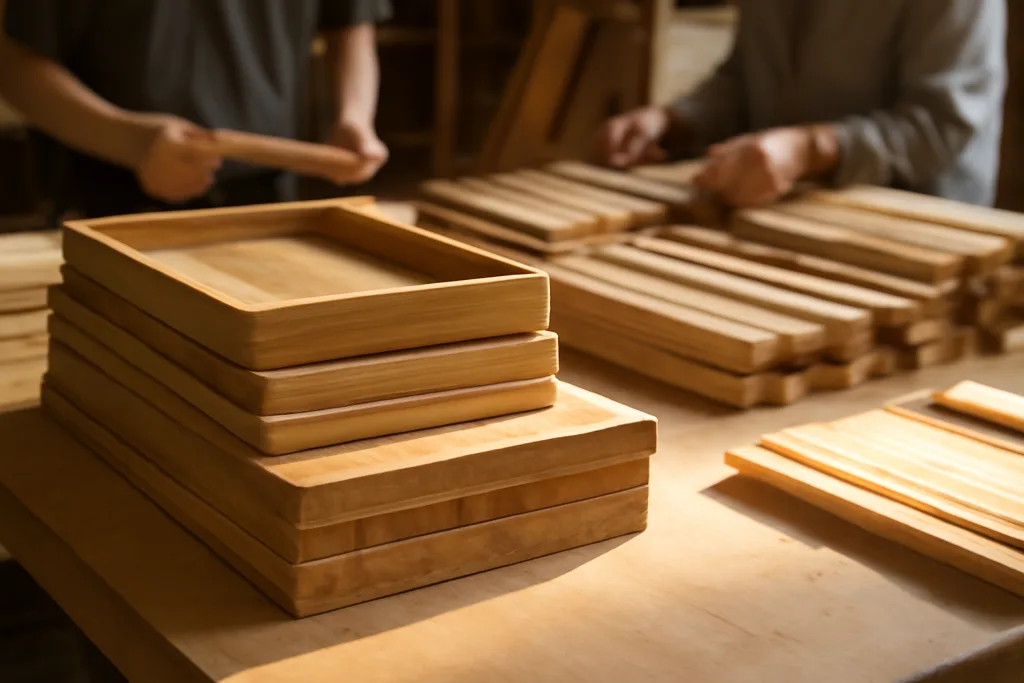
Each finish requires precise steps to ensure full coverage and lasting safety. At Bamboo Wood Art, the process starts with kiln-dried Moso bamboo, conditioned to 8–12% moisture for stability. Slats are sorted, finger-jointed, and laminated to create a strong, warp-resistant panel. CNC machining shapes boards and trays to tight tolerances. Edge profiles are sanded from 180 through 320 grit to prevent splinters.
Oil-Wax Application
- Boards are cleaned and lightly sanded.
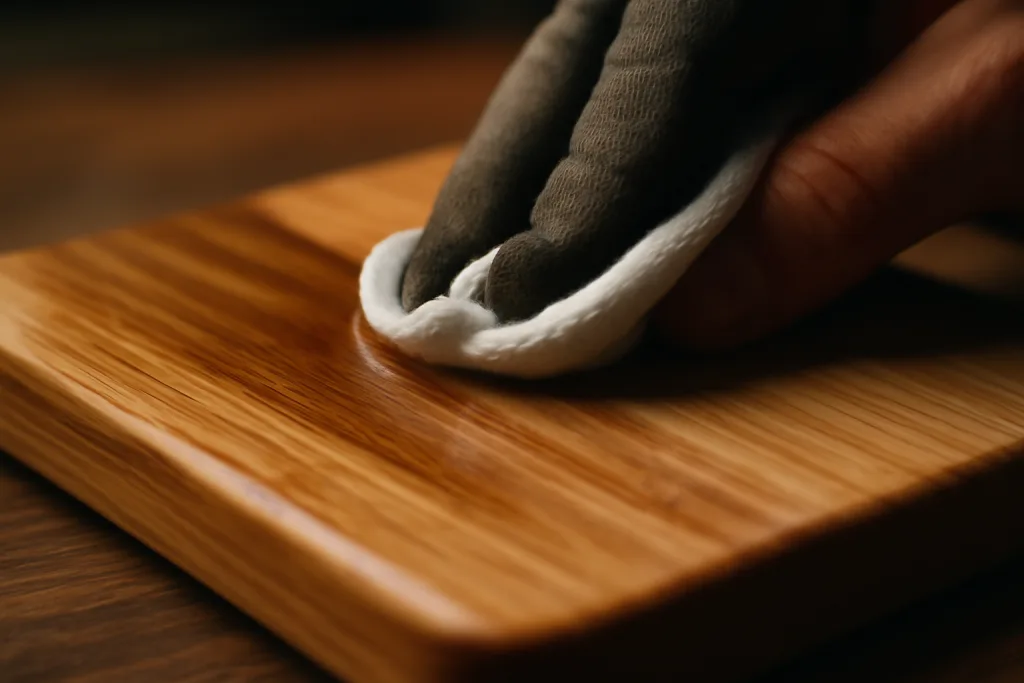
- Oil-wax mixture is brushed or wiped on. It soaks in for several hours.
- Surface is buffed, excess oil removed, and left to cure overnight.
- Multiple coats may be applied for extra durability.
Water-Based Lacquer Application
- Boards undergo dust-free sanding and pre-cleaning.
- Lacquer is sprayed or rolled thinly across all surfaces.
- UV or air curing hardens the finish in minutes to hours.
- Final inspection checks for complete, bubble-free coverage.
Maintenance and Lifespan of Bamboo Boards and Trays
Long-term performance comes from both the finish and regular care. Oil-wax boards need periodic reapplication—once each month for busy kitchens. Owners should avoid soaking or dishwasher use. Water-based lacquer boards resist staining but may scratch under heavy knives or stacking. Most lacquer surfaces only need wipe-clean maintenance. For commercial buyers, both finishes pass ASTM adhesion and 24-hour water resistance trials. Bamboo Wood Art can tailor finish thickness and hardness to meet exacting hospitality requirements.
Which Food-Safe Finish Should You Choose?
The decision depends on how the bamboo board or tray will be used. For kitchens requiring natural grip and easy repairs, oil-wax is the best bamboo food safe finish. Retail gifts, serviceware, or display trays often benefit more from water-based lacquer thanks to its stain resistance and smooth aesthetics. For export, lacquered boards offer uniform performance and long shelf life.
- Choose oil-wax for cutting boards, chef-prep surfaces, rustic serving trays.
- Choose water-based lacquer for hospitality, buffet, or promotional displays.
Expert Takeaway: “For the highest food safety, demand FDA/LFGB certification and check finish specifics with your supplier.”
Bamboo Food Safe Finish: Trends and Innovations
New formulations combine plant oils with nano-waxes or anti-bacterial agents for extra hygiene. Water-based lacquers now use renewable resins and UV cures for faster, cleaner production. Bamboo Wood Art provides OEM/ODM support for custom colors, branding, or corporate gifting, always matching finish and raw material to every client’s business need. Sustainable packaging and FSC/PEFC certified woods are available on request.
Frequently Asked Questions
What makes a finish food-safe for bamboo products?
A food-safe finish does not leach harmful chemicals and passes FDA or LFGB tests for direct food contact on bamboo boards and trays.
How often should oil-wax bamboo boards be re-oiled?
Reapply oil-wax at least monthly, or whenever the board looks dry or starts absorbing water, to maintain protection and appearance.
Does water-based lacquer affect bamboo’s natural look?
No, quality water-based lacquer preserves bamboo’s grain and color while adding a clear protective layer for shine or matte aesthetics.
Can lacquered bamboo trays go in dishwashers?
Although water-based lacquer resists moisture, it’s best to avoid dishwashers. Hand-wash with a damp cloth to extend tray lifespan.
Which finish offers better odor control for restaurant serviceware?
Water-based lacquer unambiguously blocks food and beverage odors, making it the preferred choice for high-turnover restaurant settings.
Will oil-wax finishing protect bamboo against wine or spice stains?
Oil-wax reduces staining but does not completely prevent it. Quick cleaning and regular oiling help minimize discoloration risks on bamboo boards.