Introduction
Bamboo toothbrushes have become an eco-friendly favorite for people wanting a sustainable oral care routine. But if you’ve made the switch, you might have noticed a common issue: mold can develop on your bamboo brush surprisingly quickly. Luckily, there are proven, practical ways to keep your bamboo toothbrush clean, dry, and mold-free for long-term use. This detailed guide reveals how to keep your bamboo toothbrush from molding, giving you peace of mind that you’re making a healthy, earth-conscious choice daily.
Why Bamboo Toothbrushes Are Prone to Mold
Bamboo is a natural material, and while that’s exactly why we love it, it also means your toothbrush is a little more vulnerable to mold than plastic ones. Two big factors contribute:
- Natural porous material of bamboo: The tiny pores and natural fibers in bamboo can trap water after brushing, creating a breeding ground for mold.
- Moist bathroom environment: Bathrooms are humid, and condensation collects on surfaces — an ideal setting for mold to grow if your brush stays damp.
7 Expert Tips to Prevent Mold on a Bamboo Toothbrush
Want to get the most from your eco-friendly brush? Here are seven easy habits to keep it fresh and mold-free.
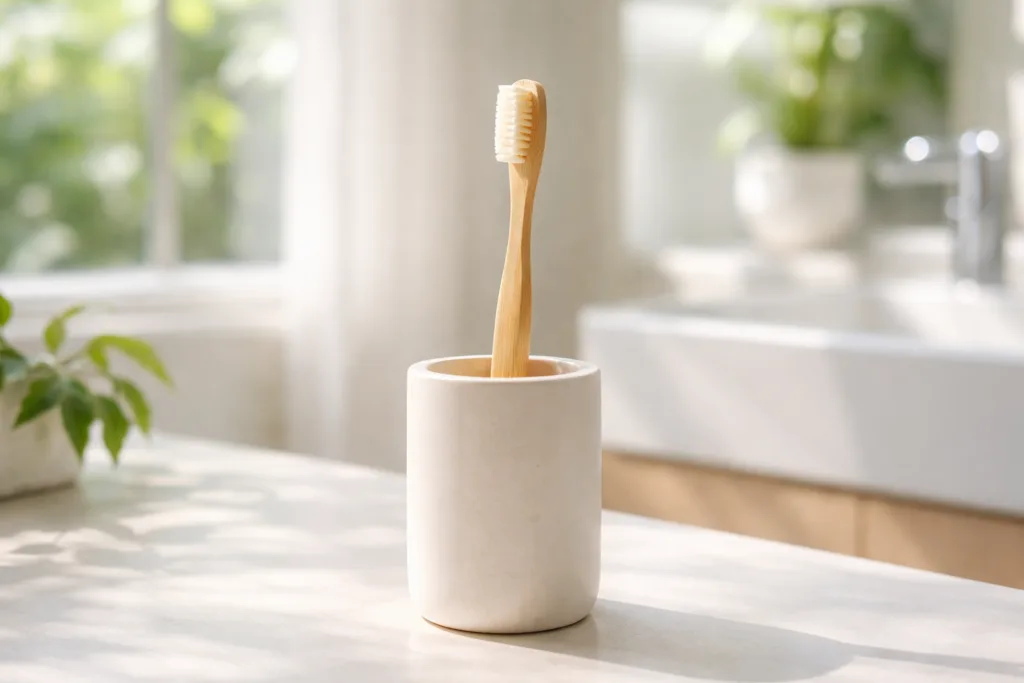
- Proper Drying: Stand your toothbrush upright in an open holder where air can circulate, away from the edge of the sink and puddled water. Fancy toothbrush holders or a bamboo slatted soap dish can lift it above wet surfaces and improve airflow.
- Ventilated Storage: After use, store your brush in a dry, well-ventilated spot. Don’t put it away in drawers or containers that hold moisture close; the more airflow, the better.
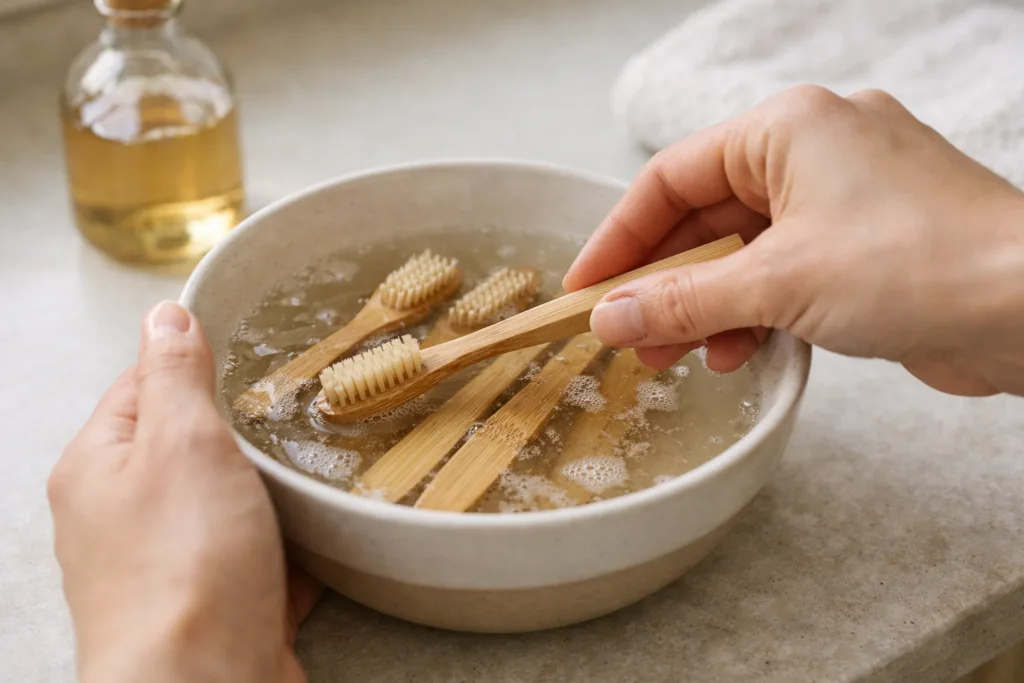
- Regular Cleaning: Always rinse your toothbrush thoroughly after brushing — paying attention to the bristles and handle — and wipe down excess moisture from the bamboo handle before putting it away. Once a week, give it a deeper clean in warm water (and optionally a splash of white vinegar).
- Avoid Covered Containers: Resist the urge to pop your toothbrush in a travel tube or covered holder after use. These traps moisture and are an open invitation for mold. If you need to travel, let the brush dry as much as possible first.
- Keep Away from Splash Zones: Position your toothbrush holder away from shower spray or areas where it can get wet repeatedly.
- Check for Early Signs: Watch for dark spots or fuzzy growth on the bamboo. The sooner you catch it, the easier it is to remove mold with a cleaning session.
- Rotate Brushes: If possible, keep two bamboo toothbrushes and alternate them, giving each time to dry fully between uses — a trick professionals use for extending hygiene products’ life.
If you’re sourcing for a business or need bulk supply, see our bamboo toothbrushes manufacturer page for custom and OEM support.
How to Clean and Disinfect Bamboo Toothbrush Handles
Even with perfect drying habits, occasional deep cleaning will help keep mold at bay and your toothbrush sanitary. Here’s a simple method that works without harsh chemicals:
- Vinegar soak: Mix one cup of warm water with two tablespoons of white vinegar. Soak the handle for 3–5 minutes. Rinse off with clean water and dry thoroughly.
- Baking soda option: Lightly scrubbing the handle with baking soda also works to deodorize and keep the bamboo fresh.
Do not soak bristles unless they are nylon-4 or a compostable plant-based variety; synthetic bristles can deform in vinegar. Curious about bristle types? Learn about charcoal infused bristles and their benefits.
How Often to Replace Your Bamboo Toothbrush
Every toothbrush—bamboo or not—should be replaced about every 3 months, or sooner if you spot frayed bristles. For bamboo specifically, replacement might be necessary if there’s any visible mold, fuzzy spots, or the handle starts to weaken. Early detection is key: regular inspection prevents using a brush that could harbor mold or bacteria.
Bamboo Toothbrush Storage Solutions
Storage plays a huge role in mold prevention. Consider investing in:
- Self-draining stands: Simple holders with slats or holes let excess water drain and air to reach the handle.
- Wall mounts: Keeping brushes off the sink reduces splashes and airborne moisture.
- Avoid mugs or cups: These can collect water at the base and keep the handle in constant contact with dampness.
Smart storage doesn’t require a fancy gadget. Even a bamboo travel toothbrush with case can work—just be sure it’s only stored in the case when dry.
Eco-Friendly Deep Cleaning Hacks
To deep clean your bamboo toothbrush and extend its life, try these natural methods:
- Lemon juice and sunlight: Rub a little lemon on the handle and let it sun-dry for an hour.
- Hydrogen peroxide solution: Dip only the handle (not the bristles) briefly, then rinse and dry.
- No bleach or harsh detergents: These can degrade bamboo, leach chemicals, and hurt the planet.
Special Care for Sensitive Gums and Kids’ Brushes
Kids and people with sensitive gums often use softer-bristled or color-coded bamboo toothbrushes. Mold prevention for these is the same, but vigilance is even more important: children may leave brushes in puddles or closed cups. Choose a holder with drainage and teach proper habits early. See tips for families in our popular guide on teaching kids to use eco-friendly kitchen tools.
Bamboo Toothbrushes: Mold Myths vs. Facts
| Myth | Fact |
|---|---|
| Bamboo toothbrushes always get moldy | Not if you dry and store them properly |
| Plastic brushes are always cleaner | Bamboo resists bacteria naturally but just needs extra care |
| Any dark spot is dangerous mold | Could be stain or harmless discoloration; inspect closely |
| Sealants on bamboo prevent all mold | Even with food-safe coatings, standing water encourages growth |
Eco-Friendly Toothbrush Disposal Tips
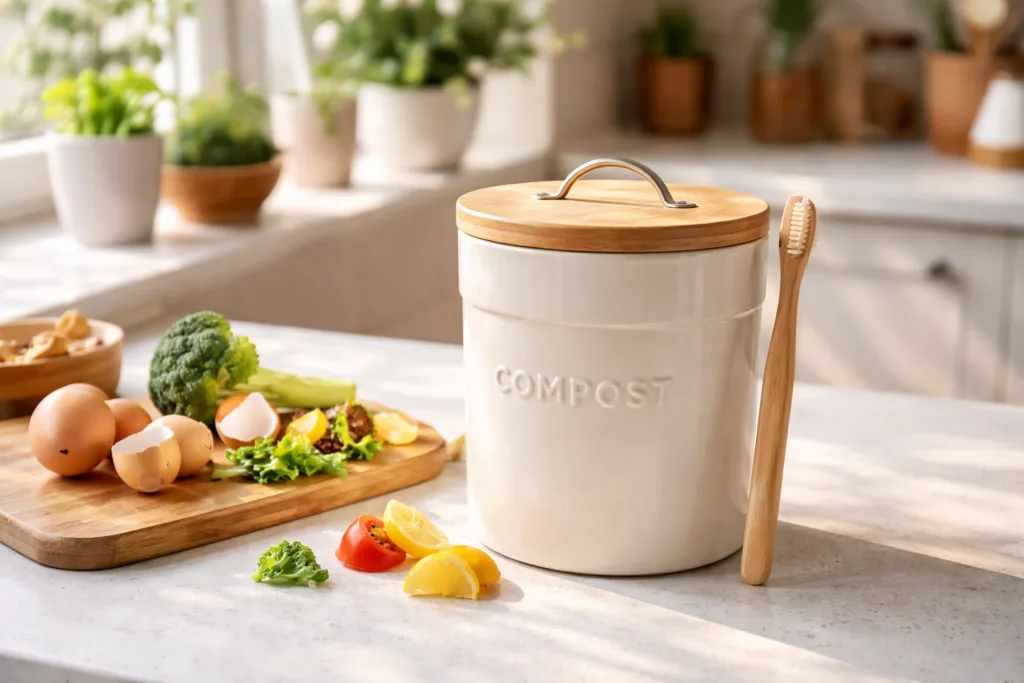
When your brush is due for replacement, composting or repurposing the handle is the most earth-friendly closing step. For step-by-step instructions, read our tutorial on how to dispose of a bamboo toothbrush correctly.
What to Do if Mold Already Appeared
- Clean thoroughly, but don’t ignore damage: If mold is surface-deep, cleaning might help. But if it’s under the finish or you notice a persistent fuzzy texture, it’s safest to replace the brush.
- Prevent recurrence: Identify what went wrong (storing damp, poor airflow) and adjust your habits for the next brush.
Best Bamboo Toothbrush Materials and Treatments
Not all bamboo toothbrushes are equal. Look for:
- Matured, seasoned bamboo: Older bamboo is denser, resists moisture, and lasts longer.
- Food-safe anti-mold coatings: Check that any lacquer or finish used is natural and non-toxic (often done at the manufacturing stage for safety and durability).
- Certified sustainable sources: Products with FSC or similar certification indicate careful bamboo crop management.
As shared by Bamboo Wood Art’s workshop team, proper kiln drying before assembly also minimizes internal moisture, limiting the risk of mold later on.
Transparency: The Limits of Bamboo Toothbrushes
Bamboo is a fantastic choice for the planet, but it’ll never be invincible to moisture like plastic. If you brush multiple times a day, live in an extra-humid climate, or can’t keep up with drying habits, consider rotating two toothbrushes. Even the best bamboo can only withstand so much continuous dampness.
Common Questions About Mold on Bamboo Brushes
- Can I remove mold and reuse a bamboo toothbrush?
- How do I know if the brush is still safe?
- What if only the bristles mold?
- Is a clear finish or paint helpful?
If in doubt, always prioritize hygiene. When a brush looks questionable, replace it.
Extra Tips for Eco-Friendly Care
- Use a natural disinfectant like vinegar for deep cleaning; it’s gentle on bamboo and environmentally friendly.
- Choose only certified sustainable bamboo; production quality makes a real difference for both lifespan and mold resistance.
Conclusion
With just a little attention to drying and storage, your bamboo toothbrush can be a hygienic, mold-free part of your daily wellness routine. Mold prevention comes down to airflow, moisture management, and conscious habits—easy steps that help both you and the environment. Choose sustainable options, check your brush often, and enjoy the fresh, natural feel of bamboo oral care.
Frequently Asked Questions
How can I tell if my bamboo toothbrush has mold?
Look for fuzzy spots, dark splotches, or a musty smell along the bamboo handle. Small surface stains can sometimes be cleaned, but persistent fuzz or odor means replacement is needed.
Is it safe to use a bamboo toothbrush with discoloration?
Mild discoloration is often harmless, but if it’s spreading or fuzzy, it’s best to err on the side of caution and dispose of the brush.
Can I store my bamboo toothbrush in a cup?
It’s better to use a holder that drains. Cups often pool water at the bottom, keeping bamboo wet and increasing mold risk.
What’s the best way to clean a bamboo toothbrush handle?
Use a mix of warm water and white vinegar or baking soda. Scrub gently and let it dry upright afterward. Avoid soaking for too long or using strong chemicals.
Should my bamboo toothbrush be coated or unfinished?
Both work, but a food-safe, natural coating slightly enhances resistance to water. Fully unfinished bamboo needs diligent drying.
How should I dispose of my bamboo toothbrush?
Remove the bristles with pliers, compost the handle, or repurpose it. You can find detailed guidance in our linked article above.