Introduction
Customization has become a defining trait of modern bamboo products. From home goods to branded merchandise, the choice of marking or decorating technique isn’t just about aesthetics – it affects durability, eco-impact, and your overall brand story. Two leading options are laser engraving and silk screen printing, each with unique strengths. Understanding these techniques can help businesses, designers, and curious consumers make more informed choices.
- Overview of customization techniques for bamboo products
- Importance of selecting the right printing method
What is Laser Engraving on Bamboo?
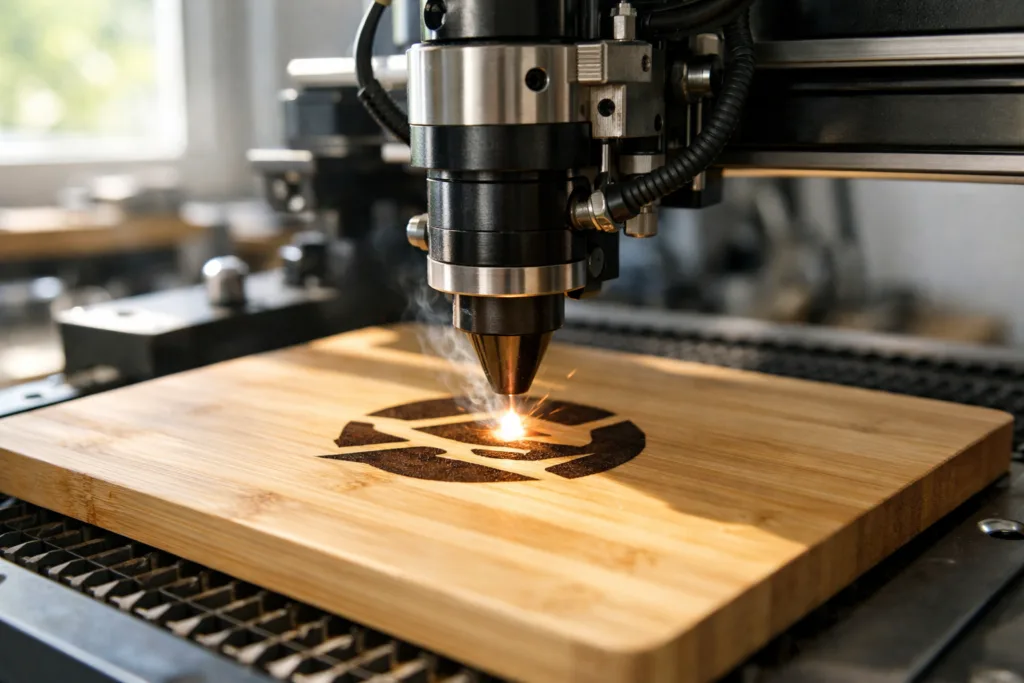
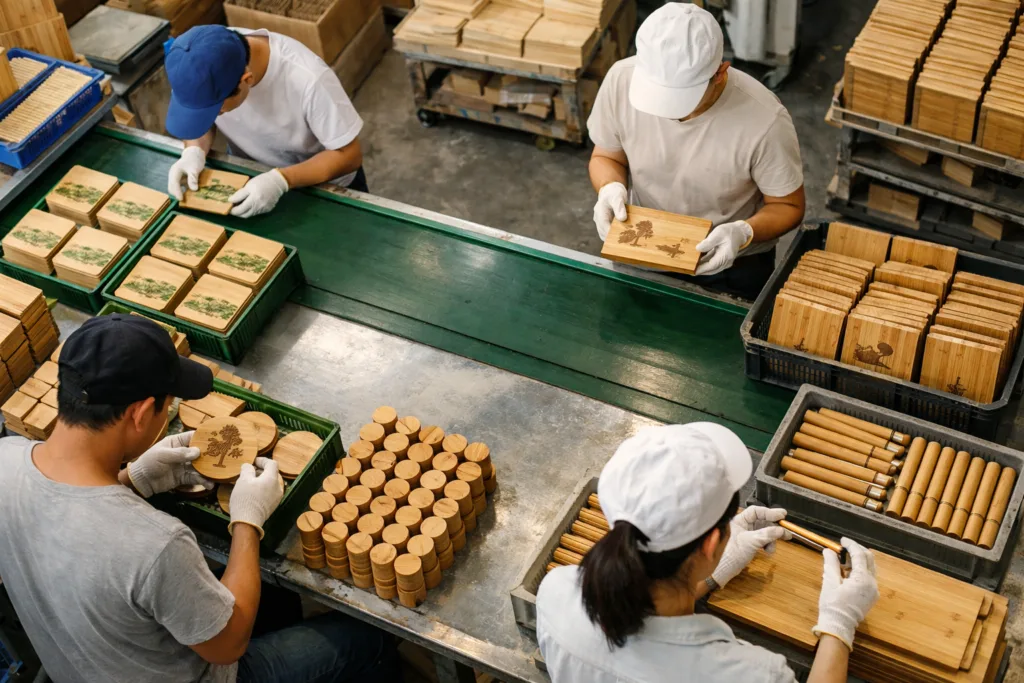
Laser engraving involves using a precise, computer-guided laser beam to burn or vaporize a thin layer of bamboo surface, creating clean, permanent marks. Unlike traditional carving, this technology translates digital artwork directly onto bamboo – down to the tiniest detail – without any contact tools. As a result, laser engraving on bamboo achieves remarkable clarity for logos, names, barcodes, or intricate graphics, all while maintaining the natural look and feel of the wood.
How Laser Engraving Works
The process starts with preparing the artwork file in a digital format (like vector graphics). The bamboo item is positioned under the laser head, which traces the image, burning away a shallow layer following the design. Key parameters—such as laser power, speed, and focus—are adjusted for the bamboo’s density and grain orientation. Bamboo Wood Art often selects mature, kiln-dried bamboo for this process, as it ensures consistent engraving quality and helps prevent warping or dark spot inconsistencies.
Key Advantages of Laser Engraving
- Precision: Achieves intricate details, sharp lines, and fine textures that would be challenging with manual or ink-based printing.
- Durability: The engraving is literally part of the bamboo’s surface—it will not scratch off or fade from sunlight, washing, or daily use.
- Eco-Friendly: No inks, solvents, or additional chemicals are needed, keeping the customization environmentally gentle.
Example Applications
- Personalized bamboo cutting boards, chopsticks, or utensils
- Corporate gifts such as engraved tea canisters or desk organizers
- Bamboo toothbrush handles (for subtle branding or unique patterns)
For more details on bamboo’s characteristics and grains, check out this guide to bamboo grain orientation.
As a bamboo products manufacturer, we offer expert guidance and flexible customization for businesses choosing between laser engraving and silk screen printing. Visit our bamboo products manufacturer page to learn more.
What is Silk Screen Printing on Bamboo?
Silk screen printing, also called screen printing, is a versatile process where a mesh screen and stencil are used to apply layers of ink onto a bamboo surface. This manual or semi-automatic technique allows for vivid, opaque colors and works well for batch production. The inks set on top of the bamboo, building up a tactile, colorful finish that can include bold brand logos, color blocks, or playful illustrations.
How Silk Screen Printing Works
The process starts with preparing a mesh screen with the design cut out as a stencil. Bamboo products are secured, often using jigs for repeatability. Specialized ink is swept across the screen with a squeegee, passing through open areas to deposit color onto the bamboo below. Each color requires a separate screen and print pass, followed by drying or heat curing. While it can take extra setup time, once prepared, the method excels at producing hundreds or thousands of identical items efficiently.
Key Advantages of Silk Screen Printing
- Vibrant Colors: Achieves bright, vivid color layers that pop—even on bamboo’s warm, textured surface.
- Batch Efficiency: Well-suited for producing large quantities with consistent branding or themed visuals.
- Design Flexibility: Supports multi-color, shaded, or gradient designs (with the right ink and screen prep).
Example Applications
- Logoed bamboo phone stands or tablet holders for trade shows
- Children’s toys and eco-friendly promotional items with playful graphics
- Bamboo jars or boxes needing crisp, color-coded labeling
If you want to learn about packaging possibilities once your products are printed, explore our article on packaging options for private label bamboo goods.
Comparison: Laser Engraving vs. Silk Screen Printing on Bamboo
Both printing techniques can deliver beautiful results, but their effects, costs, and sustainability footprints diverge quite a bit. Here’s how they stack up face to face:
| Aspect | Laser Engraving | Silk Screen Printing |
|---|---|---|
| Visual Effect | Subtle, elegant, natural contrast (no added color) | Vivid, bold, wide color range (with some surface texture) |
| Durability | Extremely durable, scratch & fade proof | Good if cured properly, may chip or fade with time |
| Environmental Impact | Low—no inks or solvents used, minimal waste | Depends on ink type—water-based inks are better for the planet |
| Cost | Efficient for small batches, setup is digital, low variable cost | Lower unit cost for large batches, but screens/stencils increase setup cost |
| Customization Flexibility | High—small or variable designs, personalization, unique SKUs | High for fixed designs, less suited to personalization |
Visual Differences
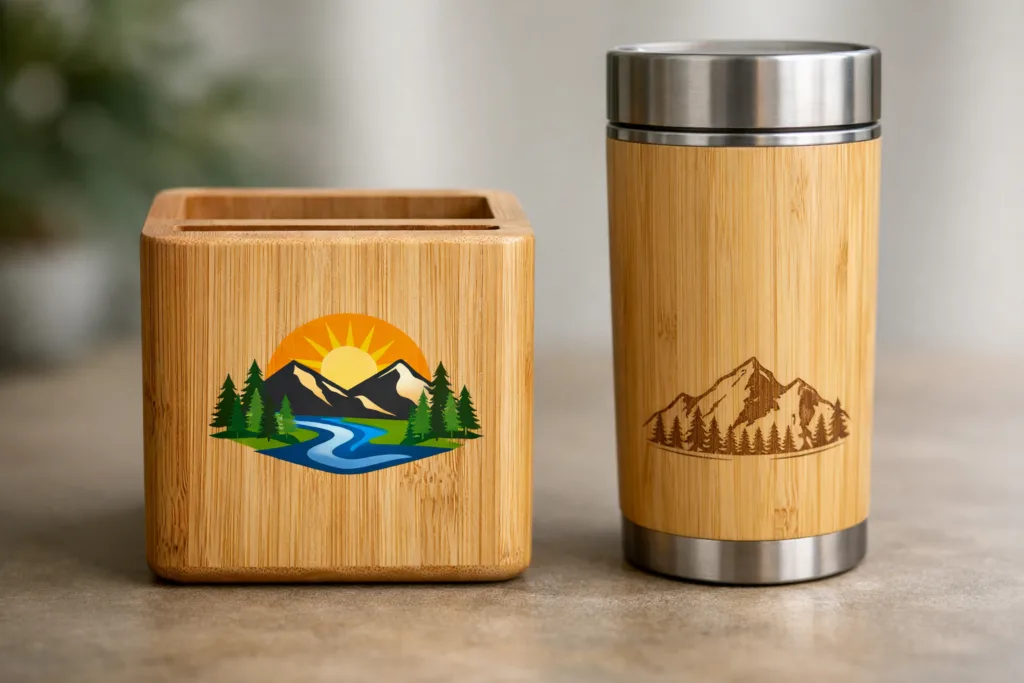
Laser engraving integrates with the bamboo’s natural look—there are no added colors, just shades of brown or black depending on the laser settings and bamboo species. This suits minimalism and eco-focused aesthetics. Silk screen printing, in contrast, sits atop the bamboo, making bright logos, artwork, or safety markings stand out.
Durability and Longevity
Since laser engraving slightly burns the bamboo, the results will not peel or wash off, making it ideal for items subjected to regular cleaning—think kitchenware or high-touch objects. Silk screen printing is remarkably tough when cured properly but may wear away with especially rough or frequent use.
Environmental Concerns
Laser engraving is a clear winner for minimal waste and chemical use. For silk screen printing, using water-based or eco-friendly inks can lower the environmental impact, but traditional solvent-based inks are less sustainable. Businesses focused on planet-friendly products often lean toward laser engraving or screen printing only with certifiable green inks.
Cost Considerations
Laser engraving is cost-effective for small runs or when each item must be personalized—setup is digital, so new designs can be swapped ‘on the fly.’ Silk screen setup requires stencils for each graphic and color, so it becomes more cost-efficient as you scale up – and when design changes are rare.
Customization Options
If your brand wants individualized names, unique codes, or subtle patterns on every piece, laser engraving makes this possible at minimal extra cost. Silk screen printing shines for fixed, multi-color graphics repeated across bulk orders.
For more on balancing production methods with order size, we cover this in our MOQs in bamboo manufacturing guide.
Choosing the Right Method for Your Bamboo Products
Which customization option is best for your project? It depends on your priorities, product type, and design needs. Here’s how to make your decision smarter:
Key Factors to Consider
- Product Type: Items regularly washed (cutting boards, utensils) suit engraving’s durability; short-term items (promotional coasters, display pieces) can work well with screen printing.
- Artwork Complexity: Highly detailed vector logos or small text are ideal for laser engraving. Bright, brand-colored logos, gradients, or large graphics favor silk screen printing.
- Batch Size: Engraving is flexible for low- or high-mix small batches. Screen printing shines with high volume and repeat designs.
- Eco Goals: Prioritize laser engraving or ask for water-based/eco inks if choosing silk screen printing.
Typical Scenarios
- Corporate teams ordering personalized bamboo gifts (names, awards): Pick laser engraving.
- Retail lines featuring a single logo in multiple colors: Choose silk screen printing for consistency and color vibrancy.
- Eco-conscious brands selling zero-waste homeware: Laser engraving offers a gentle, lasting mark without extra waste.
To learn more about bulk and custom programs, review our bulk & wholesale programs page.
PROMPT
Laser engraving and silk screen printing on bamboo are two customization powerhouses, each with clear strengths. Laser engraving excels at fine, permanent marks with zero waste and outstanding flexibility—perfect for personalized gifts, sustainable branding, and products that must withstand daily use. Silk screen printing offers dazzling color and production speed for large branded batches. When choosing the optimal method, consider your project’s needs, eco-values, and product application. Businesses and home enthusiasts alike can leverage these options to create truly memorable bamboo goods.
Frequently Asked Questions
Does laser engraving damage bamboo products?
No—laser engraving removes only a thin top layer, preserving bamboo’s strength. With the right machine settings, the finished piece remains smooth and durable.
Is silk screen printing safe for food-contact bamboo surfaces?
It can be, but make sure the printer uses food-grade, certified inks. Laser engraving is naturally safe as it adds no chemicals, making it ideal for kitchenware.
How many colors can be used in silk screen printing?
Multiple colors are possible, but each requires a separate screen and print pass. Most jobs use one to four colors for cost-efficiency on bamboo.
Can intricate designs be screen printed on bamboo?
Fine lines are possible, but not as crisp as laser engraving. Large, bold graphics or illustrations stand out better with silk screen printing.
Is one method more weatherproof than the other?
Laser engraving offers superior resistance to wear, moisture, and sunlight. Screen-printed ink coatings can fade or wear with exposure but perform well with moderate indoor use.
Which printing method is more cost-effective for small orders?
Laser engraving is generally the smarter choice for small batches or personalized products due to digital setup and low minimums.