Introduction
The bamboo products market is thriving as businesses and eco-conscious consumers around the world turn to sustainable materials for everyday goods. With its fast growth, renewability, and strength, bamboo has climbed from niche product status to mainstream popularity—showing up in kitchens, bathrooms, offices, and beyond. But for brands, retailers, and entrepreneurs aiming to bring bamboo products to market, the path isn’t always straightforward. If you’re deciding between OEM, ODM, or custom bamboo manufacturing, understanding these terms—especially OEM and the world of bamboo customization—can save you time, money, and confusion. Let’s break down what these options mean for your business and which might be the right fit for your next bamboo project.
What is OEM in Bamboo Products?
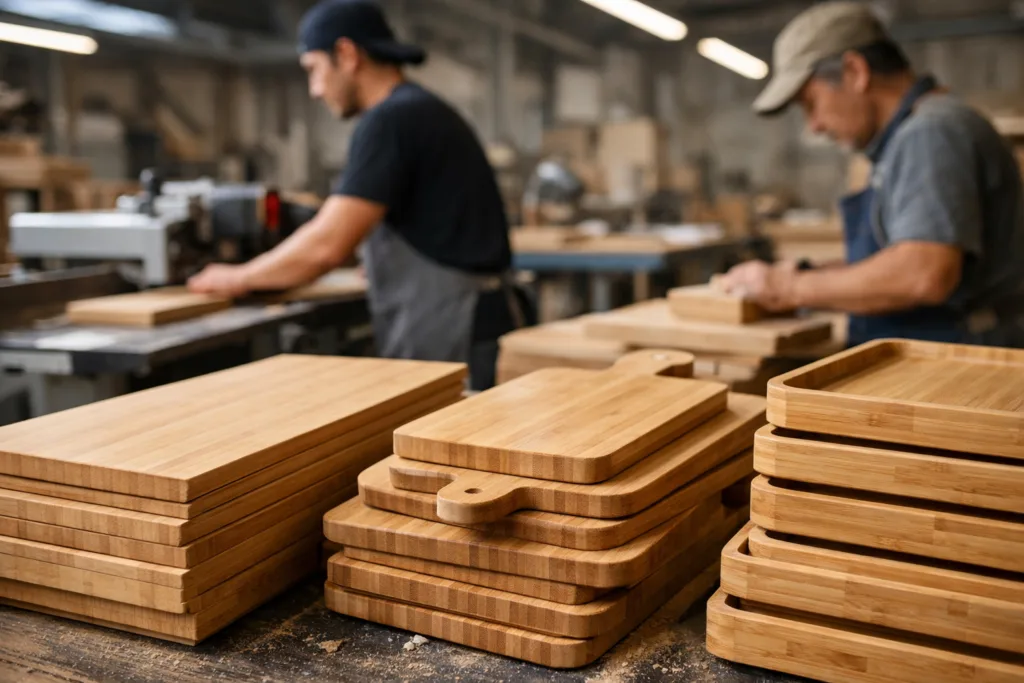
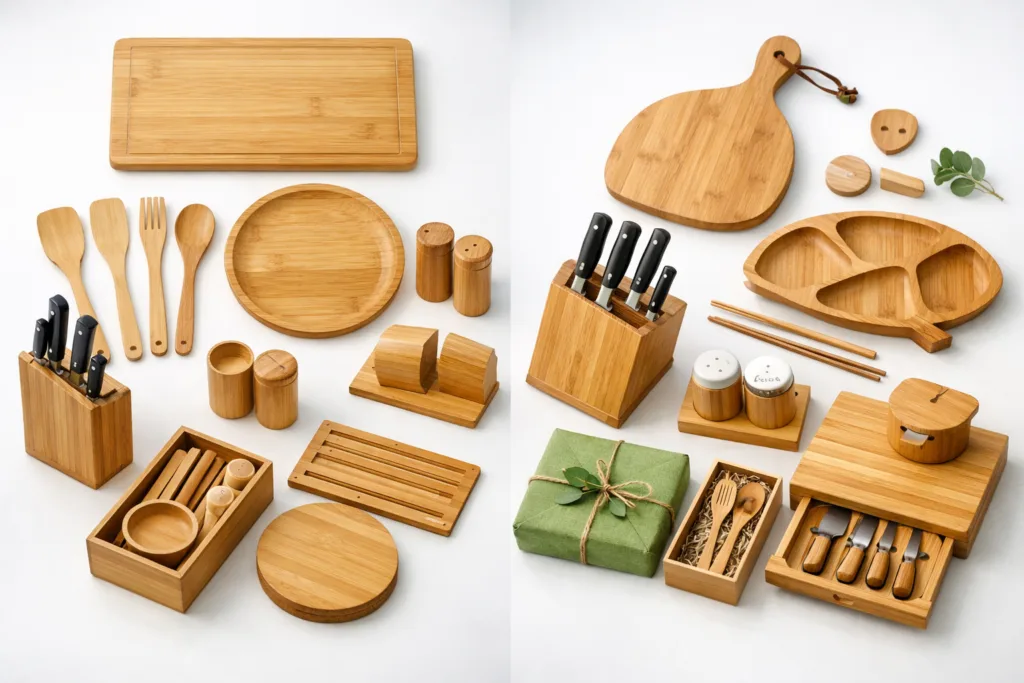
OEM stands for Original Equipment Manufacturer. In the context of bamboo products, it refers to a factory or supplier that produces items based on another company’s specifications, branding, or designs, but does not market them under its own label. Essentially, the OEM builds bamboo products for your brand, using their existing molds, production techniques, and raw material sourcing expertise. Common OEM bamboo goods include kitchenware like cutting boards, steamers, trays, and utensils; homeware such as baskets, storage racks, and laundry hampers; flooring and paneling; and even bathroom accessories.
The advantages of OEM for bamboo products include faster lead times, lower development costs (you don’t need to invent or re-design the wheel), and easier quality control since the manufacturer likely already has mature processes. You’re able to quickly fill your catalog with proven products, which is ideal for startups, e-commerce sellers, hotel chains, or gift companies scaling fast. However, there are limitations: your options are often confined to the shapes, sizes, and features the manufacturer offers, any major innovation may require extra costs, and your brand won’t have complete exclusivity. You won’t fully own the product’s intellectual property, and competitors may source a nearly identical item.
If you’re seeking a trusted manufacturer with flexible OEM options and custom upgrades, explore our versatile bamboo products manufacturer solutions.
What is Bamboo Customization?
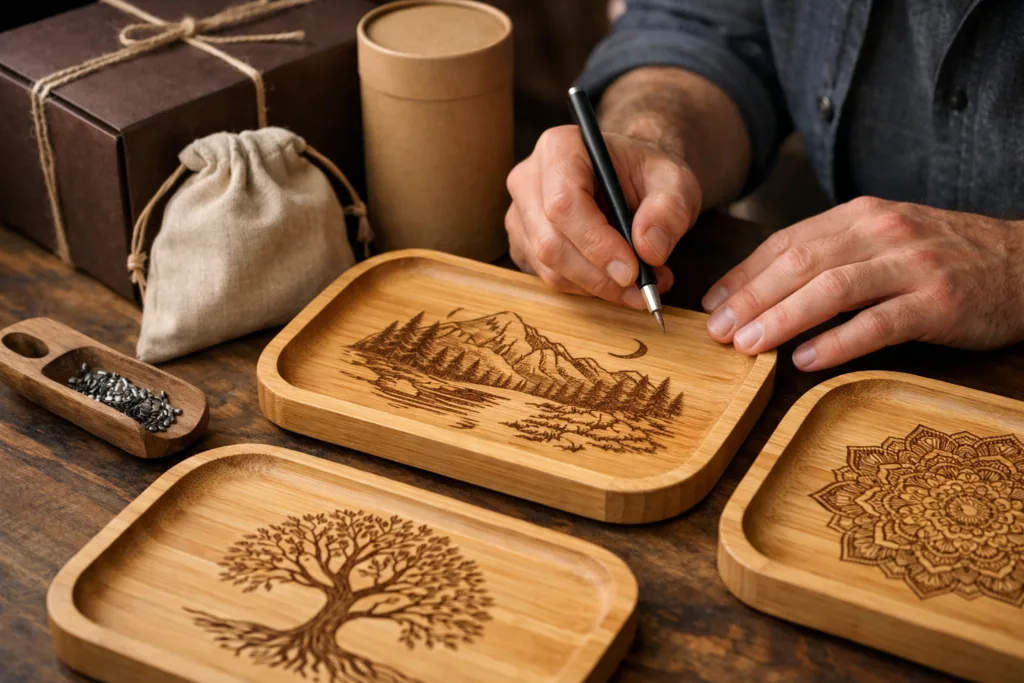
Customization in bamboo products manufacturing is the practice of making changes to existing OEM models or creating entirely new items tailored to a client’s requirements. This could involve personalized branding (like logo engraving or printed packaging), changing dimensions or fit for unique markets, adjusting surface finishes, developing new product features, or even innovating with new materials or hybrid designs.
Examples of bamboo customization include private label brands specifying their own logo, retailers requesting special sizes for storage baskets or mixing bamboo with other woods for a countertop look, or companies developing custom packaging for eco-friendly gift sets. For businesses, customization means the ability to stand out—offering unique bamboo products not found everywhere else. Customization is especially valuable for boutiques, product designers, or established brands who want every aspect of the product to reflect their identity and values.
How OEM and Customization Differ in the Bamboo Industry
The difference between OEM and full bamboo customization starts at the design stage. OEM typically begins with selection from a catalog—choosing product models that already exist. Customization requires close collaboration with your supplier’s design and engineering teams, creating technical drawings, prototypes, and sometimes new molds or jigs for production. This means development timelines can be longer for customized bamboo products, but the result is a unique product made to your precise specifications.
Another key difference is in minimum order quantities (MOQs) and pricing. OEM products generally have lower MOQs, making them ideal for small businesses testing the market. Custom bamboo items often require higher MOQs because the manufacturer is investing in new set ups, materials, or molds that only make sense at scale. Prices for customized goods can also be higher, but the added value of exclusivity, branding, and special features is often worth the investment.
Quality control is critical in both cases. With OEM, factories like Bamboo Wood Art maintain high food-safety standards, select mature bamboo for stability, and use sanding, carbonization, or kiln-drying methods to prevent mold—methods fine-tuned for repeatability. For customization, the process adds extra steps: samples, client sign-off, possibly third-party inspections, and specific material or packaging requests. Intellectual property (IP) is also an important factor: with OEM, you’re licensing or reselling an existing product, but with customization or full ODM (Original Design Manufacturer), you may own all drawings, molds, and eventual patents—just be sure to clarify with your supplier and secure clear contracts.
Choosing the Right Option for Your Business
Selecting between OEM and customization isn’t always black and white. First, consider your budget: If you have limited capital, starting with OEM bamboo products could let you test demand, build a sales channel, and reduce upfront risk. If your brand hinges on uniqueness, or you want to establish deep market differentiation, customization may justify a higher initial investment.
Your brand goals also matter. Large retailers or hotel chains can often get away with high-volume, recognizable products and benefit from fast, cost-effective OEM. Smaller brands, designers, or those entering niche markets might find greater value in custom bamboo projects that match precise needs—even if MOQs are higher. Product uniqueness and IP must be weighed: If your risk tolerance is low, OEM offers proven, stable results; if you’re chasing market leadership, pushing for customization and clear IP contracts makes sense.
Finally, think about long-term partnerships. Some bamboo manufacturers like Bamboo Wood Art can flexibly blend approaches: starting you with OEM, adding branding upgrades, and scaling up to full customization as you grow. There’s no one-size-fits-all solution—choose based on your resources, timeline, growth targets, and brand DNA.
OEM vs. ODM: What’s the Difference for Bamboo Products?
Here’s a comparison table to clarify the distinctions and help guide your decision-making process:
| Criteria | OEM (Original Equipment Manufacturer) | ODM (Original Design Manufacturer) / Customization |
|---|---|---|
| Product Design Origin | Supplier-owned, ready-made designs | Client-driven, often unique designs |
| Branding | Usually rebranded for buyer, limited change | Fully custom, unique branding possible |
| MOQ | Lower—often 200–500 units | Higher, starting from 500–1000 units or more |
| Development Speed | Fast—products ready to produce | Slower—design, sample, test, produce |
| IP Ownership | Typically supplier’s | Often client’s, but needs contract |
| Innovation Level | Low to moderate | High—new features, shapes, blends |
| Cost per Unit | Lower | Higher (setup, new molds, etc.) |
| Ideal for | Entry-level, fast launch | Brand builders, established companies |
If you’re keen on more technical aspects of OEM arrangement, such as managing lead times, shipping logistics or verifying supplier credentials, our guides on planning inventory for peak season and verifying a bamboo manufacturer provide actionable next steps.
Conclusion
OEM and bamboo customization each carry compelling benefits, and the best choice depends on your business’s stage, resources, and vision. OEM offers a shortcut to quality, consistent supply that’s quick to market but might limit your brand’s uniqueness. Full-custom or ODM bamboo projects demand deeper involvement—longer homework, more capital, and hands-on work—but deliver one-of-a-kind results that amplify your story. No matter your choice, be sure to weigh MOQs, costs, branding rights, and future growth as you draw your roadmap.
Frequently Asked Questions
What is the main reason brands choose OEM for bamboo products?
Brands choose OEM to quickly access high-quality, proven bamboo goods with low MOQs, ideal for rapid market entry and controlling costs.
Can I add my logo to OEM bamboo goods?
Yes, most OEM suppliers allow logo engraving or printing, but shape and design changes are usually limited compared to fully tailored items.
How long does a custom bamboo product take from design to delivery?
Custom bamboo projects can take 60–120 days, including time for design, sampling, revisions, and production—OEM is usually much faster.
Will customization always require large order quantities?
Custom items usually have higher MOQs due to prototyping costs, but some suppliers offer flexible solutions for growing businesses.
Is IP protection possible with OEM bamboo products?
OEM doesn’t usually offer exclusive rights or new patents, so IP protection is stronger with custom or ODM solutions and clear contracts.
What kind of testing is important in bamboo manufacturing?
Quality control checks for moisture, food safety, durability, and anti-mold treatments are vital—choose suppliers with solid QC procedures.