Introduction: Rethinking Packaging for Wooden Goods
Wooden products have earned their place in kitchens, homes, and businesses for their beauty, durability, and sustainability. Yet traditional packaging for wood—especially one-time-use plastics—undermines these strengths. As eco-conscious buyers demand greener solutions, brands like Bamboo Wood Art lead the shift toward plastic-free packaging wood alternatives that protect both product and planet.
Core Challenges With Traditional Packaging
Conventional wooden goods often arrive wrapped in layers of plastic film or bubble wrap. While these buffer against drops and humidity, they add waste, create disposal headaches, and increase carbon footprint. Switching to pulp tray packaging, kraft paper, and smart design removes much of this single-use plastic without compromising safety.
Role of Sustainable Packaging in Brand Value
Retailers, hospitality groups, and manufacturers realize packaging is no longer just about transit—it is a reflection of brand values. Sustainable choices can boost B2B trust, sharpen consumer appeal, and support certifications such as FSC and PEFC.
Kraft and Pulp Packaging Options for Wood
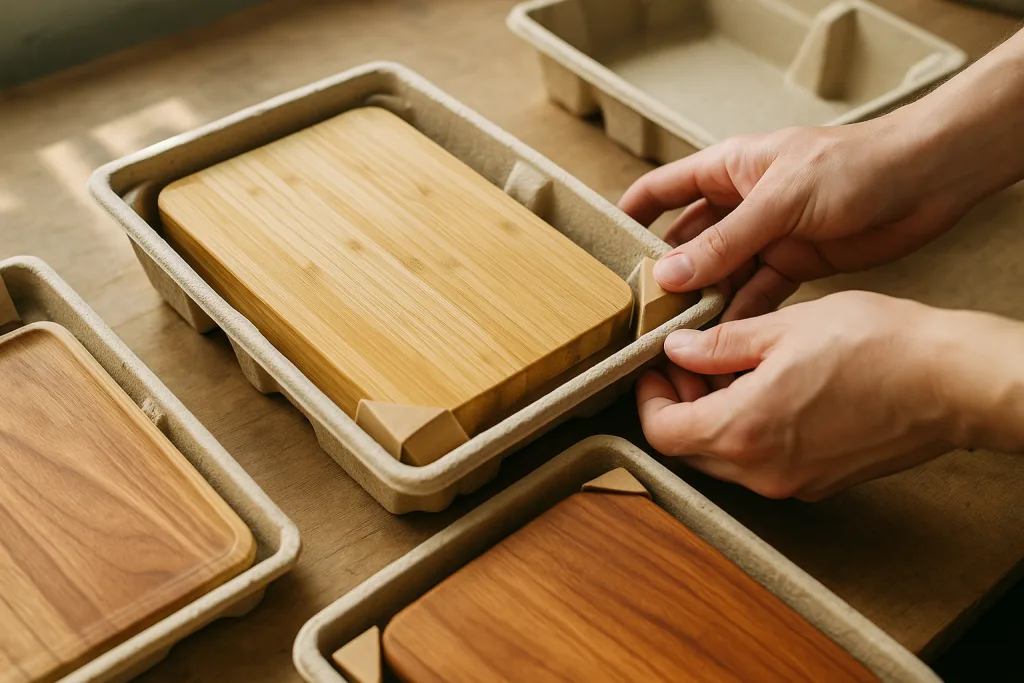
Kraft paper and molded pulp offer robust, adaptable solutions for plastic-free packaging wood. These materials are made mostly from recycled fibers, giving them a lower carbon footprint and end-of-life recyclability.
Pulp Trays: Shock Absorption Meets Low Carbon
Pulp trays are formed by pressing wet pulp into custom molds, then kiln-drying to achieve a rigid shape. These trays cradle wooden goods, absorbing shock during transit and minimizing movement. Their typical moisture content is controlled below 10%, making them suitable for direct contact with kiln-dried wood objects—from serving trays to furniture components.
Kraft Wraps and Sleeves
Kraft paper sheets and sleeves tightly wrap wooden surfaces. They offer abrasion resistance, surface scratch prevention, and basic moisture buffer. For high-value items, double-sleeving or layering with fine kraft tissue adds extra protection.
Comparative Table: Plastic-Free Packaging Materials
| Material | Properties | Best Uses |
|---|---|---|
| Molded Pulp Tray | Rigid, shock-absorbing, recyclable, humidity buffer | Cutting boards, serving trays, furniture parts |
| Kraft Paper | Flexible, high tear strength, surface scuff protection | Utensils, gift boxes, decorative panels |
| Kraft Cardboard Corner | Impact resistance, tension hold, cost-efficient | Panel corners, furniture legs, décor frames |
| Pulp Pad | Thin, moisture-wicking, compostable | Layering inside retail boxes, coasters |
Expert Takeaway
“Molded pulp trays with precision corner support can protect wood items from drops and shocks as well as plastic, while using half the CO₂.” — Packaging R&D Team, Bamboo Wood Art
Corner Protection: Smart Engineering for Wooden Goods
Wooden corners—especially on boards, boxes, and frames—are prone to chipping. Sustainable corner protectors made from kraft cardboard, multi-layer pulp, or even engineered bamboo veneer provide impact resistance, keeping goods pristine on arrival.
Designing Kraft Corner Protectors
Die-cut kraft corners are scored to clamp tightly onto wooden edges. Thickness ranges from 1.5 mm for lighter products up to 3.5 mm for bulkier furniture components. For heavier goods, double-ply pulp with a natural resin binding can take repeated knocks, reducing rejections and claims.
Implementing in Production
- Specs matched to wood thickness (0.5 mm clearance)
- Moisture-conditioned pulp for humid climates
- Die stamping for mass production consistency
Drop Testing: Ensuring Safe Delivery Without Plastic
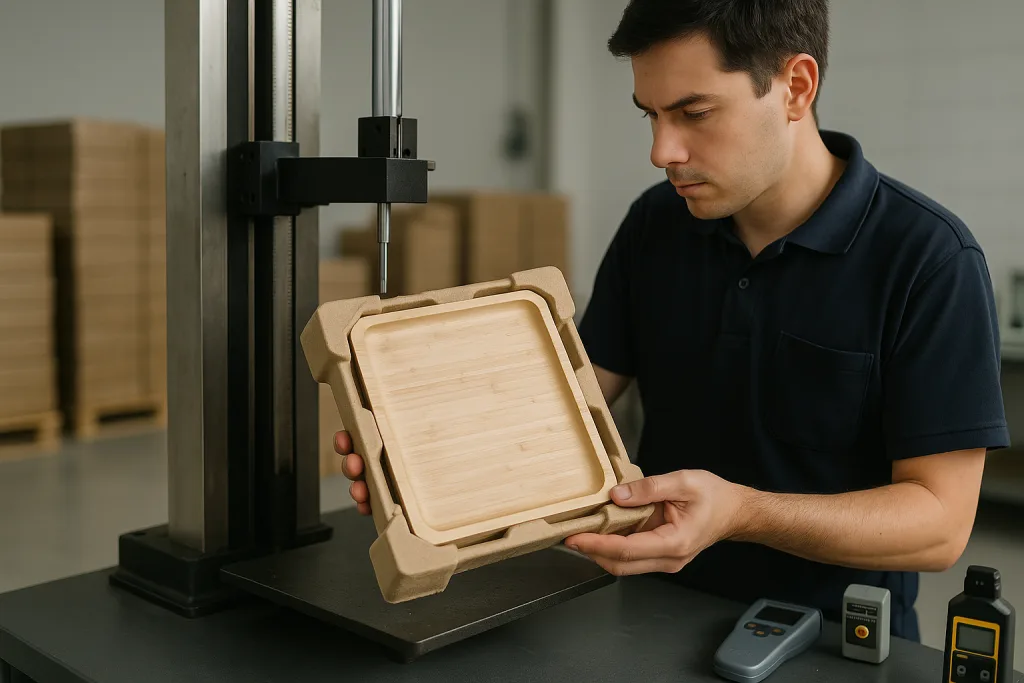
Packaging designers use drop testing to validate plastic-free packaging wood choices. Each packed sample is dropped from 0.5 to 1 meter onto hard surfaces, simulating typical transit mishaps. Wooden goods protected by pulp trays and kraft corners are assessed for cracks, chips, or surface marks.
Typical Drop Test Protocols
- Five drops per sample: flat, side, and corner
- Inspections for joint separation, finish scrape, warpage
- Packing method updates based on real-world shipping feedback
Impact on Buyer Confidence
Retailers report 30% fewer damage claims when using matched pulp trays for kitchen boards and stacked kraft sleeves for décor panels. Reliable B2B packaging translates to smoother logistics and fewer lost sales.
Humidity Buffers: Protecting Wood With Barrier-Free Solutions
Humidity is a silent enemy for wood—causing warpage, joint separation, and finish clouding. Packaging must buffer swings in moisture, especially during long exports or monsoon shipping seasons.
Naturally Humidity-Controlled Packaging
Pulp trays and double-layer kraft act as passive humidity buffers, absorbing small amounts of moisture and slowing rapid changes. For high-risk shipments, Vapor Corrosion Inhibitor (VCI) papers can substitute for plastic wraps. VCI papers are coated with plant-derived molecules that form a temporary, invisible shield against vapor, suitable for food-contact surfaces if certified.
Best Practices For Sensitive Items
- Condition wood to 8–12% moisture before packing
- Use VCI paper inside pulp trays for kitchenware and hotel supplies
- Avoid tapes with synthetic adhesives; choose paper tape
Packaging for Wooden Goods: Plastic-Lite Options
Switching to plastic-free packaging wood choices like pulp trays and kraft corners is achievable for every sector—homeware, hospitality, retail, and corporate gifting. Bamboo Wood Art, with its expertise in Moso bamboo and solid woods, integrates pulp molding, kraft die-cutting, and biodegradable tapes in export-grade packaging, reflecting its commitment to sustainability and precision.
Application Areas
- Bulk kitchenware shipments (cutting boards, trays, utensils)
- Retail gift boxes/decorative displays (bamboo and wood panels)
- Hotel and restaurant serviceware (acoustic slats, service trays)
- Furniture components, eco-corporate gifts, and branded retail packaging
Quality and Compliance Considerations
Bamboo Wood Art sources FSC-certified bamboo and follows E0/E1 emission standards. Pulp and kraft packaging is tested for flatness, moisture wicking, and structural strength (see FSC guidelines). For food-contact goods, manufacturers select paper and pulp coatings compliant with FDA or LFGB standards.
Cost and Carbon Footprint: Making the Switch Pay Off
Cost remains crucial in packaging decisions, but the long-term advantages of plastic-free packaging wood outweigh short-run savings. Molded pulp and kraft solutions cost 5–15% less than thick plastics at scale. When considering disposal fees, CO₂ savings, and brand reputation, these alternatives deliver true value.
CO₂ Comparison Table
| Packaging Type | CO₂ / 1,000 Units | Disposal |
|---|---|---|
| Plastic Foam Wrap | 45–52 kg | Landfill, low recycle rate |
| Molded Pulp Tray | 18–22 kg | Compostable, high recycle rate |
| Kraft Sleeve/Corner | 9–16 kg | Recyclable, compostable |
Business Case
Brands win on cost, compliance, and green marketing. Bamboo Wood Art routinely passes export drop testing standards with pulp and kraft packaging, supplying B2B buyers with reliable, planet-friendly solutions that meet or exceed customer specifications.
Implementing Plastic-Free Packaging for Wooden Goods
Shifting to plastic-free packaging wood options is easier with correct planning and process alignment. Here’s how leading manufacturers—including Bamboo Wood Art—adapt:
- Collaborate with wood suppliers to set precise product dimensions and tolerances for custom pulp trays.
- Integrate die-cut kraft corners at assembly stage, tailored to furniture, kitchenware, and décor component specs.
- Conduct regular drop and moisture tests to optimize packaging thickness and configuration.
- Select compliant coatings for pulp, kraft, and tapes to meet region-specific food-contact and emissions standards.
- Audit carbon footprint annually to refine material sources and disposal practices.
Practical Tips: Maximizing Protection Without Plastic
The secret to successful plastic-free packaging wood strategies lies in detail. Use the right material, thickness, and layout for every product type:
- Layer kraft sheets between stacked boards or trays
- Clamp die-cut pulp corners around frame edges—tight fit is key
- Set moisture content before packing, and add VCI paper for export
- Print instructions for end user recycling or composting
- Consider branded cardboard cartons with molded pulp inserts for retail impact
Frequently Asked Questions
What is the best plastic-free packaging wood solution for heavy items?
Molded pulp trays with reinforced kraft corners offer the best combination of strength and impact resistance for heavy wooden products.
Will pulp tray packaging protect against humidity and warping during shipping?
Pulp trays absorb minor moisture swings but should be paired with VCI paper or moisture control packets for long humidity exposures.
Can plastic-free packaging meet international food-contact safety standards?
Yes, kraft and pulp options with FDA- or LFGB-compliant coatings are used for kitchenware, serving trays, and hotel products worldwide.
Does switching to pulp/kraft packaging increase costs?
At scale, molded pulp and kraft corners often cost less than plastic, especially when considering disposal fees and recycling benefits.
How do kraft corner protectors compare to foam wraps in drop tests?
Properly die-cut kraft corners with layered pulp cushioning perform similarly in drop tests and offer better recyclability than foam wraps.
How can buyers verify the sustainability of pulp or kraft packaging?
Look for FSC/PEFC certification and ask suppliers for CO₂ footprint, moisture content, and compliance test reports for batch verification.