Why Safety Matters in Kids’ Bamboo Dinnerware
When choosing dinnerware for children, safety should come first. Parents want reassurance that plates, bowls, and cups will stand up to rigorous use and pose no risk to health. Bamboo kids dinnerware offers an eco-friendly alternative to traditional plastic or ceramic options. But how do manufacturers ensure these products are truly safe?
Safe Bamboo Dinnerware for Kids
Safe bamboo dinnerware for kids means more than just using natural materials. It combines thoughtful design, precise engineering, and strict testing to deliver lasting performance at home or in hospitality settings. Brands like Bamboo Wood Art specialize in manufacturing plates and bowls that tick every box: they use sustainably sourced Moso bamboo, blend natural fibers with safe resins, and shape each piece to eliminate sharp edges or splinters.
Material Science: What Makes Bamboo Unique?
Bamboo is a renewable grass that grows rapidly and absorbs more carbon dioxide than most trees. Moso bamboo, commonly used in dinnerware, offers high strength and low porosity. It needs to be kiln-dried to reach a moisture content of 8–12%, which helps control warping and cracking. This process keeps your child’s plate flat, even after dozens of washes or busy mealtimes.
BPA-Free and Food-Safe: What Parents Should Check
BPA stands for bisphenol A, a chemical found in some plastics that may affect health. The best bamboo kids dinnerware is marked ‘BPA-free’ and is finished only with food-contact safe coatings. Brands should provide FDA or LFGB certifications, proving these products meet strict migration limits—no chemical leaching from the plate into food.
Essential Tests for Children’s Dinnerware
- Migration Tests: Assure no harmful chemicals transfer to food.
- Edge Rounding: Checks that every rim is smooth.
- Drop Tests: Simulate real-life accidents, ensuring plates resist breaking or shattering.
- Dishwasher Cycles: Assess long-term durability after repeated washes at high temperatures.
Bamboo Wood Art conducts industry standard migration tests on every batch. Technicians scrutinize edge rounding, using a tactile gauge to check for sharp spots. Plates must pass a minimum height drop (usually one meter) onto a hard surface without splitting. This attention to detail protects little hands and ensures product longevity.
How Production Quality Controls Enhance Child Safety
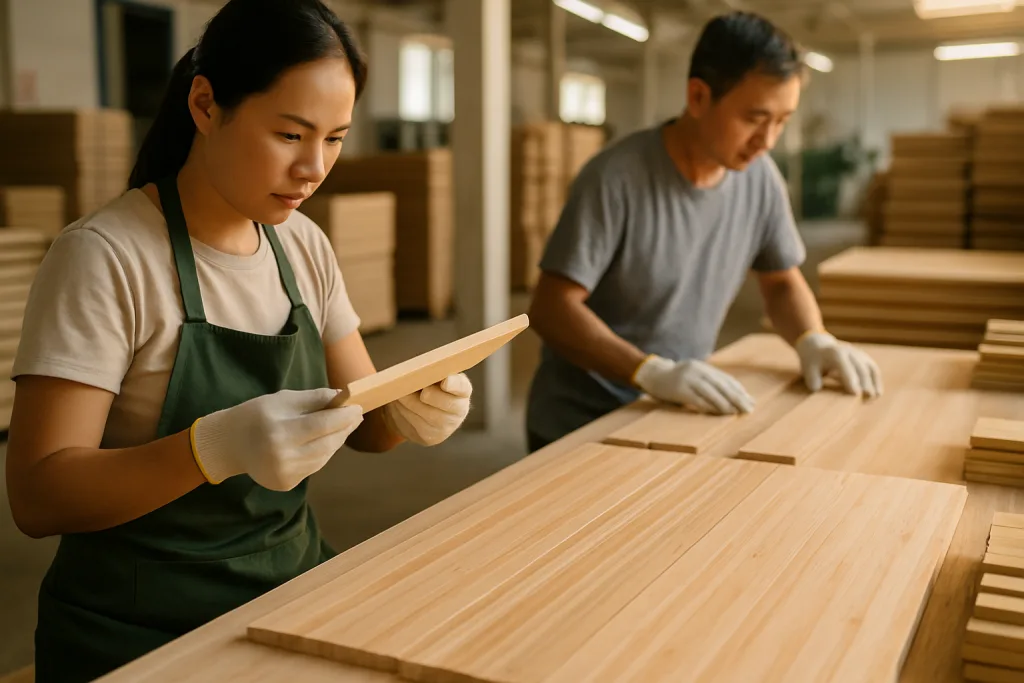
Manufacturers implement precise controls at each stage. Bamboo slats are sorted for grain uniformity and kiln-dried to exact moisture levels. Lamination with E1-class resins keeps formaldehyde emissions low. CNC machining creates smooth forms, while sanding in stages (180, 240, then 320 grit) ensures no scratching edges remain. Finished items are checked for flatness and adhesion before packaging.
Comparing Kids’ Dinnerware Materials
| Material | Properties | Best Uses |
|---|---|---|
| Bamboo Fiber Composite | Lightweight, natural, dishwasher safe, BPA-free | Plates, bowls, cups for toddlers and kids |
| Plastic (Melamine) | Bright colors, hard, prone to leaching with heat | Occasional use, not for microwaving |
| Ceramic | Heavy, breakable, easy to clean | Older children or supervised use |
| Stainless Steel | Durable, safe, can be heavy | Lunch boxes, water bottles |
Bamboo Wood Art’s Precision Manufacturing
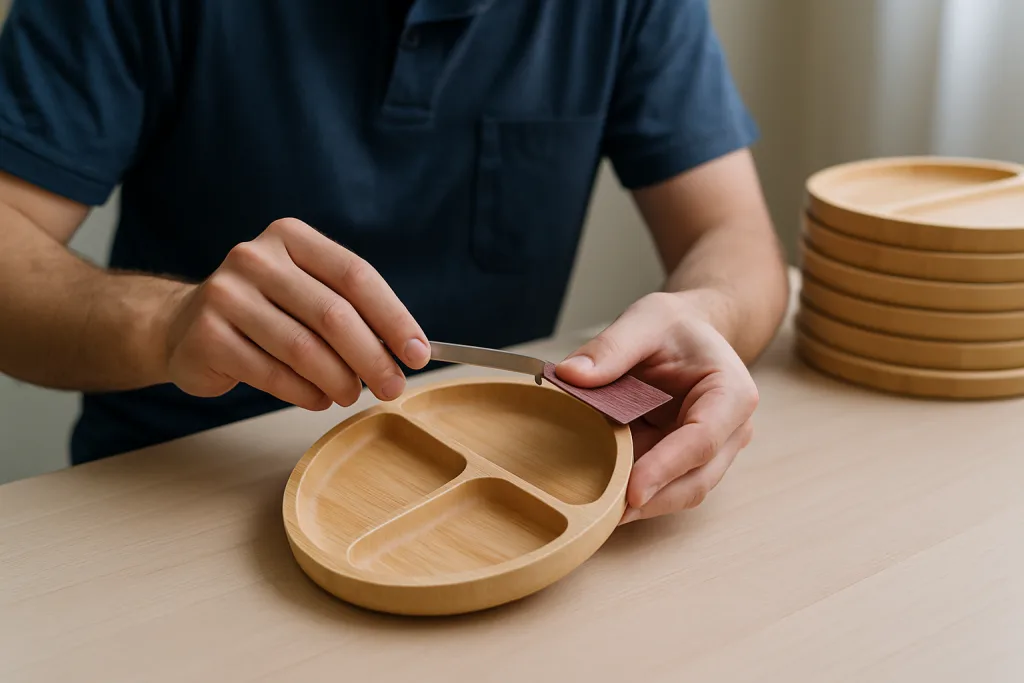
The focus on detail at Bamboo Wood Art sets their children’s dinnerware apart. Edges are profiled and sanded until no ridges remain. Multistep finishing involves water-based varnish or plant oils, each FDA-tested for safe food contact. Final QC includes drop tests from 1 meter, checking for cracks and splinter points, making their products safe for everyday use in homes, preschools, or restaurants.
Testing Protocols All Parents Should Understand
Migration Testing Explained
Migration testing involves exposing the dinnerware to chemicals or food simulants, then checking for any transfer of substances into the food. These tests follow guidelines set by the FDA and LFGB, verifying that plates and bowls cause no health risk. Only products falling far below migration thresholds receive safety labeling, reassuring families at a glance.
Edge Rounding Standards
Meticulous edge rounding ensures no dangerous spots. Plates and bowls are commonly checked with tactile gauges, ensuring all radii meet or exceed safe design benchmarks. This prevents cuts or discomfort for young diners learning to feed themselves.
Drop Test Durability
A controlled drop onto a hard surface simulates real-life accidents. Results guide design improvements: if a plate chips, splinters, or cracks, its edge may be reprofiled. Only dinnerware passing multiple drop cycles without flaws earns a safety pass.
Age Grading Guidance
Not all bamboo kids dinnerware is suitable for every age group. Testing ensures items are correctly labeled—toddlers’ plates avoid deep bowls, tiny spoons are designed for gradual bite progression. Age grading helps parents pick dinnerware that matches their child’s developmental needs.
Understanding Compliance Labels
Look for clear compliance labels on packaging and documentation. Products should state “BPA-free,” include FDA/LFGB marks, and show recommended ages for use. Bamboo Wood Art includes batch traceability with every shipment. Retail packaging promotes responsible use, with care instructions printed in plain language for ease of understanding.
Care Guidance: Ensuring Dinnerware Longevity
Daily Cleaning Tips
- Wash with warm water and mild soap; avoid harsh scouring pads.
- Towel-dry immediately; don’t leave plates soaking.
- Use the dishwasher for most bamboo fiber pieces, but check the care label first.
Prevent Warping and Cracking
Do not microwave solid bamboo plates, as uneven heating can cause warping. Keep items out of direct sunlight during drying. If needed, rub with a light coat of food-grade plant oil (like linseed or walnut oil) to revive finish and sheen.
Bamboo Dinnerware in Real Life
Meals Made Easy
Bamboo dinnerware’s balanced weight and soft feel empower young eaters. Bowls and plates are gentle on sensitive gums. Colorful designs encourage self-feeding and keep mealtime fun. Strong lamination and UV finishes resist stains from sauces, fruit, or yogurt. In preschools and cafes, stacks of bamboo plates stand up to frequent washing and lively groups.
Hospitality Solutions
Hotels and restaurants use bamboo kids dinnerware for eco-friendly presentation. Brand laser engraving or CNC personalization adds a unique touch. Bamboo Wood Art supports bulk orders and private label customization for hospitality and retail clients. Their attention to detail, from joinery to packaging robustness, ensures every shipment arrives undamaged.
Sustainability in Kids’ Dinnerware Choices
Sourcing and Manufacturing
Bamboo grows quickly and needs little water, making it a smart sustainable choice. Bamboo Wood Art selects FSC-certified bamboo and employs cross-lamination for long-term plate stability. Their plant-based finishes are low in VOCs, another plus for eco-conscious parents looking to reduce chemical exposure.
Reducing Environmental Impact
Bamboo fiber dinnerware is recyclable and biodegradable, reducing the waste left behind when plates wear out. This aligns with the growing focus on circular design and earth-friendly materials in childcare and hospitality.
Buyer’s Guidance: Choosing the Best Bamboo Kids Dinnerware
- Check for strict compliance labeling: BPA-free, FDA or LFGB marks.
- Inspect plate edges; look for rounded profiles and tactile safety checks.
- Look for robust drop-test results on product sheets or retailer pages.
- Choose age-graded designs, matching bowl and spoon size to your child’s abilities.
- Confirm packaging includes care guidance and traceability info.
- For bulk or branded orders, confirm manufacturer expertise in precision machining and quality control.
Expert takeaway: Safe bamboo dinnerware is the result of careful sourcing, exacting edge finishing, rigorous chemical testing, and thoughtful design—all tested and documented before reaching your child’s table.
Frequently Asked Questions
Is bamboo kids dinnerware truly BPA-free?
Yes, quality bamboo dinnerware uses only BPA-free binders and coatings, with clear labeling to assure parents of safety.
What certification should I look for in bamboo plates?
Look for FDA or LFGB food-contact approval, which guarantees strict migration and safety tests have been performed.
How are edges tested for safety in kids’ dinnerware?
Manufacturers use tactile gauges and visual inspection to ensure all edges are smooth and rounded, preventing cuts or discomfort.
What is a migration test and why is it important?
A migration test confirms that no harmful chemicals transfer from the plate to food; it’s critical for child safety and regulatory compliance.
Can bamboo dinnerware go in the dishwasher and microwave?
Most bamboo fiber dinnerware is dishwasher safe; however, avoid microwaving solid bamboo plates to prevent warping and damage.
How do I know which bamboo plate is right for my child’s age?
Check age grading on packaging; manufacturers test and label items for correct stage, from infant feeders to older kids’ dinner sets.