Introduction to Global Bamboo Shipping
Bamboo is much more than an eco-friendly trend—it’s now a core material in markets from construction to consumer goods and hospitality, with global demand rising every year. Shipping bamboo internationally connects bamboo-rich regions, such as Southeast Asia and China, with buyers in the Americas, Europe, and beyond. Whether you’re a business sourcing sustainable products or exploring new markets, understanding the nuances of bamboo shipping, international logistics, and customs is vital to a smooth journey from forest to shelf.
- Bamboo’s rapid growth and renewability make it a sustainable alternative to wood and plastics.
- International shipment enables supply chain flexibility and cost management, benefiting retailers, distributors, and bulk buyers worldwide.
- Expanding market adoption—such as hospitality, café branding, and corporate gifting—drives a need for reliable cross-border transport solutions.
Logistics of Shipping Bamboo
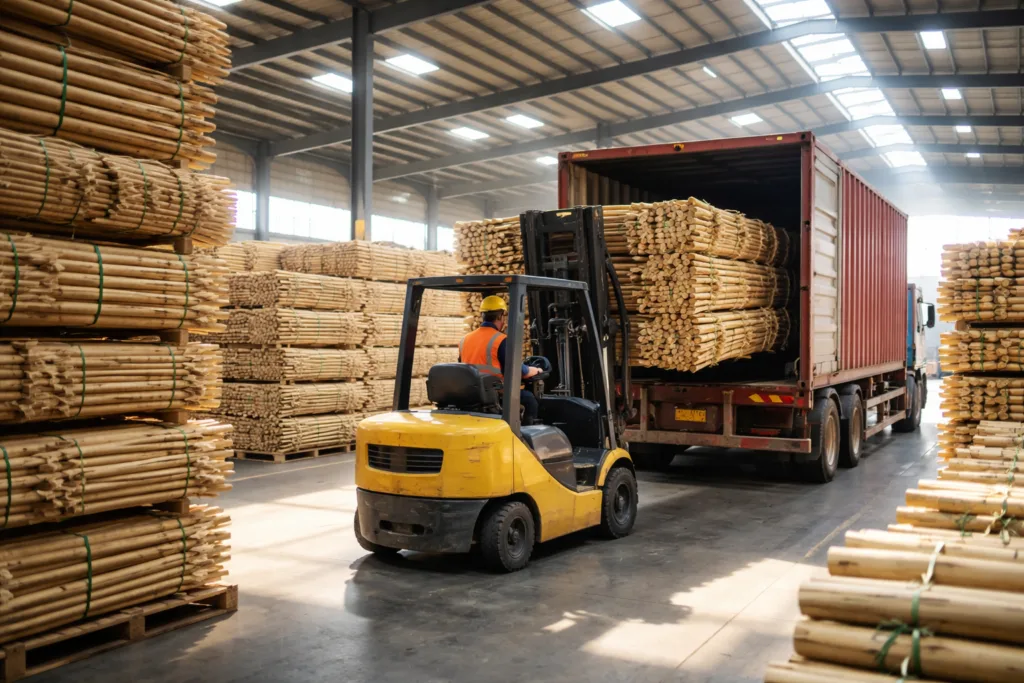
Choosing the Right Shipping Method
When arranging bamboo shipping, international logistics knowledge helps avoid delays and excess costs. Your main transport options are sea, air, and land freight:
- Sea Freight: The most common and cost-effective method for bulk shipments. Containerized transport is ideal for large volumes but takes longer—often several weeks.
- Air Freight: Faster for urgent or high-value items, though significantly more expensive than sea freight. Best for small volumes or samples.
- Land Transport: Used for cross-border transit within the same continent or as the final delivery leg after sea or air shipment.
Packing and Handling Bamboo Products for Transport
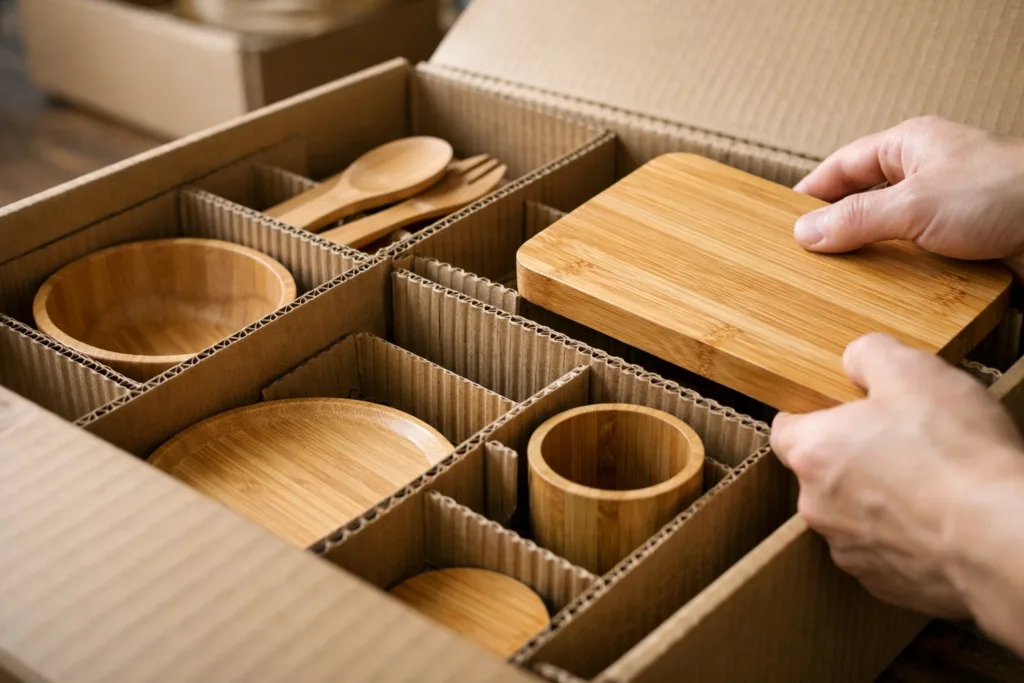
Proper packing keeps bamboo in top shape upon arrival. Bamboo’s unique structure and finishes call for careful handling. Use the following techniques:
- Wrap bamboo pieces in paper or bio-friendly padding to prevent scratches.
- For stacked items, alternate directions to reduce movement and cushion each layer with recycled cardboard or foam.
- Secure outer boxes with strapping and clear labeling to withstand long transit routes.
- For fragile items—such as trays or decor—consider custom-fit inserts.
Seasoned manufacturers, like Bamboo Wood Art, recommend kiln-drying bamboo pre-transport and monitoring humidity within containers to prevent mold and warping during sea freight. This ensures quality from warehouse to overseas client.
Key Considerations for Fragile or Large Bamboo Items
Not all bamboo cargo is created equal. Large items like furniture, and fragile goods such as bamboo trays and cutting boards, need extra precautions:
- Double-box or crate larger pieces to absorb shock.
- Avoid “tight fits” that risk edge pressure or denting during vibration in transit.
- For bulky loads, balance pallet stacking to protect weaker sections—bamboo’s tensile strength is high, but point pressure can still damage edges.
Many standing desk converters and eco-friendly organizers now ship in modular, flat-pack form—reducing risks and freight charges for global buyers.
Understanding Customs Regulations
Essential Customs Documentation for Bamboo Shipments
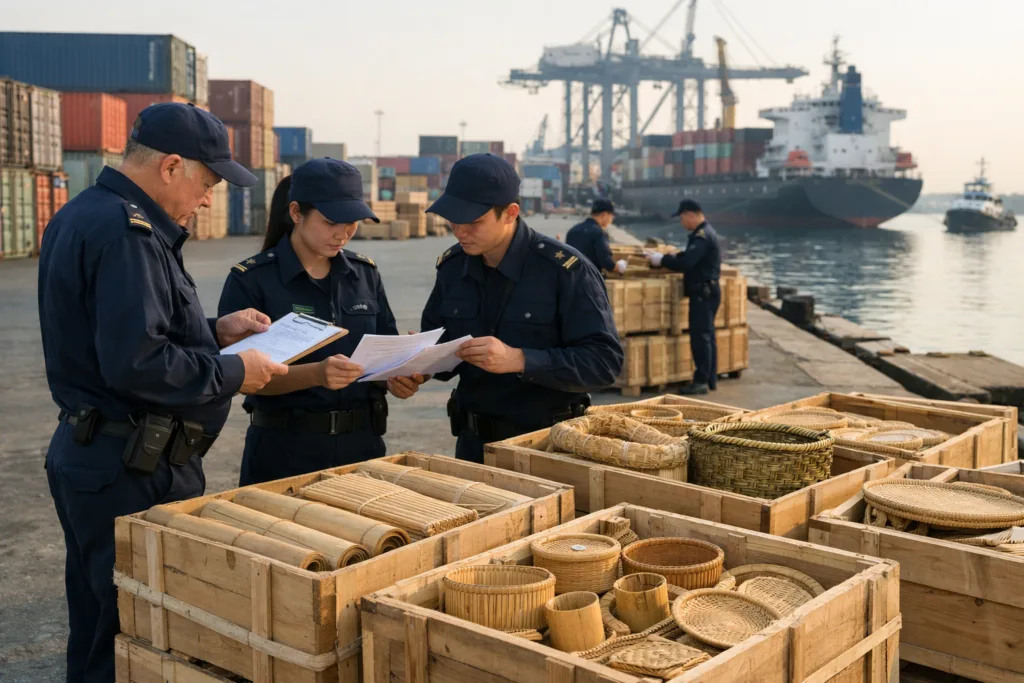
Customs clearance plays a critical role in international bamboo shipping. Required documents typically include:
- Commercial Invoice: Detailing value, contents, and origin.
- Packing List: A shipment breakdown for inspection.
- Bill of Lading (Sea) / Airway Bill (Air): Transport contract and proof of shipment.
- Phytosanitary Certificate: Confirming treatment of bamboo to prevent pest transfer, especially important for raw or minimally processed goods.
- Country-Specific Forms: Some destinations, like the EU or the US, may demand additional declarations—check with local import authorities.
Country-Specific Import/Export Restrictions on Bamboo
Bamboo is generally less regulated than hardwoods but not exempt from global controls. Some countries restrict certain bamboo species or untreated forms due to concerns about invasive pests or protected status. For example:
- The U.S. requires bamboo products to be free of soil and live pests. Proper kiln-drying or fumigation is often mandatory.
- The EU enforces strict standards on food contact bamboo products—ensure paperwork confirms food-safe coatings and adhesives.
For more, see Exporting Wooden Goods: HS Codes & ISPM-15.
Processing Times and Common Customs Challenges
Customs processing times vary widely, from two days (air) to three weeks (sea freight) depending on destination, document preparation, and local holidays. Common challenges include:
- Delays due to incomplete paperwork or missing certificates.
- Inspections for untreated bamboo or goods suspected of pest infestation.
- Incorrect HS code assignment—always verify the code for bamboo trays, furniture, utensils, etc. (see 12 Must-Know Facts for Exporting Wooden Goods).
Best Practices to Reduce Risks and Costs
Working with Experienced Freight Forwarders
Partnering with a knowledgeable freight forwarder is one of the smartest moves in bamboo shipping, international logistics. Their expertise helps you:
- Navigate rate negotiations and find the best carriers.
- Pre-arrange clearances to avoid border delays.
- Ensure proper insurance coverage for high-value loads.
Logistics partners fluent in raw material, bulk products, and sustainable goods will anticipate challenges unique to bamboo—including packing needs, moisture sensitivity, and country-specific phytosanitary rules.
Ensuring Compliance with International Standards
Standards compliance reduces customs headaches and prevents goods from being quarantined or rejected. Key steps:
- Use ISPM-15 compliant pallets or crates for all shipments to countries like Canada, the US, or Australia. This certification shows wood packaging has been heat-treated to prevent pests.
- Confirm all chemicals, glues, and finishes meet recipient country standards. Restaurants and health buyers will scrutinize for formaldehyde limits or food safety evidence (see more on food safety here).
- Coordinate with your supplier on lot documentation and chain-of-custody for FSC or other certifications if eco-claims are used.
Tips for Smooth Customs Clearance
- Submit documents electronically and ahead of time where possible.
- Label all packages clearly in English and the destination language, if required.
- Work with suppliers adept at exporting—seasoned partners often pre-print customs docs and include extra inspection samples.
- Monitor shipments during transit so you can quickly respond to customs holds or requests for more information.
Sourcing advice: Learn more about how to source bamboo products from China—a vital link in many global bamboo supply chains.
Shipping Bamboo Globally: Logistics and Customs Explained
Shipping bamboo across borders combines logistical craft with regulatory foresight. Each shipment—whether a pallet of eco-friendly cutlery, flat-pack furniture, or wholesale trays—demands attention to both packing science and customs rules. Companies new to international bamboo shipping can benefit from pre-emptive planning, collaboration with seasoned freight partners, and up-to-date knowledge of both export and import protocols.
Bamboo Wood Art, for example, regularly performs moisture testing, coordinates with freight specialists on custom pack-outs, and documents treatments to guarantee smooth transitions through customs worldwide. Their attention to detail helps clients avoid common pitfalls, such as container mold or paperwork snags, and strengthens the trust needed for long-term global trade.
Conclusion
Shipping bamboo globally isn’t just about getting boxes from point A to B. Success depends on smart logistics, airtight documentation, compliance with ever-shifting customs rules, and hands-on partnerships. Whether you’re moving bulk raw bamboo or delicate finished products, treat shipping and customs as vital extensions of your brand’s promise of quality and sustainability. With preparation and the right partners, bamboo can travel the world securely—and impactfully.
Frequently Asked Questions
What documents are required for shipping bamboo internationally?
You’ll need a commercial invoice, packing list, transport bill (sea/air), and sometimes a phytosanitary certificate for untreated items. Always check with your local customs authority for country-specific details.
Are there restrictions for importing bamboo into the US or EU?
Yes, both require bamboo to be pest-free and, in many cases, heat-treated or fully processed. The EU focuses on food contact safety, while the US has strict soil and pest controls.
How can I prevent bamboo cargo from getting moldy during shipment?
Ensure proper kiln drying, use moisture-absorbing desiccants, ventilate containers, and avoid long storage in humid environments prior to shipping.
What is the safest shipping method for fragile bamboo goods?
Air freight is safest for delicate items but costly. For sea shipments, use custom internal inserts, double boxing, and stack goods to reduce pressure points.
How long does customs clearance take for bamboo products?
Clearance can range from a few days (air) to several weeks (sea), depending on paperwork, inspections, and local regulations. Electronic pre-clearance can reduce wait times.
Does bamboo require any special treatment before export?
Yes, most countries mandate kiln drying or fumigation to eliminate pests. Sometimes, additional laboratory tests or food safety documentation is needed for finished products.