Taste, Weight & Footprint: Bamboo vs Steel vs Plastic Utensils
Choosing the right utensils for your kitchen, café, or travel set means considering more than just appearance. The material of your spoons, forks, and knives affects taste, weight, sustainability, and even day-to-day comfort. This in-depth guide compares bamboo vs stainless utensils and bamboo vs plastic utensils, breaking down each option’s unique benefits and drawbacks.
Material Breakdown: Bamboo, Stainless Steel, and Plastic
Each material has distinctive qualities that affect how utensils look, feel, and perform—from the first bite to long-term use. Let’s take a closer look at each.
Bamboo: Nature’s Touch
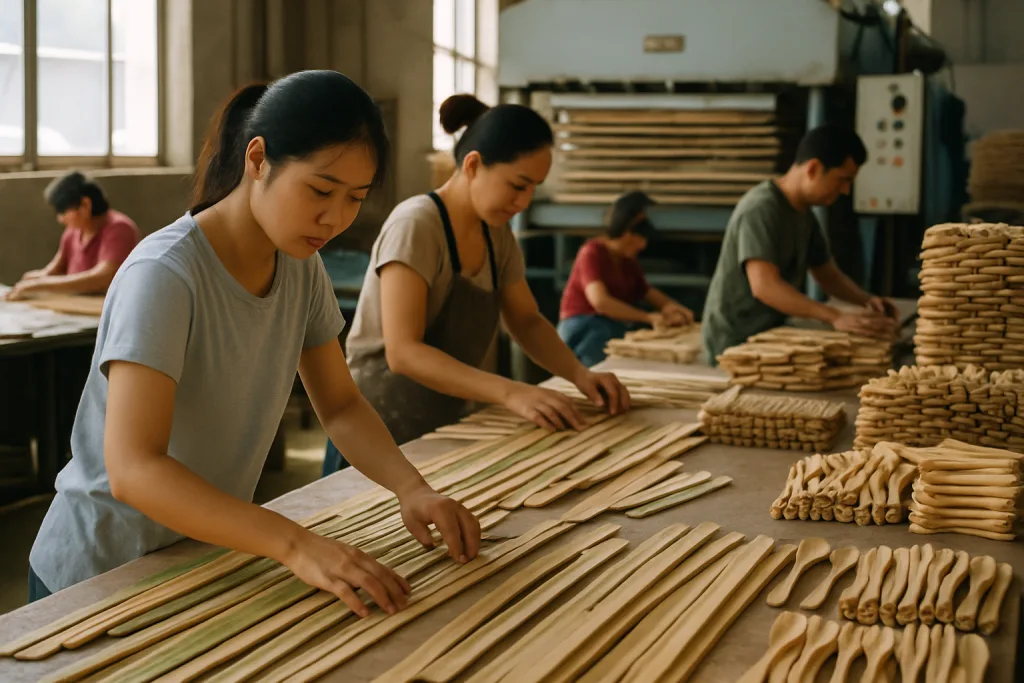
Bamboo utensils are crafted from Moso bamboo, which grows quickly and thrives without pesticides. Sourced and kiln dried to a moisture content of 8–12%, bamboo maintains natural strength while resisting warping. Slat sorting, lamination under hot press, and CNC machining ensure each piece is precise. Most manufacturers, like Bamboo Wood Art, finish bamboo utensils with water-based varnish or food-safe plant oils to protect the grain and add durability.
Stainless Steel: Timeless Durability
Stainless steel utensils feature solid metal, usually food-grade 304 or 18/10 steel. Pieces are stamped, polished, and checked for flatness and smooth edges. Steel’s heft and coolness are instantly recognizable. Compliance with NSF food safety standards is standard for restaurant use. After shaping, utensils are cleaned and polished for a sleek, shiny finish.
Plastic: Lightweight and Ubiquitous
Plastic utensils rely on injection-molding, using polypropylene (PP) or polystyrene. They are light, smooth, and cheap to make. However, they rarely pass durability or sustainability tests. Most single-use plastics do not meet the best eco standards (FDA food-contact regulations), and their glossy finishes can mask manufacturing imperfections.
Comparative Properties Table: Bamboo, Steel, Plastic
| Property | Bamboo | Stainless Steel | Plastic |
|---|---|---|---|
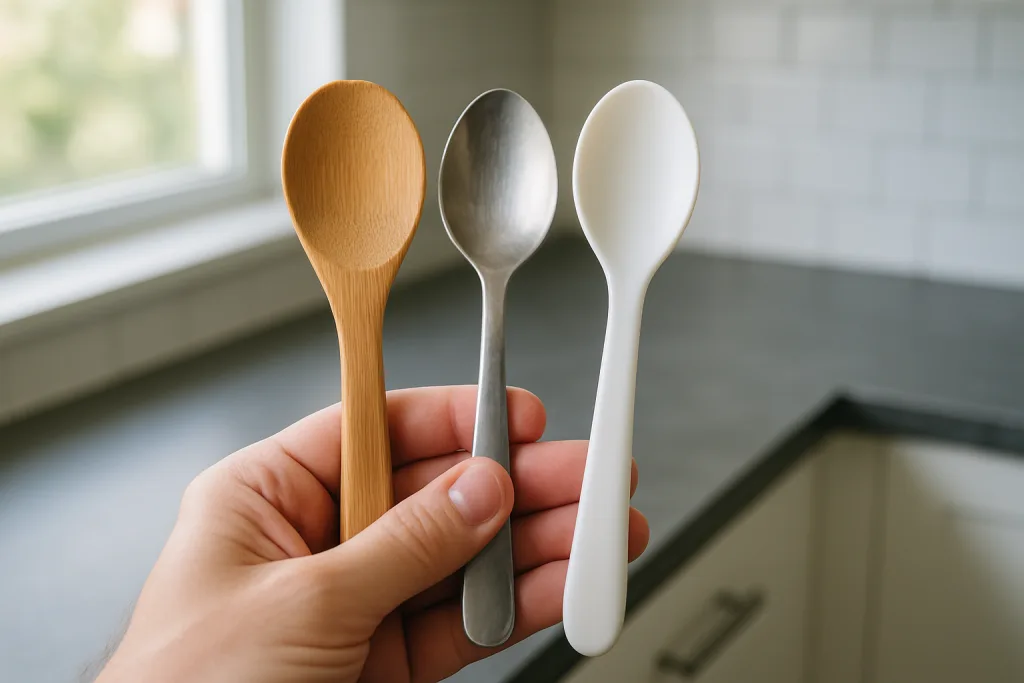
| Tactile Feel | Warm, smooth, natural grain | Cool, solid, polished | Slick, light, uniform |
| Weight | 15–18g (spoon/fork) | 35–50g (spoon/fork) | 6–10g (spoon/fork) |
| Durability | Moderate, won’t bend | High, bend/flex resistant | Low, prone to breakage |
| Taste & Flavor Impact | No metallic taste; neutral | Possible metallic hint | No taste, but can absorb odors |
| Environmental Footprint | Renewable, compostable | Recyclable (energy-intensive) | Landfill burden, rarely recycled |
| Compliance | FDA, LFGB, FSC | NSF, FDA | FDA (often not certified) |
| Common Uses | Travel, café, picnic | Home, restaurant | Events, fast food |
Bamboo vs Stainless Utensils: Key Differences
Comparing bamboo and stainless steel utensils brings out the tactile, weight, and eco differences. Bamboo is much lighter and offers a softer mouthfeel. Unlike steel, bamboo does not chill food or drink on contact. While steel utensils last decades, bamboo pieces last several years with proper care and occasional oiling. Both resist bending, but steel excels in heavy-use, while bamboo shines in relaxed cafés and takeout sets.
Sustainability Profile
Bamboo wins on renewability. Moso bamboo reaches harvestable maturity in 4–5 years, regenerates after cutting, and absorbs more CO₂ per acre than hardwood forests. With careful selection and kiln drying, manufacturers match steel for flatness and resilience. Stainless steel is recyclable and durable, but its energy-intensive minings and smelting process raises its overall carbon footprint.
Bamboo’s Edge in Tactile Experience
Many find bamboo utensils friendlier in hand. They feel light yet solid, with a gentle grain that never scratches lips. In kitchen and canteen settings, bamboo minimizes the risk of damaging nonstick pans and avoids any metallic taste.
Bamboo vs Plastic Utensils: Comfort, Safety, and Impact
The bamboo vs plastic utensils debate often centers on environmental impact, but daily use matters too. Bamboo pieces rarely snap or crack, even under pressure. Plastics offer convenience, yet most end up in landfills after use. Bamboo products finished with water-based varnish can safely withstand hundreds of washes, while plastic utensils degrade faster and may leach chemicals if exposed to heat.
Sensory Differences
Bamboo stays slightly warm. Plastic remains cool but can feel flimsy. Bamboo’s natural finish, often treated with plant oils, retains a wood-like aroma. Plastic has none—sometimes it develops an off-smell after repeated use.
Footprint & Disposability
Bamboo utensils are compostable when finished with plant-based oils or water-based varnish. Plastic utensils, even labeled compostable, usually break down only in industrial facilities and can persist in nature for decades.
Bamboo Wood Art: Craftsmanship and Quality
Leading manufacturers like Bamboo Wood Art bring precision and care to every bamboo piece. Slats are sorted, laminated under controlled heat, and finger-jointed for strength. Each utensil is shaped by CNC machining and then sanded through a 180→240→320 grit sequence, resulting in a smooth profile. Food-contact coatings meet FDA and LFGB standards, providing safe use in hotels, homes, and cafés.
Recommended Utensil Sets: Travel, Canteen, and Café
Here are the best material choices for different scenarios:
- Travel Sets: Bamboo sets are light, easy to carry, and safe for on-the-go meals. Bamboo Wood Art offers custom-branded options with strong zip pouches for retail or gifts.
- Canteen/School: Bamboo utensils are hygienic, sturdy, and won’t damage lunch boxes. Stainless steel may be preferred when a lasting set is needed.
- Café/Hotel: Both bamboo and steel suit in-house dining. Bamboo’s visual warmth and low environmental impact enhance brand appeal for sustainability-focused businesses.
Plastic utensils may seem cheap and convenient, but bamboo and steel options offer better long-term value and safety.
Bamboo Utensil Manufacturing: The Details
Let’s get hands-on with how bamboo utensils are made. Freshly harvested Moso bamboo is air dried and kiln dried to ideal moisture content. Slats are sorted and laminated in a hot press, creating blanks that resist warping. Next, CNC machines shape each piece, and craftspeople smooth the profile edges with a multi-step sanding sequence for comfort.
- Finger-jointing & edge profiling: Adds strength and tactile appeal.
- Sanding and finishing: Each piece is polished up to 320 grit, then finished with water-based or linseed oil for food safety.
- Compliance checks: Flatness, adhesion, and dimensions are tested. Finished pieces must meet FDA/LFGB criteria.
- Packaging: Sets are boxed in robust cartons with recyclable padding to prevent damage during export.
Bamboo Wood Art uses FSC/PEFC-certified sources, ensuring traceable and sustainable supply.
Applications & Buyer Guidance: Matching Material to Purpose
Material choice depends on use:
- Kitchen: Bamboo for serving, steel for cooking, plastic only if disposable needed.
- Travel: Bamboo for light packs; steel for those wanting strength.
- Hospitality & Gifting: Bamboo sets from Bamboo Wood Art can be custom engraved for branding or special events.
- Café/Deli: Bamboo adds natural warmth and eco cachet.
- Retail: Bamboo utensils excel in packaged eco sets or combined with boards and trays.
For corporate buyers, MOQs (minimum order quantities) start at 500 sets for custom bamboo. Stainless steel is best for large chain orders with above 2,000 units. Lead times for bamboo run 25–30 days; steel may be 40–45 days. Plastic orders are fastest but bring sustainability challenges.
Expert Takeaway: Why Bamboo Shines
Bamboo utensils combine gentle tactile feel, low weight, and eco-friendly sourcing. When made and finished to quality standards, they last, look great, and offer peace of mind for both personal and business buyers.
Taste, Weight & Footprint: Bamboo vs Steel vs Plastic Utensils
The choice between bamboo vs stainless and bamboo vs plastic utensils shapes the feel, safety, and sustainability of meals, whether at home or away. Bamboo stands out for light weight, neutral taste, environmental advantages, and natural aesthetics. Top manufacturers like Bamboo Wood Art guarantee food-contact safety and custom options suitable for cafés, hotels, retailers, and travel brands.
Ready to upgrade your utensil sets? Explore eco-friendly bamboo and stainless options suitable for your purpose—whether you’re kitting out a new café, sourcing travel-ready cutlery, or planning a sustainable hospitality line.
Frequently Asked Questions
Are bamboo utensils safe for hot foods?
Yes, bamboo utensils can safely handle hot foods without warping or releasing chemicals, especially if finished with food-safe coatings.
How do bamboo utensils compare in weight to steel or plastic?
Bamboo utensils weigh less than steel but more than plastic, averaging 15–18 grams for a spoon or fork.
Can bamboo utensils go in the dishwasher?
While some bamboo utensils are labeled dishwasher-safe, hand washing prolongs their life and finish, preventing warping or splitting.
Do bamboo utensils affect taste?
Bamboo utensils are flavor-neutral and do not impart a metallic or artificial taste to foods or drinks.
How sustainable are bamboo utensils compared to plastic?
Bamboo is highly renewable, compostable, and low-impact, while most plastic utensils are single-use and persistent in landfills.
What certifications should I look for when buying bamboo utensils?
Look for FDA/LFGB food-contact safety, FSC/PEFC sustainability, and robust packaging for export or retail use.