The “First Oil” Ritual: Deodorize & Protect Your Bamboo Board
Your new bamboo cutting board deserves a little fanfare on its first day in your kitchen. Prepping a bamboo board with care—sometimes called the “first oil” ritual—deodorizes, seasons, and protects the surface. This not only removes manufacturing odors but also gives your board resilience and beauty that will last for years.
Why Season Bamboo Boards Before Use?
Bamboo is dense, fast-growing, and naturally antimicrobial. But like any natural material, bamboo boards can pick up packing and factory odors. Worse, they can dry out or warp if left untreated. Proper “seasoning”—the act of infusing food-safe oil—locks out water, prevents stains, and stops cracks before they start.
Material Science: Bamboo Vs. Solid Wood
Most bamboo boards today use Moso bamboo, prized for its hardness (Janka rating ~1300) and closed-grain structure. Bamboo’s cell walls absorb moisture quickly, but over time, become less prone to swelling than woods like beech or walnut. Industrial boards, like those from Bamboo Wood Art, use kiln-dried slats (8–12% moisture), laminated under heat and pressure for strength.
| Material | Finish | Properties | Best Uses |
|---|---|---|---|
| Moso Bamboo | Plant Oil, Varnish | Tough, fast-drying, antimicrobial | Boards, utensils |
| Beech | Oil | Fine grain, absorbs quick | Boards, rolling pins |
| Walnut | Oil | Rich, softer, slow to dry | Serving boards |
| Maple | Oil, Wax | Durable, neutral | All-purpose boards |
Preparing a New Bamboo Board: Step-by-Step
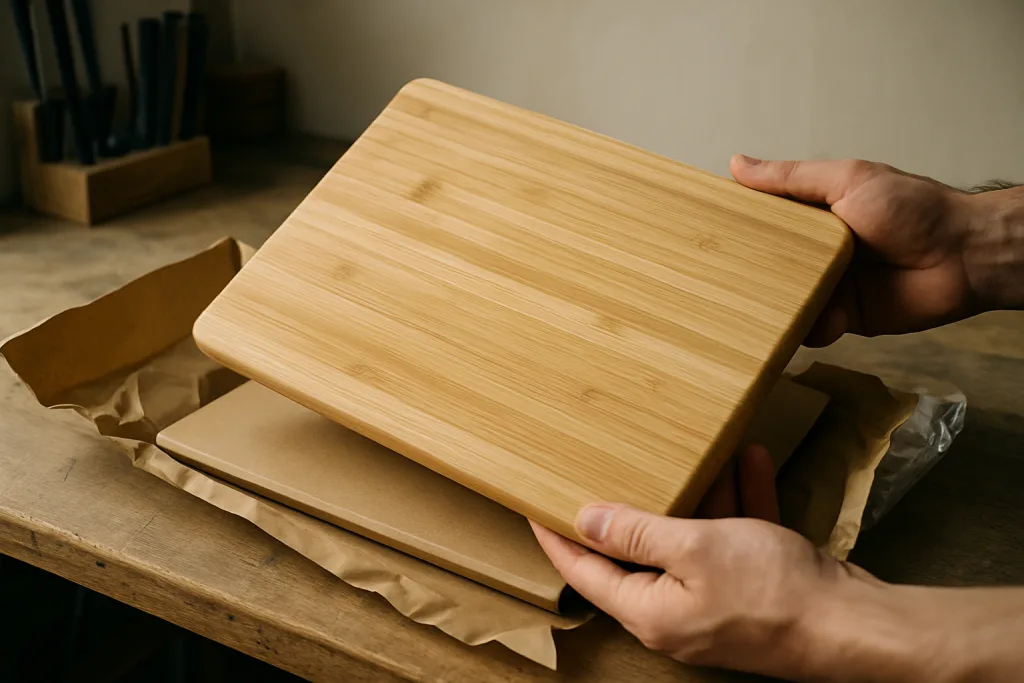
Begin with a quick set-up before your first slice of fruit or bread. Most B2B bamboo suppliers, such as Bamboo Wood Art, use food-safe glues and smooth the surface in three sanding stages (180→240→320 grit). Yet a quick rinse, deodorize, and oil routine will prime your board for kitchen success.
Unwrap and Inspect
- Peel away all packaging, including shrink wrap and stickers.
- Feel for rough spots or loose splinters; sand gently if any.
- If you detect a chemical or “woody” odor, don’t worry—deodorizing is simple.
Rapid Odor Removal
- Mix a paste of baking soda and water (2:1 ratio).
- Spread over both sides; let sit 15 minutes.
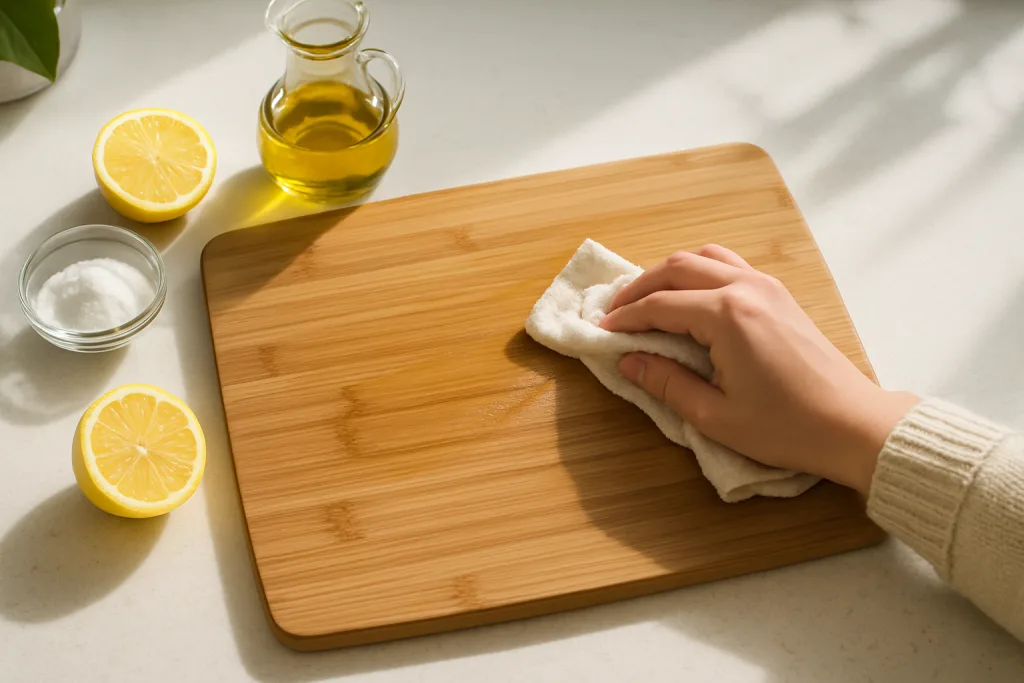
- Rub lemon half across the surface—citrus neutralizes odors naturally.
- Rinse with cool (never hot!) water. Pat dry with a towel.
- Set upright to air-dry completely before oiling.
Pro Tip: Never submerge bamboo boards or clean with hot water—the heat can warp or split the laminated layers!
Seasoning Bamboo Boards: The First Oil
Once your board is clean and dry, it’s time to perform the “first oil” ritual. This process helps seal bamboo’s pores and dramatically extends the board’s life. Choose a food-safe oil such as pure mineral oil, walnut oil (if no nut allergies), or a blend designed for cutting boards. Avoid olive or other cooking oils, which can go rancid and attract odors.
Proper Application Technique
- Pour a teaspoon of oil onto the board.
- Use a clean cloth to spread oil in a gentle, circular motion, covering all sides.
- Let the board sit for at least 2 hours (overnight is best).
- Wipe away excess with a soft towel—never leave the board oily or sticky.
Repeat this ritual monthly, or whenever your board looks dry or dull.
Watch: Quick guide to seasoning and deodorizing your bamboo board.
Common Mistakes When Prepping Bamboo Boards
Many well-meaning cooks accidentally shorten their board’s life by cutting corners. Here are the classic pitfalls to avoid:
- Over-oiling: More is not better. Too much oil leaves sticky patches that trap debris and odors.
- Using hot water or dishwasher: Heat and moisture break down the adhesive between bamboo slats, causing warps or splits.
- Skipping the dry time: Oiling a damp board locks in moisture, increasing the risk of mold or warping.
- Wax buildup: Beeswax can help, but apply sparingly. Excess leads to gunky surfaces and dull appearance.
The “First Oil” Ritual: Deodorize & Protect Your Bamboo Board
This ancient-yet-modern practice transforms any bamboo board from a blank canvas into a kitchen treasure. Whether your board is destined for restaurant meal prep or family breakfast spreads, this first-use care locks in performance. For OEMs and hospitality buyers, requesting a pre-seasoned board from producers like Bamboo Wood Art can help meet foodservice hygiene standards faster and reduce returns from odor or finish complaints.
Why Does Bamboo Board Odor Happen?
Fresh boards often carry a mild grassy or chemical scent due to kiln drying, lamination, or packaging. These whiffs fade with ventilation and initial cleaning, but rapid deodorizing ensures a neutral surface from day one—a must for chefs and retailers alike.
When to Repeat the Ritual
Oiling isn’t just a one-time event. In dry or high-volume kitchens, reapply oil monthly or as soon as the surface looks pale or rough. For heavy use boards, a quick lemon and oil wipe every two weeks keeps moisture and odor in check.
Materials and Processes in Board Production
Understanding how your board is made reveals why first-use prep matters. Bamboo Wood Art sources Moso bamboo, selected for uniform color and fiber density. Slats are sorted and kiln-dried to 8–12% moisture, then laminated crosswise (for strength) using low-VOC E1-rated adhesives. This process delivers flatness and warp resistance, verified by precise dimensional checks at every step.
Lamination & Edge Finishing
After pressing, boards are CNC machined to shape, edges are rounded, and surfaces sanded three times for smoothness. Laser logo engraving is available for retailers or hospitality clients. Most boards leave the factory unfinished—ready for custom seasoning, per region or buyer preference. Some lines receive a light plant oil or UV finish (LFGB/FDA compliant) for direct food contact.
Quick Reference: Seasonal Care Routine
Once you’ve completed the initial care, regular upkeep will keep your bamboo board looking and performing like new.
- Wipe clean daily with a damp (not wet) cloth.
- Deodorize with baking soda and lemon as needed.
- Oil monthly, or when the board looks or feels dry.
- Store upright to air both sides—never stack under heavy items.
When to Replace or Restore
Deep gouges, cracks, or persistent stains mean it’s time to sand and re-oil—or upgrade. Bamboo boards can last years, but kitchens with high humidity or rough usage should inspect boards twice a year for delamination or mold spots. Consider replacement when warps exceed 2mm or seams open.
Applications: Beyond the Kitchen
Bamboo boards aren’t just for slicing vegetables. In hotels, restaurants, or home décor, they serve as serving platters, cheese trays, display bases, or branded corporate gifts. OEMs like Bamboo Wood Art can customize sizes, engraves, or finishes for unique hospitality or retail applications, always with an eye for sustainability and reliability.
Board Longevity in Commercial Settings
Hotels and caterers may opt for boards with pre-applied plant oil finish for faster commissioning. Specify edge profiles or anti-warp construction for high-traffic use. Ensure all coatings are food-contact certified (FDA, LFGB) and request robust packaging for export shipments.
Frequently Asked Questions
How do I deodorize my bamboo board effectively?
Spread a baking soda paste on the board, wait 15 minutes, rinse with cool water, and rub with fresh lemon to neutralize odors quickly.
What type of oil is best for seasoning a bamboo board?
Use food-grade mineral oil, walnut oil (if no allergies), or cutting board oil blends. Avoid olive or vegetable oils, as they can turn rancid.
How often should I oil my bamboo board?
Oil your board monthly, or anytime the surface feels dry or looks faded. Heavy-use boards benefit from more frequent oiling.
Can I put my bamboo board in the dishwasher?
No, dishwashers and hot water can warp bamboo and degrade laminated joints. Hand-wash with cool water and mild soap instead.
What should I avoid when caring for my bamboo board?
Avoid soaking, using harsh cleaners, or applying too much oil. Give your board time to dry fully after each cleaning.
Why does my new bamboo board smell odd?
Natural bamboo and food-safe glues may emit light odors when new. Proper washing, deodorizing, and seasoning eliminate these scents quickly.