Introduction
Choosing the right bamboo manufacturer isn’t just about price—it’s about ensuring safe, sustainable products and building business relationships you can trust. In today’s competitive market, manufacturer verification and bamboo certification are cornerstone steps, whether you’re sourcing kitchenware, furniture, or packaging. This guide walks you through actionable methods to confirm that your supplier truly meets global standards, delivers genuine quality, and adheres to responsible practices.
Why Manufacturer Verification Matters in the Bamboo Industry
Fraud, inconsistent quality, and misleading “eco” claims are pitfalls that every buyer faces. Verifying a bamboo manufacturer’s credentials ensures your products are safe, compliant, and sustainably sourced. A transparent supplier not only reduces risk but provides peace of mind—especially if you sell or use products in regulated markets.
As an experienced bamboo products manufacturer, Bamboo Wood Art offers custom solutions and flexible sourcing options for businesses of all sizes.
Research Company Background and Reputation
Examine the Company’s History
Start by exploring the manufacturer’s origin story, years in operation, and leadership. Details about their core values, factory locations, and business changes help identify whether you’re dealing with an experienced, stable supplier. Deciphering their reputation can flag potential issues before you commit.
Read Online Reviews and Testimonials
Check independent sources: supplier directories, trade forums, and social platforms for honest feedback on bamboo product quality, response time, and reliability. A high volume of reviews—especially with detailed comments about materials and finish—indicates authentic market presence. Be wary of overwhelmingly positive reputations with little detail, as they could be curated or fake.
Request and Verify Official Bamboo Certifications
Key Certifications to Look For
- FSC (Forest Stewardship Council) certification: Ensures bamboo is harvested from responsibly managed forests.
- PEFC certification: Similar to FSC, but may cover different regions or standards.
- ISO Standards (e.g., ISO 9001): Ensures quality control in manufacturing.
- Food Safety Certifications (for kitchenware): E.g., LFGB, FDA; proves safe materials/processes.
How to Check Authenticity
Request digital copies of certificates—never settle for photos alone. Cross-check serial numbers with the relevant databases (FSC, PEFC) and, if possible, call the issuing organization directly. Scan for signs of forgery: blurred logos, mismatched addresses, or lack of expiry dates. Always verify food-safety labels if sourcing edible-contact items like bamboo cutting boards.
Assess Bamboo Manufacturing Processes On-Site (or Remotely)
Factory Visits & Video Tours
If you can, visit the manufacturer’s facility. Ask for guided tours showing how raw bamboo is sourced, treated, and assembled. For distant suppliers, request a real-time video walk-through. Pay close attention to workspace cleanliness, worker safety practices, and machinery maintenance.
Evaluating Sustainable Practices
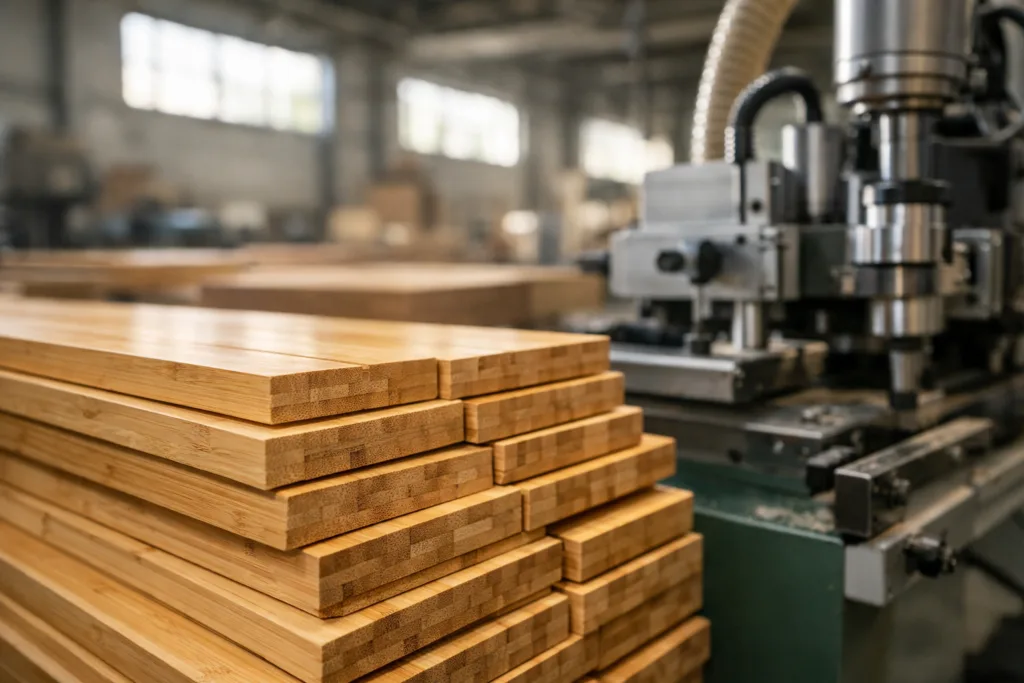
- Look for kiln-drying units that stabilize moisture (essential for mold resistance and durability).
- Ask about carbonization processes, which can extend lifespan (especially on bamboo trays).
- Pursue proof of food-safe adhesives and non-toxic coatings if relevant.
Bamboo Wood Art’s Experience Insight
Rain Chen, at Bamboo Wood Art, notes that factories often cut corners by skipping proper drying—which can lead to warping, splitting, and mold. We always recommend inspecting vertical and horizontal grain integration, glue type, and sanding finish, as these affect both appearance and long-term performance.
Confirm Legal and Regulatory Compliance
Business Licenses and Export Permits
Ask your bamboo supplier for up-to-date business licenses. If you’re importing, request their export registration and customs paperwork. Double-check that all names, dates, and government seals match the company identity you’ve researched.
Bamboo Harvesting Laws and International Standards
Suppliers should comply with forestry regulations—especially in sourcing regions like China and Southeast Asia. Confirm that harvesting quotas, worker safety norms, and environmental limits are respected. Many countries require ISPM-15 phytosanitary treatment for wooden exports; bamboo is sometimes included, so ask for heat treatment documentation where necessary.
Seek Industry References and Third-Party Validation
Buyer and Retailer References
Request contact details for previous buyers of similar bamboo products. Trade associations or organizations such as the World Bamboo Organization can also provide independent supplier vetting. Speaking directly with another buyer reveals real business challenges and true product quality.
Validate via Bamboo Trade Organizations
- Contact local or international bamboo trade groups to confirm supplier membership.
- Ask for past audit reports or supplier recognition awards.
Inspect Sample Products and Testing Reports
Request Physical and Digital Samples
Physical samples let you assess fit, finish, and durability firsthand. For remote orders, request high-res images and manufacturing data sheets. Always insist on actual product testing reports—preferably from independent labs—especially if your order involves food-use or branded items.
Compare Quality Standards
| Criteria | Professional Manufacturer | Trading Agent |
|---|---|---|
| Material Selection | Mature, uniform bamboo; proper age | May use mixed or immature stock |
| Processing Methods | Kiln-drying, sanded finish, food-safe adhesives | Standard finish, variable glue types |
| Testing & Certification | Regular lab-tested batches, certified | Inconsistent or missing certificates |
Validate Sourcing, Communication, and Logistics
Transparency in Raw Material Sourcing
Ethical bamboo manufacturers are open about where their raw bamboo comes from, and can trace each batch. Sturdy supply chains, transparent purchase records, and area-of-origin documentation support claims of genuine sustainability and prevent illegal harvesting.
Communication and Responsiveness
Professional suppliers provide quick, detailed answers to technical, certification, and logistics questions. Delays or vague responses are a red flag. For extra confidence, refer to our sourcing guide on trading companies vs direct factories.

Logistics and Custom Shipping
Ask about incoterms, preferred shipping lines, and ability to handle customs documentation. Suppliers with experience in global bamboo product shipping are better equipped to manage complex exports and prevent delivery issues.
Check Financial Stability and Trade History
Review Transaction Volumes and History
Request transaction records, bank statements, or Alibaba/Global Sources trading histories. Financial stability matters—especially if you plan to commit to large bulk orders or annual contracts. Steady, long-term trading signals dependable business partners.
Evaluate Payment Terms
Check standard payment practices: deposits, balance upon shipment, or flexible milestone-based payments. Beware of suppliers asking for 100% upfront or providing no receipts.
Audit Sustainability Claims and Eco Credentials
Assess Eco Marketing vs Reality
Look for direct evidence supporting sustainability claims, such as carbon footprint reports, recycling programs, and third-party audits. Ask how bamboo waste is managed (repurposed, composted, or discarded).
Environmentally-Safe Inputs and Packaging
Manufacturers committed to eco standards use water-based adhesives, plant-derived finishes, and minimal packaging. Review their processes and request to see finished packaging—such as plastic-free wrappers or recycled paper. For further insights, see our post on plastic-lite packaging for bamboo goods.
Understand Sampling, MOQ, and Lead Times
Sampling Policy and Lead Time Clarity
Reliable suppliers offer clear sampling policies and quick turnaround times for prototypes or first orders. Clarify their production schedules, typical minimum order quantity (MOQ), and batch delivery times. Read more on MOQs in bamboo manufacturing for negotiation tips.
Monitor After-Sales Support and Partnership Practices
Warranty, Replacement, and Ongoing Support
Providers with strong credentials offer post-sale support: warranties, replacement policies, and advice for storage or cleaning. This level of service helps maintain lasting partnerships and signals accountability.
How to Verify a Bamboo Manufacturer’s Credentials
Compile your findings into a comprehensive scorecard. Rate each manufacturer by key areas: certification, legal compliance, production quality, sustainability, customer feedback, and transparency. Only work with suppliers who meet or exceed standards across all categories—and don’t be afraid to walk away if something doesn’t add up!
Conclusion
Smart sourcing begins with thorough manufacturer verification, especially in the bamboo sector where certifications, honest practices, and consistent quality set great suppliers apart. By conducting diligent research, requesting real documentation, and understanding the nuances of bamboo product manufacturing, you can confidently build relationships with reliable partners and protect your business investment.
Frequently Asked Questions
How do I check if a bamboo manufacturer’s FSC certificate is real?
Locate the unique FSC certificate code and cross-reference it directly on the FSC public online database or contact the FSC office—never trust screenshots alone.
Why is bamboo certification important for kitchenware?
Certifications like LFGB or FDA prove the bamboo is safe for food contact, free from toxic chemicals, and processed responsibly according to health standards.
Are all bamboo manufacturers required to have export permits?
Yes, legal exportation mandates valid export permits and adherence to customs laws, especially for raw bamboo and finished bamboo products.
What’s the difference between an ISO certified and non-ISO bamboo factory?
ISO-certified factories maintain higher process consistency, reliable quality controls, and better traceability for all production steps compared to non-certified peers.
Can I verify a manufacturer without visiting the factory?
Yes, request video tours, live calls, and third-party inspections to virtually audit process standards and certifications if in-person visits aren’t possible.
What should I do if a supplier can’t provide references?
Consider it a warning sign; reputable bamboo manufacturers are transparent and can offer references or trade association membership for validation.