What Makes a High-Quality Bamboo Tray?
A high quality bamboo tray delivers a harmonious blend of robust structure, flawless surface finish, neutrality of odor, sustainable credentials, and real-world durability. Whether serving delicacies in a five-star hotel or elevating home dining, the right bamboo tray stands out in both function and style. In this guide, we reveal how to accurately assess bamboo tray quality, based on manufacturing expertise and rigorous inspection standards adopted by trusted industry leaders like Bamboo Wood Art.
Structural Integrity: The Foundation of a Durable Bamboo Tray

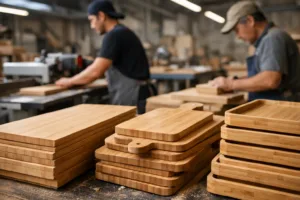
First impressions matter, but the true test of a bamboo tray is in its engineering. Sturdy construction ensures longevity—preventing warpage, splitting, or loosened joints after repeated use. High quality bamboo trays start with carefully selected raw materials:
Bamboo Slat Selection and Processing
- Moso bamboo: Favored for density, straight grain, and resilience.
- Moisture control: Slats are kiln dried, targeting 8–12% moisture to minimize later deformation.
- Sorting criteria: Only straight, uniform slats are laminated, rejecting those with knots or wide grain variance.
Joinery Techniques & Tray Construction
- Lamination: Cross-laminated layers improve stability and resist warping.
- Joinery: Finger-jointing, dowel, or mortise-and-tenon methods enhance tray frame strength.
- CNC Machining: Precision shaping maintains dimensional tolerances as tight as ±0.3mm.
Dimensional & Flatness Checks
Bamboo Wood Art technicians check tray thickness, overall flatness, and fit between joined sections to prevent rocking, gaps, or irregularities. High quality bamboo trays resist warping after cycles of washing and humidity changes.
Surface Finish and Tactile Appeal
The tactile and visual experience of a bamboo tray depends on finishing quality. A professional, even finish not only improves aesthetics but seals the wood for protection and hygiene.
Finishing Standards
- Sand sequence: Trays progress through 180, 240, and 320 grit sanding, removing roughness for a silky touch.
- Edge profiling: Chamfered or rounded edges prevent splintering and feel comfortable when handled.
- Coating: Water-based varnishes, UV finishes, or plant oils (tung, linseed) are used to ensure food safety (LFGB/FDA standards).
- Low-VOC adhesives: E0/E1 resins and glues minimize chemical emissions, a must for hospitality or kitchen use.
Surface Uniformity
Look for traceless sanding, consistent gloss, and absence of drips, haze, or pitting. Scratches or uneven color reveal shortcuts compromising surface protection.
Odor-Free Assurance: Why Neutral Scent Matters
A high quality bamboo tray should be free from chemical or musty odors that detract from presentation and indicate poor processing. This is especially critical for food service or gifting.
Odor Control Strategies
- Fresh bamboo sourcing: Avoids stale, mold-prone stock.
- Controlled kiln drying: Drives out moisture, prevents mold spore development.
- Use of odorless, food-grade adhesives and finishes: Ensures compliance with hospitality industry requirements.
Expert Insight: “A truly premium bamboo tray is almost scentless—if there’s a strong aroma, check for shortcuts in drying or finishing.”
Eco-Friendly Standards: Sustainability and Compliance
Environmental trust is central in today’s hospitality, gifting, and retail applications. Bamboo wood trays excel at sustainability, but only top manufacturers meet rigorous certification benchmarks.
Responsible Materials Sourcing
- FSC/PEFC Certification: Bamboo and wood sourced from certified plantations for ecological balance. Learn about FSC standards
- Plant-based dyes and finishes: Replace petrochemical options for safer indoor use.
- Responsible packaging: Robust, recyclable cartons protect trays during export and delivery.
Manufacturing Compliance
Bamboo Wood Art ensures food-contact safe coatings (FDA, LFGB) and low formaldehyde emission (E1/E0 standards), delivering peace of mind for professional buyers.
Bamboo Tray Quality Check: Step-by-Step Evaluation
Whether sourcing for a boutique retailer, hospitality brand, or executive gift campaign, buyers must perform thorough quality checks—beyond appearances. A reliable bamboo tray quality check covers four main areas:
Visual Inspection and Handling
- Check for smooth surface and joinery—no cracks, splits, or glue lines.
- Rub fingers along edges to feel for snags or unevenness.
- Assess weight: Heaviness can indicate solid lamination, but excessive mass may signal subpar adhesives.
Warpage & Flatness Test
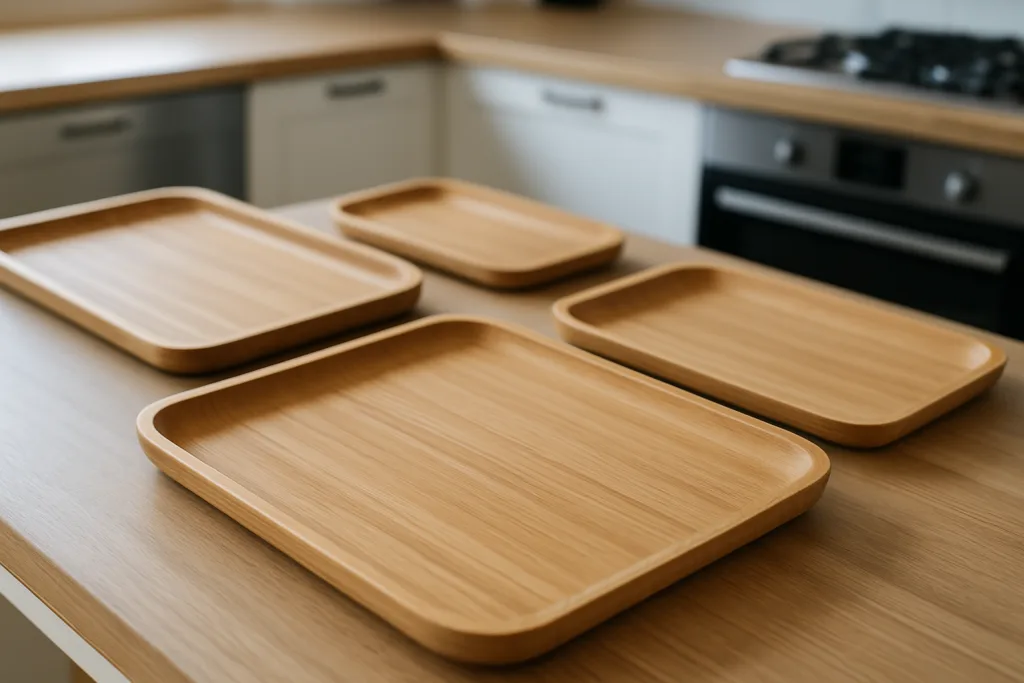
Lay the tray on a flat surface—wiggle test. If it rocks, the core or rim may be improperly laminated or dried.
Odor Evaluation
Bring the tray close and inhale gently. A faint plant aroma is normal, but chemical, sour, or musty notes are red flags.
Certification and Documentation
- Request FSC/PEFC certificates, food-contact safety reports (LFGB/FDA), and internal QC documentation.
- Confirm batch records for adhesive and finish lots to track compliance.
Comparative Table: Bamboo Tray Features vs. Alternatives
| Material/Finish | Core Properties | Best-Use Scenarios | Common Issues |
|---|---|---|---|
| Bamboo (cross-laminated, UV finish) | Stable, lightweight, moisture resistant, eco-friendly | Hospitality serving, kitchenware, retail displays, gifting | Potential warping if not kiln dried; avoid excessive water soak |
| Solid wood (oak, walnut, beech) with oil finish | Heavier, luxurious grain, strong edges | Premium home décor, restaurant service, luxury gifting | Prone to cracking under high humidity; usually more expensive |
| Bamboo veneer (over MDF/Ply) | Cost-effective, uniform appearance | Budget retail, mass promotional gifting | Lower durability, surface delamination risk |
Additional Quality Factors for Bamboo Trays
Edge Design and Ergonomics
Look for trays with finger grips, recessed handles, or contoured edges—ergonomics support comfortable daily use, especially in hospitality settings.
Branding and Customization
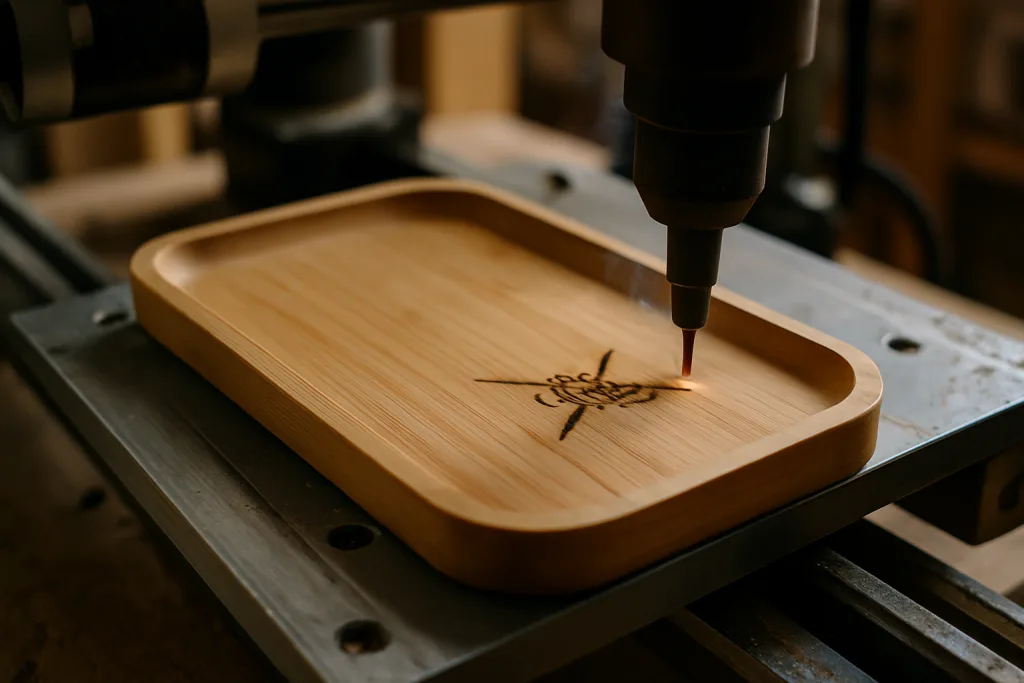
Premium trays allow subtle branding via laser engraving, inlaid logos, or custom shapes. Bamboo Wood Art provides OEM/ODM tray solutions tailored to unique requirements.
Applications of High Quality Bamboo Trays
Recognizing quality empowers smart buying for various markets:
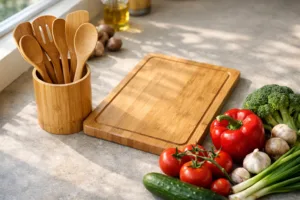
- Kitchenware: Cutting boards, sushi platters, bread trays.
- Décor: Coffee table organizers, bathroom accessories.
- Hospitality/Restaurant: Room service, buffet setups, cocktail displays.
- Corporate & Retail: Executive gifts, branded event trays, retail displays.
Bamboo Wood Art: Commitment to Quality and Sustainability
Bamboo Wood Art exemplifies industry-leading standards in bamboo tray manufacturing, from material selection to process control and final inspection. With expertise spanning home, hospitality, décor, and custom OEM/ODM projects, they prioritize sustainability, craftsmanship, and compliance—making them a preferred partner for discerning buyers worldwide.
How to Choose the Best Bamboo Tray Supplier
Choosing a supplier is not just about price—it’s about partnership. Focus on these checkpoints for quality assurance:
- Proven track record with large MOQs and export logistics
- Transparent documentation for compliance
- Custom solution capability (engraving, finishes, structure)
- Responsive B2B customer service
Request samples, inspect finish and structure, and confirm supplier certifications before placing volume orders.
Frequently Asked Questions
How can I visually identify a high quality bamboo tray?
Look for trays with smooth, flawless surfaces, tightly joined sections, no visible glue lines, and perfectly flat bottoms that don’t rock on a tabletop.
What finishes are safest for food-contact bamboo trays?
Water-based varnish, UV-cured coatings, and plant oils like tung or linseed are safest and compliant with FDA and LFGB food-contact standards.
Why do some bamboo trays become warped or cracked?
Poor kiln drying, high humidity exposure, and weak lamination cause warping and cracking; high quality trays use controlled drying and cross-lamination.
What certifications should I ask for when sourcing bamboo trays?
Request FSC or PEFC certification for sustainability and LFGB/FDA reports for food safety, along with E1/E0 formaldehyde emission documentation.
Are odorless bamboo trays always better?
Yes; a neutral or very faint plant scent signals proper drying and finish, while chemical, sour, or musty odors indicate subpar materials or processes.
What business applications benefit most from premium bamboo trays?
Hospitality service, homeware retail, corporate gifting, and branded event displays all benefit from durable, elegant, and eco-compliant bamboo trays.