Mastering Wooden Utensil Care: Why Technique Matters
Wooden utensils—like spoons, spatulas, and serving tools—bring warmth and natural beauty to any kitchen. But to keep them sturdy and safe, proper care is essential. Wooden utensil care does not mean a quick pass in the dishwasher or a long soak in the sink. These practices can lead to splitting, warping, and even harbor harmful bacteria. Instead, choose cleaning and maintenance methods that respect the nature of wood.
Understanding Temperature & Soak Damage
Wood reacts strongly to heat and water. When exposed to high temperatures or left soaking, fibers in the wood swell, contract, and eventually crack. This not only ruins the utensil’s appearance but also weakens its structure—leading to splintering or breakage. Avoid hot dishwashers, and never leave wooden spoons submerged in water. Instead, rinse utensils soon after use with warm (not hot) water, and dry promptly.
- Prolonged soaking opens cracks and exposes wood to bacteria
- High dishwasher heat causes swelling, warping, and loosening of joints
- Sustained moisture fosters odors and stains
Mild Detergent Technique: Cleaning Wooden Kitchen Tools
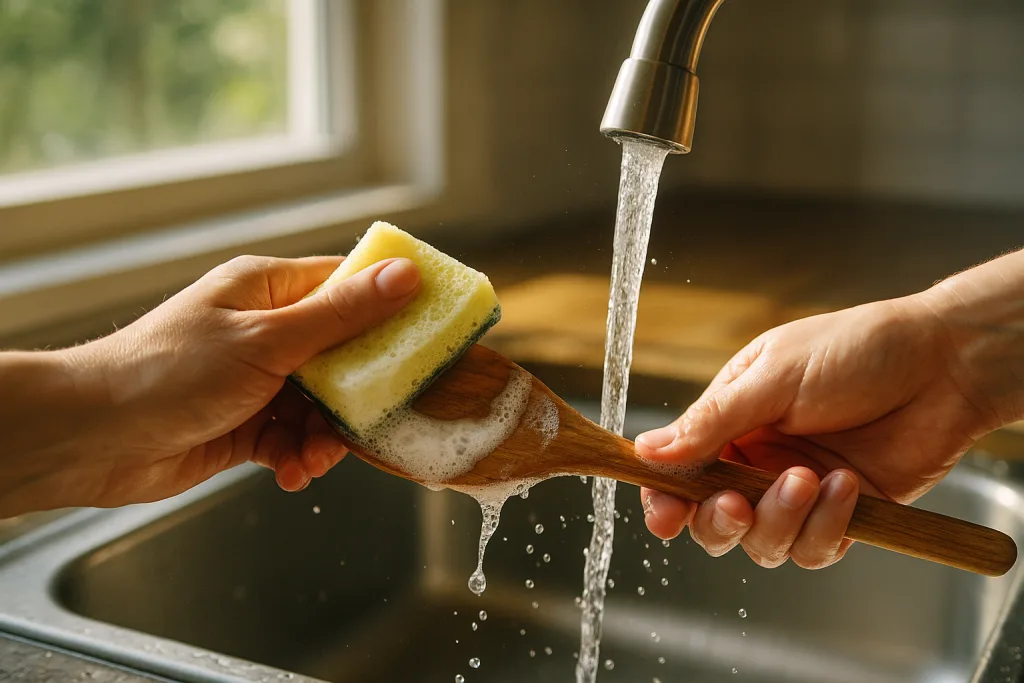
The best approach for cleaning wooden utensils is gentle and quick. A soft sponge and mild detergent can remove food residue without damaging the wood. Use only a small amount of soap. Scrub along the grain, not across, and avoid abrasive pads. Rinse thoroughly to prevent soap buildup.
- Scrape off any food bits immediately after use.
- Wash with a mild, unscented detergent using lukewarm water.
- Wipe clean with a soft cloth or sponge—never steel wool.
- Rinse completely, removing all soap traces.
- Towel dry right away; let air dry upright.
Periodic Re-Oiling: The Secret to Long-Lasting Beauty
Re-oiling preserves the color, strength, and smooth feel of wood. Dry and worn utensils soak up oil quickly. Choose food-grade oils like mineral oil, coconut oil, or beeswax blends. Apply with a soft cloth every few weeks—or as soon as you notice dull or thirsty-looking wood.
- Drizzle a small amount on the utensil’s surface
- Rub it in using circular motions, paying attention to handles and edges
- Let oil soak several hours or overnight, then buff excess with a clean towel
Expert tip: Use mineral oil specifically marked “food-safe” to prevent rancid smells and comply with FDA food-contact standards.
Wooden Utensil Care (No Soak, No DW)
Every wooden utensil tells a story of daily use, careful production, and mindful maintenance. At Bamboo Wood Art, utensils are crafted from sustainably sourced woods—Moso bamboo, beech, ash—dried to the ideal moisture level (8–12%) before shaping and sanding. Tools like CNC routers and sanders shape each handle, while edge profiling and finish sanding (180–320 grit) create smooth contours for comfort and safety.
After machining, food-safe finishes—such as water-based varnish or plant oils—protect the wood from kitchen wear. Every step, from material selection to final inspection, influences how utensils hold up to cleaning and daily use. Durable finishes resist stains and odors but must never be exposed to harsh chemicals, soaking, or the heat and pressure of dishwashers.
Stain and Odor Solutions for Wooden Spoons
Over time, wooden spoons can pick up strong odors or become stained by turmeric, beets, or tomato sauces. Prevent these issues by cleaning your wooden utensils soon after use. For stubborn stains or smells, try these proven fixes:
- Lemon & Salt Scrub: Cut a lemon, sprinkle coarse salt on your utensil, and rub the cut side of the fruit against the stains. Rinse and pat dry.
- Baking Soda Paste: Mix a small amount of baking soda with water. Apply the paste, scrub gently, then rinse thoroughly and dry.
- White Vinegar Wipe: For odors, dampen a cloth with vinegar and wipe down the utensil, then air dry fully.
When to Sand or Retire Your Utensil
If a utensil becomes rough or frayed, a quick sanding with fine (320-grit) sandpaper can restore smoothness. Deep cracks or persistent odor after cleaning mean it’s time to replace the tool.
Wood Choices and Manufacturing Behind Superior Utensils
Not all wooden utensils are created equal. At Bamboo Wood Art, Moso bamboo and select hardwoods undergo careful slat selection, kiln drying, and lamination for stability. Finger-jointing and dowel joinery enhance strength, limiting warping and splitting. Surfaces are CNC-shaped for ergonomic grip, then finished by hand and machine for even texture.
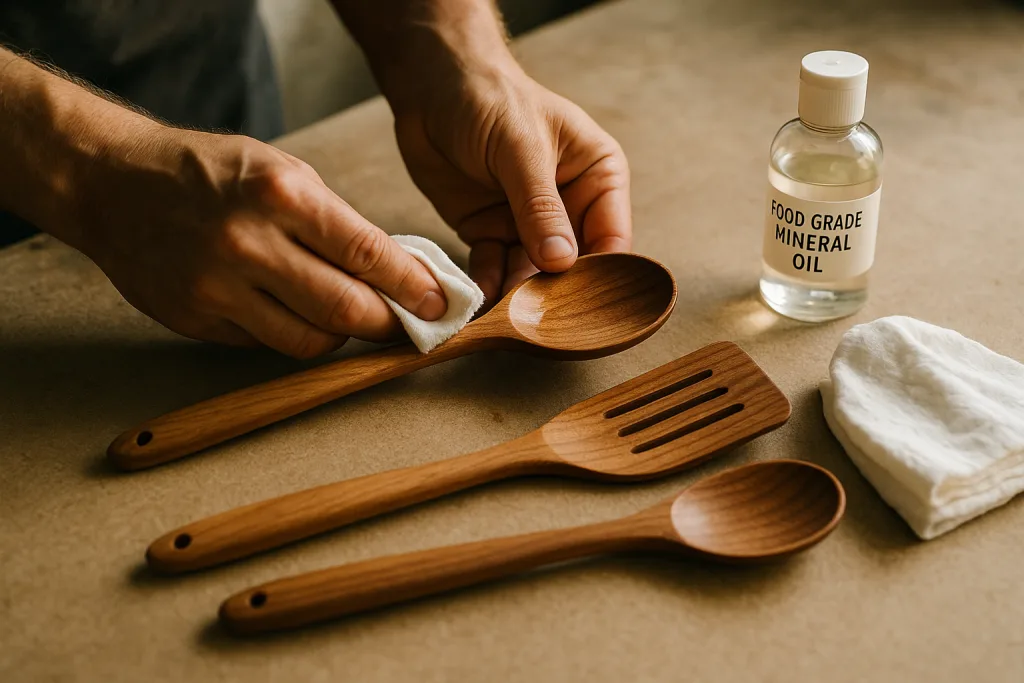
Table: Popular Woods for Utensils
| Wood Type | Durability | Best Use Scenarios | Finish Applied |
|---|---|---|---|
| Moso Bamboo | High (dense, low warpage) | Eco-friendly, light-duty & professional kitchens | Plant oil/water-based varnish |
| Beech | Medium (tough, forgiving) | General kitchen use, elegant spoons | Food-grade oil or wax |
| Ash | High (springy, resilient) | Spatulas, mixing paddles | Oil, clear UV finish |
| Walnut/Oak | Very High (hard, luxurious) | Serving, display, gifting | Tung/linseed oil, sometimes shellac |
Common Missteps: What Not to Do with Wooden Utensils
Protect your investment by avoiding the misuse that ruins many wooden tools. Here is a check-list card for reference:
- Don’t soak or leave in standing water
- Don’t clean in dishwashers (No DW)
- Don’t use harsh detergents or bleach
- Don’t expose to open flame or hot pans
- Don’t store before thoroughly drying
- Do wash soon after use with mild soap
- Do dry promptly and thoroughly
- Do oil the wood periodically
- Do use lemon/salt or baking soda for stains/odors
- Do sand rough spots gently as needed
Why Choose Sustainably Crafted Wooden Utensils?
Sustainability and craftsmanship go hand in hand. Brands like Bamboo Wood Art use FSC/PEFC-certified sources, low-VOC resins, and rigorous flattening/adhesion checks. This results in utensils that are not only safe to use but withstand the test of time. B2B buyers gain reliable supply, cost control, and kitchenware that makes a positive environmental statement.
B2B Considerations: Packaging, Compliance, and Brand Value
For businesses, careful wooden utensil care supports both brand reputation and regulatory compliance. Bamboo Wood Art ensures each batch is finished, inspected to tight tolerances, then packaged for transit. All food-contact finishes meet FDA and LFGB standards. Bespoke branding—engraving, laser etching—adds value, while robust cartons keep products safe from warehouse to table.
Ordering, Gifting, and Extending Utensil Lifespans

Whether sourcing for a hotel, retailer, or home, ask about wood origin, finish type, and care guidelines. Include a printed care card—featuring these maintenance steps—to help users enjoy their utensils for years. Bamboo Wood Art offers OEM/ODM solutions that include detailed instructions and compliance info, ensuring both customer satisfaction and product longevity.
Frequently Asked Questions
How often should I oil my wooden utensils?
Oil wooden utensils every three to four weeks, or whenever the surface looks dull, to prevent drying and keep the wood resistant to stains.
Can I use olive oil to condition wooden spoons?
Avoid olive oil as it can go rancid; use food-safe mineral oil, coconut oil, or beeswax blends specifically made for wooden kitchen tools.
Why is soaking wooden utensils harmful?
Soaking causes wood fibers to swell and crack, trapping moisture and promoting bacteria growth, which leads to warping and possible utensil failure.
What is the best way to remove garlic or onion smells?
Rub the wooden utensil with lemon and coarse salt, rinse well, and dry thoroughly to eliminate strong odors from garlic or onion.
Are wooden utensils dishwasher safe if labeled as such?
Even if labeled dishwasher safe, repeated washing in hot appliances can still weaken the wood and damage finishes, so hand wash is always best.
How do I sanitize wooden utensils without harsh chemicals?
Sanitize by wiping with diluted white vinegar, then rinse and dry fully; this kills most bacteria and preserves the wood’s integrity.