Introduction
Creating a healthy, efficient workspace is more important than ever with so many people working from home. An ergonomic home office doesn’t just boost comfort—it also reduces aches and fatigue, improves focus, and supports your well-being. Fortunately, achieving this doesn’t require a hefty investment. With some planning and smart choices, you can design a highly ergonomic, sustainable home office—even on a tight budget. In this guide, you’ll learn practical steps, space-saving strategies, and affordable furniture ideas focused on bamboo—a stylish, eco-friendly material that brings both comfort and value to your workspace.
Planning Your Ergonomic Space
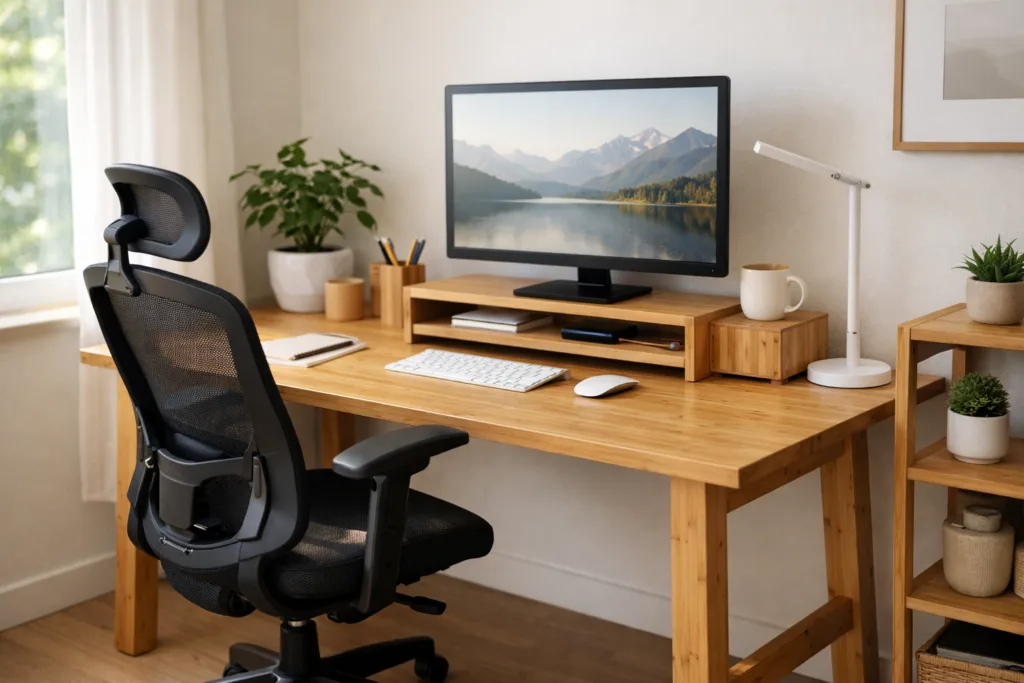
A great workspace starts with understanding your needs. Begin by assessing your available area. Is it a spare room, a cozy nook, or a corner in the living room? Check the amount of natural light—it relieves eye strain and increases energy, so try to position your desk near a window if possible.
Set a realistic budget. Make a wishlist with essentials first: a good chair, a desk at the right height, and basic organization tools. Identify which items need to be purchased and what you can repurpose or DIY. This clear plan helps prevent overspending and ensures you prioritize ergonomics.
If you want affordable, made-to-order options, consider working with a direct bamboo furniture manufacturer for custom ergonomic solutions.
Choosing the Right Furniture
The heart of any ergonomic office is the furniture. Start with these three essentials:
- Chair: Look for adjustable height, lumbar support, and a comfortable seat. Affordable alternatives include adding a sturdy seat cushion or lumbar roll to a basic chair.
- Desk: Aim for a surface at elbow-height with enough space for your gear. If a new desk isn’t feasible, consider repurposing a table and adding a bamboo modular riser or shelf for flexibility. Bamboo desks bring warmth and modern style—plus, they’re generally wallet-friendly and highly durable.
- Monitor height: Your screen top should align with your eyes. If you can’t spring for a new monitor arm, use a bamboo laptop riser or a stack of bamboo trays for an instant lift.
Bamboo stands out for its sustainability, strength, and practical price-point. You’ll find affordable bamboo furniture options—like bamboo monitor risers and desks—at both local shops and online. DIY options are also popular for tight budgets: many hardware stores sell unfinished bamboo boards, which you can turn into simple desktop stands or shelves with basic tools. As a material, bamboo’s tight grain means less warping, and it’s easy to sand or finish if you want a smooth custom look.
Ergonomic Accessories on a Budget
Accessories can dramatically boost comfort—without draining your wallet. Here are some essential and budget-friendly bamboo accessories to consider:
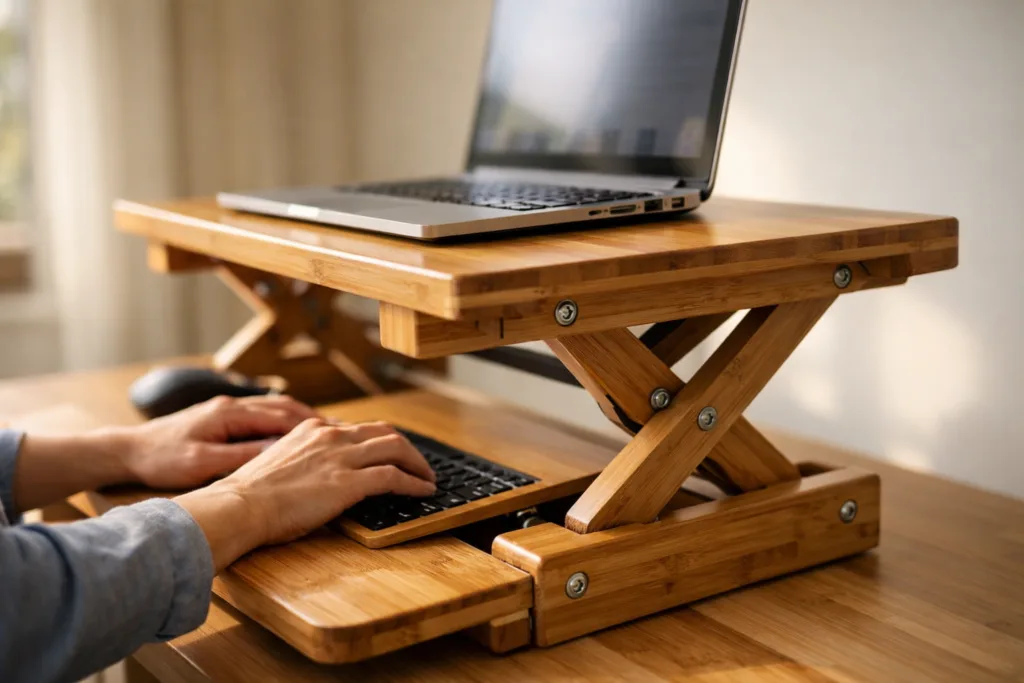
- Bamboo laptop stands: Elevate your laptop to eye-level for better posture. These stands are lightweight, portable, and often less expensive than metal models.
- Footrests and keyboard trays: A bamboo footrest encourages healthy sitting habits, while a low-cost slide-out bamboo keyboard tray can reduce wrist strain.
- Standing desk converters: Swap long hours of sitting with a simple bamboo standing desk converter. These are far more affordable than electric standing desks and are easy to reposition in small spaces.
Small details count: nonslip bamboo coasters or small trays can keep your mouse and phone within reach. Many online guides highlight how functional and stylish affordable bamboo furniture and accessories are for ergonomic setups.
Organization and Aesthetics
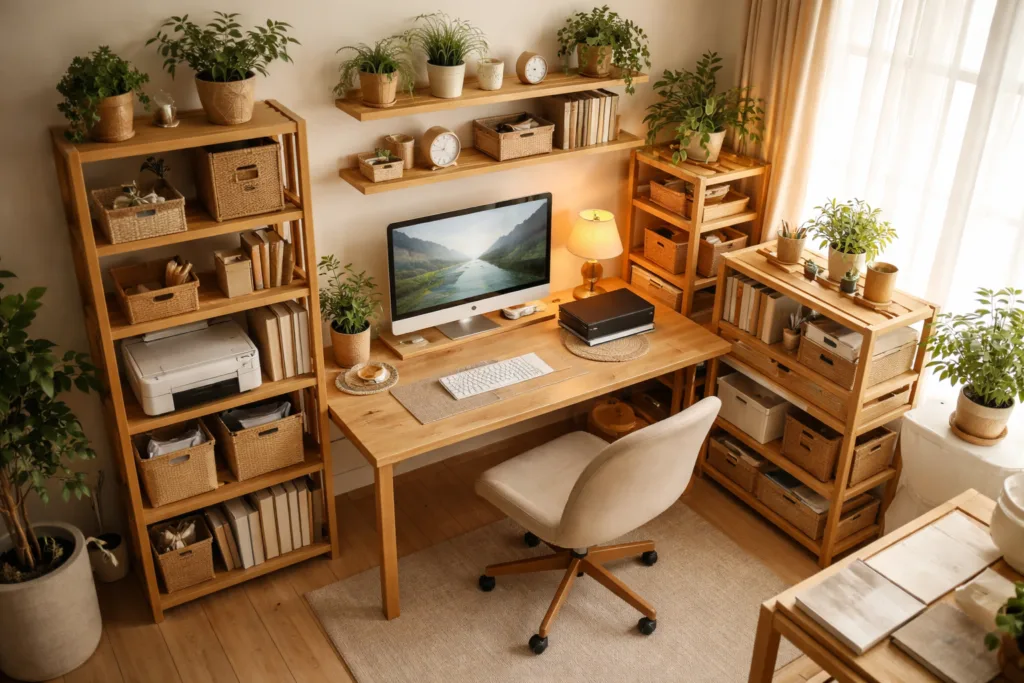
Work is easier and less stressful in a tidy environment. Bamboo organizers and shelves offer a blend of warmth, strength, and versatility:
- Desktop organizers: Use bamboo trays or drawer inserts for pens, notepads, and gadgets. Their smooth finish stands up to daily use and is easy to wipe clean.
- Wall-mount shelves: Mount a slim bamboo shelf above your desk to save desktop space for documents, plants, or decor.
- Multi-tier racks: A bamboo 3-tier rack can sort books, office supplies, or display productivity tools—all while keeping your floor area clear.
Besides maximizing space, bamboo adds natural beauty to your home office. For the style-conscious, it pairs easily with neutral, modern, or Japandi-inspired interiors. Bamboo’s subtle grain and warm tones promote a calm, inviting mood—ideal for long workdays. If you want more ideas, the Bamboo Home Decor & Storage guide covers creative and affordable ways to make the most of small spaces.
For best results, keep only what you need within arm’s reach and regularly declutter desks, trays, and shelves.
Tips for Maintaining a Healthy Workspace
Comfort goes beyond furniture—it’s how you use your workspace. Here are simple, budget-friendly tips for making your home office truly ergonomic:
- Desk setup: Position your monitor so your eyes look straight ahead, feet flat on the ground or on a footrest, and elbows bent at 90 degrees. Keep frequently used items within easy reach to avoid twisting or overreaching.
- Movement matters: Stand up and stretch every 30 minutes. Take short walks or do gentle exercises. Standing or shifting between postures protects your back and keeps your mind sharp.
- Lighting: Use adjustable desk lamps or natural light. Reduce screen glare by positioning your monitor perpendicular to windows if possible.
Industry tip: At Bamboo Wood Art, we kiln-dry bamboo used in organizers and racks to maintain stability and ensure a smooth surface—this reduces the risk of splinters or warping over time, making your investments last longer. Even on a budget, it pays to choose accessories made by brands that prioritize material quality and finish.
How to Set Up an Ergonomic Home Office on a Budget
Setting up a budget-friendly, ergonomic workspace with bamboo doesn’t need to be overwhelming—or expensive. Focus on these clear, practical steps:
- Pick a well-lit spot that fits your daily routine.
- Use a simple, robust desk (or table) and optimize with a bamboo monitor riser or shelf.
- Choose a supportive chair, and add DIY lumbar cushions if needed.
- Incorporate essentials: an adjustable laptop stand, footrest, or bamboo keyboard tray.
- Add bamboo organizers and wall shelves to keep everything accessible and tidy.
- Choose accessories that add value—like a simple desk lamp for lighting or a standing desk converter for flexibility.
- Commit to healthy habits: move often, adjust your setup as your needs change, and tidy up weekly.
With a little strategic planning and a focus on sustainable materials, you can build an ergonomic, uplifting home office that supports productivity and well-being—without straining your finances.
Conclusion
Designing a comfortable and ergonomic home office on a budget is more than possible—it’s smart. By planning well, prioritizing essentials, and integrating affordable bamboo furniture, you get both functionality and style. Remember: it’s not about expensive gear but about thoughtful selection and good habits. With these practical steps and tips, anyone can set up a healthier, more inspiring workspace to support body and mind for the long haul.
Frequently Asked Questions
What is the most important ergonomic item to invest in?
Your chair is the foundation of ergonomic comfort. Look for support and adjustability, or use cushions to improve your current seat.
How can I make a desk more ergonomic if I can’t buy a new one?
Try raising your monitor with a bamboo riser, and use a stack of books or trays for additional height. Ensure your elbows are at a 90-degree angle as you type.
Are bamboo standing desk converters durable enough for everyday use?
Yes, especially when made from high-quality, kiln-dried bamboo. Look for reviews and weight capacity details to find the best affordable option.
How do I reduce clutter in a small home office?
Use vertical storage, bamboo organizers, and wall-mounted shelves to keep items off your desk. Regular decluttering is key to staying organized.
Can I build my own bamboo furniture for the office?
Absolutely—DIY bamboo stands, monitor risers, and simple shelves are all doable with basic tools. Bamboo boards are easy to work with and finish neatly.
Why is bamboo considered an eco-friendly option?
Bamboo grows fast, needs less water, and doesn’t require pesticides. It’s renewable and biodegradable, making it a sustainable furniture choice.