When buyers compare freestanding vs wall mounted bamboo shelves, the real question is not only style. It is how the shelf will perform in your room: how much weight it must hold, how much floor area you can spare, whether you own or rent the space, and how often the shelf may need to move. As a manufacturer, we often see projects fail when the shelf type is chosen for appearance first and for structure second.
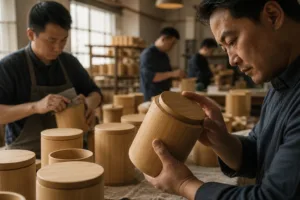
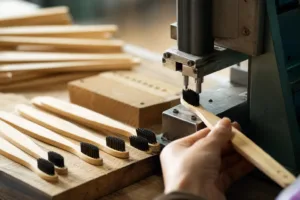
bamboo shelf and rack manufacturing solutions are useful when a buyer needs a shelf designed around a specific room, mounting method, finish, and load target rather than a generic retail model. At Bamboo Wood Art, we support custom shelf projects with material selection, sample review, fastening or assembly planning, surface finishing, and bulk quality control, so the final product fits the intended space instead of forcing the space to fit the shelf.
What Is the Structural Difference Between Freestanding and Wall-Mounted Bamboo Shelves?
The difference starts with how the shelf carries weight. A freestanding bamboo shelf transfers load through its legs, side frames, back panel, or floor-contact structure. The floor helps support the unit, which makes this style easier to place and move. A wall-mounted bamboo shelf transfers much of the load into the wall and the hardware, so the shelf itself can look lighter and use less floor space, but installation becomes more important.
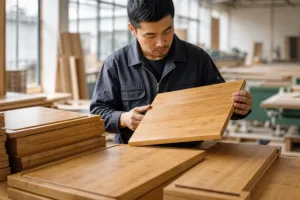
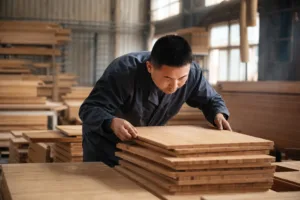
From a manufacturing perspective, freestanding shelves usually need stronger side frames, more reliable joinery, and better anti-rack stability. Wall-mounted shelves need precise hole placement, cleaner back edges, and hardware compatibility. In both cases, bamboo board quality, moisture content, sanding, and finish consistency affect how well the shelf survives everyday use.
| Comparison Point | Freestanding Bamboo Shelf | Wall-Mounted Bamboo Shelf |
|---|---|---|
| Support method | Floor-based frame and joints | Wall hardware and anchors |
| Installation | Usually simple assembly | Requires drilling and wall matching |
| Space use | Uses floor area | Saves floor area |
| Mobility | Easier to move | Less portable |
| Stability focus | Frame rigidity and balance | Anchoring and wall strength |
Freestanding Bamboo Shelf: Where It Works Best
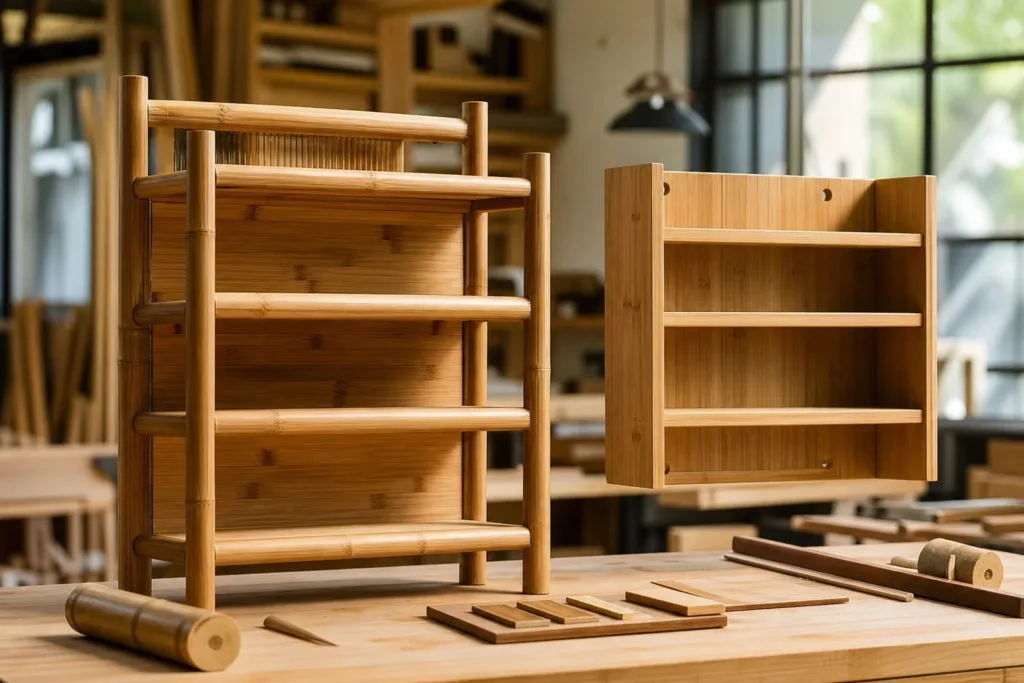
A freestanding bamboo shelf is often the better choice when the buyer wants flexibility. It works well in rental homes, bedrooms, entryways, offices, and open-plan rooms where the shelf may be rearranged later. It is also practical for buyers who do not want to drill into tile, concrete, masonry, or uncertain wall surfaces. If the shelf is meant for retail display, temporary event use, or changing seasonal layouts, a freestanding design is usually easier to manage.
For product development, freestanding shelves give more room for design variation. We can build open-tier units, ladder-style shelves, compact corner shelves, or mixed-height organizers. Bamboo is especially attractive for these models because it offers a clean natural look, but the structure still needs careful engineering. If the shelf is tall, slim, or intended for heavier items, the frame must resist side sway and tipping. That can mean wider feet, rear support bars, thicker shelf panels, or a more compact height-to-width ratio.
Another advantage is serviceability. Buyers often prefer freestanding shelves when they expect to move, reconfigure, or resell the item as a ready-to-use home storage product. For sourcing teams, that can simplify after-sales support because the risk of wall mismatch is reduced. If you are also comparing bamboo against other materials for storage furniture, our material selection guidance for home storage products can help clarify when bamboo offers a better balance of appearance, weight, and cost performance than heavier hardwood options.
Freestanding shelf examples by use case
- A three-tier bathroom shelf for towels and toiletries when wall drilling is not desirable.
- A slim bedroom shelf for books, baskets, and bedside storage in a compact apartment.
- A corner organizer for a small retail display area where layout may change frequently.
- A kitchen counter shelf that needs easy repositioning near appliances or prep zones.
Wall-Mounted Bamboo Shelf: Where It Works Best
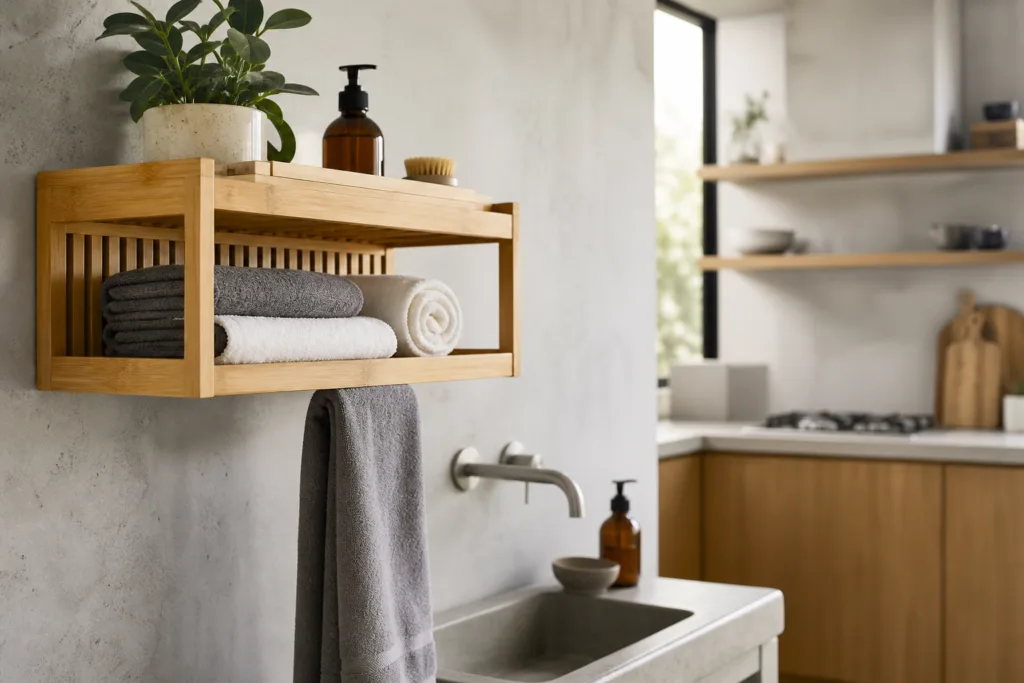
Wall-mounted bamboo shelves make more sense when floor space is limited or the buyer wants a cleaner visual line. They are often used in bathrooms, kitchens, laundry spaces, and small bedrooms because they keep the floor open and can make a room feel less crowded. For minimalist interiors, a wall-mounted shelf also creates a lighter appearance than a freestanding unit with legs or side panels.
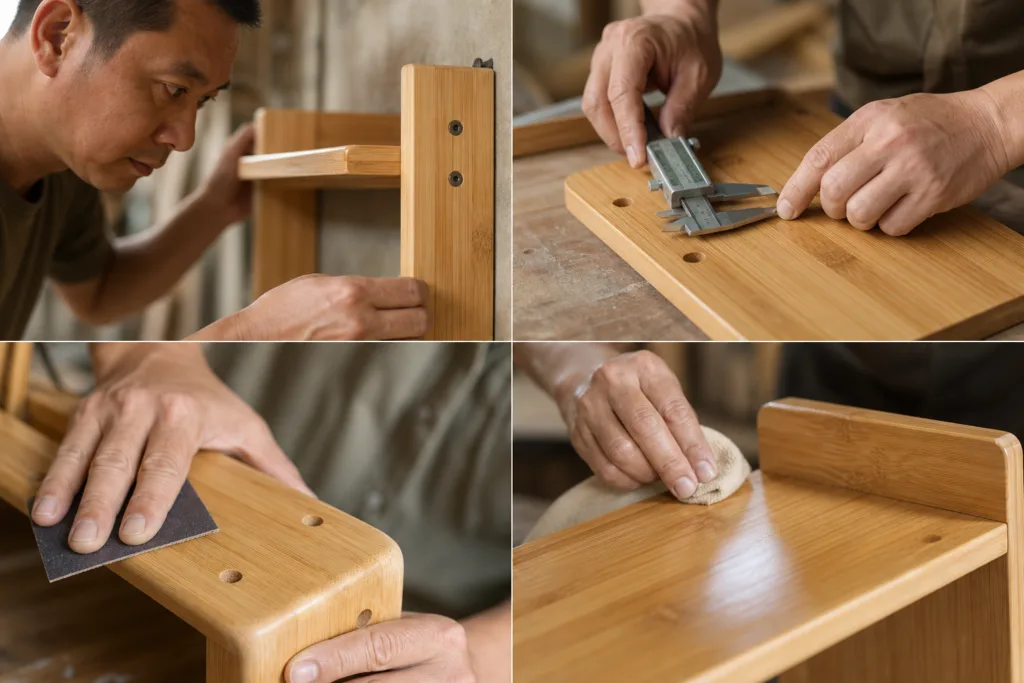
However, the wall itself becomes part of the product system. That means the shelf is only as dependable as the substrate, anchors, screws, and installation method. A mounted shelf that is perfectly manufactured but paired with the wrong wall anchor can still fail in use. For this reason, wall-mounted bamboo shelf projects need clear load expectations, wall-type information, and hardware planning before production starts. This is one reason buyers should review how to evaluate a bamboo shelf sample before approving mass production. A sample can reveal not only finish quality, but also the rigidity of the mounting area, hole alignment, and edge finishing around the hardware points.
In our production work, mounted shelves often benefit from reinforced back rails, tighter dimensional control, and a finish that protects the product in humid rooms. Buyers sometimes assume bamboo is automatically suitable for any bathroom or kitchen. In reality, placement, ventilation, and cleaning habits matter just as much as material choice. For humid rooms, a wall-mounted shelf should be specified with room conditions in mind, not just size and color. If the shelf will be used near sinks, showers, or steam sources, the finish, edge sealing, and mounting method deserve as much attention as the visual design.
If you are exploring a specific mounted format, such as a compact accessory shelf, our wall-mounted bamboo shelf design options show how a small format can be engineered for stable installation, clean drainage, and practical use in moisture-prone zones.
Which Option Makes More Sense for Small Spaces and Rental Homes?
For many buyers, this is the deciding factor. In rental homes, wall-mounted shelves can be a challenge because drilling may not be allowed or because the wall substrate is not suitable. Even if drilling is permitted, the tenant may not want permanent holes or hardware visible after moving out. In that case, freestanding bamboo shelves usually make more sense.
In very small spaces, the answer depends on the floor plan. A wall-mounted shelf saves floor space, but only if the wall is usable. If the available wall is blocked by pipes, tiles, mirrors, windows, or low-quality plaster, the installed shelf may be less practical than a narrow freestanding unit that can sit in an unused corner. A well-designed freestanding shelf can sometimes outperform a mounted one because it can use vertical storage without requiring installation risk.
For apartments, studios, dorm-style rooms, and temporary living spaces, we often recommend thinking in terms of movement frequency. If the furniture will likely be moved again within a year or two, freestanding usually wins. If the shelf will remain in one fixed location and the wall is suitable, wall-mounted can be a stronger space-saving solution.
Load Capacity, Stability, and Safety: What Buyers Need to Check
Load capacity is not just about the shelf board itself. It is about the entire system. For freestanding shelves, the main risks are tipping, wobble, and frame deformation. For wall-mounted shelves, the main risks are anchor pullout, screw failure, and wall damage. When we develop bamboo shelves, we look at expected item weight, shelf span, depth, bracket spacing, and the nature of the wall or floor contact points.
A buyer should be careful with decorative product descriptions that say a shelf is “strong” without explaining the context. A shallow wall shelf for toiletries does not need the same structure as a shelf intended for books, pantry items, or jars. Similarly, a freestanding shelf for towels has different requirements from one used to hold ceramics or heavy kitchen containers.
One practical rule is to define the heaviest normal load, not the maximum emergency load. If the shelf is likely to carry baskets, bottles, or stacked towels, the structure should be tested with that real use pattern in mind. In our QC process, we look for joint looseness, screw pull resistance, shelf bowing, and finish defects that may become more visible when the product carries weight over time.
Stability checks buyers should request
- Confirm the shelf’s intended load category by room and use.
- Ask how the unit resists side sway or tipping.
- Check whether shelf boards are reinforced at span points.
- For wall-mounted units, confirm anchor type and wall compatibility.
- Review sample assembly to catch alignment or looseness issues early.
We also advise buyers to request common bamboo shelf quality issues to avoid when they are comparing suppliers. Problems such as uneven sanding, loose joints, inaccurate hole spacing, rough edges, or inconsistent coating can all affect real-world stability and customer satisfaction, even if the shelf looks fine in photos.
Bathroom, Kitchen, and Bedroom: Which Shelf Type Fits Each Room?
Room function should guide the shelf choice. In bathrooms, wall-mounted shelves are popular because they keep cleaning easier around the floor and make narrow rooms feel less crowded. But bathrooms also bring humidity, so finish quality and ventilation matter. The humidity and moisture control in bathrooms/kitchens is important because moisture buildup can shorten product life if the room is poorly ventilated or if the shelf is placed too close to steam and splash zones.
For kitchens, both shelf types can work. Wall-mounted shelves are good for small jars, seasoning containers, or light accessories near a backsplash, provided the wall is suitable and the item load is controlled. Freestanding shelves work better for pantry overflow, countertop organization, or flexible storage near appliances. In kitchens, we pay special attention to surface finish because oil, steam, and repeated wiping can affect appearance over time.
In bedrooms, freestanding shelves often make more sense for books, baskets, folded clothes, or decorative storage. They are easier to move as the room layout changes. Wall-mounted shelves are better when the goal is to free floor area, create a floating look, or hold lightweight decorative items. A bedroom shelf rarely needs the same moisture resistance as a bathroom unit, but it still needs good sanding and consistent color if it is part of a visible furniture set.
Room-by-room quick guide
| Room | Freestanding | Wall-Mounted | Best Fit Reason |
|---|---|---|---|
| Bathroom | Good for renters | Good if wall is suitable | Moisture, ventilation, and cleaning access |
| Kitchen | Good for flexible storage | Good for light items | Space use and access to countertops |
| Bedroom | Often best | Good for minimal layouts | Mobility and visual simplicity |
Installation Difficulty, Cleaning Convenience, and Mobility Compared
Freestanding shelves are generally easier to install because they usually arrive as an assembly project rather than a drilling project. That reduces labor and installation risk, especially for buyers who are ordering in bulk for retail or hospitality use. Wall-mounted shelves need better instructions, clearer hardware kits, and more careful installation support. The product may be compact, but the logistics are not always simpler.
Cleaning is another difference. Wall-mounted shelves often make floor cleaning easier because there is more open space underneath. Freestanding shelves, however, are easier to dust and inspect because they can be moved away from the wall. This can matter in a household, but it matters even more in commercial settings where cleaning schedules are tight.
Mobility is where freestanding models usually lead. A freestanding bamboo shelf can move with a room change, a relocation, or a redesign. A mounted shelf is more permanent and therefore better when the buyer is sure about the location. If a buyer expects the item to be re-used in multiple homes, pop-up retail areas, or temporary projects, mobility should carry significant weight in the decision.
Wall Type and Surface Limitations: When Wall-Mounted Shelves Are Not a Good Idea
Wall-mounted shelves are not ideal for every wall. Tile, concrete, brick, drywall, plaster, and hollow partitions all behave differently. Some walls need special anchors. Some walls are not strong enough for heavier use. Some are too risky to drill into because of hidden pipes, wiring, or building restrictions. This is why we always ask about the wall type before finalizing a mounted shelf design.
For buyers who work with contractors, hotels, or property managers, this is especially important. A shelf that is technically well made can still become a source of complaints if the installation environment is wrong. If the wall surface is uneven, fragile, or not fully known, a freestanding shelf is often the safer and more predictable choice. In practical sourcing terms, that means fewer returns, fewer installation errors, and less confusion for end users.
Wall-mounted designs also require more care around back panel geometry and hardware placement. Even small deviations in drilling or alignment can create an uneven finished look. In bamboo product manufacturing, those tolerances need to be controlled before shipment, not after the customer opens the box.
How to Choose Based on Space, Use Case, and Moving Frequency
The best decision usually comes from three questions: How much space do you have, what will you store, and will the shelf stay in one place? If the answer is “very little floor space, light items, fixed location,” wall-mounted often makes sense. If the answer is “changing layout, rental use, heavier mixed items,” freestanding usually makes more sense.
As a manufacturer, we encourage buyers to think beyond the display photo. A shelf that looks clean in an online image may not suit a specific room layout, wall material, or weight target. That is why our own product planning at Bamboo Wood Art starts with use case, surface finish, and packing method before production details are finalized. We want the shelf to arrive ready for the actual environment, not just the catalog description.
If your project requires custom dimensions, logo marking, or a specific room theme, the choice between freestanding and wall-mounted can also affect tooling and packaging. Freestanding units may need more assembly protection during shipment. Wall-mounted units may need stronger hardware separation and clearer instruction cards. In both cases, sample approval and practical testing can prevent costly redesigns later.
Selection Checklist: Freestanding or Wall-Mounted?
- Choose freestanding if drilling is not allowed or wall conditions are uncertain.
- Choose wall-mounted if you need open floor space and the wall is suitable.
- Choose freestanding if you expect to move the shelf often.
- Choose wall-mounted if you want a lighter visual profile and a fixed location.
- Choose freestanding for easier rearrangement in rentals, offices, or temporary setups.
- Choose wall-mounted for compact bathrooms, kitchens, or tight corners with safe anchoring.
- Request samples to verify finish, assembly, and load behavior before bulk order approval.
Common Mistakes Buyers Make When Choosing Bamboo Shelves
One common mistake is treating all bamboo shelves as interchangeable. A shelf designed for lightweight décor is not automatically suitable for pantry jars or bathroom bottles. Another mistake is ignoring room moisture. Bamboo performs well when properly manufactured and used in appropriate conditions, but humidity, poor ventilation, and standing water can still cause issues over time.
Buyers also sometimes overlook the finish. A beautiful bamboo surface can still be too rough at the edges, too glossy for a humid zone, or too lightly coated for repeated wiping. We recommend checking sanding quality, edge finishing, coating consistency, and hardware alignment before approving production. If you are comparing suppliers, the most useful step is to review sample workmanship carefully rather than rely only on product photos.
Finally, some buyers choose wall-mounted shelves only because they look more modern. That can be a mistake if the wall type is unsuitable or if the shelf will need to move later. Style matters, but in manufacturing and sourcing, practical fit matters more.
FAQ
Are wall-mounted bamboo shelves stronger than freestanding ones?
Not automatically. Wall-mounted shelves can carry useful loads when the wall and hardware are suitable, but their strength depends on anchors, screw quality, wall type, and installation accuracy. Freestanding shelves may feel less permanent, but they can be very stable when the frame, joints, and balance are well engineered. The right answer depends on the actual use and installation environment.
Which bamboo shelf type is better for renters?
Freestanding bamboo shelves are usually better for renters because they do not require drilling and can move with the user. Wall-mounted shelves may still work if the property allows installation, but they add risk, labor, and possible wall repair concerns. For many rental projects, mobility and non-permanent setup are the main priorities.
Can bamboo shelves be used in bathrooms and kitchens?
Yes, but the placement and finish matter. Bathrooms and kitchens have higher humidity, splashing, and cleaning exposure, so a bamboo shelf should be designed with moisture control, good ventilation, and appropriate surface finishing in mind. A shelf that stays away from direct water contact will generally last better than one placed in a constantly wet area.
What should I check in a bamboo shelf sample before bulk order?
Check sanding smoothness, edge finishing, color consistency, hole alignment, joint fit, hardware quality, and any signs of wobble or unevenness. If it is a wall-mounted model, verify the mounting area and how the hardware sits. If it is freestanding, confirm that the unit stands level and that shelves do not bow under expected load.
How do I know if my wall is suitable for a mounted shelf?
You need to know the wall material and strength before choosing a mounted shelf. Drywall, tile, brick, concrete, plaster, and hollow partitions all require different hardware or may not be suitable for the same load. If the wall type is uncertain, a freestanding shelf is often the safer choice because it avoids installation uncertainty.
What customization options are available for bamboo shelves?
Common options include size changes, tier count, shelf spacing, surface finish, color tone, logo marking, packaging design, and hardware selection for wall-mounted models. Depending on the project, we can also adjust structural reinforcement, corner shape, and assembly method. The most effective custom plan starts with the target room, load expectation, and shipping method.