Why Bamboo Steamer Quality Matters
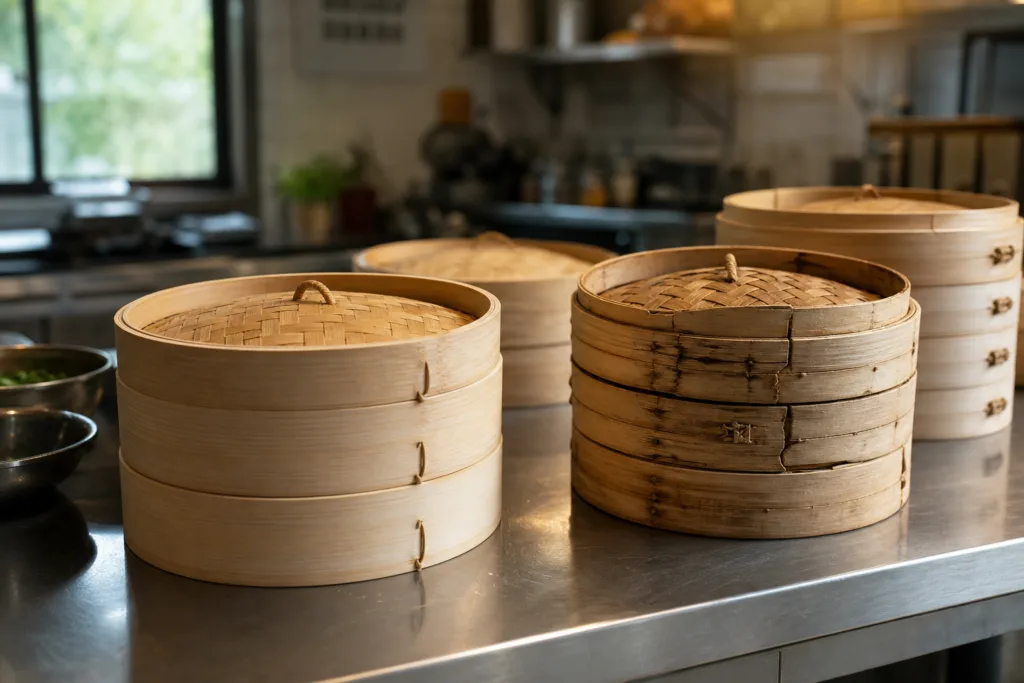
Bamboo steamers are widely used because they are lightweight, stackable, and well suited to gentle steaming. They also present well in retail and food service settings. But their strengths depend on balance. Bamboo must handle repeated heat, wetness, cooling, and drying without losing shape or structure.
That balance matters differently for different buyers. A home user may steam once or twice a week and expect a simple, natural product that lasts with basic care. A restaurant may run the same steamer through many cycles in one day. A retailer or importer has another concern: whether the item will arrive consistently made, survive normal use, and avoid returns tied to odor or visible defects. In many cases, bamboo steamer problems are less about one dramatic mistake and more about small weaknesses that become obvious under repeated use.
Why steamers fail differently in home and commercial use
Usage intensity changes everything. In a home kitchen, drying time between uses is usually longer. In commercial kitchens, steamers may stay in warm, damp environments for hours, then be cleaned quickly and returned to service. This higher cycle frequency puts more stress on rims, woven bases, and fastened joints.
Why small defects become buyer complaints
A faint natural bamboo aroma may be acceptable at first. A strong lingering smell after several uses is different. Minor lid distortion may seem cosmetic in a sample, but poor fit affects steam control. A tiny split may not stop use immediately, yet it can expand with each wet-dry cycle. For sourcing teams, these are not isolated details. They are early indicators of whether the product was built with enough consistency for the target market.
bamboo steamer problems
The most common bamboo steamer problems are smell, warping, cracking, and structural separation. These issues can appear alone, but they often connect. A steamer that absorbs too much water may warp. Warping changes how parts sit together. Poor fit increases stress on the frame. Stress then leads to cracking or loosening at the joints.
Persistent smell after purchase
Some new steamers have a mild plant-like aroma, especially when first exposed to hot steam. That often fades. The concern starts when smell remains strong after multiple uses or shifts into sour, smoky, musty, or chemical-like notes. Persistent odor usually points to one of four causes: incomplete drying before packing, trapped residues, heavy smoke or heat treatment, or adhesives and finishes that do not respond well to moisture.
For end users, smell affects food perception immediately. For retailers, it creates quick dissatisfaction because odor is one of the first things a customer notices after opening the package.
Warping around rims and lids
Warping appears when circular rims no longer stay even or when lids no longer seat neatly. Mild variation is possible in natural materials, but visible distortion usually means the steamer has absorbed and released moisture unevenly. Thin rims, low-density bamboo strips, or rushed drying after production can make this worse.
Warping is not just about looks. A poor lid fit can let steam escape unevenly, reduce stacking stability, and create a low-quality feel in use.
Cracking in slats and woven parts
Cracks often begin as hairline splits in the base strips, side walls, or rim components. They become more likely when bamboo is too dry at one stage and then exposed to heavy moisture later. Rapid temperature change can also contribute. In lower-quality products, cracking may show that the bamboo strips were too brittle, too thin, or not well matched in grain and density.
Structural separation at joints
Separation usually shows up where layers join, where side walls meet the rim, or where woven sections pull away from the frame. This can come from weak fastening, poor assembly tension, swelling and shrinking over time, or excessive handling stress. Once separation begins, the steamer becomes less stable and harder to clean well.
How these issues affect restaurants and retail buyers
For restaurants, these failures interrupt service and increase replacement frequency. For retail programs, they create returns, lower perceived value, and can damage brand trust. Importers and wholesalers also face a timing issue: some defects do not show during basic visual inspection but appear after a short period of real use. That is why a sourcing process should look beyond appearance alone.
Root Causes Behind Repeat Failure
Heat and moisture cycling as the main stress test
The central stressor is repeated movement between wet heat and dry cooling. During steaming, bamboo absorbs moisture and expands slightly. During drying, it contracts. Good construction allows this movement without major distortion. Weak construction does not. Over time, each cycle acts like a small test of the material, the joinery, and the overall shape.
Drying too fast or too slowly
Both extremes can create problems. If a steamer dries too slowly, trapped moisture may lead to musty smell, staining, or softening in vulnerable points. If it dries too fast, especially near direct heat or strong sun, strips can shrink unevenly and split. The goal is steady airflow and moderate drying, not harsh drying.
Storage conditions that shorten product life
Closed cabinets while still damp, plastic wrapping after use, or back-of-house storage areas with poor ventilation can all increase odor and mold risk. On the other hand, very dry environments combined with heater exposure may encourage brittleness. Good storage is simple: clean, dry, and ventilated.
Usage habits that increase damage risk
- Boiling dry so the steamer overheats from below
- Soaking the steamer for long periods
- Scrubbing aggressively with hard tools
- Stacking heavy items on top during storage
- Putting a damp steamer into closed packaging or cabinets
These habits add stress that the product was not designed to handle repeatedly.
Material and Structural Quality Signals
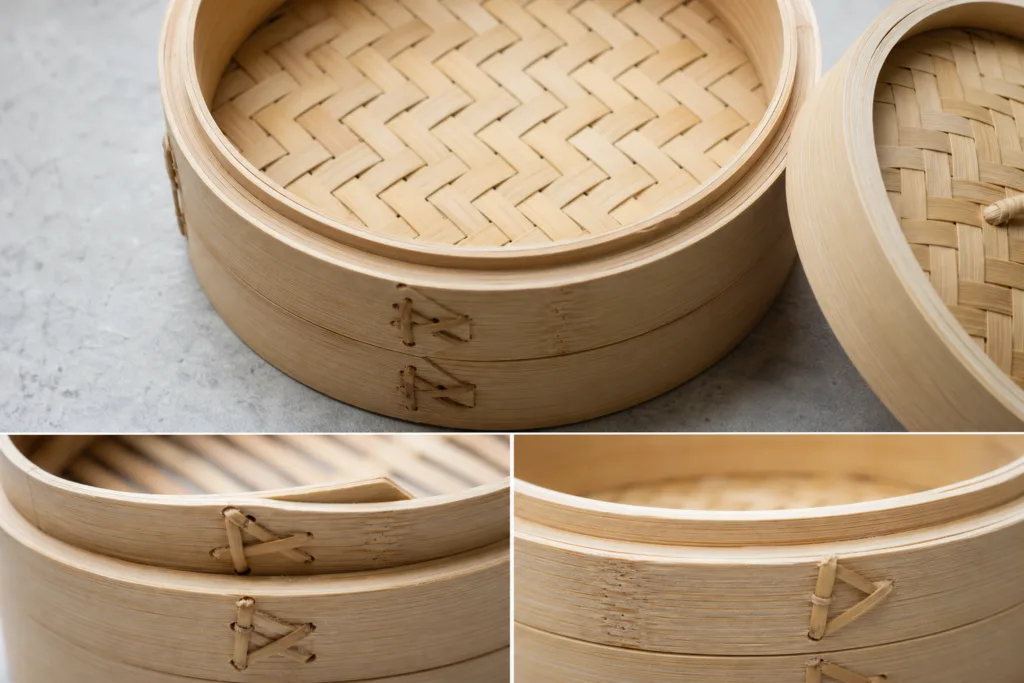
If buyers want fewer bamboo steamer problems, quality evaluation should start before first use. Material selection, strip consistency, rim construction, and assembly control all influence whether the steamer stays stable over time. Readers focused on identifying a high-quality bamboo steamer should examine not just appearance, but how the product is likely to behave after repeated steam exposure.
Bamboo species and strip consistency
Not all bamboo behaves the same way. Even without going into species-level sourcing claims, buyers can still look for practical signs: even strip thickness, controlled color variation, smooth splitting lines, and a consistent feel across the product. Large differences from one strip to another often suggest weaker sorting or less controlled processing.
Weaving density and base stability
A stable woven base should look balanced, neither too loose nor unnaturally compressed. Loose weaving can shift under wet heat. Overly forced weaving may create internal tension that later releases as distortion. The base should sit flat, feel firm, and return a sense of even structure when lightly pressed.
Rim reinforcement and joint strength
Rims carry much of the stress because they define shape and support stacking. A durable rim usually shows consistent thickness, clean bending, and secure joining. If the rim already looks uneven, fuzzy, or weak at the seam, long-term shape stability may be limited.
Visual signs of good workmanship
- Edges look smooth rather than splintered
- Lid and basket align without obvious gaps
- The base sits level on a flat surface
- Join points look tight and orderly
- Color is natural and controlled, not patchy in a way that suggests uneven processing
Bamboo Wood Art often finds that buyers who compare samples side by side notice workmanship differences faster when they handle the lid fit, rim smoothness, and base flatness instead of relying on photos alone.
Bamboo vs wood steamer differences
Bamboo is generally lighter and common in stackable basket designs. Wood steamers can feel more solid and may suit certain design preferences, but they also behave differently under moisture depending on construction and thickness. Bamboo usually offers a more traditional woven form and lighter handling. Wood may offer a different visual style and structural profile. The right choice depends on use frequency, desired look, and cleaning habits rather than one material being universally better.
Cleaning and Drying for Longer Lifespan
What to do after each use
After steaming, remove food residue while the steamer is still slightly warm but not hot. A soft brush or cloth with warm water is usually enough. If needed, use mild soap sparingly and rinse lightly rather than soaking. Then let the steamer dry fully in open air.
What not to do when cleaning
Dishwashers, long soaking, harsh chemical cleaners, and abrasive scouring tools usually do more harm than good. They can raise fibers, weaken joints, trap smell, or speed up splitting. A bamboo steamer is better treated as a natural-use kitchen tool than as hard industrial cookware.
Best drying method for odor and shape control
The best approach is to place the steamer in a well-ventilated space, separate the lid and basket layers, and allow all surfaces to dry evenly. Avoid direct high heat. Avoid sealing it away while damp. If odor has started to develop, repeated careful drying often helps more than masking the smell.
When smell means residue and when it means material issues
If the odor appears mainly after cooking oily or strongly seasoned foods, residue is the likely cause. If the odor is present even when the steamer is clean and becomes stronger with steam, the issue may relate to material processing, incomplete drying before packing, or unsuitable finish choices. For buyers comparing development paths, it can also help to look at how natural vs carbonized bamboo finishes affect appearance, smell expectations, and moisture response in practical use.
User-End Prevention Tips
Simple routine for home cooks
- Line the base when appropriate to reduce direct residue buildup
- Do not let the pot boil dry
- Clean after each use with light tools
- Dry fully before stacking for storage
- Store in an open or ventilated area
This routine is easy to follow and usually prevents the most common issues before they become structural.
Higher-frequency routine for restaurants
Restaurants should treat steamers as high-cycle tools. That means rotating units so they can dry properly, checking rim shape regularly, removing damaged pieces from service early, and avoiding rushed stacking while still wet. In commercial use, the cost of poor drying is usually higher than the cost of maintaining a clear rotation system.
When to retire a damaged steamer
If a crack is widening, the rim no longer stays round, the base has become unstable, or joints are separating enough to trap residue, replacement is usually the safer choice. Minor wear can be acceptable. Structural weakness is different because it tends to worsen under continued steam exposure.
Sourcing and Procurement Checks Before Purchase
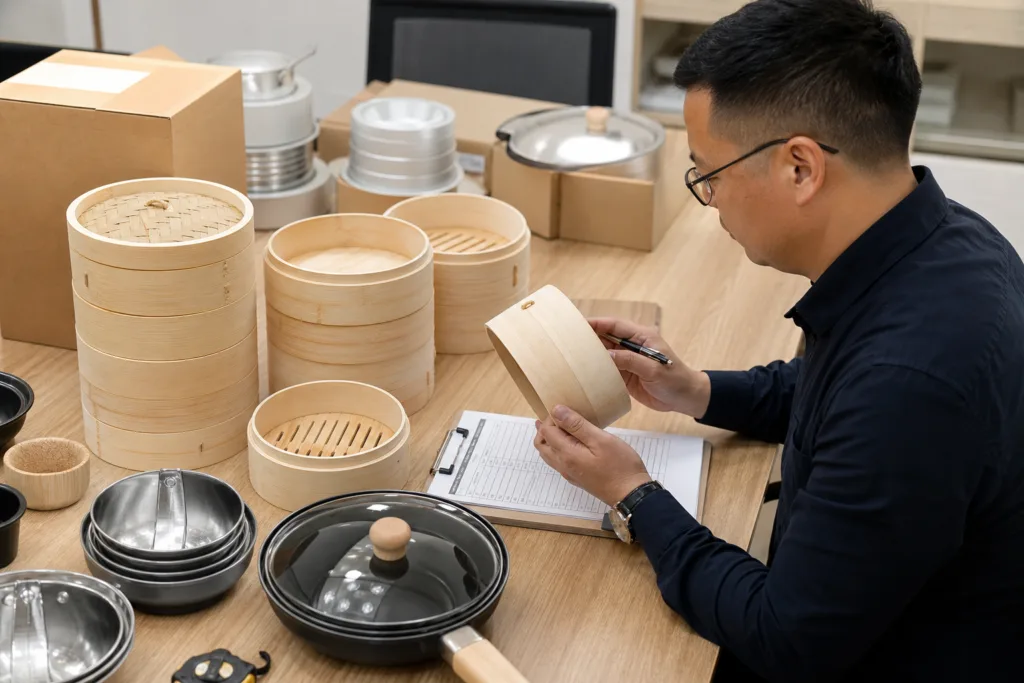
For importers, wholesalers, retailers, and brand owners, the best time to reduce bamboo steamer problems is before production approval. A visually attractive sample is not enough if the target market expects repeat use, gift presentation quality, or consistent retail performance. Buyers assessing broader kitchen assortments may also review custom bamboo products for kitchen use to see how steamer construction fits into a wider material and manufacturing program.
Sample review points that matter
- Check whether the lid sits evenly
- Inspect rim seams and pressure points
- Look for splinters, loose fibers, or lifted edges
- Smell the product before and after light steam exposure
- Test whether the basket sits flat and stacks securely
- Review packing condition if moisture exposure during shipping is a concern
If possible, samples should be exposed to several use-and-dry cycles before final judgment.
Questions buyers should ask manufacturers
- How is the bamboo dried before assembly?
- What visual quality checks are used for rims, weaving, and fit?
- How are odor concerns reduced before packing?
- What type of use is the steamer designed for: light home use or higher-frequency use?
- Can construction details be adjusted for target market needs?
These questions do not require confidential factory data. They simply help reveal whether the supplier understands performance risks and can discuss them clearly.
How finish choices affect smell and appearance
Natural-looking bamboo may better fit buyers who want a lighter, fresh material aesthetic. Darker carbonized finishes may offer a different retail look, but buyers should still consider how finish expectations connect to odor sensitivity, visual consistency, and the product story being presented to customers. Material appearance should support function, not hide weak construction.
Why product fit matters by sales channel
A steamer meant for a giftable retail shelf may prioritize neat finish, packaging presentation, and smooth visual consistency. A food-service-focused item may need stronger emphasis on repeat-cycle durability and easy part handling. Bamboo Wood Art generally advises buyers to match the construction level to the actual use case rather than assume one basket style fits every channel equally well.
Conclusion: Making Informed Choices for Performance and Longevity
Most bamboo steamer problems come back to a simple pattern: natural material under repeated moisture stress will only perform well when the bamboo is properly processed, the structure is well made, and the user follows sound care habits. Smell, warping, cracking, and separation are not random events. They usually reflect identifiable causes, from weak drying control to rough cleaning or a mismatch between product build and actual use intensity.
For individual users, prevention starts with gentle cleaning, full drying, and sensible storage. For buyers and sourcing teams, prevention starts earlier, with better sample evaluation, better manufacturer questions, and a clearer view of which construction details matter most. A smart decision is not always the most complex one. It is usually the one that aligns material, design, and expected use from the beginning.
Frequently Asked Questions
Why does my bamboo steamer still smell after several uses?
If the smell stays strong after several uses, it often points to trapped moisture, residue, heavy processing odor, or materials that do not respond well to steam rather than a normal new-bamboo scent.
Can a warped bamboo steamer still be used?
A slightly uneven steamer may still function, but visible warping usually affects lid fit and stacking stability, so continued use depends on how much the shape change interferes with safe and even steaming.
What causes bamboo steamers to crack?
Cracking usually comes from uneven moisture movement, fast drying near high heat, brittle material, or repeated stress on thin or poorly matched bamboo strips.
Should bamboo steamers be soaked before cleaning?
No, long soaking is usually a poor idea because it increases water absorption and can lead to odor, warping, and joint weakness; light rinsing and gentle wiping are typically safer.
How can buyers test bamboo steamer durability before placing a larger order?
The most practical approach is to review samples closely, steam them through multiple use-and-dry cycles, inspect lid fit and base flatness, and check whether odor, splitting, or loosening appears quickly.
Are wood steamers less likely to have the same problems?
Not necessarily, because wood also reacts to heat and moisture; the better choice depends on construction, thickness, finish, and the intended use pattern rather than material name alone.