For modern home product brands, material choice affects far more than appearance. In practice, the bamboo vs hardwood decision shapes product positioning, sourcing risk, finish options, cost control, packaging fit, and customer expectations over time. Buyers and developers rarely choose between these materials on looks alone. They usually need to balance design goals with factory practicality, order volume, and the story the product will carry into retail, gifting, or private-label channels.
A useful next step is to review Discover key considerations when comparing bamboo and hardwood for modern home product brands. Readers planning the next sourcing step may want to explore how Bamboo Wood Art presents its manufacturing scope, product categories, and material direction from a factory perspective, especially when evaluating custom development, finish choices, and category fit.
Why Material Choice Matters for Modern Home Product Brands
In home product development, the material often determines the commercial logic of the item. A tray, cutting board, comb, organizer, or gift set may look attractive in either bamboo or hardwood, but the production route, visual language, and market message can differ in meaningful ways.
That is why bamboo vs hardwood is usually a comparison-stage question rather than a basic educational one. The reader often already knows both materials are common. What they need is a decision framework: which material better fits the category, target customer, and supply plan?
For sourcing teams, the main concerns often include consistency, machining behavior, finishing results, and price stability. For brand owners, the same choice also affects shelf presence, sustainability messaging, and how premium or casual the product feels in hand.
bamboo vs hardwood
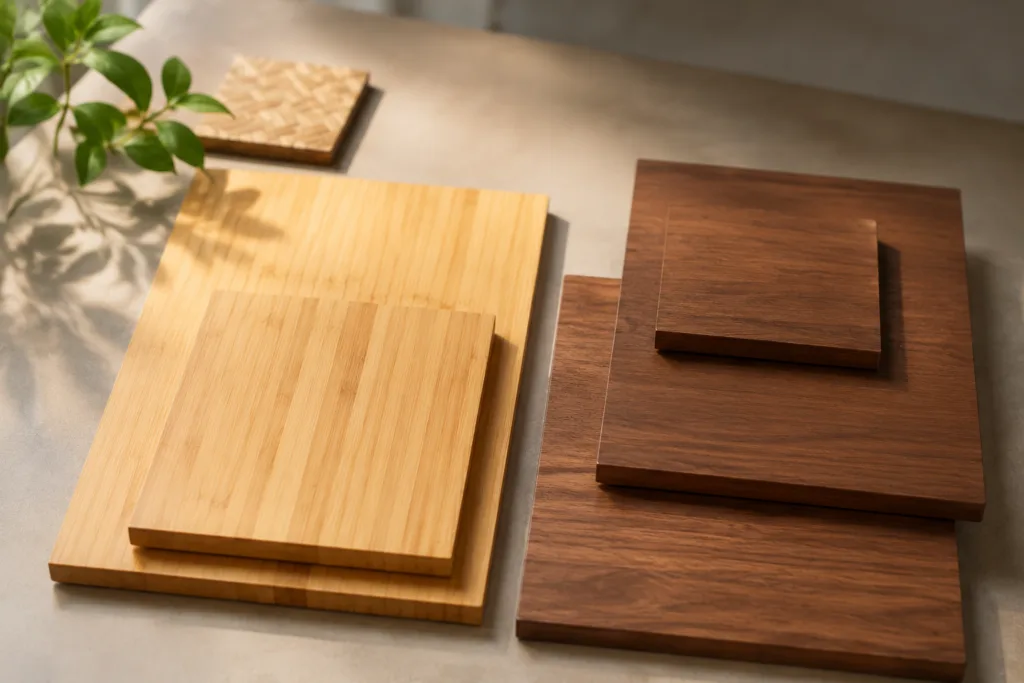
At a high level, bamboo is a fast-growing grass processed into usable product components, while hardwood refers to broadleaf tree species cut and milled into solid wood parts. That simple difference in biological origin leads to very different manufacturing paths.
How bamboo is turned into product-ready material
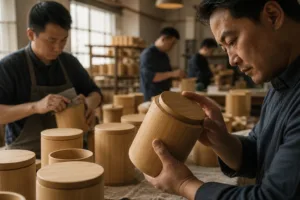
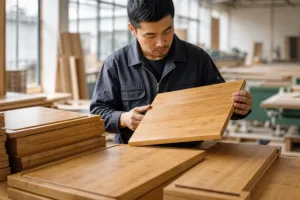
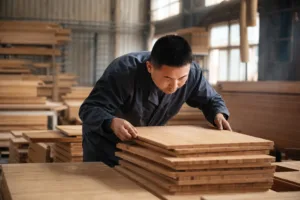
Most bamboo products begin with harvested culms that are split, treated, laminated, pressed, and cut into boards or shaped components. This means many finished bamboo goods are engineered from strips or layers rather than carved from a single solid piece. That structure can support good consistency, but it also means the visual pattern is influenced by lamination style and panel construction.
How hardwood enters manufacturing
Hardwood usually starts as sawn timber from species such as acacia, walnut, maple, beech, oak, or ash, depending on the application and sourcing region. It may be used as solid wood, finger-jointed stock, laminated panels, or mixed-material assemblies. Because hardwood is a broader category, performance and appearance vary much more by species.
Typical bamboo applications
- Cutting boards and serving boards
- Kitchen utensils and small tabletop items
- Bathroom accessories
- Storage organizers
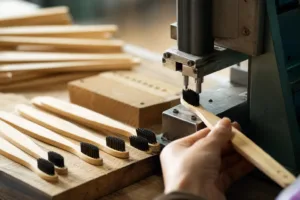
- Combs, brushes, and personal care accessories
- Light gift-oriented home products
Typical hardwood applications
- Furniture and structural home accessories
- Premium trays and charcuterie boards
- Decor-forward tabletop items
- Solid wood organizers and boxes
- Long-handle utensils or carved items
- Products where species identity adds value
When readers want category-specific development paths, they may also want to explore bamboo product manufacturing options to see how bamboo is commonly adapted across everyday home and gift-oriented products.
Visual and Tactile Differences Between Bamboo and Hardwood
For many brands, the first visible difference is pattern. Bamboo typically shows a more linear, uniform, and contemporary appearance, especially in laminated boards. Hardwood often presents deeper grain movement, more natural variation, and a warmer traditional feel.
Grain pattern and visual rhythm
Bamboo usually feels cleaner and more controlled visually. Depending on whether the panel is flat-grain, side-grain, or strand-style, the surface can look sleek and modern. Hardwood grain is usually more expressive. Species with strong grain variation can make each piece feel more individual, which many premium or artisan-style brands prefer.
Color range and natural tone
Bamboo often starts in pale blond to honey tones, with carbonized versions shifting darker brown. Hardwood covers a much wider natural color range, from light beige species to rich chocolate tones. This gives hardwood more built-in variety without surface coloring, but it also introduces more natural variation from batch to batch.
Touch, warmth, and hand feel
Customers do not only see materials; they handle them. Hardwood often feels warmer, denser, and more organically textured. Bamboo can feel smooth, neat, and refined, especially when the finish is clean and the panel is well-pressed. Which is better depends on the product brief. A minimalist retail line may benefit from bamboo’s orderly look, while a rustic or elevated tableware line may lean toward hardwood.
Finishing and customization potential
Both materials can support oil finishes, clear coatings, stained looks, laser engraving, and shape customization, but results differ. Bamboo often delivers crisp engraving and a clean branded look. Hardwood can create more visual depth, but grain movement may influence how stain and engraving appear. This is why sample review matters before locking a mass-production surface direction.
In many factory discussions, the visual choice is not only about taste. It is also about repeatability. Bamboo Wood Art often sees buyers choose bamboo when they want a more consistent retail look across sets, while hardwood is selected when natural variation is part of the premium appeal.
Supply Chain and Sourcing Stability
Supply stability is one of the most practical parts of the bamboo vs hardwood comparison, yet it is often underexplained in consumer-style articles. For brands planning repeated orders, launch calendars, or seasonal programs, this part matters just as much as appearance.
Availability and raw material consistency
Bamboo supply can be attractive when a product line depends on repeatable panel-based manufacturing. Because many bamboo products are produced from processed strips and laminated boards, factories can often work with a more standardized input format. Hardwood supply depends more heavily on species, grade, board size, moisture condition, and sourcing origin.
Lead times and production planning
Lead time is rarely about material alone, but some materials create fewer planning surprises than others. Bamboo-based product lines can be easier to standardize for common SKUs. Hardwood may require more attention to grading, color sorting, and defect control, especially if the brand wants a consistent look across larger production runs.
Manufacturing suitability by product type
Panel-based products such as boards, organizers, and flat-surfaced accessories often align well with bamboo. Products that benefit from carved depth, visible end grain character, or species-specific aesthetics often align better with hardwood.
Matching supply logic to sales channels
Retail chains and promotional programs often prefer predictability in color and dimensions. Boutique brands may accept more variation if it supports a handcrafted story. The right choice depends on whether the brand values uniform presentation or natural individuality more highly.
For teams comparing broader factory routes beyond bamboo alone, it can also help to learn about wood product manufacturing solutions when reviewing species options, construction styles, and product-category suitability.
Sustainability Narratives and Brand Communication
Sustainability is one reason many buyers begin exploring bamboo, but this area needs careful communication. A brand should avoid oversimplified claims and focus instead on responsible, supportable messaging.
Why bamboo appeals to sustainability-minded brands
Bamboo is widely associated with fast renewability and efficient regrowth. That makes it attractive for brands that want a material story linked to lower resource intensity in broad terms. It often fits products marketed around modern living, daily reuse, and natural alternatives to more resource-heavy materials.
Why hardwood still holds value in sustainability discussions
Hardwood is not automatically the weaker sustainability choice. The real picture depends on species, sourcing practices, product longevity, waste control, and how efficiently the material is used. A durable, well-designed hardwood product that lasts a long time can support a strong long-term use narrative.
How to communicate responsibly
Good brand communication avoids vague claims. Instead of promising broad environmental superiority, it is usually better to speak about material characteristics, intended longevity, reduced plastic use where relevant, and design choices that support repeated daily use.
The branding trade-off
Bamboo often gives brands an immediate eco-aware signal. Hardwood often gives a timeless, craftsmanship-led signal. Neither story is universally stronger. The right fit depends on the audience and whether the product is meant to feel modern-natural or heritage-premium.
Material Fit by Product Category
Not every product category asks the same question. Some categories reward consistency and clean edges. Others reward depth, weight, and grain character.
Where bamboo often works best
- Cutting boards for mainstream retail and gifting
- Kitchen accessories with simple geometry
- Bathroom and vanity organizers
- Combs, brushes, and light personal care items
- Private-label home accessories where uniformity matters
Where hardwood often works best
- Premium serving boards and entertaining products
- Decorative trays with richer visual character
- Solid wood gift items positioned as upscale
- Furniture-adjacent home accessories
- Products where species identity supports the selling story
Where either material can work
Many items can be successful in both materials, including trays, boxes, utensil sets, racks, and organizers. In those cases, the deciding factors are often retail positioning, target price, finish direction, and the amount of natural variation the brand is willing to accept.
Cost Structure and Commercial Considerations
In sourcing, cost means more than raw material price. The commercial decision behind bamboo vs hardwood usually includes yield, labor, defect control, finishing steps, packaging efficiency, and the level of sorting needed to meet appearance standards.
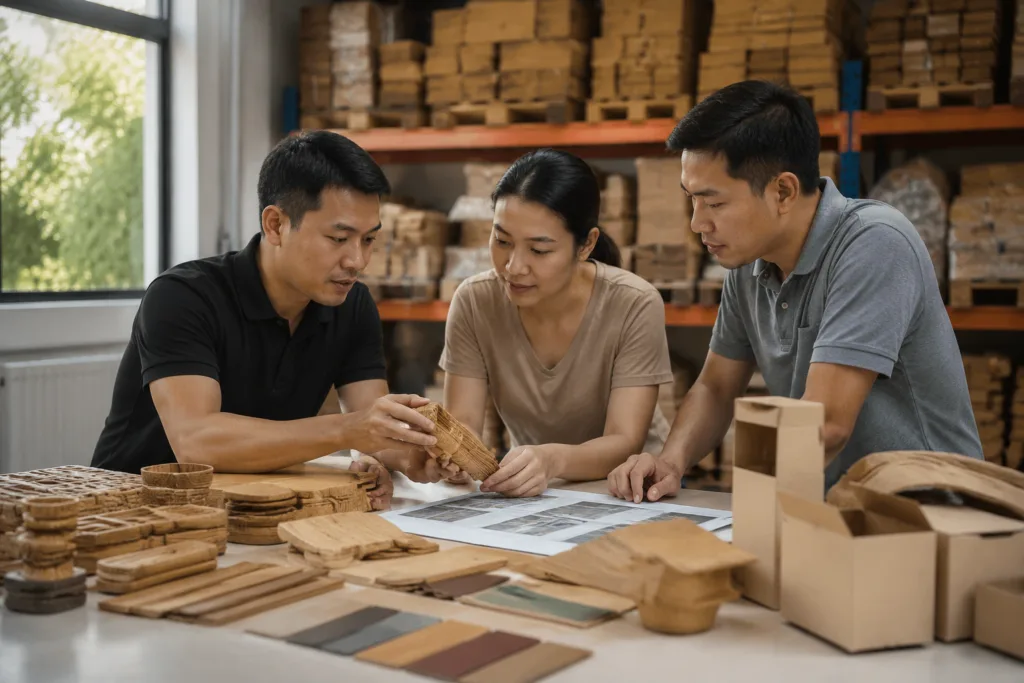
Raw material cost is only the starting point
Bamboo can be cost-effective in categories built around standardized panels and repeated shapes. Hardwood cost can vary widely by species. A comparison between bamboo and a common utility hardwood is very different from a comparison between bamboo and a premium decorative species.
MOQ and production practicality
Minimum order quantities often reflect production setup, not just material. Products requiring complex grain matching, special wood selection, or tighter color sorting may raise practical thresholds in hardwood programs. Bamboo often suits scaled repeats well, especially for items with stable dimensions and surface expectations.
Packaging and freight logic
Uniformity can simplify packaging design, carton planning, and presentation in boxed sets. If each hardwood piece varies strongly in color or grain, packaging windows and set matching may require more attention. That does not make hardwood a poor option, but it can add handling considerations for premium presentation.
The hidden cost of inconsistency
In many cases, the most expensive problem is not the material itself. It is mismatch between material behavior and brand expectation. A low-cost material becomes costly if the final look does not fit the brand or if sorting and rework become necessary to maintain presentation standards.
Durability, Maintenance, and Customer Expectations
Durability discussions often become too simple. Neither bamboo nor hardwood should be treated as a universal winner without context. Performance depends on construction, thickness, finish, use frequency, moisture exposure, and care habits.
Everyday wear and surface resilience
For many home accessories, both materials perform well when properly made and properly used. Bamboo is commonly chosen for kitchenware because it can support frequent everyday use in a lightweight, practical format. Hardwood often appeals where customers expect a heavier, more substantial feel.
Moisture sensitivity and care
Both materials benefit from sensible care. Prolonged soaking, dishwashers, and harsh storage conditions can shorten product life. A customer education insert or care note is often useful regardless of material, especially for kitchen and bath items.
Hardness versus long-term user experience
Hardness matters, but it is not the only factor. Surface friendliness, finish wear, edge stability, and ease of cleaning also affect perceived durability. Buyers evaluating category performance may find it useful to review innate material hardness differences alongside broader use-case considerations.
What customers usually expect
Customers often expect bamboo to feel practical, clean, and modern. They often expect hardwood to feel richer, more natural, and more furniture-like. If the product experience does not match that expectation, reviews and reorder performance can suffer even when the physical quality is acceptable.
Specialized Comparison: Acacia Wood vs Bamboo
Acacia is one of the most common hardwoods discussed in home product sourcing, so it deserves separate treatment. In many categories, the real decision is not bamboo vs hardwood in the abstract, but bamboo vs acacia.
Why acacia is often compared with bamboo
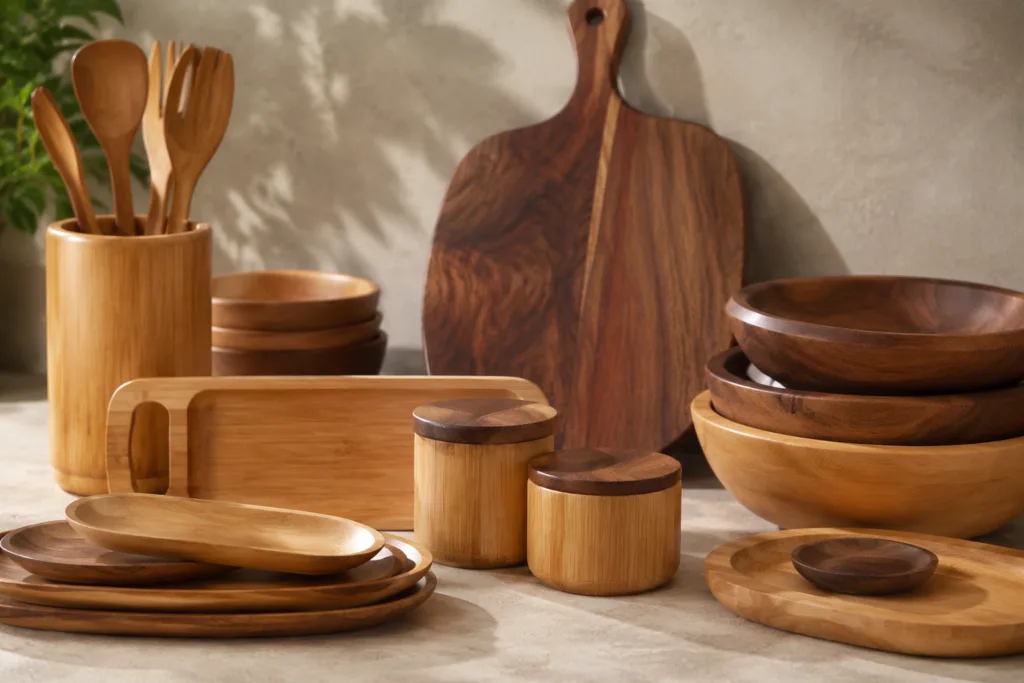
Both materials appear frequently in cutting boards, serving boards, trays, kitchen accessories, and gift sets. Both can work in mass-market and better retail segments. Both support natural-material branding. But the look and feel differ clearly.
Where bamboo usually has the edge
- More uniform visual presentation
- Cleaner modern styling
- Strong fit for minimalist retail ranges
- Often easier category consistency across matching sets
Where acacia usually has the edge
- Richer grain movement
- Warmer premium perception
- Stronger natural variation for artisan-style positioning
- Good fit for entertaining and decor-led tabletop products
The practical trade-off
If a brand wants clean repeatability and a contemporary surface story, bamboo often works better. If it wants visible natural character and a more elevated wood identity, acacia often becomes the stronger candidate. The best answer depends on whether uniformity or expressive grain is more valuable to the sales strategy.
Decision Matrix for Buyers and Developers
| Selection Factor | Bamboo Often Fits Better | Hardwood Often Fits Better |
|---|---|---|
| Visual style | Clean, modern, uniform | Warm, natural, character-rich |
| Category consistency | High repeatability across sets | Depends on species and sorting |
| Species storytelling | Less species-driven | Strong opportunity |
| Retail positioning | Practical, eco-aware, contemporary | Premium, crafted, decor-led |
| Panel-based products | Very suitable | Suitable with species choice |
| Natural variation appeal | Lower | Higher |
| Gift set matching | Often easier | May need more visual sorting |
| Customization look | Crisp, neat branding | Richer but more variable effect |
Questions to ask before locking material
- Is the product meant to feel modern or traditional?
- Does the brand want uniformity or visible natural variation?
- Will the item be sold singly or in coordinated sets?
- How sensitive is the project to cost swings and sorting labor?
- Will engraving, staining, or coating need to look highly consistent?
- What customer care expectations need to be communicated?
Case Examples from a Manufacturer Perspective
From a manufacturing standpoint, the strongest material decisions are usually tied to product purpose rather than trend. A simple retail cutting board line may favor bamboo because the visual consistency supports easier series development. A premium entertaining board may favor hardwood because grain expression becomes part of the value.
Example: entry-to-mid retail kitchen line
A brand launching multiple board sizes, utensil holders, and small kitchen organizers often benefits from bamboo’s cleaner family look. Products can feel coordinated without needing heavy sorting for grain character.
Example: premium gifting set
A gift set built around hosting, wine service, or tabletop presentation may benefit from hardwood if the buyer wants more warmth and perceived richness. In that case, species selection becomes a branding choice, not just a materials choice.
Example: design-led customization
Where engraving, shape language, and packaging are central, material choice should be tested through samples rather than decided from appearance alone. For teams focused on customization-led kitchen programs, it is often useful to review approaches to customizing bamboo cutting boards for brand differentiation because the finish, profile, and branding method can change the final perception significantly.
Bamboo Wood Art generally treats these projects as alignment exercises: product category, target price, finish expectation, and sales channel all need to point in the same direction. Material choice works best when it supports that full commercial picture.
Common Selection Mistakes to Avoid
Choosing by trend alone
A material may be fashionable, but if it does not match the category or brand voice, the result can feel forced.
Ignoring variation tolerance
Some buyers approve beautiful samples without defining acceptable production variation. That creates avoidable risk, especially with expressive hardwood species.
Comparing categories too broadly
Bamboo vs hardwood for a comb is not the same as bamboo vs hardwood for a serving tray. Product function changes the answer.
Underestimating finish and packaging effects
The same material can feel mass-market or premium depending on edge profile, finish clarity, insert design, and carton presentation. Material is the base, not the whole product story.
Practical Guidance for Buyers and Developers
If the goal is a clean, modern, consistent product line with a natural-material identity, bamboo is often the more practical choice. If the goal is deeper grain character, a warmer premium feel, or species-based storytelling, hardwood often becomes the stronger direction. Neither answer is universal, and the right decision usually depends on how the item will be used, sold, and replenished.
For modern home product brands, the best material decision is rarely the one that sounds best in isolation. It is the one that fits the category, finish plan, target price, packaging approach, and customer expectation at the same time. Teams that sample early, define variation clearly, and match material logic to channel strategy usually make better long-term choices.
Frequently Asked Questions
Is bamboo better than hardwood for home products?
Bamboo is not always better, and hardwood is not always better. Bamboo often suits modern, consistent product lines, while hardwood often suits products that benefit from richer grain and a more premium natural feel.
What is the main difference in bamboo vs hardwood?
The main difference is that bamboo is a processed grass-based material often used in laminated form, while hardwood comes from tree species and usually offers more natural grain variation, species identity, and visual warmth.
Is bamboo or hardwood more suitable for cutting boards?
Both can work well, but the better choice depends on the brand brief. Bamboo often fits repeatable retail programs and cleaner styling, while hardwood often fits premium serving and presentation-focused board lines.
Why do some brands choose bamboo over acacia?
Many brands choose bamboo over acacia when they want a more uniform surface look, easier coordination across product sets, and a cleaner contemporary design language.
Does hardwood always look more premium than bamboo?
Not always. Hardwood often feels more premium because of grain depth and visual warmth, but a well-designed bamboo product with strong finishing and packaging can still feel refined and market-appropriate.
How should buyers decide between bamboo and hardwood?
Buyers should compare product function, target price, variation tolerance, finish expectations, packaging needs, and the brand story they want the product to communicate before locking the material direction.