Choosing a bamboo soap dish for bar soap is not just a matter of matching size or style. For B2B buyers, the real question is whether the holder is meant for a bathroom bar soap that stays relatively dry between uses or a kitchen dish soap bar that faces frequent rinsing, heavier residue, and more direct contact with water. Those use patterns change the best design, the most suitable drainage structure, and even the right surface finish for bulk production.
For buyers building a private label line, a hospitality amenity set, or a kitchen cleaning accessory range, bamboo soap dish manufacturing solutions can help you translate those use differences into practical specifications. At Bamboo Wood Art, we can support size planning, drainage detail selection, laser engraving or branding, sample approval, and bulk packaging decisions so the final product fits the actual soap it will hold, not just a generic retail photo.
Why bathroom and kitchen soap bars should not use the same holder design
The simplest way to evaluate a soap dish is to start with the soap itself. Bathroom bar soap is usually used for handwashing, shaving, or general bathing, and it often has a smoother surface, lighter residue, and a more decorative presentation requirement. A kitchen dish soap bar, on the other hand, is usually used repeatedly at the sink, exposed to more water splash, and expected to wash off grease or food residue from hands and dishes. That means the holder must dry faster, tolerate more moisture, and stay easier to clean.
From a sourcing perspective, this is why one generic soap tray often underperforms in both settings. A bathroom buyer may care most about appearance and drip control. A kitchen buyer may care more about rinse efficiency, residue runoff, and the ability to wipe or wash the holder quickly. When both use cases are served by the same product, one environment usually pays the price in mess, softness, or reduced lifespan.
For bamboo products, this distinction matters even more because bamboo performs best when the design helps it dry properly. Standing water, trapped residue, and poor airflow can shorten product life regardless of the base material. That is why we always recommend defining the use scenario before finalizing structure, finish, and packaging.
How soap size and shape affect bamboo soap dish dimensions
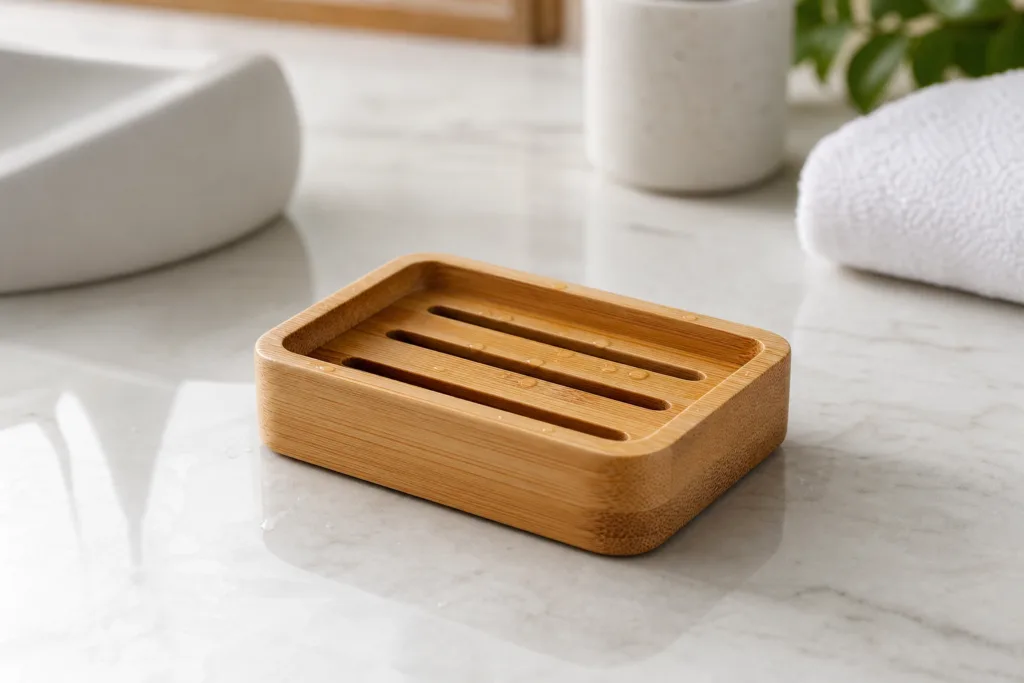
Soap bars are not uniform. Bathroom bars are often rounded, oval, or sculpted, while kitchen bars may be flatter, denser, or purpose-shaped for easier grip. If the tray is too small, the soap can overhang the edges and hold water around the perimeter. If it is too large, the bar may slide around, look undersized in retail packaging, or take longer to dry because the contact area is poorly controlled.
We usually evaluate three dimension points during sampling: soap footprint, bar thickness, and how the soap moves as it shrinks in use. A good bamboo soap dish for bar soap should support the bar without creating a sealed wet pocket under it. For kitchen use, a slightly wider tray often helps because dish soap bars tend to be used more often and can become softer around the edges. For bathroom use, a more compact visual footprint may be preferred if the product is sold as a countertop accessory or gift set component.
| Use case | Typical soap behavior | Dimension priority | Design implication |
|---|---|---|---|
| Bathroom bar soap | Moderate moisture, lighter residue, decorative use | Fit and presentation | Balanced tray size, tidy edge profile, good visual finish |
| Kitchen dish soap bar | Frequent rinsing, heavier residue, higher splash exposure | Drainage and cleaning | Wider base, faster runoff, easier wiping and drying |
| Hospitality or gift set | Brand presentation, uniform pack fit | Consistency | Controlled dimensions and repeatable packaging fit |
For product development teams, the practical step is to confirm the soap bar first, then design the tray around it. This avoids oversizing the holder, which can increase material cost and packaging volume, or undersizing it, which can create return issues after launch.
Bathroom placement needs: appearance, splash control, and dry-down speed
Bathroom placement sounds simple, but it creates its own performance requirements. A soap dish on a vanity or sink edge often has to look tidy, sit securely, and dry fast enough to avoid discoloration or surface softening. Bathroom buyers usually want a tray that complements the basin and does not draw attention to water marks or soap streaks.
A slatted structure often works well in this setting because it creates airflow beneath the bar and lets excess water drain away naturally. If you are considering a slatted bamboo soap dish, the key manufacturing detail is not just the slat count but the spacing, edge sanding, and underside support. Too few slats can reduce airflow, while too many or too narrow gaps can make cleaning harder and let soap stick between the edges.
For bathroom retail programs, we also look at how the holder sits on the counter. A raised underside or small feet can prevent the bottom from staying wet after splashes. That small detail can improve perceived quality and help the product stay stable on smooth ceramic or stone surfaces. When the goal is premium presentation, finish consistency and grain appearance matter almost as much as drainage.
In bathroom applications, the best design usually balances three things: visual simplicity, quick dry-down, and enough structure to prevent soap slippage. Overly elaborate drainage patterns may look attractive in a catalog, but they can trap residue or create hard-to-clean corners. Simpler geometry often wins in the long run.
Kitchen placement needs: heavier residue, more rinsing, and higher hygiene expectations
A kitchen soap bar holder faces a different workload. It sits near food prep, sink spray, dishwater, and regular handwashing. That makes hygiene and easy cleaning central design criteria. A kitchen-use holder should not hold stagnant water, and it should not develop residue pockets that are difficult to rinse away.
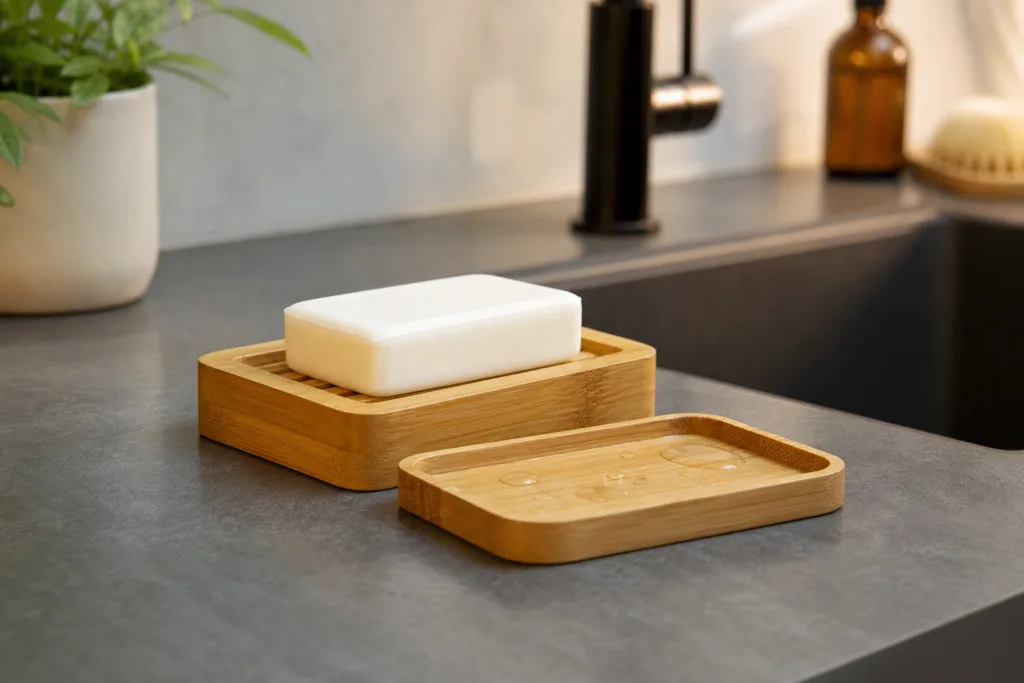
The CDC’s guidance on handwashing emphasizes the importance of soap and water in removing dirt and contaminants, which is one reason kitchen holders should be easy to clean and dry quickly. In the same way, FDA food-handling guidance highlights the need to keep kitchen surfaces and utensils clean. A soap dish used in a kitchen should fit that environment by staying simple to wash, quick to air-dry, and resistant to buildup rather than decorative complexity. For that reason, we often recommend a design built around soap dish with removable drip tray when the buyer wants a more maintenance-friendly kitchen model.
Kitchen buyers should also pay attention to how the soap bar is used. If the bar is rubbed directly on hands after handling greasy pans or food residue, the holder may see more grime than a bathroom tray ever will. In that case, a removable tray or a deep-clean-friendly form can save the end user time and improve product satisfaction. A tray that is easy to separate and rinse also helps reduce the chance of oily buildup in corners.
For private label kitchen programs, the product story should be practical, not decorative. Buyers want a holder that fits the cleaning routine, not one that requires special handling. That is why kitchen soap dish development should always include residue management as part of the spec, not as an afterthought.
What drainage structure works best for a dish soap bar holder?
Drainage is the core engineering issue in this category. A holder can be made from bamboo, wood, or a combination of materials, but if drainage is weak, the product will underperform. The right structure depends on the application, soap softness, and the amount of water exposure at the point of use.
We normally compare four common structures during design review: slatted, grooved, raised-base, and removable-drip-tray formats. Each has a place, but each solves a different problem.
A soap dish with drain grooves is often a good middle-ground option for buyers who want a cleaner visual line than a slatted tray but still need water to move away from the soap. Grooves can guide runoff while keeping the surface easy to package and visually calm.
Slatted designs can offer strong airflow, which helps the bar dry. Grooved designs can simplify cleaning. Raised-base designs can protect the underside from direct contact with water. Removable-drip-tray designs can be best where water volume is higher or where end users expect a simple rinse-and-empty routine.
| Drainage structure | Strength | Limit | Best use |
|---|---|---|---|
| Slatted | Strong airflow and dry-down | Can trap small residue if spacing is poor | Bathroom soap bars, premium retail |
| Grooved | Simple runoff path, easy visual style | May hold soft soap if grooves are shallow | General-purpose bathroom or light kitchen use |
| Raised-base | Keeps underside away from wet surface | Does not manage runoff alone | Vanity and counter use with moderate moisture |
| Removable drip tray | Best maintenance control | More parts, more assembly | Kitchen bars and high-rinse environments |
In production, the smartest approach is to choose one primary drainage logic and refine it for the actual use case. Trying to make one design do everything often leads to compromises in cleaning, packaging, or durability.
How residue control changes the best soap bar storage bamboo design
Residue is often the hidden reason a soap dish gets rejected after launch. Bathroom residue tends to be softer and more cosmetic, while kitchen residue may include grease, food traces, or heavier soap film. That means the surface geometry around the soap matters as much as the drainage channels.
A tray with flat corners and tight seams can collect sludge over time. Slightly rounded interiors, open drainage paths, and easier-to-wipe surfaces usually perform better in long-term use. If the holder is meant for a soap bar that gets soft quickly, we also recommend limiting the amount of contact surface under the bar so it does not stick to the tray.
For buyers evaluating a soap dish with removable drip tray, the benefit is that the tray can be emptied before residue hardens. That can be especially helpful for kitchen users who rinse the bar often or leave it near a sink that sees repeated splashing. The holder should support easy hand cleaning without requiring specialized brushes or soaking steps.
Residue management also affects packaging and merchandising. A product that looks clean on day one but collects buildup quickly will create avoidable complaints. That is why we look at the end-user maintenance routine during specification, not only the initial appearance in the box.
Cleaning frequency, hygiene expectations, and maintenance planning
Different buyers expect different cleaning intervals. A bathroom accessory may be wiped during routine housekeeping, while a kitchen soap holder may be cleaned several times a week or even daily in busy homes and hospitality settings. The product should be designed to match that maintenance rhythm.
In hospitality, easy-clean design is especially important because housekeeping teams need predictable, fast maintenance. A tray that can be lifted, rinsed, and dried without special tools is easier to standardize across rooms. In retail, the same logic applies to customer satisfaction: the simpler the holder is to maintain, the more likely it is to stay in use.
If the soap dish is part of a bundled set or amenity kit, the cleaning expectation should inform the finish. Very glossy coatings may show scratches or fingerprints more easily. Very raw surfaces may absorb moisture too quickly. The best choice is usually a balanced finish that supports appearance while still allowing practical wiping and air-drying.
For this reason, buyers should include maintenance language in their product brief. It helps suppliers select the right coating, joint construction, and drainage profile before the first sample is made.

Material and finish considerations for bamboo soap dish production
Bamboo is often a strong fit for soap accessories because it offers a clean natural appearance and can be machined into small, precise parts. But in wet-use products, the material alone is not enough. Surface preparation, moisture control, and edge treatment all influence performance. A well-made holder should be sanded smoothly, have protected edges, and dry properly after use.
When bamboo is processed for humid environments, the treatment matters. Research on bamboo water resistance and heat treatment shows that processing can influence performance in wet conditions, which supports the idea that finish and material prep are not cosmetic details but functional decisions. For buyers comparing natural bamboo with processed options, our natural and carbonized bamboo finish guide is useful because carbonization changes color tone and can affect the look buyers expect in bathroom or kitchen collections.
From a manufacturing perspective, we usually assess four finish points: moisture resistance, sanding quality, edge smoothness, and coating compatibility. If the surface is too rough, soap residue clings more easily. If the edges are poorly finished, the product feels cheap and can splinter during use. If coating is too heavy, it may reduce the natural look or make the holder feel less authentic. If coating is too light, water can penetrate and shorten service life.
Here is a practical finish comparison for buyers:
| Finish choice | Visual effect | Functional effect | Buyer fit |
|---|---|---|---|
| Natural sanded | Warm, simple, organic | Needs careful moisture planning | Bathroom retail, eco-focused brands |
| Carbonized | Deeper tone, more uniform look | Can help mask grain variation | Decorative and private label programs |
| Sealed or coated | More consistent surface appearance | Better against splashes if correctly applied | Kitchen use and higher-moisture settings |
We also recommend testing edge treatment during sampling. A very small product like a soap dish can still fail if the edges are sharp, uneven, or poorly sealed. That is why finish quality and assembly quality should be part of the same review, not separate checkboxes.
B2B customization options for bathroom and kitchen versions
Customization is where a soap dish becomes a product program. Different channels may need different dimensions, different drainage detail, and even different branding methods. For a bathroom retail line, the priority may be compact appearance and premium packaging. For a kitchen line, the priority may be function, cleaning convenience, and quick replenishment. We can develop both under one brand family while keeping the actual product geometry appropriate to each use.
At Bamboo Wood Art, we often support OEM and ODM projects through sample development, dimension confirmation, logo placement, and packaging planning. For branded programs, laser engraving is a strong option when the buyer wants a durable, understated logo. CNC shaping or carving may be appropriate if the product needs a more tactile design language. The key is to keep the branding method aligned with the finish and the intended use.
For some buyers, packaging is just as important as the dish itself. A retail-ready bathroom version may need a clean window box, while a kitchen version may benefit from a more functional insert or protective inner tray. If the order is private label, package strength must also account for transport damage, especially if the soap dish has grooves, removable parts, or delicate feet. When packaging and product design are planned together, breakage and presentation issues are both easier to control. For buyers planning a wider assortment, Bamboo Wood Art can align manufacturing, finishing, and packing under one development brief.
Common customization variables include:
- Length and width to fit a specific soap bar
- Drainage style for bathroom or kitchen use
- Logo engraving, laser mark, or blank surface
- Natural, carbonized, or coated finish
- Gift box, sleeve, or e-commerce protection packaging
- Bundle sets with matching accessories
When these variables are specified early, sampling becomes much more efficient. Buyers avoid redesigning packaging after the product shape is already locked.
How to choose the right design by use case
There is no single best soap dish design for every channel. The right choice depends on where the product will sit, how often it will be washed, and what the buyer wants to emphasize in the final market.
Bathroom retail
For bathroom retail, the best design is usually compact, elegant, and easy to dry. Slatted or grooved models often perform well because they support quick dry-down while keeping the product visually simple. Presentation matters, but so does practical drainage.
Kitchen retail
For kitchen retail, easy cleaning and residue control matter most. A removable-drip-tray or similarly easy-rinse format is often the safer choice. Buyers should focus on how the tray handles frequent rinsing and how easy it is to keep clean near the sink.
Gift sets
For gift sets, the holder has to look refined and ship safely. A stable tray with clean edge treatment, balanced branding, and protective packaging usually creates better shelf appeal. Small details like finish consistency and insert design become important because the product is often judged by presentation first.
Hotels and hospitality
For hotels, the soap dish should be easy for housekeeping to maintain and durable enough for repeated replacement cycles. A simple, sturdy structure with consistent dimensions helps standardize room setups. If a property uses multiple room types, a single product family with minor size variations can reduce sourcing complexity.
Private label programs
Private label buyers should think in terms of assortment architecture. A bathroom SKU and a kitchen SKU can share the same design language while still having different drainage, finish, or packaging specifications. This helps build a coherent brand while respecting use-case differences.
Common sourcing mistakes to avoid when ordering in bulk
Many sourcing issues begin with assumptions. The first mistake is treating all soap bars as if they need the same tray. The second is overlooking moisture load and assuming a decorative holder will function in a wet kitchen environment. The third is choosing a finish based only on appearance and not testing how quickly the holder dries after use.
Another common mistake is approving samples without checking soap fit under real conditions. A holder may look fine empty but become unstable when the bar softens or shrinks. Buyers should also check how easy it is to clean residue from corners, grooves, and joins. If the product has too many small design features, maintenance can become a hidden complaint point.
In bulk orders, consistency is another critical issue. Bamboo grain, color tone, and surface texture can vary naturally, but suppliers should still control sanding, coating, and assembly standards. If the order includes branding, the engraving depth and placement should be verified across the sample and production runs. Good communication during sampling prevents avoidable disputes during shipment and QA.
Finally, packaging should not be treated as an afterthought. A soap dish is small, but it can still break, scratch, or warp if packed poorly. Protective inserts, moisture-safe wrapping, and box fit all matter when the product is shipped in volume.
Choosing the right bamboo soap dish for bar soap in real buying scenarios
When we help buyers choose a bamboo soap dish for bar soap, we start with the end use, then move to moisture exposure, soap size, maintenance habits, and branding needs. That order keeps the product aligned with the actual customer experience. A bathroom bar soap holder should prioritize airflow, stable presentation, and a clean finish. A kitchen dish soap bar holder should prioritize drainage, residue control, and easy cleaning.
For buyers who want one product family with two use cases, the safest path is usually to keep the brand look consistent while adjusting the internal structure. That may mean a slatted bathroom version and a removable-drip-tray kitchen version, or a grooved model for one channel and a raised-base model for another. The important point is that the structure should match the moisture and cleaning environment, not just the logo.
In bulk production, the best results come from clear specifications, realistic sample testing, and packaging that protects the product from the first warehouse move to final retail display. If you define the use case early, the design choices become much easier to justify and much less risky to scale.
FAQ
Do bathroom and kitchen soap dishes need different drainage designs?
Yes. Bathroom soap dishes usually need enough drainage to keep the bar dry and presentable, while kitchen soap dishes need faster runoff and easier cleaning because they face more frequent rinsing and heavier residue. A bathroom design may work well with slats or grooves, while a kitchen design often benefits from a removable drip tray or another easy-clean structure.
What size should a bamboo soap dish for bar soap be?
The best size depends on the actual soap bar, not a generic category. We recommend measuring the bar footprint and thickness, then adding enough clearance to avoid overhang while still keeping the soap stable. For kitchen bars, a slightly wider tray may help with softness and frequent use; for bathroom bars, a more compact fit often looks better.
Which finish is better for wet-use soap accessories?
A good wet-use finish should balance appearance and moisture protection. Natural sanded bamboo can work well if the design dries quickly, while carbonized or sealed finishes may offer better visual consistency or moisture handling when correctly made. The best choice depends on the use environment, cleaning frequency, and target price point.
Can bamboo soap dishes be customized with a logo?
Yes. Logo engraving, laser marking, and other branding methods are common for bamboo soap dishes. The best method depends on the surface finish, the brand style, and how bold the mark should appear. We usually test logo placement during sampling to make sure it stays readable and does not interfere with the product’s clean look.
What should buyers check in a sample before bulk ordering?
Buyers should check soap fit, drainage speed, edge smoothness, stability on the counter, finish quality, and how easy it is to clean residue from the surface. If the product includes packaging, the sample should also be tested for fit and protection. A good sample should reflect real use, not just visual appearance.
Are bamboo soap dishes suitable for hospitality or private label programs?
Yes, as long as the design is matched to the use environment and the production standards are controlled. Hospitality and private label buyers often need consistent sizing, durable finishes, simple maintenance, and packaging that supports bulk handling. With the right spec, bamboo soap dishes can fit both bathroom amenity sets and kitchen retail programs.