When buyers compare a bamboo steamer vs metal steamer basket, the question is rarely just about materials. In real cooking, the choice changes how steam moves, how much condensation drips back onto food, how delicate textures hold up, and how easy the tool is to live with after dinner. For dumplings, buns, vegetables, and mixed batch cooking, those differences can be more noticeable than the price gap between products.
If you are sourcing for a kitchenware brand, restaurant program, or private label cookware line, the right match is not only about appearance. It also depends on food-contact expectations, cleaning habits, storage limits, and how consistent the product needs to feel from sample to bulk order. For food-contact safety considerations, the FDA guidance on food-contact materials is a useful reminder that the material touching food should be evaluated for its intended use, repeated moisture exposure, and long-term maintenance. At Bamboo Wood Art, we approach these decisions as a manufacturer, helping buyers choose material structure, finishing, packaging, and QC standards that fit the actual cooking scenario rather than just the shelf display.
What a Bamboo Steamer and a Metal Steamer Basket Actually Are
A bamboo steamer is usually a woven or laminated bamboo body with a fitted lid, often stacked in one or more tiers. It is designed to sit over a wok, pot, or steaming ring and allow steam to move through the base and sides. A metal steamer basket is usually stainless steel or another food-safe metal basket with perforations, a collapsible insert, or a tiered insert system that fits inside a pot or rests on a rack.
From a manufacturing point of view, the two products are built for different user priorities. Bamboo units depend on material density, weave quality, edge finishing, and lid fit. Metal baskets depend on gauge thickness, hole pattern, weld quality, rim stability, and how evenly the basket maintains shape under heat. The visible result may seem simple, but the performance comes from those details.
If you are comparing options for a private label line, the most useful question is not “which one is universally better?” It is “which one creates the cooking experience my customer expects?” That answer changes with the dish, the cookware, the storage space, and the cleaning tolerance of the end user.
Why Steam Behavior Matters More Than Most Buyers Expect
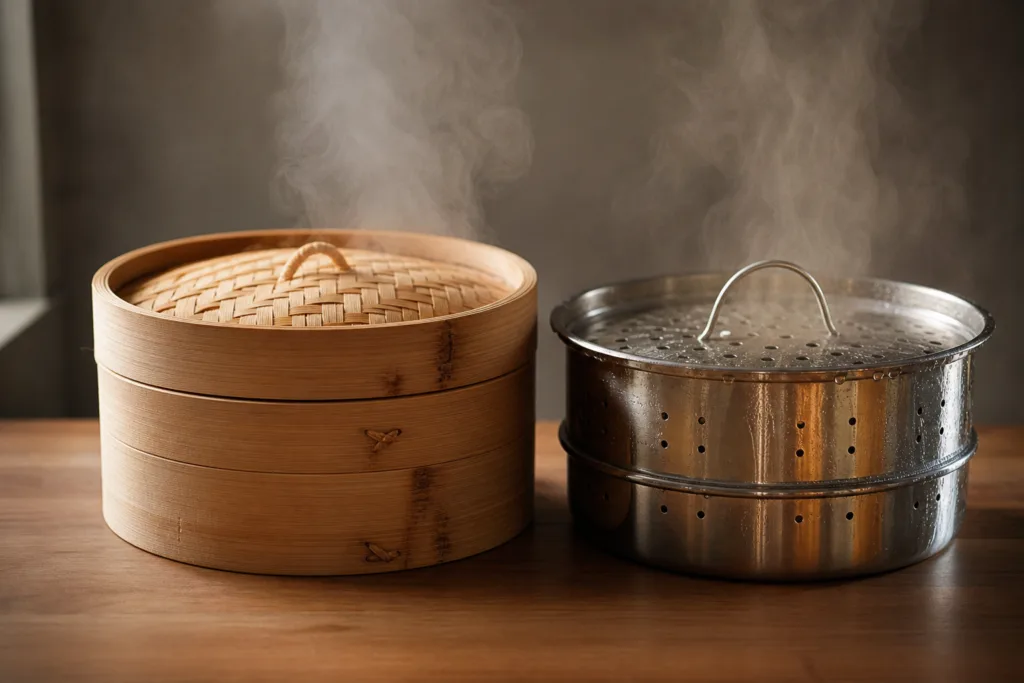
The biggest difference in a bamboo steamer vs metal steamer basket comparison is not only the basket material; it is how each one handles steam, moisture, and heat response. Steaming is about controlled moisture, but food texture changes quickly when condensation pools in the wrong place.
Bamboo tends to absorb and buffer a small amount of moisture. That can reduce the amount of visible dripping on dumplings and buns. Metal, by contrast, stays cooler in some areas and hotter in others depending on the cookware and the pot design. That can make condensation collect more visibly on the lid or basket surfaces, which may drip back onto the food. In practical cooking, that often means a wetter bottom surface and softer dumpling wrappers.
For some foods, moisture is helpful. For others, especially delicate wrappers or proofed bun tops, too much dripping changes the finish. That is why the cooking experience difference is often more obvious than buyers expect when they test the two side by side.
In culinary steaming, steam circulation and covered-pot setup affect performance as much as the basket itself. A steady steam path and the right rack or water level help prevent soggy results. In other words, the basket is only one part of the system, but it is still the part that directly shapes what the food feels like when it comes out of the steamer.
| Comparison Point | Bamboo Steamer | Metal Steamer Basket |
|---|---|---|
| Condensation | More moisture-buffering, often less dripping | More visible condensation, may drip back faster |
| Texture on delicate foods | Often gentler on wrappers and buns | Can feel wetter if steam collects heavily |
| Heat response | More moderated surface feel | Faster hot-to-touch behavior and direct heat transfer |
| Cleaning | Requires careful drying | Usually easier to wash and dry |
| Storage | Light but bulkier when stacked | Often compact, especially collapsible versions |
Bamboo Steamer vs Metal Steamer Basket for Dumplings
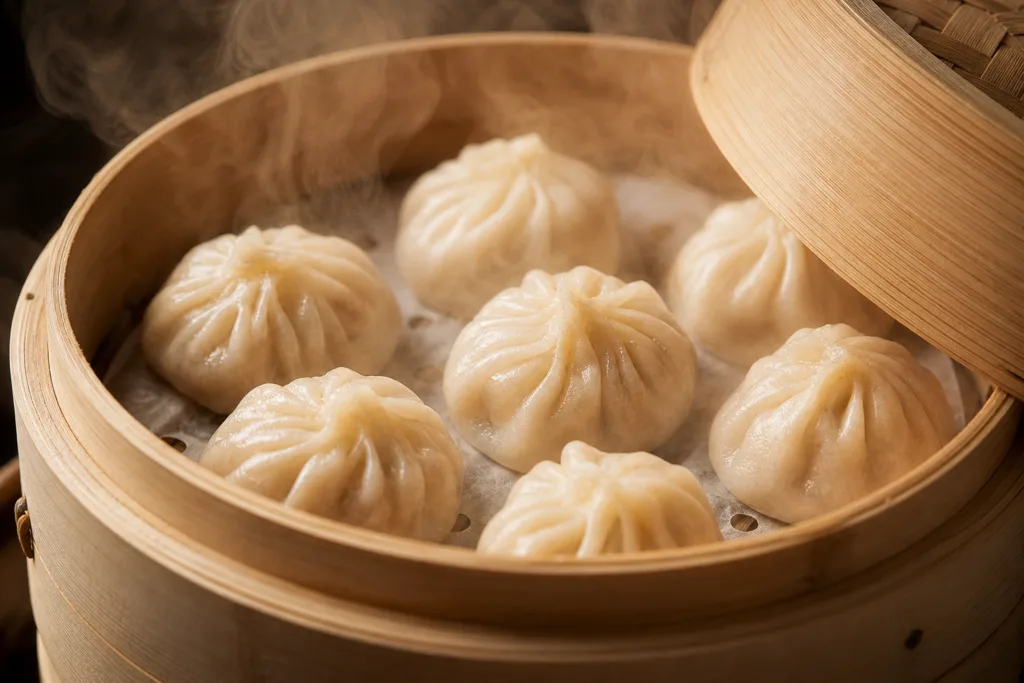
Dumplings are the most common test case because they show moisture problems quickly. A bamboo steamer vs metal steamer basket comparison here often comes down to bottom texture and wrapper integrity. Bamboo usually creates a more forgiving environment for dumplings because the surface is less likely to turn glossy with condensation. For buyers who value a drier, more classic finish, that matters.
Metal steamer baskets are not wrong for dumplings, but they can require more attention to liner choice, spacing, and heat control. If a basket sits too low over boiling water or if the lid traps too much condensation, dumpling bottoms can become too soft. Some users solve this with parchment holes, cabbage leaves, or oiling the basket lightly, but these are extra steps rather than inherent advantages.
For brands serving dumpling lovers, the product story should match the experience. If the goal is traditional presentation and a more tactile steaming result, bamboo usually fits better. If the goal is fast cleanup and universal cookware compatibility, metal may be more practical.
Bamboo Steamer vs Metal Steamer Basket for Buns and Bao
Buns and bao are even more sensitive to surface finish. A well-steamed bun should be soft, even, and visually clean on top. Bamboo steamers often help preserve that soft finish because they manage condensation in a more balanced way. They also create the familiar presentation that many customers associate with handmade dim sum or restaurant-style service.
Metal baskets can still steam buns well, but they are more likely to make users notice surface moisture if the lid, pot, or burner setup creates a wet environment. That does not necessarily affect taste, but it can affect visual appeal. For retail buyers, this matters because customers often judge the result by appearance before they taste it.
Manufacturers also need to think about product geometry. A bamboo lid that fits correctly, with smooth rim finishing and stable tier alignment, helps maintain consistent steam flow. A metal basket with a poor rim fit may wobble or lose steam more quickly, which affects both texture and energy efficiency.
Bamboo Steamer vs Metal Steamer Basket for Vegetables
Vegetables are a more forgiving category, but the choice still changes the result. For broccoli, carrots, asparagus, and leafy greens, metal baskets often feel convenient because they heat quickly and are easy to handle. Many home cooks prefer them for weeknight cooking because they can go straight into a pot and come out with minimal care.
Bamboo steamers can produce a slightly gentler steam environment, which may help retain a cleaner exterior on softer vegetables. They are also appealing when the serving style is meant to be rustic or table-ready. However, the difference here is usually smaller than with dumplings or buns. In vegetable cooking, the pot setup, water level, and timing still matter more than the basket material alone.
For sourcing teams, this is important because it affects customer segmentation. A product pitched for “all-purpose steaming” should not promise the same user experience across every food type. A basket can be versatile, but it still has strengths.
Condensation, Mouthfeel, and Why Texture Feels Different
Texture is where many buyers finally notice the difference between a bamboo steamer vs metal steamer basket. Bamboo tends to create a drier surface finish because it does not behave like a cold metal chamber that gathers water quickly on the walls. That can make the final mouthfeel more pleasant for delicate wrappers and bread-like foods.
Metal basket users often describe the result as faster and more direct. That can be good when speed matters, but it can also mean a less forgiving environment. If a basket is made from thin stainless steel, the heat may move quickly through the material, and condensation may gather faster on the coolest upper surfaces. For this reason, a metal basket can feel more efficient but less gentle.
From a product development perspective, this is where design details matter. Polished edges, correct perforation patterns, and stable lid geometry are not cosmetic only; they influence condensation paths and how the user experiences the tool.
Capacity and Stacking: Batch Size and Kitchen Workflow
One advantage of bamboo steamers is stackability. Multiple tiers let a cook steam several foods at once while keeping flavors separated. That can be useful for mixed dim sum service, family meals, or hospitality settings where batching matters. It also supports a more organized workflow: one tier for dumplings, one for buns, one for vegetables.
Metal steamer baskets may offer capacity through inserts, stackable pots, or multi-level systems, but they are not always as intuitive. Some are collapsible and compact, which is great for storage, yet they may not feel as roomy or specialized as a tiered bamboo unit. For bulk meal prep, that difference can influence whether the tool feels efficient or awkward.
This is also where steam circulation becomes a practical issue. The more food you add, the more important it is to maintain a clear steam path. If the basket is overloaded, even a strong steaming setup can become uneven.
For buyers comparing manufacturing partners, it helps to evaluate whether the supplier can control tier size, rim fit, and stack stability. At Bamboo Wood Art, we often advise buyers to define target batch size before sampling so the product structure matches the real kitchen workflow rather than a generic catalog image.
Compatibility with Pots, Woks, and Heat Sources
Another major decision point is compatibility. Bamboo steamers are usually happiest over woks or wide pots with enough support and a snug but not airtight fit. They perform best when steam can rise freely around the sides and the lid can close well. If the base sits too loosely, steam escapes and cooking performance drops.
Metal baskets are often easier for users who want direct pot compatibility. A basket insert can fit many common pots, and some models are designed to work with induction or standard stovetop cookware. But fit is not automatic. A basket that is too shallow, too narrow, or too unstable can create safety and usability problems.
Heat source also matters. On gas, the user may be more tolerant of minor fit variation. On induction or electric cooktops, the pot and insert combination may need more precise design. That is why sourcing teams should ask for sample testing against the actual cookware families their customers use.
Cleaning, Maintenance, and Long-Term Care
Cleaning is where metal usually wins. A stainless steel steamer basket is generally easier to rinse, scrub, and dry. It also tolerates repeated washing better in many daily-use settings. For busy households, catering teams, or hospitality kitchens, that convenience can be decisive.
Bamboo requires more care. It should be cleaned gently, not soaked for long periods, and dried thoroughly to reduce odor retention and deformation. If a bamboo steamer is stored while damp, the risk of mold, warping, or cracking rises. That does not mean bamboo is fragile by default, but it does mean the user must follow a more disciplined care routine.
For buyers, the key question is not which one is “easier” in theory, but whether the end customer will realistically maintain it properly. A beautiful bamboo product that is neglected will underperform. A metal basket that cleans quickly may be more durable in fast-paced homes, even if it feels less traditional.
In manufacturing, this is where surface finishing matters. Smooth sanding, edge deburring, proper seasoning of bamboo components, and stable assembly reduce the chance of premature wear. On the metal side, weld quality and corrosion resistance are the main durability checkpoints.
Storage and Durability
Storage habits often determine whether a steamer becomes a favorite tool or a forgotten one. Bamboo steamers are lightweight but can take up more space when stacked, especially if the buyer chooses multiple tiers or a larger diameter. They also need dry storage, which may not suit every kitchen layout.
Metal baskets are often better for compact storage, especially collapsible versions. They can slide into a drawer or nest inside other cookware. That convenience is a real advantage for apartment kitchens, small retail assortments, and gift sets where packaging space matters.
Durability is a trade-off. Bamboo can last well if cared for, but it may warp or crack under poor drying habits. Metal resists moisture better, but thin-gauge baskets can dent, bend, or feel flimsy over time. For private label buyers, the better long-term choice depends on whether the target customer values tradition and texture or convenience and easy maintenance.
Which Users Usually Prefer Bamboo Steamers?
Bamboo steamers are usually the better fit for:
- home cooks who value traditional dim sum presentation
- buyers focused on softer condensation behavior
- dumpling and bao enthusiasts who care about wrapper texture
- brands looking for a natural material story
- customers willing to dry and store the product carefully
These users usually accept a bit more maintenance because the cooking result feels more specific and authentic. The experience is often less about speed and more about texture, visual finish, and ritual.
Which Users Usually Prefer Metal Steamer Baskets?
Metal steamer baskets are usually the better fit for:
- busy households that want quick cleanup
- users with varied cookware and limited storage space
- high-volume cooking or meal prep situations
- customers who prioritize easy washing and drying
- buyers who want a broad, general-purpose steaming tool
Metal usually wins on practicality. For customers who steam vegetables often and want a tool that can be rinsed and put away quickly, that convenience may outweigh the more traditional cooking feel of bamboo.
How to Choose the Best Steamer for Dumplings and Other Foods
If your main use is dumplings, the choice should be guided by what you want the end result to feel like. If you want a drier bottom, a softer visual finish, and a more traditional service experience, bamboo is often the stronger choice. If you want easier cleaning, faster handling, and broader kitchen compatibility, metal is usually more efficient.
Here is a simple buyer framework:
| Buyer Priority | Better Fit | Why |
|---|---|---|
| Texture and presentation | Bamboo steamer | Often manages condensation more gently |
| Easy cleaning | Metal steamer basket | Simple rinse and dry workflow |
| Traditional dim sum feel | Bamboo steamer | Natural material and classic service look |
| Small kitchen storage | Metal steamer basket | Often compact or collapsible |
| Batch steaming with tiers | Bamboo steamer | Stacked layers support multi-food cooking |
| All-purpose daily use | Metal steamer basket | Convenient for mixed meals and quick cleanup |
For sourcing managers, another practical point is sample testing. Ask for at least one real cooking test with dumplings or buns, not just a visual approval. A sample that looks good may still handle moisture poorly if the lid fit, tier depth, or basket spacing is off. That is why we encourage buyers to evaluate the tool in the same cookware and stove conditions that their customers will actually use.
When we support custom kitchenware development, we also help buyers align surface finish, branding method, packaging, and carton protection with the target market. This matters especially for OEM/ODM projects where the steamer is part of a broader product line and consistency across the assortment is important.
Common Mistakes Buyers and Users Make
The first common mistake is choosing based on appearance alone. A bamboo steamer can look more premium or authentic, but if the customer wants fast cleaning and compact storage, it may not be the right fit. Likewise, a metal basket can seem universal, but the cooking result may not satisfy buyers who care deeply about dumpling texture.
The second mistake is ignoring lid fit and pot compatibility. A steamer that is too loose wastes steam, while one that is too tight can be frustrating or unsafe. The third mistake is skipping care instructions. Bamboo needs drying guidance, and metal needs anti-corrosion and handling guidance if the gauge is thin or the finish is sensitive.
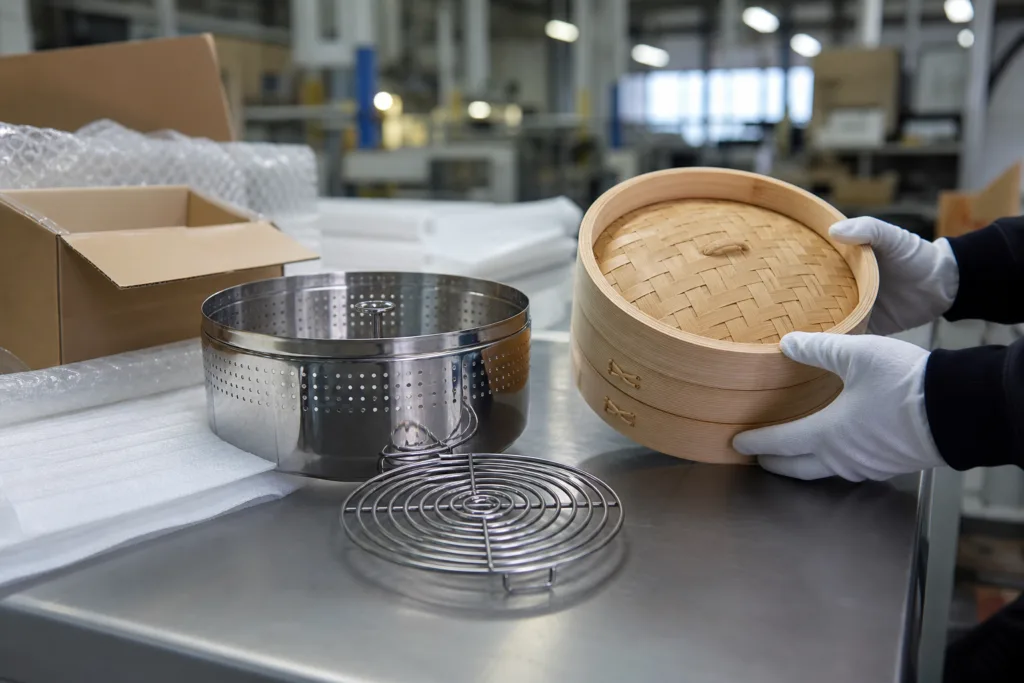
The fourth mistake is poor packaging planning. A bamboo product can crack or chip during transit if the inner support is weak. A metal basket can bend if it is not held firmly in place. For bulk orders, packaging design is part of product performance, not an afterthought.
Final Verdict: Which One Changes the Cooking Experience More?
If the question is which option changes the cooking experience more, the answer is usually bamboo. The difference in condensation behavior, texture preservation, presentation, and sensory feel is more noticeable, especially for dumplings and buns. Bamboo steamer users are more likely to describe the result as softer, calmer, and more traditional.
But if the question is which option changes the overall day-to-day experience more for convenience, metal may have the bigger effect. It often wins on speed, washing, and storage, which are the things that determine whether a tool is used regularly.
So the real answer depends on the buying goal. For texture-focused cooking, bamboo usually makes the bigger difference. For utility-focused kitchens, metal may change the routine more. In either case, the best choice is the one that matches the end user’s habits, cookware, and care tolerance.
At Bamboo Wood Art, we see this comparison not as a contest with one universal winner, but as a product-fit decision. The better steamer is the one that performs consistently in the hands of the customer, holds up in bulk production, and ships with the right structure, finish, and protection.
FAQs
Does a bamboo steamer make dumplings less soggy than a metal steamer basket?
Often yes, because bamboo tends to manage condensation more gently than metal. That can reduce dripping back onto dumpling wrappers and help the bottom stay drier. Results still depend on lid fit, water level, and cooking time.
Is a metal steamer basket easier to clean than bamboo?
Usually yes. Metal is typically easier to rinse, scrub, and dry quickly after use. Bamboo can be cleaned safely, but it needs more careful drying and storage to avoid odor, warping, or cracking.
Which steamer is better for bao buns?
Bamboo is often preferred for bao because it can create a softer, less wet surface finish. Many buyers also like the traditional look. Metal can work, but the cooking setup may need more attention to condensation control.
Can I use a bamboo steamer on any pot?
Not every pot is ideal. Bamboo steamers work best with cookware that supports stable steam flow and a reasonably snug fit. If the base is too loose or the pot is too narrow, steam may escape and cooking performance can drop.
What should I check before buying a steamer in bulk?
Check lid fit, material thickness, surface finishing, moisture tolerance, packaging protection, and sample performance with your actual food items. For B2B buyers, those details matter more than a catalog photo because they affect consistency and customer satisfaction.
How do I choose between bamboo and metal for private label kitchenware?
Start with the customer use case. If your audience values tradition, texture, and presentation, bamboo is usually stronger. If they want easy care, compact storage, and broad daily utility, metal may fit better. Align the choice with branding, packaging, and expected cleaning habits.