For many buyers, the phrase best bamboo toothbrush is less about consumer hype and more about finding a product that can perform in retail, hospitality, or subscription programs while still supporting a clean sustainability story. From a manufacturer’s point of view, the strongest opportunities usually come from the right mix of handle material, bristle choice, packaging format, and order planning rather than from a single “best” design.
For brands evaluating OEM sourcing, our OEM bamboo toothbrush manufacturing support can help align handle spec, brush feel, logo placement, and packout with a channel-specific brief. At Bamboo Wood Art, we usually guide buyers through sampling, bristle selection, surface finish, and private label packaging so the final product fits both shelf expectations and bulk production realities.
What Makes a Bamboo Toothbrush a Strong Private Label Category?
A bamboo toothbrush can be a strong private label item because it sits at the intersection of repeat purchase, lightweight shipping, and easy branding. Buyers in this category are often not just asking whether the brush is eco-friendly; they are evaluating whether the item can support consistent quality, clear packaging, and a price point that works across retail or online channels. That is why the best bamboo toothbrush search intent often signals category evaluation rather than a simple consumer review search.
For private label buyers, the category works best when the product offers predictable manufacturing, enough surface area for brand identity, and a packaging system that protects the brush during transit. A toothbrush is a daily-use item, so small quality issues such as loose bristles, rough handle edges, or inconsistent head shape become quickly visible to the end user. That makes supplier discipline important from the first sample onward.
Who Buys Bamboo Toothbrushes?
We see demand from several buyer groups. Brand owners want a low-complexity product that can anchor an oral-care line. Hotels and hospitality buyers want a compact amenity item that supports environmental messaging without becoming fragile in guest kits. Cross-border sellers want low weight, repeat purchase potential, and packaging that can travel well through different fulfillment systems.
Each of these buyers values different details. A hotel may prioritize individually wrapped brushes or paper sleeves. An ecommerce brand may prioritize a good unboxing experience and a print-ready carton. A distributor may care more about consistent carton counts, standardized brush size, and the ability to scale production without changing the look every order.
Core Product Components: Handle, Bristles, Head Shape, and Packaging

A bamboo toothbrush is simple in structure, but that simplicity hides many sourcing decisions. The handle, bristles, head shape, surface finish, and packaging all influence how the product performs in use and how it is perceived at retail. Buyers who focus only on the handle material may miss the details that create complaints later.
| Component | Buyer Decision | Manufacturing Impact |
|---|---|---|
| Handle | Bamboo species, diameter, grip, finish | Cutting, sanding, moisture control, coating |
| Bristles | Nylon or bio-based, soft or medium, color | Tufting, retention, trimming, sterilization workflow |
| Head | Adult, kid, travel, hotel format | Mold design, trimming accuracy, user comfort |
| Packaging | Sleeve, box, gift set, carton | Print quality, protection, retail readiness |
In practice, we recommend treating these four areas as one sourcing package. If the handle is finished well but the packaging is weak, the product may arrive scuffed or look lower value on shelf. If the bristles are comfortable but the head shape is too large for the intended audience, the product may still fail in use. Good private label development starts with the full user scenario.
Bamboo Handle Options: Species, Surface Finish, Grip, and Durability
Handle selection is more important than many buyers expect. Bamboo is popular because it is light, renewable, and visually recognizable, but handle quality depends on how the raw material is selected, dried, machined, and finished. A handle that is too rough, too dry, or too glossy can affect comfort and durability.
We typically review handle choices in terms of diameter, length, taper, edge comfort, and natural grain appearance. Some buyers prefer a rounder profile for a softer feel. Others want a flatter surface for easier branding and carton-fit planning. A natural matte finish often works well for a clean, modern look and can reduce the slippery feel that overly polished handles sometimes create.
Moisture control matters
Because bamboo is a natural material, moisture content and storage conditions affect warping and cracking risk. Handles should be dried and conditioned before finishing, and packaging should avoid trapping moisture after production. In humid shipment routes, a stable handle design with smooth sealing at the end grain can reduce cosmetic issues.
Buyers sometimes ask for darker stains or stronger coatings to make the product look premium. Those requests can be workable, but the finish should still allow the handle to breathe enough to avoid surface problems during storage. This is one place where sample approval matters: the sample should be tested not only for appearance, but also for feel after handling and brief exposure to bathroom-like humidity.
Where the manufacturing source matters
At Bamboo Wood Art, we usually evaluate handle geometry and finish together, because changing one often affects the other. A sharper taper may look elegant but can feel less secure in wet hands. A more generous grip may improve usability but require different box dimensions. Small changes like these affect the final product, carton count, and packaging layout.
Bristle Selection Guide: Nylon, Bio-Based Options, Soft vs Medium
Bristles are one of the most important decision points in bamboo toothbrush sourcing. The handle may carry the sustainability story, but the bristles determine the brushing experience. Buyers should be clear about comfort expectations, cleaning feel, market positioning, and whether the product is intended for adults, children, or hospitality kits.
Nylon bristles remain common because they are proven in manufacturing and can be specified in different softness levels. Soft bristles are often preferred for sensitive gums and daily use, while medium bristles may feel more firm and familiar to some markets. If a buyer plans to market a product for gentle care, then brush feel and tuft density should be tested in samples rather than assumed from a catalog description.
Some buyers explore bio-based bristle options to strengthen the sustainability narrative. That can be a useful direction, but the seller should still verify performance, retention, and the actual message on packaging. A material that sounds greener is not automatically the right choice if it weakens wear resistance or complicates channel compliance. We recommend balancing user comfort with product consistency and making sure the claims are supportable.
For buyers comparing different brush feel options, our charcoal bristle bamboo toothbrush options can be a useful benchmark when deciding how much differentiation is worth adding to a private label line. The key is not to over-specify bristles in ways that hurt cost control or make future reorders unstable.
Soft, medium, and target user fit
Soft bristles are often safer for broad retail appeal because they reduce the chance of discomfort complaints. Medium bristles may work for buyers who want a firmer brush feel, but that is usually a more specific market choice. If a toothbrush is going into hotel amenity packs, a soft brush is usually the lower-risk option because the end user is anonymous and repeat use is limited.
For children’s or family-oriented programs, head size and bristle firmness should be selected together. A small head with soft bristles may improve perceived comfort, while a large head or firm bristles can create user resistance even if the product looks attractive in packaging.
Head Design and Ergonomics for Adult, Kids, Travel, and Hotel Use
Head design affects reach, comfort, and the visual balance of the product. Adult brushes usually need enough cleaning surface without feeling bulky. Kids’ brushes need a smaller profile and a softer touch. Travel and hotel brushes often need a compact structure that packs efficiently while still looking complete and intentional.
From a manufacturing perspective, head shape should be checked for symmetry and tuft placement consistency. Misaligned heads are not only a quality issue but also a brand issue because consumers notice them immediately on shelf or at first use. Even slight variation can create a perception that the line is unstable, especially when the product is sold in sets.
Ergonomics also matter in promotional or hospitality applications. Guests or conference attendees do not want a brush that feels awkward in the hand. A straightforward profile, clean finish, and practical head size will often outperform a more complex design that looks interesting but is less useful.
Private Label Customization Opportunities
Private label toothbrush programs have room for meaningful customization without turning the item into a high-risk custom development project. The most common options include laser engraving, printed logos, sleeve printing, carton printing, gift set layouts, and barcode or SKU placement for retail systems. These are useful because they support recognition without requiring a completely new mold for every order.
Laser engraving works well when the buyer wants a natural, understated brand mark on the handle. Printing can be useful for brighter branding, but it should be checked for wear resistance and alignment on the handle curvature. Packaging can carry a more detailed brand story than the brush itself, which is helpful when the product is sold in multi-channel formats.
For buyers thinking about bundle programs or seasonal retail sets, our bamboo toothbrush gift set formats show how a simple oral-care item can be positioned as a retail-ready pack rather than a loose commodity. That matters when the goal is shelf appeal, gifting, or a higher average order value.
Artwork preparation and brand consistency
We recommend that buyers prepare logo files early and confirm placement rules before sampling. A logo that looks clear on a flat digital mockup may need adjustment when applied to a curved handle or narrow carton panel. It is also important to define whether the visual identity should feel natural, clinical, premium, or playful, because those directions affect the color choices and finishing strategy.
When the product line includes multiple SKUs, consistency across artwork, carton size, and inner pack count becomes essential. Reordering should not require a redesign every time. The more standardized the packaging system, the easier it is to scale.
Eco-Friendly Storytelling That Holds Up
Sustainability is a real reason buyers consider bamboo toothbrushes, but it should be presented carefully. Buyers need to separate the renewable nature of the handle from broader end-of-life or packaging questions. In other words, the product can support a lower-plastic story, but that does not mean every part of the item is automatically compostable or universally recyclable.
The most reliable approach is to describe the material honestly, explain the packaging choices clearly, and avoid claims that cannot be verified in the target market. If the bristles are nylon, that should be reflected in product documentation and customer communication where required. If the pack uses recycled paper or a minimal sleeve, that can be a strong selling point when it is true and visible.
Retailers and importers should also consider local labeling expectations. For U.S. retail, the U.S. labeling and packaging compliance for oral-care and cosmetic products is useful context when oral-care items are bundled with products that fall under cosmetic labeling or packaging rules. Clear claims, accurate ingredient or content statements, and non-misleading presentation all help reduce downstream risk.
Retail and Channel Fit: E-commerce, DTC, Subscription, Hospitality, and Promotions
The best bamboo toothbrush for one channel is not always the best for another. E-commerce buyers may prioritize image quality, small shipping volume, and packaging that survives parcel handling. DTC brands may want a more premium visual identity and story-led insert cards. Subscription programs may care more about repeatable pack counts and stable replenishment lead times. Hotels and hospitality buyers often want functional simplicity and low breakage risk.
Promotional gifting is another important channel. In this case, the toothbrush is rarely sold for its own sake; it supports a larger brand message. That means packaging, presentation, and price-per-impression can matter more than a highly complex product structure. A clean handle, a dependable brush feel, and a branded sleeve are usually enough.
For this type of use, buyers often ask how the product should be packed for downstream distribution. A clear count declaration and proper carton labeling can make handling much easier. In retail channels, packaging should be easy for buyers to understand at a glance, which is one reason we pay attention to pack format and net contents during development.

For buyers comparing retail-ready bundle formats, the family bamboo toothbrush pack is a practical reference for how count-based packaging can support value perception without adding unnecessary complexity.
Packaging Design for Shelf Appeal and Shipping Protection
Packaging does two jobs at once: it sells the product and protects it. A toothbrush package needs to communicate the brand clearly, keep the handle clean, and survive compression, pallet movement, and parcel transit. This is especially important for ecommerce and cross-border shipments where outer packaging may be handled several times before it reaches the end user.
Paper sleeves, printed cartons, and kraft-style boxes each create a different positioning effect. Sleeves are minimal and economical. Cartons offer more room for storytelling and legal text. Gift boxes are stronger visually and can support higher retail value, but they may also raise freight cost and carton space usage. The right choice depends on channel and price target, not just aesthetics.
Our private label packaging options for bamboo goods section is a useful reference point when buyers are deciding between simple eco sleeves and more retail-focused printed cartons. For toothbrushes, the key packaging question is usually not “which looks nicest?” but “which protects the product, supports the claim, and fits the sales channel?”
Packout details that affect cost
Every additional insert, window, hanger hole, or foil detail changes production cost and can extend lead time. Buyers should decide early whether they need a mass-market, premium, or gift-ready look. If the item is being sold at high volume, simple structures often perform better because they reduce waste and protect the margin.
We also advise checking how the package opens and closes. If the toothbrush is meant for bathroom storage or a subscription refill model, the package should be easy to handle without damaging the brush. A well-designed packout can reduce complaints even before the consumer notices the visual design.
MOQ, Sampling, Lead Time, and Cost Drivers
Private label buyers often underestimate how much MOQ and lead time depend on packaging complexity, not just the brush itself. A standard brush with simple sleeve packaging is easier to plan than a gift set with custom inserts and multi-language print. Lead time also depends on whether the factory already has the bamboo material, bristle configuration, and carton tooling in place.
Sampling should be used to confirm more than looks. Buyers should approve handle comfort, logo sharpness, bristle retention, brush head symmetry, package fit, and outer carton strength. If the sample feels right but the packaging is loose or the bristles are not firmly set, the final order may generate avoidable complaints.
Cost drivers usually include handle selection, bristle type, printing method, packaging structure, labor time, and final QC standards. A product can become expensive quickly if the buyer keeps changing specifications after sampling. A clearer brief usually leads to a better result and fewer hidden costs.
How to think about MOQ strategically
MOQ is not just a supplier number; it is a planning tool. A buyer with uncertain demand may need a lower initial run and a simple package. A buyer with established retail placements may justify a larger MOQ because the product can move through predictable replenishment cycles. The right decision depends on channel confidence, not just price per unit.
For cross-border sellers, it is also important to plan stock levels around shipping lead times and customs clearance rather than only production days. A toothbrush line can look inexpensive on paper but become inefficient if the packaging is too delicate or the reorder cycle is too tight.
Quality Control Checklist: Bristle Fixing, Handle Smoothness, Mold Risk, and Consistency
Good QC is the difference between a product that looks inexpensive and one that feels professionally made. For bamboo toothbrushes, the main checkpoints usually include handle smoothness, edge finish, bristle fixation, tuft alignment, head shape, surface cleanliness, and pack integrity. In humid storage environments, moisture issues can also create a risk of surface changes or mold if materials are not properly conditioned and packed.
We recommend that buyers ask for process photos, sample comparison, and pre-shipment inspections when needed. A toothbrush line should feel visually uniform across the carton. If one handle is rougher or darker than the next, the consumer may suspect poor manufacturing even if the product is still usable.
For a more detailed look at production pitfalls, our common bamboo toothbrush quality risks overview helps buyers understand where defects tend to appear and how they can be prevented through better specification control. This kind of issue mapping is especially useful for first-time importers and private label teams.
What to request from a supplier
Ask for sample reference photos, material confirmation, finish description, and packaging specs. If the brush is intended for retail, ask how the supplier controls count accuracy and carton labeling. If the product is intended for hotel use, ask how they ensure a clean appearance and secure packaging that can survive guest amenity handling.
For category programs, it is often wise to keep a master sample approved and compare later production against it. That reduces ambiguity when discussing slight differences in natural material tone or grain.
Common Sourcing Mistakes When Choosing a Bamboo Toothbrush Supplier
One of the most common mistakes is focusing on the bamboo handle while ignoring the full assembly. Another is assuming that all bristles or all coatings are equivalent. A third is approving a visually attractive sample without checking how the product behaves in packaging or after shipping.
Some buyers also over-customize too early. A branded toothbrush can be successful with simple, disciplined customization. But if the buyer changes handle shape, finish, packaging, and bristle type at the same time, the development process becomes harder to control and the cost structure becomes less predictable.
Channel fit is another source of error. A product made for gift retail may not be ideal for hospitality, and a hotel amenity brush may not create the shelf impact needed for ecommerce. Sourcing works better when the manufacturer understands the actual sales channel and the buyer is clear about the intended user.
How to Evaluate a Bamboo Products Manufacturer for OEM/ODM Toothbrush Orders
When evaluating suppliers, buyers should look for more than a finished product photo. A capable manufacturer should be able to discuss material selection, bristle options, finishing methods, packaging development, and QC flow in practical terms. They should also be able to explain how they manage reorders, sample changes, and production consistency.
At Bamboo Wood Art, we approach toothbrush sourcing the same way we approach other bamboo and wood product categories: by matching use case, material behavior, and packaging requirements before finalizing the production plan. That mindset matters because a toothbrush is a simple item only if the sourcing brief is simple. Once branding, compliance, and retail expectations are added, careful planning becomes essential.
Buyers should also verify that the supplier can communicate clearly across time zones and development stages. Good OEM/ODM work depends on fast answers to questions about size, structure, print file setup, and sampling feedback. A supplier that can support that process will usually reduce friction throughout the order lifecycle.
Decision Framework: When Bamboo Toothbrushes Are a Good Category and When They Are Not
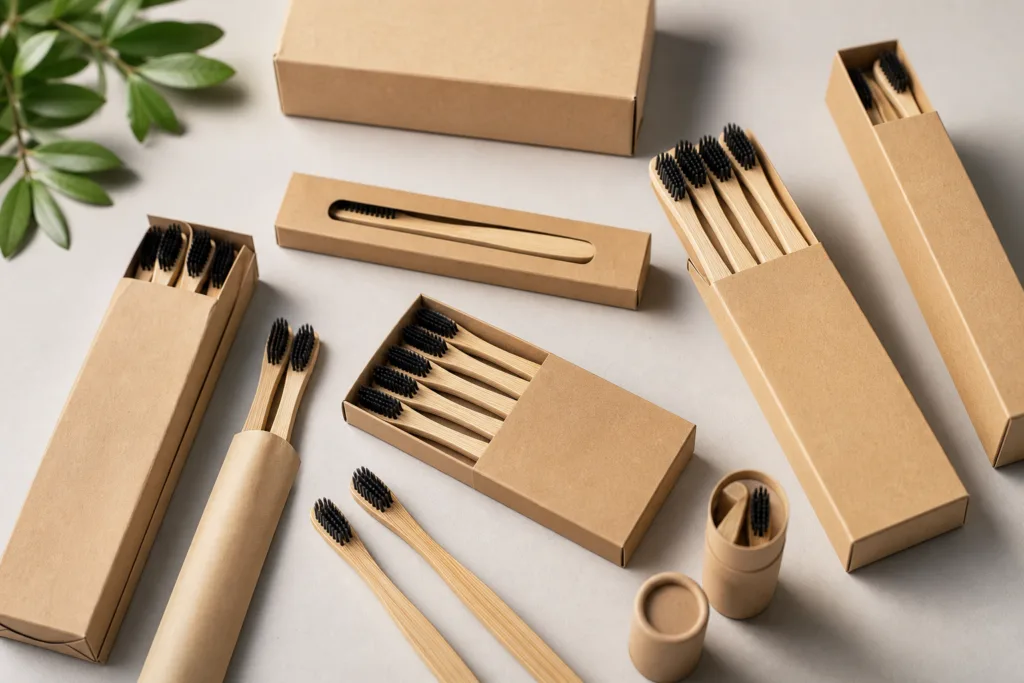
Bamboo toothbrushes are a strong category when the buyer wants a lightweight repeat-use item with room for private label branding and a simple sustainability narrative. They are especially effective when sold in sets, refills, hotel amenity packs, or curated oral-care bundles. They also fit well when the buyer values low packaging weight and a natural-looking shelf presence.
They may be a weaker fit when the target market requires highly technical product claims, extremely long replacement cycles, or a fully plastic-free solution that includes every component. In those situations, the buyer may need more careful claim management, alternative material choices, or a broader oral-care strategy.
For product teams that want a giftable or starter-program format rather than a single loose brush, our eco starter bamboo toothbrush kit format shows how the category can support onboarding, bundles, or trial sets while staying aligned with private label planning.
Conclusion
The best bamboo toothbrush is not simply the one with the nicest bamboo handle or the most eco-friendly wording. For private label buyers, it is the product that balances handle quality, bristle comfort, packaging protection, channel fit, and reliable production. If those pieces are aligned, a bamboo toothbrush can become a practical category for brand owners, hotel buyers, and cross-border sellers alike.
From a manufacturing perspective, the smartest way to source this product is to define the use case first, then choose the material, bristle, packaging, and QC expectations to match. That is the approach we use when developing OEM and private label toothbrush programs, because it reduces surprises and creates a better reordering path. When the brief is clear, the result is much closer to what buyers want from a commercial product line.
FAQs
What should buyers look for when sourcing the best bamboo toothbrush?
Buyers should look at the full system, not just the handle. Handle finish, bristle firmness, head size, packaging strength, and reordering consistency all affect whether the toothbrush works well in retail, hospitality, or subscription programs. A good sample should feel comfortable, look clean, and match the planned channel.
Are soft bristles better than medium bristles for private label programs?
Soft bristles are usually the safer choice for broad retail or hospitality use because they are more comfortable for a wider range of users. Medium bristles may suit specific market preferences, but they should be tested carefully because they can feel too firm for some buyers. Sample approval should always include brushing feel, not just appearance.
Can bamboo toothbrushes be customized with a logo?
Yes. Logo customization can be done through laser engraving, printing, or packaging design. Laser engraving is often subtle and natural-looking, while printed logos can provide stronger brand visibility. The best option depends on the channel, the desired look, and how much detail the brand needs to show.
What packaging works best for retail and ecommerce?
Printed cartons, paper sleeves, and gift boxes each serve different purposes. Retail usually benefits from clearer shelf messaging and count declarations, while ecommerce often needs stronger shipping protection. The right structure depends on product positioning, freight expectations, and whether the buyer wants premium presentation or lower cost.
How can buyers judge if a supplier is reliable for bamboo toothbrush orders?
Reliable suppliers should be able to explain materials, bristles, finishing, sampling, QC, and lead time in detail. Buyers should ask for clear product specs, master samples, and packaging confirmation. It also helps when the supplier can show how they control bristle fixing, handle smoothness, and carton consistency before mass production.
Are bamboo toothbrushes always the right sustainability choice?
Not always. They can support a lower-plastic product story, but the buyer still needs to verify bristle material, packaging format, and the accuracy of all claims. The best approach is to communicate what the product really is and avoid overstating environmental benefits that are not fully supported.