When we plan a bamboo soap dish FAQ page, we are not just answering buyer questions. We are deciding which topics deserve a place on the main product page, which ones belong in a buying guide, and which ones are too narrow to support a separate article. That distinction matters because bathroom-use questions, cleaning questions, and product-selection questions often overlap enough to create keyword cannibalization if they are split across too many pages.
For brands that need OEM development, private label packaging, or custom sizing, our OEM bamboo soap dish manufacturing support can help you turn those questions into a practical page structure. We look at drainage style, finish choice, logo method, and packing protection first, then map the content around real buyer intent so the product page, FAQ module, and supporting guide each do one job well.
What this bamboo soap dish FAQ page should accomplish
A strong FAQ page should reduce friction for shoppers who are already close to a buying decision. It should answer the practical questions that stop a buyer from adding the item to cart, such as whether the soap dish drains well, whether it can handle wet bars, whether bamboo is suitable for a humid bathroom, and how the product should be cleaned. It should also help a sourcing team compare construction options without forcing them to read a long blog post that repeats the same points.
From a search strategy perspective, the page should support the main product page rather than compete with it. If the main page is already targeting a broad commercial term, the FAQ should strengthen that page by handling recurring concerns and lower-friction questions. The buying guide, by contrast, should handle comparison intent, selection logic, and broader educational topics like drainage styles, finish choices, or packaging considerations. A separate blog post is only justified when the keyword cluster introduces a new search intent that cannot be answered well inside the product page or FAQ module.
We see better performance when the page hierarchy is simple: product page for the item, FAQ module for purchase blockers, buying guide for selection logic, and only then a supporting article for narrow educational questions. That structure keeps the content useful for buyers while reducing the chance that two pages compete for the same query set.
Which questions belong in the main page FAQ module?

The main page FAQ module should cover questions that are short, decision-oriented, and directly tied to the product being sold. These are the questions a shopper asks when they already know they want a bamboo soap dish, but still need reassurance on fit, durability, and care. In our manufacturing work, these questions usually map to construction details rather than broad research topics.
Best-fit FAQ topics for the product page
- How does the soap dish drain water?
- Is bamboo suitable for a bathroom?
- How should the soap dish be cleaned?
- Will the dish help a soap bar dry faster?
- Can it be used for shampoo bars or small bath bars?
- What finish or foot style improves durability?
These are ideal for the product page because they support conversion. They answer the shopper’s final objections without expanding into separate educational territory. For example, a question about drainage may be answered by a short note on slots, grooves, or a raised base, while a question about stability may be answered with a brief explanation of foot pads or surface grip. If the FAQ starts turning into a detailed comparison article, it is probably too long for the main page.
When a buyer asks specifically about drainage design, a linked product variation such as bamboo soap dish with drain grooves is a good example of how the FAQ can guide users toward a relevant option without creating a separate article. That is the right balance: concise answers, clear product path, and no unnecessary duplication.
Which questions belong in a bamboo soap dish buying guide?
A buying guide is the right place for questions that need comparison, context, or a decision framework. These are usually broader than the FAQ module and more useful for buyers who are still evaluating options. If the question requires comparing multiple drainage structures, finishing methods, or material combinations, it likely belongs in a buying guide rather than on the product page.
Topics that fit a buying guide better than an FAQ
| Question type | Best page type | Why it fits there |
|---|---|---|
| Which drain style is better for wet soap? | Buying guide | Requires comparison of slats, grooves, and trays |
| Should bamboo soap dishes have silicone feet? | Buying guide | Needs context on slip resistance and countertop protection |
| What finish lasts longer in a humid bathroom? | Buying guide | Needs material and coating discussion |
| How should brands position soap dishes for shampoo bars? | Buying guide | Requires use-case segmentation and merchandising advice |
| What packaging reduces breakage in transit? | Buying guide | Needs logistics and QC planning |
A buying guide is also the better home for keyword groups that connect the product to broader shopper education, such as bathroom accessories, bathroom organization, sustainable bath tools, or giftable home essentials. Those terms often need more than a simple FAQ response. They need a structured explanation that connects product design, user behavior, and sourcing priorities.
If your catalog includes a version with a removable base, a product like bamboo soap dish with removable drip tray is a good example of a feature that deserves explanation in a buying guide. The guide can describe how the tray helps collect moisture, what cleaning routine works best, and when a tray design is more suitable than a slotted base.
How to decide whether a keyword needs its own blog post
Not every keyword deserves a separate article. In fact, many bamboo soap dish queries are too small, too repetitive, or too close to the main page intent to justify a standalone post. A separate blog post makes sense only when the keyword represents a distinct informational need with enough depth to support original content and clear search value.
The simplest test is this: if the answer can be given in two or three useful sentences on the product page, it does not need a separate post. If the answer requires a comparison table, a step-by-step evaluation, or a process explanation that supports multiple product variants, it may belong in a guide. If it is a highly specific edge case, it may not need a page at all.
Keywords that are usually too narrow for a separate blog post
- bamboo soap dish cleaning tips
- how to dry soap in a bamboo dish
- soap dish with drainage holes vs slots
- best soap dish for one bathroom
- small bamboo soap holder for sink edge
- bamboo soap dish replacement foot pads
These phrases are useful, but they are often better treated as subtopics. They can strengthen the main page FAQ, a product comparison section, or a broader buying guide. Creating a separate post for each one usually produces thin content and weak internal differentiation. That can reduce topical clarity and make it harder for search engines to understand which page should rank for the core product intent.
We see the same issue in custom manufacturing. If a buyer wants a simple countertop soap dish, a related design such as bamboo soap dish with silicone feet can be explained as a feature variation inside the same cluster. It does not need a separate content island unless the buyer intent truly changes.
How to identify cannibalization risk across FAQ, product page, and blog content
Keyword cannibalization happens when multiple pages target the same or nearly the same query with overlapping intent. For a bamboo soap dish content cluster, this often happens when the product page, FAQ module, and blog post all try to answer the same core questions: what it is, how it drains, whether bamboo is suitable for bathrooms, and how to clean it. Search engines then have to choose between pages that are too similar.
The fix is not to avoid content. The fix is to assign intent clearly. The product page should emphasize the item itself, its variants, and conversion details. The FAQ module should address objections and quick service questions. The buying guide should explain selection criteria. A blog post should only exist when it adds a distinct layer of educational value that the others cannot provide.
To make that distinction more concrete, we use a simple filter: intent, specificity, search volume, and overlap. If two pages target the same intent and same key terms, one should usually be consolidated. If they target different intents but share a few surface-level terms, they can coexist as long as internal linking and heading structure keep them distinct.
For a current summary of the risk, we also recommend reviewing keyword cannibalization and intent grouping before splitting related bamboo soap dish questions into separate URLs. That mindset helps you avoid creating pages that compete with one another instead of reinforcing the same commercial topic.
Keyword grouping framework: intent, specificity, search volume, and overlap
When we plan content for a manufacturer website, we group keywords by job to be done. For a bamboo soap dish, that usually means separating purchase-support keywords from educational keywords and from feature-specific comparison terms. This is especially important when you are balancing a main product page, an FAQ module, and one or two supporting articles.
Practical grouping model
| Keyword group | Intent | Best destination |
|---|---|---|
| Buy bamboo soap dish | Commercial | Product page |
| Is bamboo good for soap dishes | Decision support | FAQ module |
| How to choose a bamboo soap dish | Comparative | Buying guide |
| Drainage, mold, and drying questions | Problem solving | FAQ plus supporting section |
| Soap dish trays and accessory variants | Feature comparison | Buying guide or subcategory page |
This framework works because it protects the main page from becoming too broad. It also prevents support content from stealing the primary query target. In SEO terms, the page with the clearest purpose usually performs better than several pages with slightly different wording but no true difference in intent.
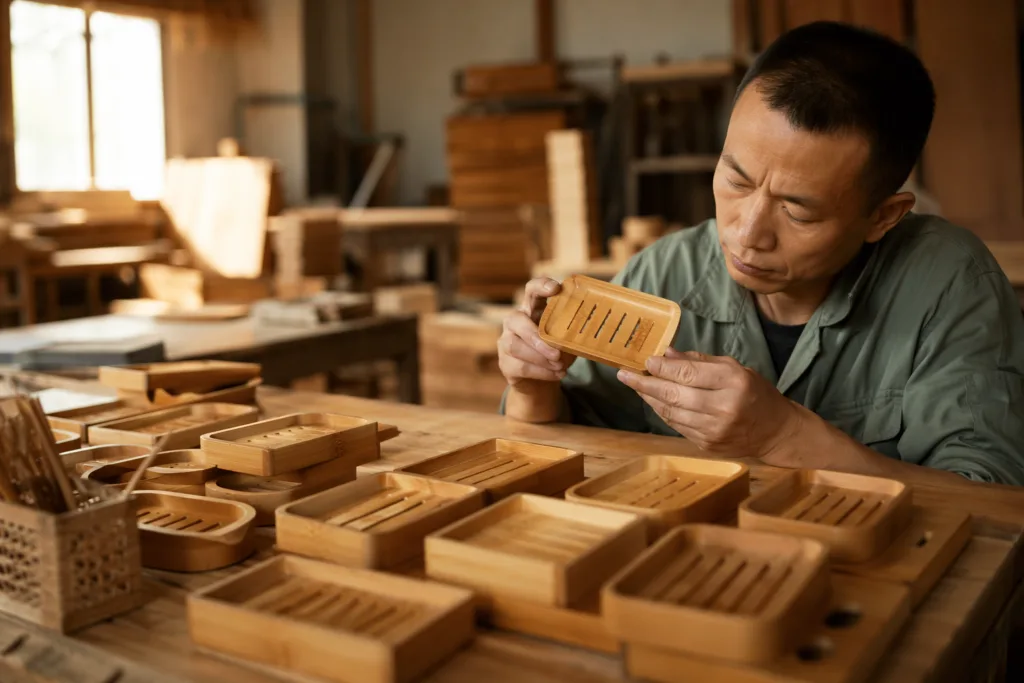
At Bamboo Wood Art, we use the same logic in product development. Our Bamboo Wood Art homepage is designed to route buyers toward the right manufacturing solution, whether they need a standard soap dish, a variant with a special drainage pattern, or a private label version with packaging support. That same routing principle should apply to content architecture: each page should guide the buyer forward instead of repeating the same message in a new format.
Recommended internal page structure for bamboo soap dish content
A clean content structure usually works better than a large number of short pages. For this product category, we recommend a three-layer model: product page, FAQ module, and one buying guide. Supporting blog posts should be rare and should only exist when they answer a distinct research question.
Suggested structure
- Product page: Product overview, dimensions, materials, finish, variants, pricing logic, MOQ notes, and clear purchase CTA.
- FAQ module: Cleaning, bathroom suitability, drying performance, care, and packaging questions.
- Buying guide: Drainage design, feature comparison, bamboo versus other materials, finish options, and sourcing considerations.
- Support article: Only for a truly separate topic, such as shipping protection, material care, or a niche use case like shampoo bars.
This structure helps the category stay organized. It also makes internal linking easier. For example, the product page can link to a guide on finish selection, while the guide can link back to the product variation most relevant to the buyer’s needs. If a site has several versions of the same product, the structure should emphasize why each version exists, not just that it exists.
A version with a travel-friendly closure is a good example of a separate use case that may deserve its own feature explanation, such as bamboo soap dish travel version. That kind of variant is not just a style choice; it changes how the buyer thinks about portability, moisture control, and packing.
How to use supporting sections without creating duplicate pages
One common mistake is turning every subtopic into a separate URL. Cleaning, mold prevention, bathroom use, drainage, and product selection are all important, but they do not all need independent pages. The better approach is to place these points in the right part of the cluster and keep each section brief enough to remain focused.
Where supporting topics should live
- Cleaning: FAQ or product care note
- Mold prevention: FAQ, buying guide, or care section
- Bathroom suitability: FAQ and material explanation
- Drainage design: product page and buying guide
- Packaging and shipping protection: sourcing guide or manufacturer page
When these topics are grouped correctly, the content cluster becomes more useful to buyers and more legible to search engines. The pages can still link to one another, but they should not say the same thing in slightly different words. That is especially important for manufacturers because buyers often compare product variations, not just one exact SKU.
In production terms, it is similar to choosing the right structure before adding decoration. A bamboo soap dish with silicone feet solves a different user problem than a slotted version or a tray version, so the content should explain that difference once, clearly, in the best place.
When a separate article is justified and when it is not
A separate article is justified when the topic has enough depth to support a practical guide and enough intent separation to avoid duplication. It is not justified when the topic is just a reworded version of the product page question. This is where many content plans go wrong: they chase every long-tail query even when the query cannot support a meaningful standalone piece.
A separate article may be justified if the topic is one of the following:
- How to choose between drainage styles for different bathroom conditions
- How bamboo finishes affect moisture resistance and care
- How to package bamboo soap dishes for ecommerce shipping
- How to position bamboo soap dishes for shampoo bars or travel use
- How to build a bamboo bath accessory cluster without overlap
A separate article is usually not justified if the query is only a small variation of the main keyword, such as “bamboo soap dish cleaning” or “bamboo soap dish mold.” Those questions are better answered inside the FAQ or buying guide, where they support the main product instead of creating another ranking competitor.
If you are building a category around soap accessories, the right content strategy is to keep the core intent concentrated. Then use one guide to expand into comparison topics and one FAQ to answer blockers. The rest should stay in the cluster as supporting references, not as independent pages.
Practical SEO checklist for consolidating content and protecting rankings
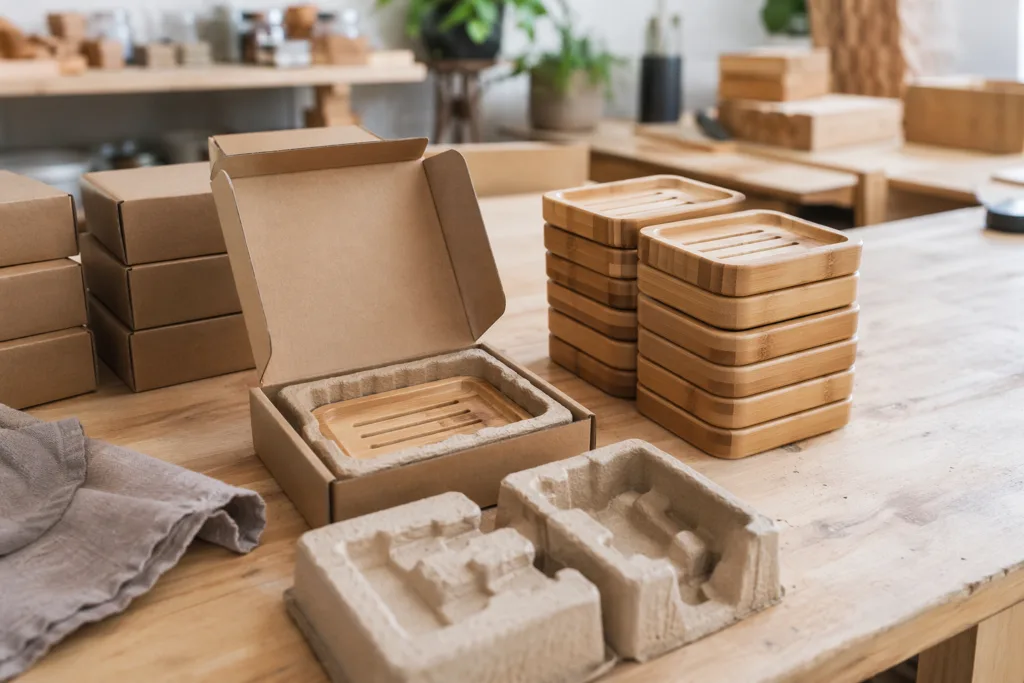
Before publishing or splitting any bamboo soap dish page, we recommend checking the following points. This helps avoid thin content, duplicate intent, and poor internal signaling.
- Does the page answer one primary intent clearly?
- Can the topic be covered better as an FAQ answer or a guide section?
- Does the page overlap heavily with another product or blog page?
- Would a buyer expect a product decision, a comparison, or a care tip?
- Is the answer useful enough to justify its own URL?
- Does each page in the cluster have a distinct role?
- Are internal links pointing buyers to the next logical step?
We also suggest checking the actual page language. If the same wording appears in multiple places, consolidation is usually the better move. This is where manufacturers and brand teams often gain the most efficiency: one strong main page, one strong FAQ module, one strong buying guide, and a small number of supporting links that keep the cluster connected.
Final keyword deployment recommendations for Bamboo Wood Art
For Bamboo Wood Art, the most efficient approach is to keep bamboo soap dish FAQ content concentrated on the main product page when the question supports purchase decisions. Use the buying guide for comparison and selection keywords, and reserve separate articles for topics with clearly different intent. That keeps the content cluster clean, reduces overlap, and makes it easier for search engines to understand which page should rank for which query.
If you are building a bamboo soap dish collection, think in terms of page roles, not just keywords. Product pages sell the item, FAQs remove friction, buying guides explain options, and only a few blog posts should cover deeper educational topics. When that structure is in place, you can add product variants, packaging notes, and care advice without creating cannibalization.
As a manufacturer, we find that the same discipline used in production planning also works in SEO planning: define the function first, then build the structure around it. That is the simplest way to keep a bamboo soap dish content cluster clear, scalable, and commercially useful.
FAQs
Should a bamboo soap dish FAQ live on the product page or as a separate article?
In most cases, the FAQ should live on the product page because it answers purchase blockers and supports conversion. If the question is short, practical, and directly tied to the product, keep it on the main page. A separate article is only needed when the topic becomes a broader comparison or educational guide.
Which keyword types usually belong on the main product page?
Keywords that reflect immediate buying intent or quick product questions usually belong on the main page. These include drainage, cleaning, bathroom suitability, material durability, and basic care questions. They help the shopper make a decision without sending them to another page.
When should I create a separate buying guide instead of expanding the FAQ?
Create a buying guide when the topic needs comparison, evaluation, or structured decision support. For example, if you need to compare drainage styles, finish choices, or feature variants, the guide gives you room to explain the differences without overwhelming the product page.
How do I know if my bamboo soap dish content is cannibalizing itself?
If multiple pages are targeting the same core question and could realistically answer the same search query, cannibalization risk is high. A product page, FAQ page, and blog post should each have a clear purpose so they do not compete for the same intent.
Are short cleaning or mold questions worth separate blog posts?
Usually not. Short cleaning and mold questions are better handled in an FAQ or care section because they are practical, narrow, and closely tied to the product. A separate post only makes sense if you are covering a larger topic such as bathroom moisture management or finish selection.
What is the safest content structure for a bamboo soap dish category?
The safest structure is one product page, one FAQ module, and one buying guide, with only a few supporting articles when needed. That setup gives each page a clear role, reduces overlap, and makes it easier to expand the cluster later without creating duplicate intent.