For teams building a bamboo steamer FAQ, the real challenge is usually not writing more content; it is deciding what should live on the main page and what should stay out of separate blog posts. When the same intent appears in multiple URLs, search signals get diluted, internal links become less focused, and buyers may land on the wrong page for a simple question. From a manufacturer’s perspective, a good content plan mirrors how the product is actually specified, sold, and used: one core page for the main buying decision, one FAQ section for common questions, and only a few supporting articles when the topic truly deserves depth.
If you are planning that structure, our OEM bamboo steamer manufacturing support page is a useful starting point because it shows how product format, size, liner choice, and packaging needs can be tied back to one primary commercial page instead of being spread across multiple near-duplicate articles. In practice, that is also how we approach custom bamboo steamer projects at Bamboo Wood Art: we separate core product decisions from low-value informational overlap, then support the main page with clear specifications, sampling, and bulk production planning.
What This Bamboo Steamer FAQ Strategy Is Trying to Solve
The purpose of a bamboo steamer FAQ strategy is not only to answer shopper questions. It is to organize search demand so that one page can rank for the most valuable bamboo steamer queries without competing against your own blog content. If a buyer searches “how to use bamboo steamer,” “how to clean bamboo steamer,” or “best bamboo steamer size,” they are usually still in the same decision path: they want to understand the product, compare options, and decide what to buy.
That means the core page should be allowed to carry a wide set of closely related questions, especially when those questions are low-complexity, common, and commercially tied to the same product. In contrast, splitting each query into a separate article can create keyword cannibalization. One page may rank for usage terms, another for cleaning terms, and a third for sizing terms, but none of them gains enough strength to become the clear primary result.
This matters for ecommerce teams, wholesalers, and product brands because a bamboo steamer is not just a content topic; it is a product decision. Buyers need help with size, tiers, liners, food-contact materials, packaging protection, and usage compatibility with wok setups. If the content structure does not reflect that decision flow, you end up with traffic that is informational but not useful enough to convert.
Which Bamboo Steamer Questions Belong in the Main Page FAQ Section
The main page FAQ section should absorb the most common, most repetitive, and most purchase-adjacent questions. These are usually the questions buyers ask before they add the product to cart, request a sample, or compare suppliers. If the answer is short, practical, and does not require a separate framework, it belongs in the FAQ.
| Query Type | Best Page Location | Why |
|---|---|---|
| How to use bamboo steamer | Main page FAQ | High intent, short answer, directly tied to purchase confidence |
| How to clean bamboo steamer | Main page FAQ or care section | Basic maintenance guidance that supports product trust |
| Best bamboo steamer size | Main page buying guide section | Needs comparison by wok size, household size, or serving volume |
| Bamboo steamer liners | Main page FAQ or accessory module | Relevant to use and upsell, but not always deep enough for a full post |
| Is bamboo steamer safe for food | Main page FAQ with safety note | Important buyer concern that should be addressed clearly on the product page |
Questions like these are ideal for a bamboo steamer FAQ because they help the buyer finish the purchase decision without leaving the page. They also support conversion because they remove friction around use, maintenance, and safety. If your main page is product-focused, these answers should be concise and tied to specific product attributes rather than written as a general lifestyle explainer.
For example, if you sell a standard family set, a two-tier version, or a compact serving model, the FAQ can explain the difference in simple terms. If you want to show the product range more visually, linking to two-tier bamboo steamer configurations inside the body supports the page while keeping the main topic centered on the primary product page. That kind of internal link helps buyers move from a question to a product decision without fragmenting the topic.
Which Topics Deserve a Buying Guide Module Instead of a Separate Blog Post
Some topics are too important to leave only in FAQs, but still too close to the core product to justify a standalone article. These belong in a buying guide module on the main page. The difference is simple: an FAQ answers a question, while a buying guide helps a buyer choose between options.
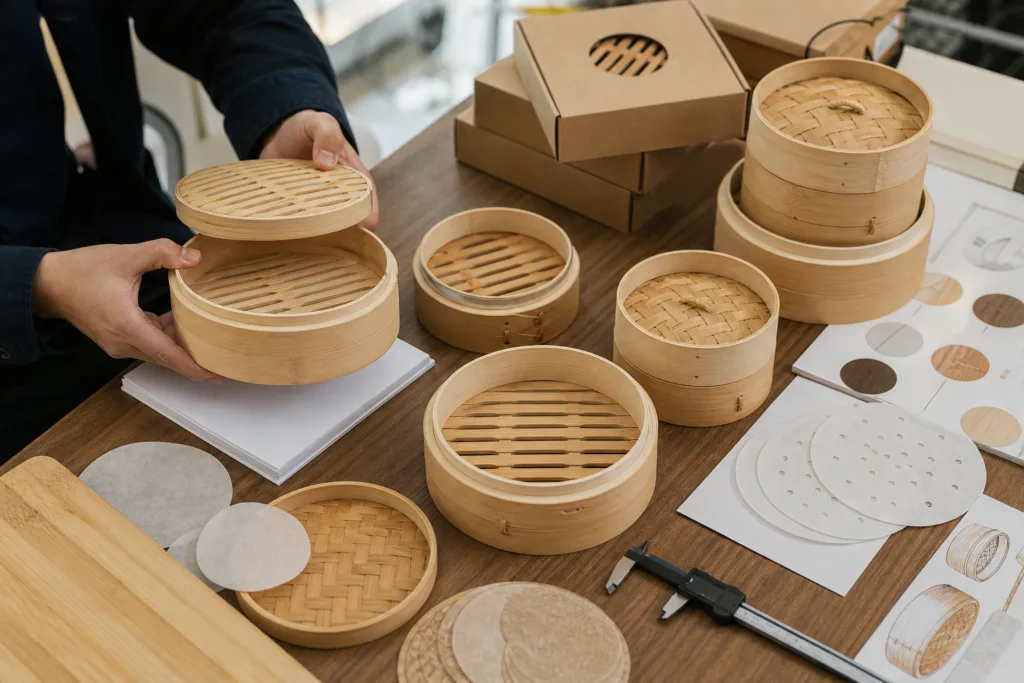
In bamboo steamer content, a buying guide module is the right place for comparisons such as size, tier count, liner type, and intended use. That is where you explain the trade-offs that affect conversion. For example, a small dim sum steamer is not the same as a large family-size model. The first is optimized for portion control and table presentation; the second is better for batch cooking and larger households. If the buyer needs a visual or product-specific path, large bamboo steamer size options can sit naturally in the guide as a supporting product reference.
A buying guide module is also the right place to address accessory decisions. Liners are a good example. They are not usually a separate blog topic unless you are writing a deep guide on food release, moisture management, or paper versus cotton options. In most cases, the main page should explain why a liner exists, who needs it, and what choice works best for the buyer. If the page includes a product set, bamboo steamer sets with liners can be used to connect that explanation to a real product configuration.
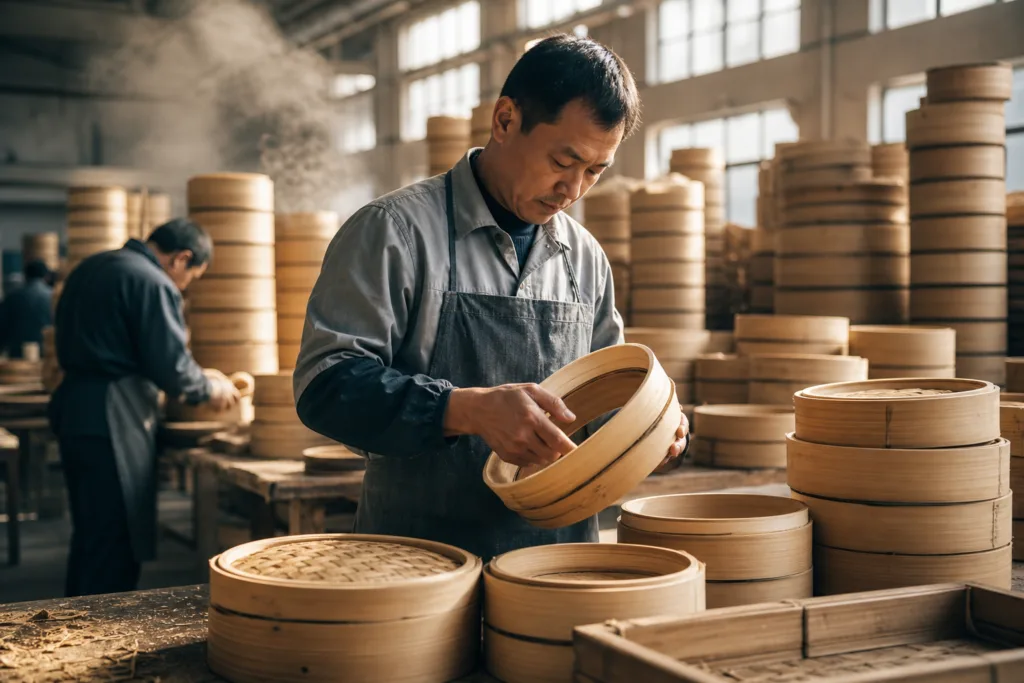
From a manufacturer’s point of view, the buying guide should also reflect how products are actually produced. Size affects material consumption, ring formation, weaving consistency, fit, and packaging volume. A steamer intended for retail shelf display may need cleaner edge finishing and stronger carton protection than a simple bulk foodservice unit. That is the kind of detail that belongs on a main page guide because it helps sourcing teams compare specifications without forcing them into separate articles that all say nearly the same thing.
Which Keywords Are Too Basic, Too Narrow, or Too Overlapping for Separate Blog Posts
Many bamboo steamer keywords look article-worthy at first glance, but they are actually too close to the same user intent. Separate posts for each of these can weaken the content cluster instead of strengthening it.
- Too basic: “How to use bamboo steamer,” “How to clean bamboo steamer,” and “bamboo steamer liners” often fit better in FAQ or buying guide sections.
- Too overlapping: “Best bamboo steamer size” and “choosing a bamboo steamer size” usually target the same decision.
- Too narrow: “mini bamboo steamer formats for dim sum” may only need a product or collection page, not a full article.
- Too repetitive: articles on steam basket care, basket cleaning, and maintenance may all cannibalize the same informational intent.
A useful test is whether a topic changes the buyer’s decision framework. If it does not, it probably belongs on the main page. If it does, it may justify a separate article. This is where many teams overpublish: they see search volume, but not intent overlap. A keyword with search volume is not automatically a content opportunity if the answer is already needed in the FAQ or the buying guide.
When the question is tightly linked to product format, the main page can often cover it better than a standalone post. For example, mini bamboo steamer formats for dim sum is a product-specific topic that usually works best as a product module, not as a separate educational article. That keeps the commercial signal strong and prevents dilution across too many thin pages.
How to Group Keywords by Search Intent
The easiest way to prevent cannibalization is to classify keywords by intent before writing. For bamboo steamer content, the main intent groups are usage, cleaning, sizing, accessories, and purchase decisions. Each group has a different role in the page structure.
| Intent Group | Examples | Best Content Function |
|---|---|---|
| Usage | how to use bamboo steamer | FAQ answer or short buying guide note |
| Cleaning | how to clean bamboo steamer | Care section or FAQ |
| Sizing | best bamboo steamer size | Buying guide comparison section |
| Accessories | bamboo steamer liners | FAQ, add-on section, or product bundle note |
| Purchase decisions | two tier vs single tier, family size, mini size | Main page product selection module |
From our manufacturing perspective, this grouping also reflects how a buyer thinks during sourcing. A retailer or importer usually starts with a use case, then narrows to dimensions, then evaluates packaging and accessory needs. The more your content follows that journey, the better the page can serve both SEO and sales enablement. If you manage a broader bamboo and wood catalog, it also helps to keep the page architecture consistent across product families. On our side, Bamboo Wood Art structures product pages the same way: product fit first, technical details second, and supporting questions in the right module rather than in separate duplicate posts.
This approach also works well for ecommerce teams that want search traffic without creating a publishing burden. Instead of producing five near-identical posts, you build one strong page with FAQ, one stronger buying guide section, and maybe one separate article only when the topic has a distinct audience or deeper technical demand.
How to Reduce Keyword Cannibalization Between FAQ Pages, Buying Guides, and Blog Articles
Keyword cannibalization happens when multiple URLs try to answer the same question with similar depth and intent. In bamboo steamer content, this is common because the questions are simple and the product journey is linear. The fix is not more content; it is clearer content function.
Use one main page as the canonical commercial page. Put the most common questions in the FAQ. Put decision-making content in the buying guide module. Reserve separate blog posts for topics that need their own audience, depth, or lifecycle stage. For example, a standalone post may make sense if you are explaining steam-cooking techniques across different cookware systems, but not if you are just rewriting “how to clean bamboo steamer” in three slightly different ways.
Search visibility improves when each page has a distinct job. The main page should capture product-intent and support transactional queries. The FAQ should capture question-based long-tail queries. A blog article should only exist when it answers a broader or more technical topic that cannot be condensed without losing value. This is exactly the kind of keyword consolidation logic that avoids overlap and strengthens a single page’s authority. A practical overview of keyword cannibalization can help content teams see why multiple pages targeting the same query often compete instead of compound.
One common mistake is creating separate articles for every accessory or use tip because the topic seems easy to write. That strategy often produces thin pages that do not outrank a strong main page FAQ. A better tactic is to fold those questions into one structured section on the product page and then use internal links only where they genuinely add context.
Recommended Page Structure for Bamboo Steamer Content Hubs
A content hub for bamboo steamers does not need to be complicated. It just needs to reflect buyer behavior and search intent in the right order.
Suggested structure
- Primary product page: the commercial page that introduces the steamer range, materials, sizes, and key use cases.
- Buying guide module: a section that explains how to choose size, tiers, liner type, and intended application.
- FAQ block: short answers to the most common usage, cleaning, and compatibility questions.
- One or two support articles only if needed: deeper topics that are not duplicative and serve a separate audience or intent.
This structure works because it keeps the strongest page focused while still giving search engines enough semantic coverage to understand the topic. It also makes site maintenance easier. If a question becomes outdated, you edit one FAQ entry rather than patching multiple blog posts. If a size range changes, you update the buying guide once instead of chasing duplicate mentions around the site.
For brands that need product-family consistency, packaging and assortment also matter. A steamer line with different sizes, liners, and set configurations should be organized as a single family, not as a pile of isolated articles. If you need a product package that already reflects those choices, a page such as two-tier bamboo steamer configurations can reinforce the content hub without splitting the ranking signals across separate educational pages.
Decision Rules for FAQ, Buying Guide, or Separate Blog Post
When in doubt, use these rules.
- Use an FAQ when the answer is short, practical, and directly tied to the product page.
- Use a buying guide section when the question requires comparison, selection, or recommendation.
- Use a separate blog post only when the topic has its own search intent, broader educational value, or enough depth to stand alone.
If the question can be answered in five or six sentences without losing meaning, it usually does not need a separate post. If the question needs examples, comparison tables, or buyer scenarios, it belongs in the buying guide. If the topic would naturally attract readers beyond the product page and does not duplicate the main intent, a standalone article may be justified.
For bamboo steamer projects, the most common wrong move is to publish separate articles for every familiar phrase. That can make the site feel active, but it often reduces total performance. A better publishing framework is to map the highest-value query to one primary page, then assign the rest of the questions to sub-sections that support that page.
Practical Content Mapping for Common Bamboo Steamer Queries
Here is a simple way to map frequent bamboo steamer search terms:
- how to clean bamboo steamer: FAQ or care note on the main page
- best bamboo steamer size: buying guide section with comparison logic
- bamboo steamer liners: accessory section or FAQ
- how to use bamboo steamer: FAQ plus a small usage tip module
- mini bamboo steamer formats for dim sum: product page or collection page, not a separate blog post
That mapping keeps the most important signals in one place. It also makes internal linking more effective because each link reinforces a purpose. If the buyer is looking for a compact format, the page can point to mini bamboo steamer formats for dim sum without forcing a new informational article into the index. The same principle applies to larger formats and accessory bundles.
For brands building around a single steamer line, this is also where product development and content strategy meet. The better your assortment is defined, the easier it is to assign keyword ownership. A clear size ladder, liner bundle, and tier variation make it much simpler to decide what belongs on the main page.
Common Mistakes That Create Duplicate Content and Weaken Rankings
The biggest mistakes are easy to spot once you know what to look for.
- Writing two or three posts that all answer the same “how to use” question.
- Publishing a “best size” article when the product page already compares size options.
- Creating a liner article that says the same thing as the product FAQ.
- Splitting one product family into multiple thin posts instead of a single structured page.
- Linking to too many pages from the same keyword phrase, which confuses both users and crawlers.
Another common issue is over-explaining simple topics while under-explaining real buyer risks. For bamboo steamers, buyers often care more about fit, durability, packaging, and food-contact considerations than about generic cooking prose. If you want a helpful safety note, you can also point buyers to FDA guidance on food-contact substances and cookware safety when discussing liners, coatings, or added materials. That keeps the content practical and grounded in product-use reality.
When content teams stay focused on intent, they avoid the trap of publishing duplicate explanations that sound useful but do not add ranking value. The goal is not to write the most pages; it is to write the fewest pages that fully cover the topic.
FAQ and Blog Division of Labor: A Simple Publishing Framework
A good division of labor is easy to remember.
- FAQ: answer the quick, repeated, high-intent questions.
- Buying guide: help buyers choose the right size, tier count, or accessory set.
- Blog article: cover one deeper topic that deserves independent search visibility.
If a topic needs product visuals, size examples, or purchase comparisons, the buying guide should handle it first. If a topic is mostly a question and answer, the FAQ should handle it. If a topic is about broader cooking behavior, bamboo durability, or sourcing logic across multiple products, then a separate article may make sense.
For teams managing line expansion, this framework also simplifies future updates. When a new set appears, you can add it to the product module instead of creating a new article. When a new question starts appearing in search, you can add it to the FAQ before it becomes a duplicate blog post. That is a much cleaner path for long-term SEO efficiency.
Final Keyword Prioritization Checklist for Bamboo Steamer Content Planning
Before publishing, ask these questions:
- Does this keyword share the same intent as the main product page?
- Can the answer fit naturally into an FAQ or buying guide section?
- Would a separate post genuinely add depth, or only repeat the same advice?
- Will this page compete with another page already targeting the same query?
- Is the buyer trying to choose, compare, or simply understand the product?
If the answer is mostly “yes” to the first four questions, keep the keyword on the main page. If the answer is “yes” to the last question and the topic is broader than the product page, a standalone article may be worth publishing. That decision rule is simple, but it prevents a lot of low-value content from entering the site.
At Bamboo Wood Art, we see the same logic in product development. The cleanest bamboo steamer programs are the ones where the product range, size options, liners, packaging, and use cases are organized from the beginning. Content should work the same way. A strong bamboo steamer FAQ strategy does not just answer questions; it protects ranking signals, improves page clarity, and helps the right page win the right search.
FAQs
Should how to use bamboo steamer be a separate blog post?
Usually no. If the answer is short and directly related to buying or using the product, it belongs in the main page FAQ or a small usage section. A separate blog post only makes sense if you are covering a broader cooking method that extends beyond one product page.
Is how to clean bamboo steamer too basic for a blog article?
In most cases, yes. Cleaning guidance is important, but it is usually concise and closely tied to the product page. A FAQ or care note is the better place unless you are comparing cleaning methods across multiple cookware types.
Where should best bamboo steamer size go?
This belongs in a buying guide module, not a standalone post in most cases. Size selection affects purchase decisions, so the page should compare use cases, servings, and compatibility instead of repeating the same advice across multiple articles.
Do bamboo steamer liners deserve their own article?
Only if you are making a deeper material or performance comparison. For most ecommerce and manufacturer pages, liners fit better as a product accessory section or a FAQ item because the topic supports the main purchase rather than replacing it.
How do I stop keyword cannibalization on bamboo steamer content?
Assign one clear job to each URL. Let the product page own the commercial query, let the FAQ handle repetitive questions, and let buying guide content handle comparisons. If two pages would answer the same intent, consolidate them.
When is a separate bamboo steamer blog post actually worth it?
It is worth it when the topic has a distinct search intent, needs deeper explanation, or serves a broader audience than the product page. If the post would mostly repeat what the FAQ or buying guide already says, it is usually not worth splitting out.