Introduction
Bamboo is celebrated for its sustainability, strength, and natural beauty. As the demand for modern, functional products grows, designers and manufacturers are finding new ways to enhance bamboo assemblies by adding silicone or metal parts. Whether for extra support, improved aesthetics, or unique joint solutions, these additions allow bamboo structures to meet higher standards for durability and usability. This guide covers the essentials of integrating silicone and metal into bamboo assemblies—from choosing connectors and materials to designing for longevity and ease of use.
- Overview of integrating silicone or metal components into bamboo structures
- Importance and benefits for modern bamboo assemblies
Suitable Applications
- Examples of where silicone or metal additions enhance bamboo projects
- Case studies in furniture, architecture, or crafts
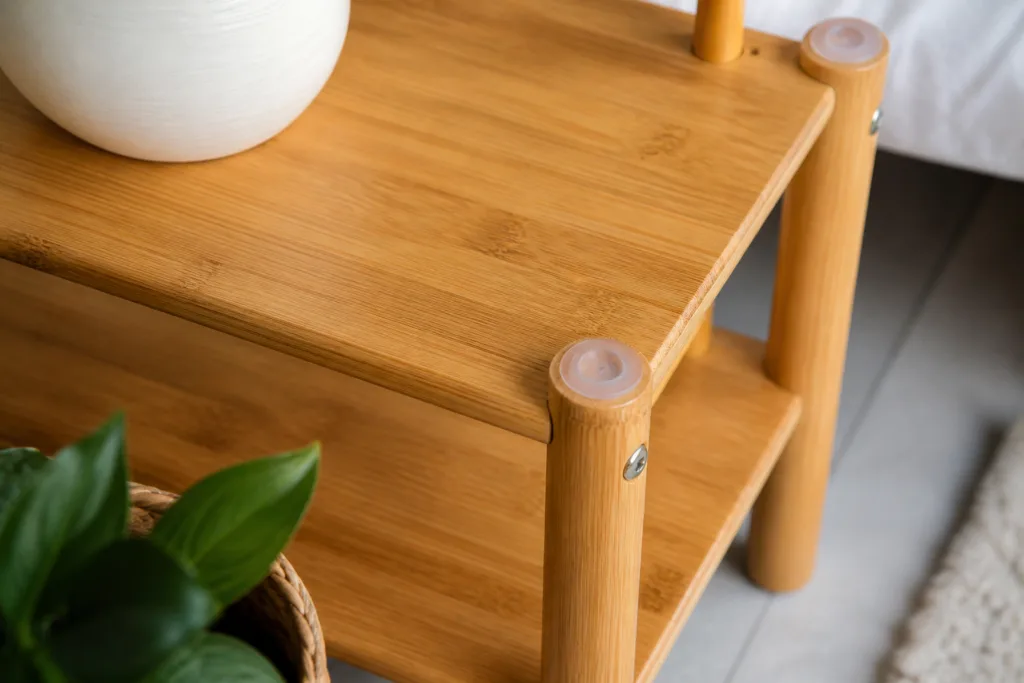
Hybrid bamboo structures are broadly used in furniture, shelving, kitchenware, and architectural features. For example, bamboo shelves reinforced with metal brackets will last longer and carry heavier loads than pure-bamboo shelves. Another common upgrade is adding silicone feet to bamboo trays or racks, offering slip resistance and protecting surfaces. In architectural settings, metal connectors make complex bamboo frameworks possible, supporting balconies, railings, or decorative partition walls. These mixed-material assemblies not only improve structural performance, but also create a sleek, professional look that suits modern interiors.
As a bamboo products manufacturer, Bamboo Wood Art offers custom solutions for integrating silicone or metal into your unique designs. Discover our manufacturing options.
Types of Silicone and Metal Parts
- Description of common connectors and joints
- Material selection tips and compatibility with bamboo
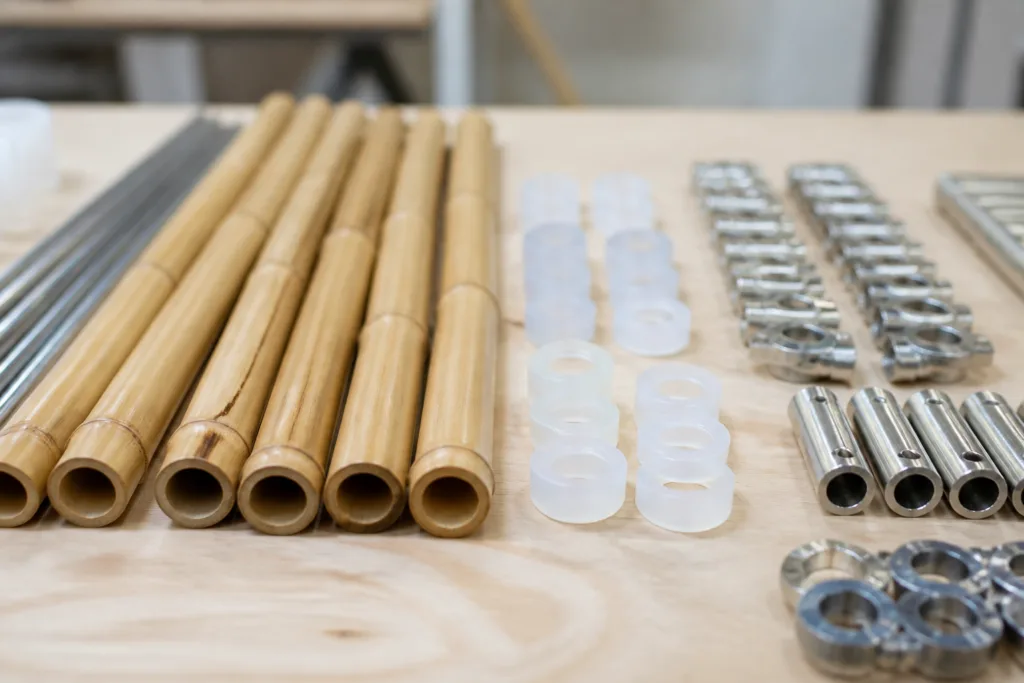
Bamboo joints and connectors come in a wide range of shapes and functions. Metal parts such as brackets, screws, pins, corner plates, and threaded inserts are ideal for demanding connections, especially in shelving or furniture legs. Stainless steel and zinc alloys are preferred for their corrosion resistance and mechanical strength. Silicone elements include gaskets, anti-slip pads, shock absorbers, and feet—making assemblies safer and quieter.
When selecting connectors, consider the diameter and wall thickness of your bamboo. Metal parts should not be so tight as to damage bamboo fibers; a silicone gasket or liner can soften the interface and prevent splitting. Always look for food-grade silicone for kitchenware. Material compatibility is vital: choose adhesives that bond well to both bamboo and your chosen metal or silicone, avoiding solutions that become brittle or lose grip over time. For more on proper material selection, check FDA standards for wooden food contact surfaces.
Common Hybrid Connector Designs
| Connector Type | Use Case | Material Compatibility |
|---|---|---|
| Metal Bracket | Furniture corners | Bamboo, steel |
| Silicone Foot | Tray bases, racks | Bamboo, silicone |
| Threaded Insert | Removable legs | Bamboo, stainless |
| Gasket | Joint dampening | Bamboo, silicone |
| Corner Plate | Shelf stabilization | Bamboo, metal |
Integration Techniques
- Step-by-step process for attaching silicone and metal parts to bamboo
- Tools and adhesives required
- Ensuring strong, durable connections
Attaching Metal Connectors
For metal parts, prepare the bamboo ends by sanding and checking for splinters. Drill pilot holes if using screws, and always avoid overtightening. Apply a thin layer of epoxy or a food-safe adhesive between metal and bamboo surfaces for extra strength. Position brackets or plates precisely to avoid shifts and ensure stability.
Mounting Silicone Parts
Silicone feet or pads typically come with adhesive backing or require a dab of hot-melt glue. Clean both surfaces thoroughly and press the silicone firmly in place. If silicone is used as a gasket, measure and cut for a snug fit, then glue or press into the joint.
Tools for Integration
- Drill with adjustable bits
- Screwdriver or Allen wrench
- Epoxy or food-safe glue
- Clamps
- Measuring tape
- Hot-melt glue gun for silicone
To ensure durability, let adhesives cure fully before use, and inspect joints for tightness. For best results, reference the techniques used in prototyping from sketch to bamboo sample, which illustrates smart trial-and-error before final assembly.
Design Considerations
- Aesthetics and functional improvements
- Addressing challenges like expansion, movement, and joint stability
Designing with hybrid connectors requires balancing visual appeal and practicality. Silicone adds a subtle, modern flair—especially when color-coordinated with the bamboo’s natural tones. Metal highlights can transform a rustic bamboo piece into a contemporary showpiece. Functionally, silicone mitigates vibration and surface scratching, while metal supports high-load areas.
Expansion and movement are important factors since bamboo breathes and shifts with humidity. Choose connectors that allow micro-movement or use silicone gaskets to absorb stress. Avoid rigid connections in areas likely to experience swelling. Joint stability depends on connector placement and the length of bamboo segments; evenly distributing load and placing connectors away from knots or thin sections reduces the risk of splitting or loosening.
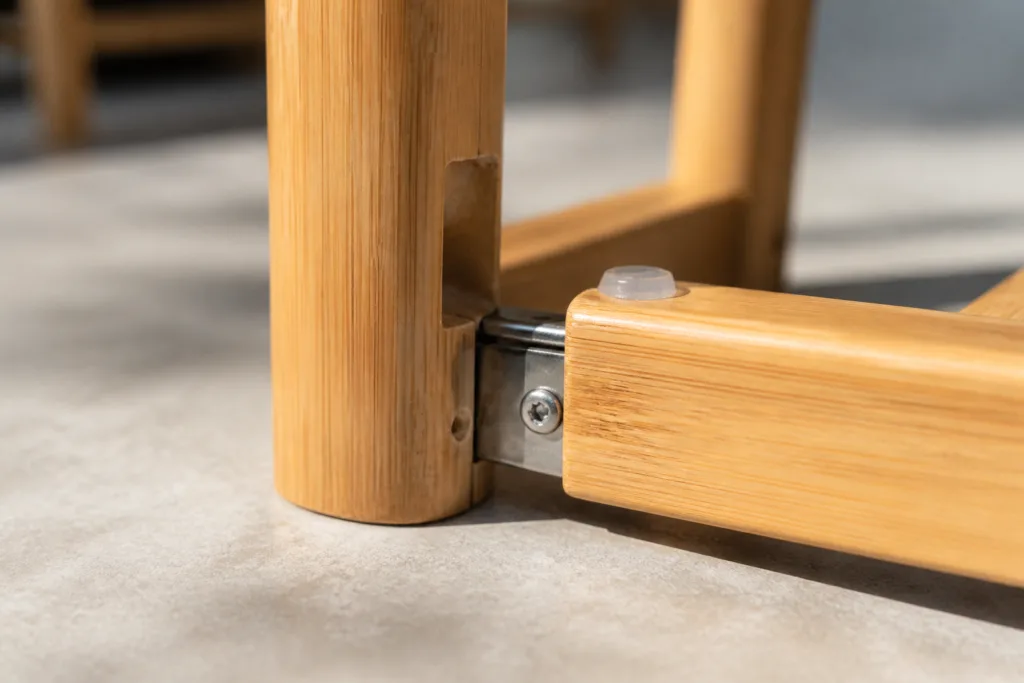
Overcoming Stability Challenges
Hybrid assemblies sometimes need reinforcement in high-stress zones. Consider creating multi-point brackets for furniture legs or modular joints for shelves. For display racks, using silicone feet not only increases non-slip stability but also prolongs floor life. More info about rack design can be found in vertical storage with bamboo racks.
Maintenance and Durability
- Maintaining hybrid bamboo assemblies
- Repair tips and common issues
Maintaining bamboo assemblies with silicone or metal parts involves regular checks for tightness and wear. For silicone pads or gaskets, watch for peeling, discoloration, or loss of elasticity. Silicone parts can usually be re-glued or replaced easily. Metal connectors should be checked for rust or loosening, and cleaned with a mild, non-abrasive cloth. Environmental factors—such as moisture and temperature swings—can cause bamboo to expand and contract. To combat these effects, manufacturers like Bamboo Wood Art kiln-dry the bamboo and suggest periodic tightening and oiling of joints.
If a connector fails, remove the affected part carefully, then inspect for cracks or wear in the bamboo. Replace connectors as needed, ensuring compatibility with existing joints. Hybrid designs are generally easier to maintain since separate parts can be swapped out without rebuilding the whole structure. For more repair tips, see why some bamboo shelves wobble, warp, or fail under load.
Adding Silicone or Metal Parts to Bamboo Assemblies
To integrate silicone or metal into bamboo assemblies, start by evaluating your project goals—strength, aesthetics, or flexibility. Select parts that match your joint load, surface type, and intended use. Carefully prepare surfaces, use compatible adhesives, and allow for possible expansion. Follow a methodical assembly routine, checking each joint for stability. Maintenance ensures lasting performance, especially if the assembly is exposed to frequent use, moisture, or load changes. Combining bamboo’s natural properties with the smart use of silicone and metal unlocks new potential in home, commercial, and craft applications.
Conclusion
- Future potential for mixed-material bamboo construction
- Summary of best practices
The fusion of bamboo with silicone and metal connectors represents a forward step in sustainable construction and product design. These assemblies deliver greater strength, versatility, and style, making them ideal for furniture, architectural features, and creative crafts. By understanding material compatibility, applying sound integration techniques, and planning designs that address expansion and stress, you ensure lasting, attractive results. As the industry evolves, so too will hybrid bamboo innovations—encouraging greener, smarter products for every environment.
Frequently Asked Questions
What are the main benefits of adding silicone or metal parts to bamboo assemblies?
Integrating silicone or metal parts greatly improves the strength, durability, and flexibility of bamboo assemblies, making them suitable for modern uses like furniture, architectural details, and craft projects.
Will metal connectors damage the bamboo over time?
Properly installed metal connectors, especially stainless steel or coated options, shouldn’t damage bamboo if appropriate adhesives and gaskets are used to buffer direct contact. Regular maintenance helps ensure long-term stability.
Can silicone parts be safely used with bamboo for food-contact items?
Yes, food-grade silicone is commonly used with bamboo in items such as steamers and trays. Choosing certified materials and following FDA standards keeps food-contact surfaces safe and durable.
How do I choose the right connector for my bamboo assembly?
Select connectors based on the mechanical stress, joint location, and desired aesthetics. Stainless steel is good for visible parts; silicone works for anti-slip or flexible elements. Always test for compatibility.
What tools are needed for integrating silicone or metal parts?
You’ll typically need a drill, clamps, appropriate adhesives (epoxy or food-safe glue), a screwdriver or wrench, and measuring tools. For silicone, sometimes hot-melt glue is used for rapid assembly.
How do I repair hybrid bamboo assemblies if a connector fails?
If a connector fails, remove the damaged part carefully, inspect for cracks or wear, and replace it with a matching piece. For silicone, re-gluing or reseating is often sufficient. For metal, check for rust and replace as needed.