Introduction
Choosing the right wood for your home—whether it’s for flooring, cutting boards, or a custom-made desk—can feel overwhelming. Each wood type brings a different set of features, and one of the most critical factors is hardness. In this guide, we take a close look at bamboo, maple, and walnut, three of today’s most popular materials, focusing on their hardness, their ideal applications, and their unique strengths. Our goal? To help you make an informed decision based on durability, style, and practical needs. If you’ve ever wondered about bamboo hardness or pondered the differences between maple and walnut wood, you’re in the right place.
What is Wood Hardness?
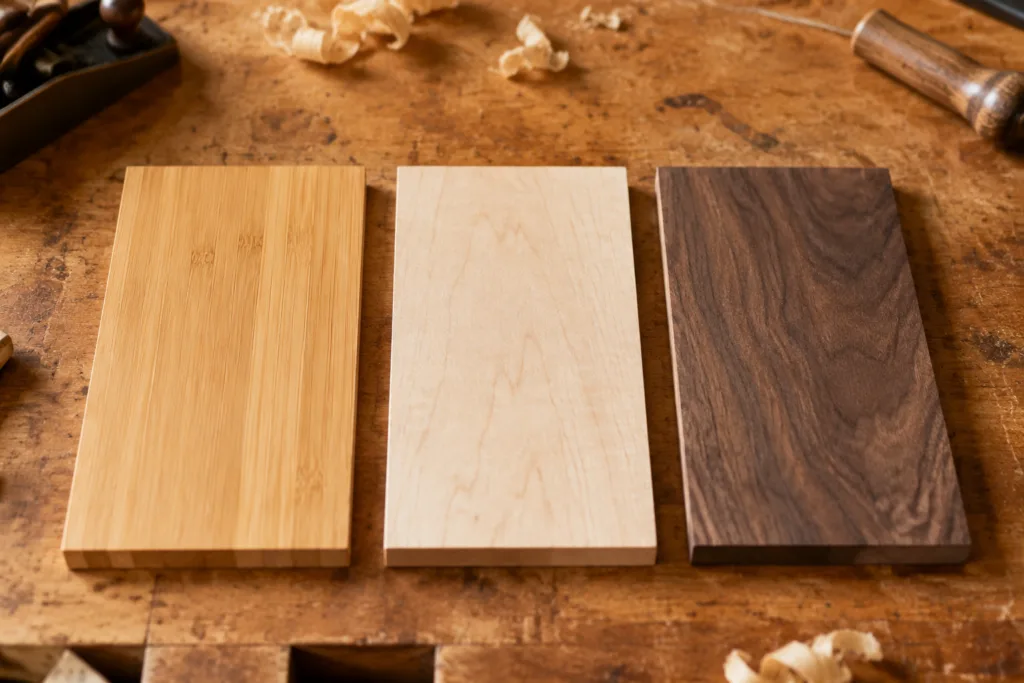
Wood hardness refers to how resistant a wood species is to dents, wear, and scratches. It’s crucial in areas where your material faces frequent use, like kitchen counters, flooring, and dining tables. The most widely accepted measure of wood hardness is the Janka Hardness Scale. This scale determines hardness by testing how much force (measured in pounds-force, or lbf) is required to press a small steel ball halfway into the wood. A higher Janka rating means a tougher, more dent-resistant surface—perfect for high-traffic spaces or homes with lots of activity.
Bamboo: Strengths and Characteristics
Bamboo stands out because it’s technically a grass, but it offers the strength and look of hardwood. It grows astonishingly fast, reaching full maturity in just five years compared to the decades needed for maple or walnut. This eco-friendly aspect is why so many are turning to bamboo for their homes and businesses.
The hardness of bamboo varies depending on the processing technique. Horizontal and vertical bamboo planks typically score between 1200 and 1400 lbf on the Janka scale, similar to red oak. Strand-woven bamboo, however, is compressed under high pressure, resulting in a rating of 2000–3000 lbf—making it one of the hardest flooring materials on the market.
Pros:
- Renewable and environmentally responsible
- High hardness with strand-woven types
- Modern, light-toned aesthetic
Cons:
- Variable quality depending on manufacturing
- Moisture sensitivity if not properly sealed
- Can be susceptible to swelling in humid climates
In fact, proper construction matters—brands like Bamboo Wood Art focus on high-grade bamboo, kiln drying to manage moisture, and food-safe adhesives to ensure long-lasting strength without warping or odors.
Maple: Strengths and Characteristics
Maple wood comes in several varieties, but the two most common are hard maple (Acer saccharum) and soft maple (Acer rubrum and others). Despite the name, even soft maple is reasonably tough, but hard maple, especially sugar maple, stands out for its dense grain and exceptional strength. On the Janka scale, hard maple typically scores 1450 lbf—higher than most domestic woods—which explains its popularity in gymnasium floors, butcher blocks, and heavy-duty countertops.
Pros:
- Durable and dent-resistant
- Uniform grain makes it ideal for contemporary finishes
- Available across North America, often affordable
Cons:
- Tends to yellow with age unless sealed
- Can be difficult to stain evenly
- Somewhat heavier than bamboo and walnut
Hard maple is a favorite for heavy-use areas, while soft maple offers a bit more workability for intricate designs and furniture legs.
As a bamboo cutting board manufacturer, we offer completely custom sizing, finishing, and branding for business and design professionals.
Walnut: Strengths and Characteristics
Walnut wood, particularly American black walnut (Juglans nigra), is prized for its rich, chocolate-brown color and elegant grain pattern. It is a premium choice for fine furniture, cabinetry, and statement pieces. On the Janka scale, walnut scores around 1010 lbf—making it softer than both bamboo (strand-woven) and hard maple. However, its appeal lies as much in its beauty as in its function.
Pros:
- Gorgeous color and intricate grains
- Good workability for shaping and carving
- Stable and less prone to warping than many softer woods
Cons:
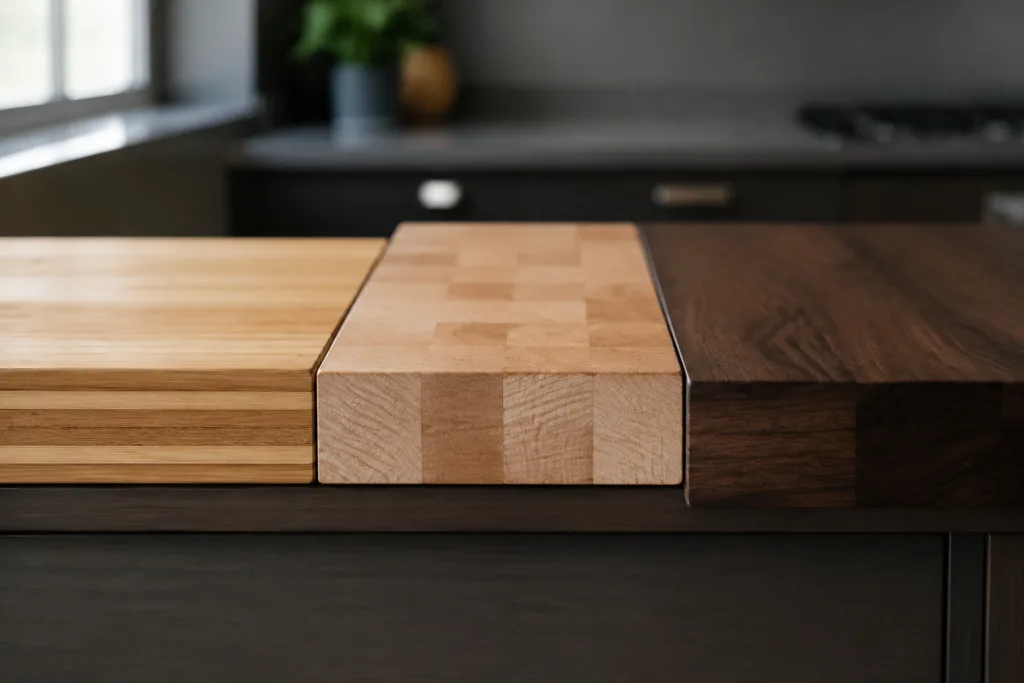
- Less dent-resistant than bamboo or maple
- Typically higher cost due to limited supply
- Shows scratches more easily, though many consider this part of its patina
Walnut shines in decorative uses, heirloom-quality projects, and as a high-contrast accent in kitchens or offices.
Head-to-Head Comparison
| Wood Type | Janka Hardness | Main Uses | Durability |
|---|---|---|---|
| Bamboo | Varies (typically high – 1200-3000 lbf) | Flooring, Furniture, Cutting Boards | Good to Excellent |
| Maple | Hard (e.g., 1450 lbf) | Flooring, Cabinets, Countertops | Very Durable |
| Walnut | Medium (e.g., 1010 lbf) | Furniture, Decorative Uses | Moderate |
It’s clear from the data: for pure hardness, strand-woven bamboo leads, followed by maple, then walnut. However, hardness isn’t the only factor—appearance, grain, cost, and intended use matter just as much.
How to Choose: Factors to Consider
Deciding between bamboo, maple, and walnut depends on far more than numbers alone. Here are the main things to weigh:
- Intended use: Consider which areas will see the most wear. Bamboo and maple are excellent for high-traffic floors and work surfaces, while walnut is best for accent furniture or low-traffic areas.
- Durability and maintenance: Maple resists dents well, bamboo is best when using strand-woven planks, and walnut requires a bit more care.
- Personal style and budget: Walnut offers a premium look and feel, but usually at a higher cost. Bamboo is eco-friendly and often more affordable, while maple delivers durability with a classic, versatile appearance.
Maintenance should also be part of your plan. For instance, with wooden combs or cutting boards, a proper routine—like oiling wood for longevity—can dramatically increase usable lifespan. Bamboo products, similarly, benefit from regular cleaning and occasional reoiling, as outlined in our bamboo cutting boards guide. In all cases, avoid leaving any of these woods in standing water or excessive humidity.
Bamboo vs. Maple vs. Walnut: A Hardness Comparison
If your main priority is dent resistance for flooring or countertops, strand-woven bamboo outpaces even hard maple, while conventional bamboo is about equal to red oak or soft maple. Maple provides a dependable middle ground—tough, attractive, and widely available. Walnut, though softer, stands out for its deep, classic appearance and workability.
Summary tips:
- Flooring: Prefer strand-woven bamboo for ultra-high hardness, maple for a long-lasting classic look, or walnut for luxury, low-wear areas.
- Kitchenware: Bamboo and maple both offer excellent hardness. Walnut is beautiful, but may require more gentle care.
- Furniture: All three can be good options; consider walnut for a premium accent or bamboo/maple for everyday durability.
Sustainability and Eco-Impact
Bamboo is the sustainability champion, requiring minimal water and regrowing rapidly after harvest. Maple and walnut come from managed North American forests, but still require decades to regrow after harvesting. When sourcing wood, always look for certifications such as FSC or opt for manufacturers who can trace their supply chain from forest to finished product. Sustainable choices protect wild habitats and reduce carbon footprints. If you’re aiming for a greener kitchen or workspace, choosing bamboo or responsibly harvested woods is key.
Surface Finish and Feel
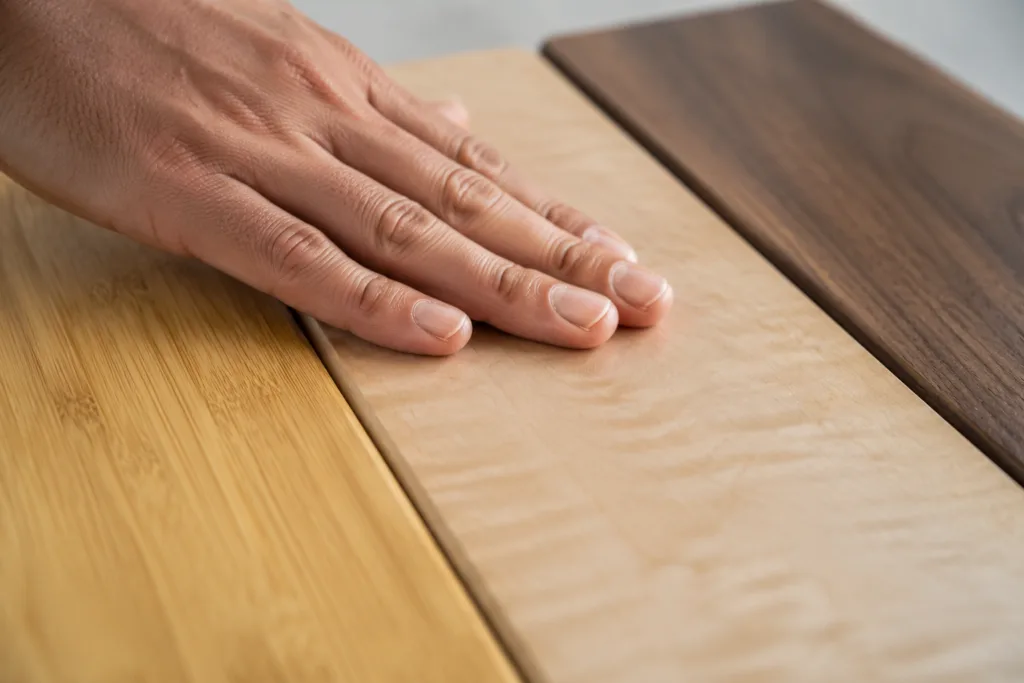
The tactile experience of each wood can’t be ignored. Bamboo tends to be ultra-smooth, with a modern ‘blonde’ look unless darkened through carbonization. Maple boasts a fine, even grain with a subtle shine, while walnut is prized for a silky finish and complex grain depth. These differences also affect how each wood handles stains and polishes. High-end finishing—such as multi-coat sanding or natural oil treatment—can enhance longevity and tactile satisfaction in all three materials. If you love a specific finish or want to color-match with other items, check out insights on color customization for bamboo and wood.
Conclusion
Bamboo, maple, and walnut each offer unique advantages for flooring, furniture, or kitchenware projects. Strand-woven bamboo is top-tier for hardness and sustainability, hard maple is the go-to for classic durability and resilience, and walnut delivers unrivaled elegance and color—though with a bit less dent resistance. Choose bamboo for a modern look and eco-performance, maple for lasting functionality, or walnut to make a statement with warmth and depth. Consider your needs, your style, and the level of maintenance you’re willing to provide. By understanding the practical pros and cons, you’ll select the right wood for your project and enjoy your investment for years to come.
Frequently Asked Questions
Which wood is hardest: bamboo, maple, or walnut?
Among bamboo, maple, and walnut, strand-woven bamboo is generally the hardest, even surpassing hard maple. Conventional bamboo and maple are both harder than walnut.
How does the Janka hardness scale work?
The Janka hardness scale measures how much force is needed to embed a steel ball into wood. The higher the Janka rating, the more resistant the wood is to dents and wear.
Is bamboo more environmentally friendly than maple or walnut?
Yes, bamboo is considered more eco-friendly due to its rapid growth and renewability, making it a sustainable alternative to slow-growing hardwoods.
Can I use bamboo in high-moisture environments?
Bamboo can be used in damp areas if it is properly sealed and maintained. Quality manufacturing and finishes are key to preventing warping or swelling.
Which wood is best for kitchen cutting boards?
Bamboo and hard maple are popular for cutting boards due to their hardness and food safety. Walnut is also suitable but may require more careful maintenance.
Does walnut scratch easily compared to bamboo or maple?
Walnut is slightly softer and may show scratches more easily than bamboo or maple. However, many users appreciate the rich patina walnut develops over time.