Introduction
Wooden combs have become the top choice for those seeking healthier hair and a more sustainable care routine. Whether your hair is curly, wavy, or perfectly straight, the natural properties of wooden and bamboo combs offer a gentle touch that plastic simply cannot match. This guide explores why eco-friendly combs—especially bamboo and other responsibly-sourced woods—are ideal for everyday use, and details how they benefit different hair types.
Benefits of Wooden Combs
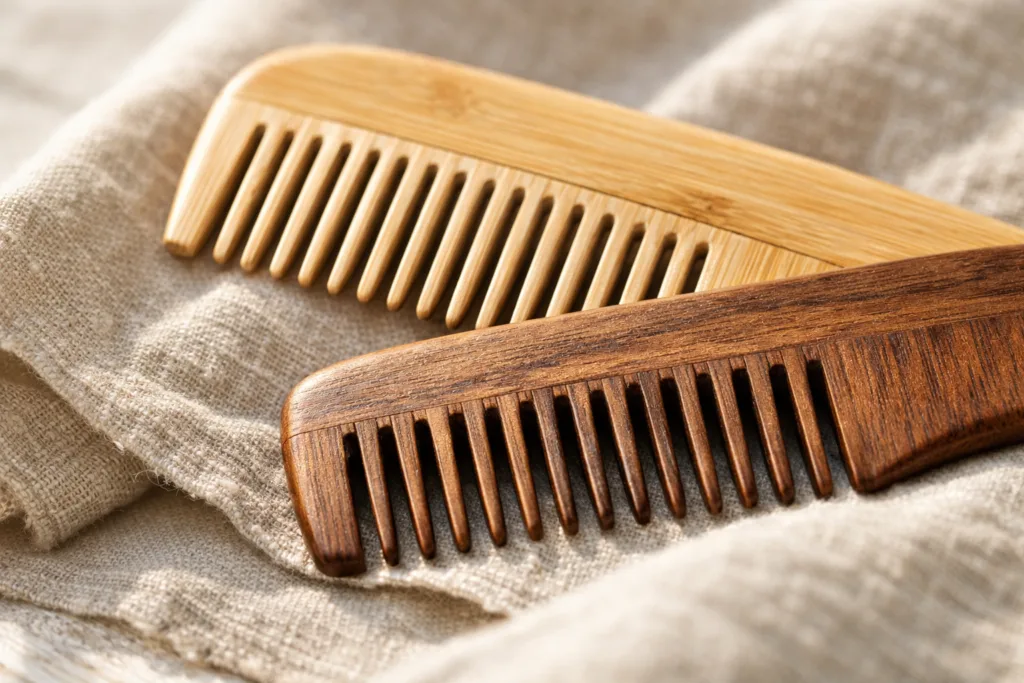
- Gentle on Hair and Scalp: The smooth, rounded teeth of wooden combs don’t scratch or irritate the scalp, helping minimize breakage and split ends.
- Reduces Static and Frizz: Unlike plastic combs, wooden options don’t create static electricity, so your hair stays smoother and less frizzy all day. Explore more on minimizing static in our guide How Wooden Combs Reduce Static and Frizz.
- Eco-Friendly Materials: Bamboo, in particular, is both rapidly renewable and biodegradable, making it one of the most planet-friendly choices for hair care tools.
- Durability and Aesthetic Appeal: Strong woods like bamboo, sandalwood, and neem not only last for years but add a touch of nature-inspired beauty to your grooming routine.
Wooden Combs for Curly Hair
- Wide-Tooth Wooden Combs: The generous spacing between teeth helps detangle curls gently, minimizing breakage and preventing snagging. For the science behind scalp care with wooden combs, see Scalp Stimulation: Using a Wide-Tooth Wood Comb.
- Bamboo Combs for Gentle Glide-Through: Bamboo’s smoothness allows the comb to glide through textured or curly hair, reducing friction and tangling.
- Combing Techniques: Always start from your ends and work upward to roots, detangling in small sections while hair is damp or conditioned for less stress on curls.
As a wooden combs manufacturer, Bamboo Wood Art offers custom sizes and designs—perfect for curly or straight hair businesses seeking private labels. Explore our wooden comb options here.
Wooden Combs for Straight Hair
- Fine-Tooth Wooden Combs: Closer-set teeth are excellent for straight hair, creating a polished, neat look without pulling or snapping fine strands.
- Bamboo for Sleek Results: Bamboo combs help evenly distribute hair’s natural oils from roots to tips. This boosts shine and reduces the need for synthetic styling products.
- Styling Tips: Use a fine-tooth wooden comb on dry, clean hair for smoothing flyaways, sectioning for braiding, or creating straight partings.
Curly vs. Straight Hair: Choosing the Right Wooden Comb
Comparing Designs: Wide-Tooth vs. Fine-Tooth
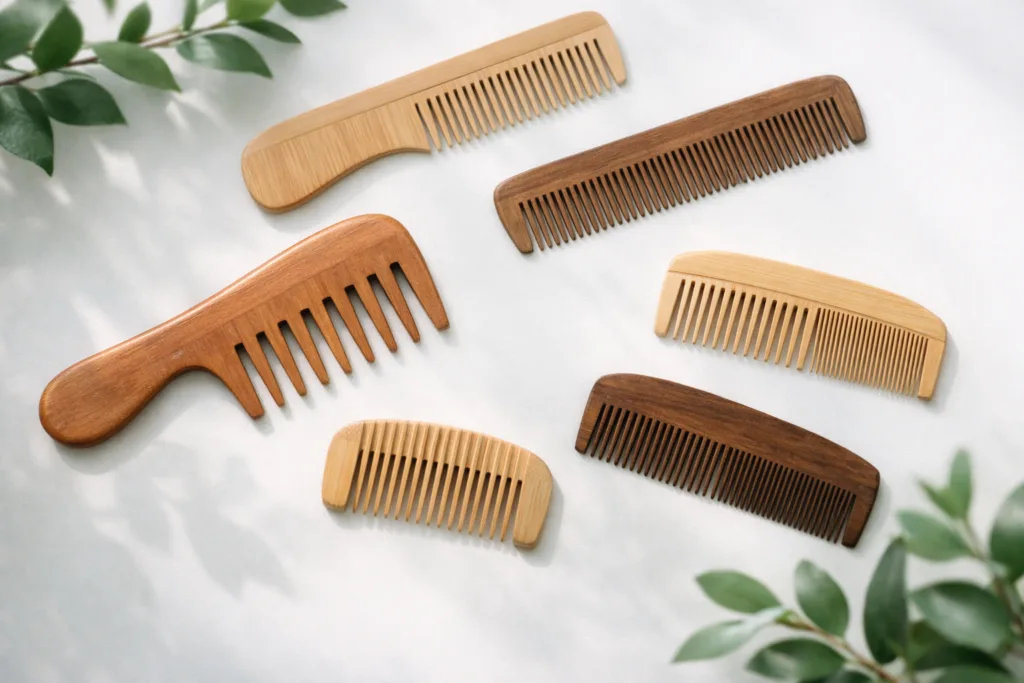
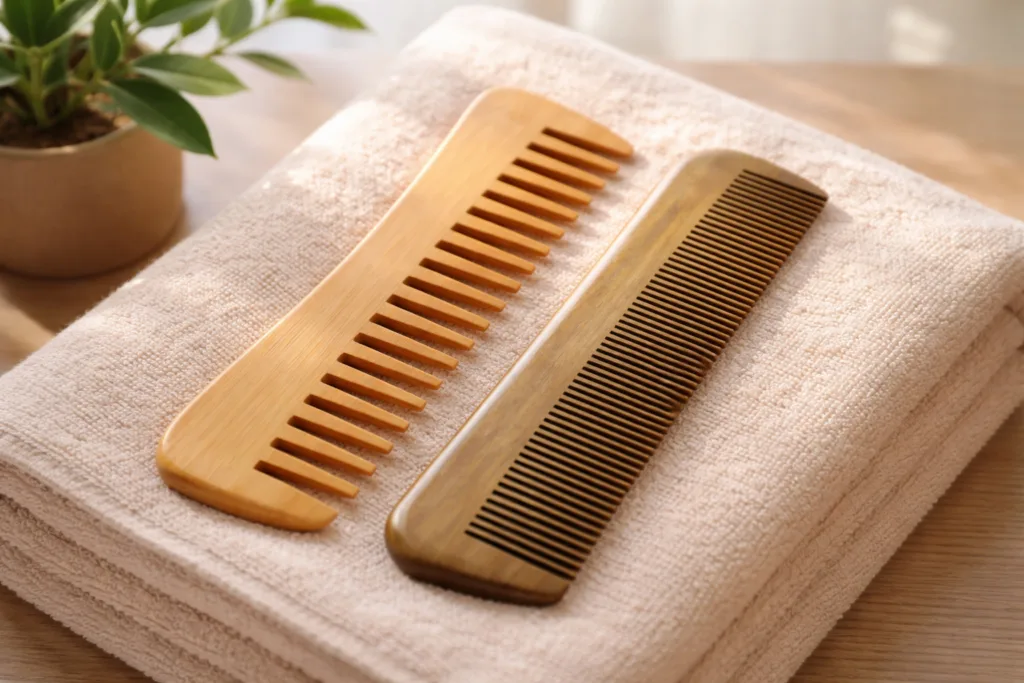
Choosing between a wide-tooth and fine-tooth comb depends on texture and styling needs. Curls do best with widely-spaced teeth to avoid breakage, while straight hair benefits from close, parallel teeth for sleek styling.
| Hair Type | Recommended Design | Main Benefit |
|---|---|---|
| Curly/Coily | Wide-tooth comb | Prevents breakage & detangles easily |
| Straight/Wavy | Fine-tooth comb | Smooths, polishes & sections cleanly |
Material: Bamboo vs. Other Woods
Bamboo is lightweight, durable, moisture-resistant, and especially sustainable as a rapidly renewable resource. Other woods like sandalwood, neem, or peach feature luxurious textures and natural nourishment for the scalp. Some, like neem, even have antibacterial properties. For a deep dive into material differences, see Bamboo vs. Neem Wood Combs: Which is Best for Scalp?.
Maintenance and Care for Longevity
Wooden combs thrive with simple care: keep them clean and dry, occasionally oil to preserve wood grain, and avoid submersion in water. Learn the do’s and don’ts of Cleaning Your Wooden Comb for best results.
Best Wooden Combs for Curly vs. Straight Hair
Top Features to Consider
- Teeth shape and spacing (wide vs. fine)
- Material (bamboo, sandalwood, neem)
- Ergonomic handle for larger hands/longer combing sessions
- Compact or travel design for on-the-go use
Bamboo Wood Art’s Approach to Wooden Comb Manufacturing
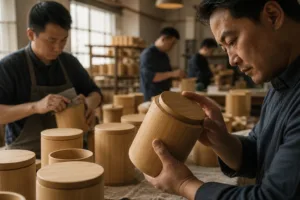
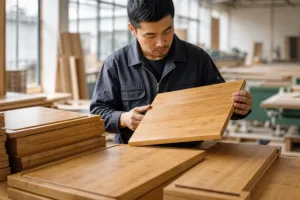
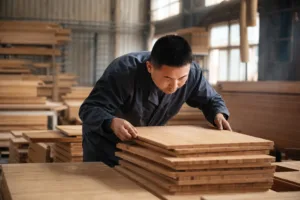
At Bamboo Wood Art, we’ve refined the process of selecting bamboo sourced from managed forests for optimal moisture control, durability, and grain uniformity. This care ensures our combs resist warping and splitting, aligning aesthetics with longevity for both salon professionals and everyday users.
Comparing Popular Wooden Comb Types
| Comb Type | Best For | Material Note | Portability |
|---|---|---|---|
| Wide-Tooth Wooden Comb | Curly, thick, textured hair | Bamboo, sandalwood | Medium, often handleless |
| Fine-Tooth Wooden Comb | Straight, fine hair | Peach wood, sandalwood | High, often pocket-size |
| Handle Comb | All hair types | Bamboo, mixed woods | Standard, comfortable grip |
| Pocket Wooden Comb | Travel, everyday carry | Bamboo | Very high, slim build |
Styling and Scalp Care Tips
- Comb gently section by section, starting at ends for curls.
- Distribute scalp oils thoroughly for smoothness with straight hair.
- Use light natural oils or leave-in conditioners for slip, especially with curls.
Sustainability and Hair Health
Wooden combs not only reduce waste in the bathroom but can also promote healthier hair by reducing friction, static, and split ends. Bamboo stands out, growing rapidly without fertilizers or pesticides, making it an excellent choice for eco-conscious individuals and salons alike. For more on bamboo’s sustainable journey, see The Lifecycle of a Bamboo Product: From Forest to Kitchen.
How to Store and Travel with Wooden Combs
Protect your comb’s finish by storing it in a dry place, using a cloth pouch or bamboo travel case. Avoid tossing in wet bags. Discover tailor-made travel options, like the Wooden Travel Comb with Case, for on-the-go hair care harmony.
Maximizing the Lifespan of Your Wooden Comb
Oil your comb with light vegetable oil every few months to keep wood nourished and protected. Never soak wooden combs and always allow them to dry fully between uses. Spot clean with mild soap and a soft cloth for best results.
Conclusion
Choosing the best wooden comb for curly or straight hair depends on a balance between tooth design, wood type, and personal preference for weight, feel, and sustainability. Adopting natural wood or bamboo combs helps keep locks smooth, frizz-free, and beautifully healthy—all while reducing your ecological footprint. Whether you seek gentleness for curls or polish for straight hair, a thoughtfully selected wooden comb becomes a daily delight and a sustainable style upgrade.
Frequently Asked Questions
What’s the main difference between bamboo and sandalwood combs?
Bamboo is lightweight and highly sustainable, while sandalwood is heavier, has a smooth finish, and a natural woody scent. Both are excellent, but bamboo wins on eco-friendliness and allergy resistance.
Can I use a wooden comb on wet hair?
Yes, but dry the comb after use. Detangle gently, starting from the ends, and avoid prolonged soaking to prevent warping.
How often should I clean my wooden comb?
Clean every one to two weeks using mild soap and a cloth, then air-dry to keep the wood in great condition and remove product buildup.
Will a wooden comb help reduce hair frizz?
Absolutely. Wooden combs don’t generate static electricity, so they help manage frizz and leave hair smoother than plastic combs.
Are there any styling tricks unique to wooden combs?
Yes! Use wide-tooth wooden combs for gently detangling curls or applying conditioners, and fine-tooth versions for precise partings in straight or fine hair.
Is bamboo safe for all hair types and scalp conditions?
Bamboo combs are naturally hypoallergenic, so they’re safe and soothing for sensitive scalps and suitable for all hair textures.