Introduction
Cleaning your wooden or bamboo comb is essential for its longevity and your hair’s health. Discover the best practices and common mistakes to avoid for optimal comb care and scalp wellness. Whether you use a classic wooden comb or a modern bamboo comb, this guide will provide everything you need to keep your grooming tools in pristine condition.
Why Clean Your Wooden or Bamboo Comb?
- Prevents buildup of natural oils and styling products
- Maintains comb durability and hygiene
- Keeps hair healthy and smooth
As a direct wooden combs manufacturer, custom sizes, finishes, and detailing are available for brands or salons.
The Importance of Regular Comb Cleaning
Wooden and bamboo combs may appear low-maintenance, but regular cleaning is crucial. Hair products, oils, and dirt build up over time, making combs less effective and unhygienic. A neglected comb can harbor bacteria and contribute to scalp issues. Routine cleaning keeps your comb safe for daily use and extends its lifespan—especially important if you use a specialty wooden comb for hair care benefits.
Do’s of Cleaning a Wooden or Bamboo Comb
- Use a soft brush to remove debris and hair strands between the teeth.
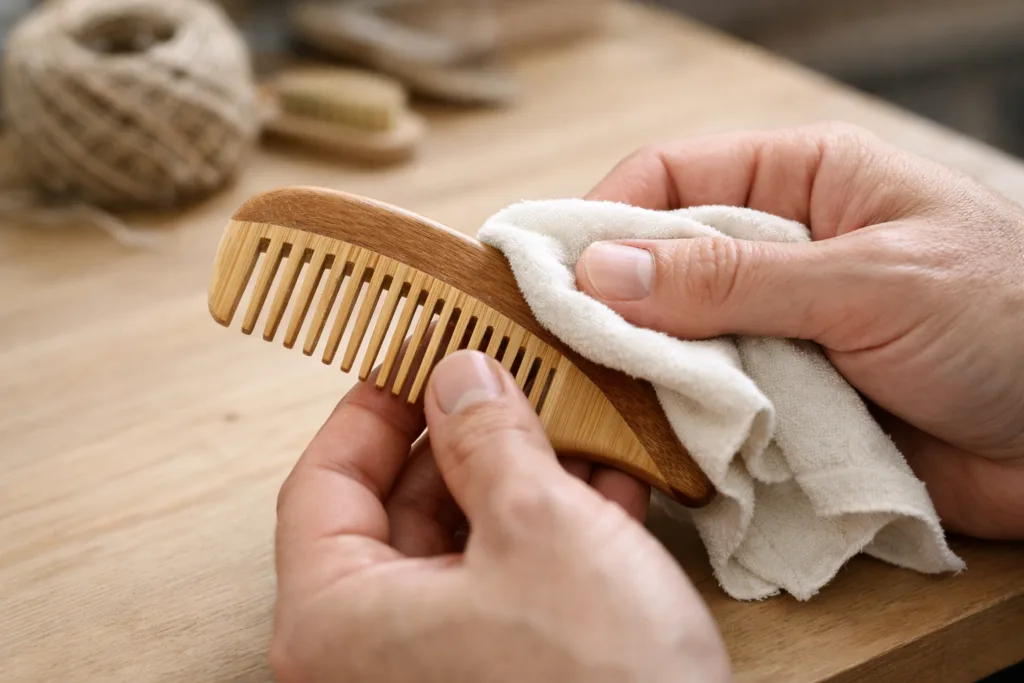
- Wipe gently with a damp cloth—never submerge it in water.
- If needed, use a drop of mild, natural soap. Rinse soap residue off with a damp, clean cloth.
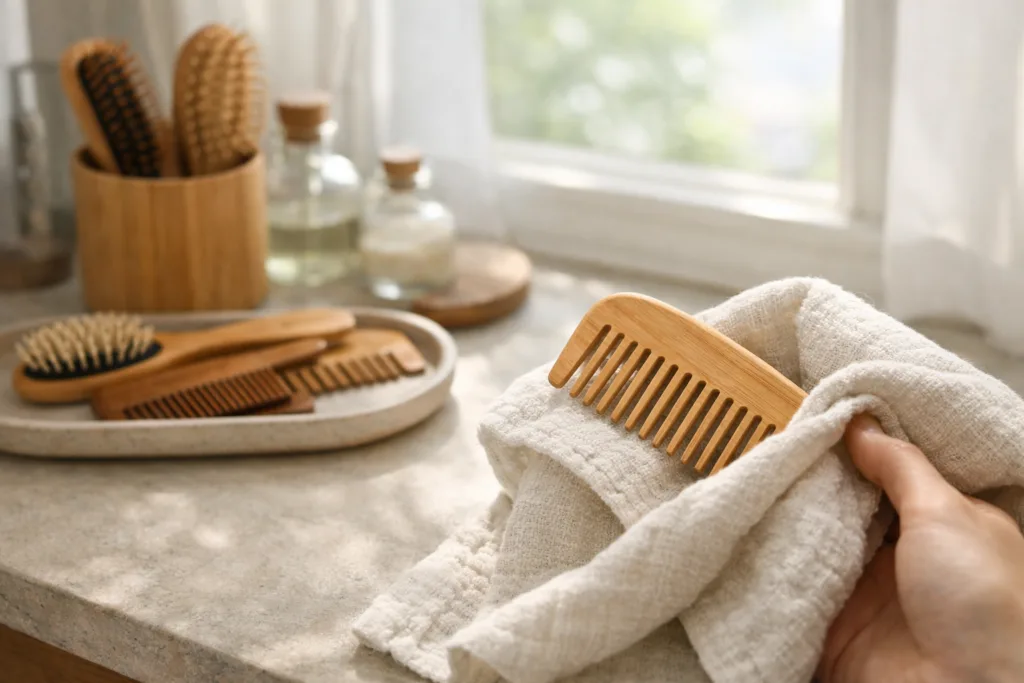
- Dry the comb immediately with a soft towel; avoid lengthy air drying.
- Apply a light coat of nourishing oil (e.g., olive, jojoba, or coconut) every few weeks. This prevents the wood or bamboo from drying out and cracking.
Step-by-Step Guide: How to Clean Your Wooden Comb
Step 1: Remove Hair and Debris
Start by picking out any loose hair with your fingers. A small, soft brush or an old toothbrush can help sweep away stubborn lint or residue. Take care to brush along the comb’s grain to avoid splintering.
Step 2: Wipe Down the Comb
Dampen a lint-free cloth with water. Gently wipe each tooth and the handle, making sure not to soak the comb. For heavier dirt or residue, dampen the cloth with a mix of mild soap and water, but keep moisture to a minimum.
Step 3: Rinse Carefully
If soap was used, wipe the comb again with another clean, damp cloth to remove any remaining suds. This is especially important with bamboo combs, as soap residue can lead to discoloration over time.
Step 4: Immediate Drying
Blot moisture off with a soft towel. Never leave your comb to dry in sunlight or near heat sources, as this can warp or crack the wood over time.
Step 5: Nourish with Oil
For added shine and durability, rub a few drops of your chosen oil onto the comb, focusing on dry or dull-looking areas. Buff gently with a dry cloth. This step helps prevent splintering, especially for combs that see heavy daily use.
Don’ts of Cleaning a Wooden or Bamboo Comb
- Don’t soak wooden or bamboo combs in water. Prolonged exposure causes swelling, warping, or mold.
- Don’t use harsh detergents, bleach, or chemical cleaners. These can strip finish and damage fibers.
- Don’t expose to direct heat, radiators, or sunlight for drying. Sudden temperature shifts can crack the comb.
- Don’t scrub with abrasive pads; rough cleaning damages the surface and can cause splinters.
Troubleshooting Common Cleaning Issues
What if Your Comb Still Smells?
If your wooden or bamboo comb develops an odor, sprinkle a bit of baking soda on a damp cloth and wipe gently. Avoid letting baking soda sit for too long; rinse and dry immediately. Sometimes natural wood absorbs strong fragrances or moisture from the environment, especially in humid climates.
Sticky or Stubborn Product Build-Up
For persistent residue, a very mildly soapy cloth repeated twice works better than stronger detergents. Rinse well and always dry thoroughly. If the buildup persists, it may be time to consider a new comb.
Tips for Maintaining Your Comb
- Clean your comb weekly to avoid crusted buildup.
- Store wooden and bamboo combs in a dry place, away from direct sunlight and steamy bathrooms.
- Check for cracks, splinters, or raised grain after each cleaning—it’s a sign your comb might need oil treatment or, if severe, replacement.
- If your wooden comb travels with you, consider a travel case for added protection.
How Often Should You Clean a Wooden or Bamboo Comb?
For people who use styling products or have oily hair, weekly cleaning is best. For others, every two weeks suffices. Never let months pass between cleanings, as stubborn gunk becomes much harder to remove and will reduce your comb’s life span. Integrate comb-cleaning into your overall hair care routine for best results.
Differences Between Wooden and Bamboo Comb Care
While both types require gentle handling, bamboo is technically a grass and may react faster to moisture than most hardwoods. Thus, bamboo combs are extra sensitive to soaking or humid environments. Both benefit greatly from periodic oiling, though some bamboo manufacturers pre-treat combs for extra moisture resistance. If you’re curious about material impact on scalp and hair, see our guide on Bamboo vs. Neem Wood Combs.
Can You Disinfect Wooden or Bamboo Combs?
Disinfecting is sometimes necessary, particularly for combs used by multiple people. Avoid alcohol or bleach—these chemicals dry and crack natural materials. Instead, wipe down with a diluted tea tree oil solution, then rinse thoroughly with a damp cloth and dry as described above. The antibacterial properties of tea tree oil help maintain hygiene without harming the comb’s integrity.
Why Wooden Combs Last Longer with Proper Care
Wooden and bamboo combs, when properly maintained, outlast most plastic alternatives and minimize static and frizz. This not only saves money but aligns with eco-friendly values. Using mild cleaning methods preserves the comb’s finish and prevents warping, making your investment last for years, if not decades. Manufacturers like Bamboo Wood Art select mature, kiln-dried bamboo and smooth sanded surfaces to maximize durability and minimize warping from repeated cleaning.
Common Myths About Cleaning Wooden and Bamboo Combs
- Myth: Hot water kills all bacteria.
Reality: Hot water can damage the comb; proper drying and mild cleansers are safer. - Myth: Wooden combs don’t need cleaning because they’re “natural.”
Reality: They attract oils and buildup like any other utensil. - Myth: Oil treatments are optional.
Reality: Periodic oiling is essential for keeping combs from splintering.
When to Replace Your Wooden or Bamboo Comb
With diligent care, a quality wooden or bamboo comb can last for years. However, replace your comb if you notice:
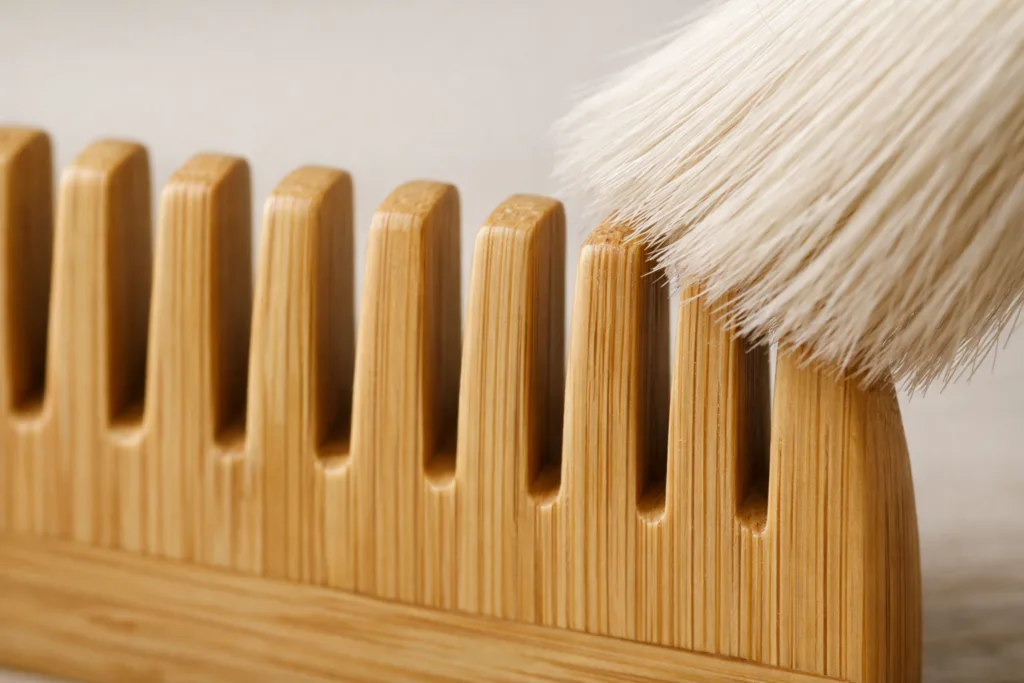
- Deep cracks or splits running through the teeth or handle
- Persistent mold smell
- Warped or rough teeth that pull hair or scratch the scalp
Regular inspections will help you decide if it’s time for an upgrade.
Cleaning Your Wooden Comb: Do’s and Don’ts
To recap, here are the most important do’s and don’ts:
- Do: Clean with soft brushes, use a damp cloth, dry immediately, and oil regularly.
- Don’t: Soak in water, use harsh cleaners, or expose to direct sunlight or heat while drying.
Sustainability and Comb Care
Caring for your wooden or bamboo comb supports a sustainable lifestyle. Natural materials are biodegradable, but only if kept free of synthetic residues. Maintaining your comb ensures it serves your grooming needs for longer, which reduces waste. Bamboo Wood Art prioritizes using responsibly harvested bamboo and food-safe finishes in every comb—good for your hair and better for the planet.
Advanced Care: Deep Cleaning Tips
Sometimes regular cleaning isn’t enough. For deep cleans: dampen a cloth with diluted white vinegar, wipe gently, then rinse with a water-dampened cloth and dry immediately. Vinegar naturally sanitizes without harming the wood or bamboo fibers if used sparingly. Make this a bi-annual ritual if you notice excess buildup.
Storage Best Practices
After cleaning, ensure your comb is completely dry before storing it. Use a pouch or case for travel. Avoid tossing into damp bathrooms or near sinks, as moisture promotes warping and mildew. If your bathroom is usually humid, find a high shelf or airier spot for storage to extend the comb’s lifespan.
Brand Insights: Manufacturing Features that Enhance Cleanability
Manufacturers that kiln-dry and sand combs to a smooth finish make cleaning easier and reduce the risk of splinters. Bamboo Wood Art, for example, sources mature bamboo that is carbonized for moisture resistance, minimizing mold and warping risks—features you may want to ask about when sourcing custom combs for your business or home.
Recommended Products for Wooden and Bamboo Comb Care
- Natural oils (olive, jojoba, coconut) for conditioning
- Soft-bristled cleaning brushes
- Linen or microfiber towels for drying
- Travel comb case for on-the-go protection
DIY Comb Oil Blend: A Simple Recipe
Mix equal parts olive and coconut oil, add a drop of tea tree oil for antibacterial qualities. Apply sparingly to your clean comb for shine and longevity.
Reusing or Upcycling Old Wooden Combs
When your wooden comb finally wears out, don’t toss it—repurpose it as a plant label in your garden or sand it down for use in craft projects. Natural wood and bamboo decompose over time, making them an eco-friendly choice even after their grooming days are over.
Professional Cleaning Services: Are They Worth It?
If you own a luxury wooden comb or a family heirloom, professional cleaning can restore luster without risking damage. However, for everyday combs, gentle DIY cleaning is almost always sufficient. When in doubt, consult the comb’s manufacturer for care recommendations.
Conclusion
With proper care, your wooden or bamboo comb will remain a sustainable, healthy choice for your hair. Follow these simple do’s and don’ts to maximize its lifespan and effectiveness. Remember, a clean comb contributes to better scalp health, a smoother appearance, and reduces your environmental impact. Invest just a few minutes per week and enjoy the rewards of mindful grooming for years.
Frequently Asked Questions
How often should I clean my wooden or bamboo comb?
Ideally every week if you use hair products or have oily hair; otherwise, every two weeks works for most people.
Is it safe to use soap on a wooden comb?
Mild soap is safe when used sparingly and followed by a thorough rinse and immediate drying to prevent wood or bamboo from absorbing moisture.
Can I remove mold from a bamboo or wooden comb?
Light surface mold can be wiped away with a vinegar solution and dried immediately; extensive mold usually means it’s time to replace the comb.
Should I oil my comb after each cleaning?
No, oiling once every few weeks or whenever the wood looks dry is sufficient; too much oil can attract dirt.
What’s the best way to dry my wooden comb?
Use a soft towel to blot dry immediately—avoid air drying in direct sun or near heaters to prevent warping.
Can I use disinfectant wipes on a wooden or bamboo comb?
Most commercial disinfectant wipes contain harsh chemicals that can damage natural materials; use a mild tea tree oil solution instead.