Introduction to Color Customization for Bamboo and Wood
Color customization transforms bamboo and wood products beyond their natural look, allowing vibrant styles, unique aesthetics, and improved durability. Whether you’re creating furniture, household goods, or decorative accents, choosing the right color finish opens up creative possibilities while also boosting protection and value. In this guide, we’ll explore the major approaches—paints, stains, and carbonization—as they apply to bamboo and wood finishes, color treatments, and custom solutions.
- Overview of color finishing options: paints add shape and style, stains highlight organic patterns, and carbonization creates depth with warm, natural tones.
- Benefits of customizing color for bamboo and wood products: maximizes appeal, aligns with interior designs, enhances personal or retail branding, and provides added protection against wear and aging.
Looking to create a custom line of bamboo or wood products? As an established bamboo and wood products manufacturer, we offer tailored color finishing at scale—learn more about our customization options.
Paints: Adding Vibrant and Protective Layers
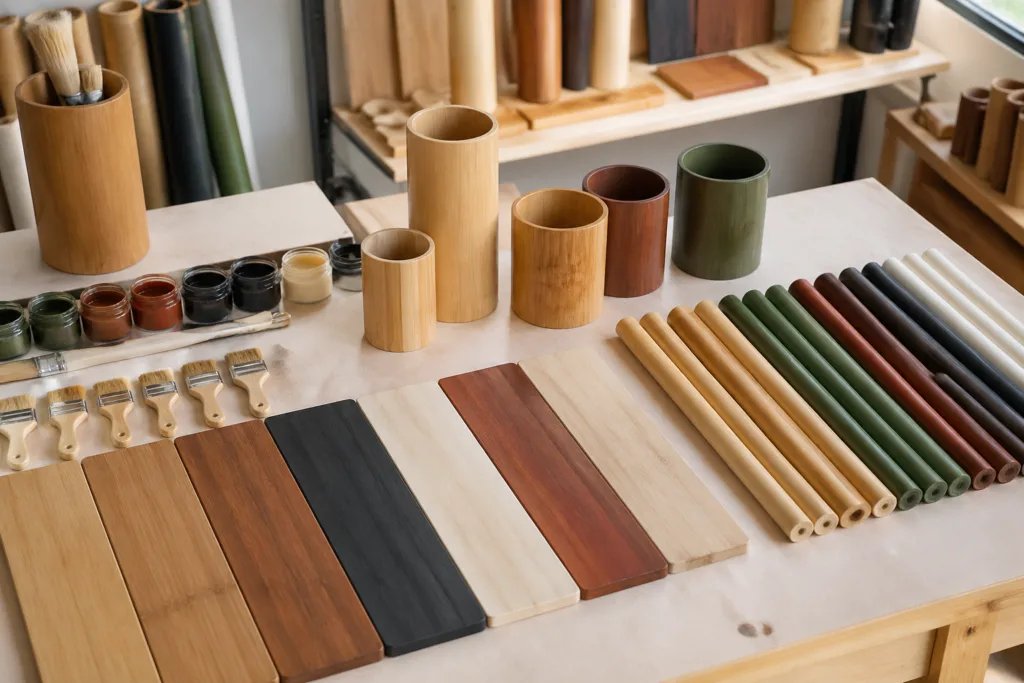
Paints are one of the most popular ways to completely transform the color of bamboo and wood items. They serve both functional and decorative purposes, forming a hard shell that blocks moisture and damage while offering dazzling color options.
- Types of paints suitable for bamboo and wood:
- Latex/acrylic: Great for flexibility, low odor, vivid colors, and easy clean-up for indoor use.
- Oil-based: Offers intense color and high durability; ideal for outdoor goods and high-use surfaces.
- Specialty paints: Chalk, milk, and mineral paints give unique finishes for artistic or vintage effects.
- Spray enamels: Ensures uniform coverage on intricate bamboo patterns or small wooden pieces.
- Application techniques and tips:
- Start with clean, dry, lightly sanded bamboo or wood for maximum adhesion.
- Sealers or primers create a stable base, especially for bamboo, which can absorb paint unevenly.
- Multiple thin coats prevent drips and preserve fine grain patterns.
- Airbrushing works well for even finishes on curved or woven bamboo basket surfaces.
- Pros and cons of painting bamboo and wood:
- Pros: Unlimited color choices, additional moisture and sunlight protection, hides imperfections.
- Cons: Conceals grain/natural beauty, prone to chipping if not applied properly, sometimes less eco-friendly.
Stains: Enhancing Natural Beauty
Staining is favored for letting the organic grain of bamboo and wood shine through, infusing subtle hues that deepen visual appeal. Stains are absorbed into the material, highlighting patterns and creating a warm, timeless look.
- How stains interact with bamboo and wood grains: Unlike paint, stains soak into fibers, accentuating patterns and variations. On bamboo, vertical and horizontal grains can absorb stain differently, creating distinct looks. For hardwood, stains bring out swirls, knots, and rings.
- Popular stain colors and effects: Traditional tones like walnut, cherry, and oak for wood; honey, amber, and espresso shades for bamboo. Whitewashing or gray-toned stains create modern, Scandinavian effects. Layering can produce two-tone or rustic finishes.
- Steps for staining bamboo and wood surfaces:
- Sand lightly and wipe clean to remove dust and open pores.
- Apply an even coat of stain with a brush, pad, or cloth, working with the grain.
- Let it soak in (from 5 to 30 minutes), then wipe off the excess for a uniform tone.
- Finish with a clear topcoat for protection when the stain is fully dry.
Carbonization: Unique Darkening Method
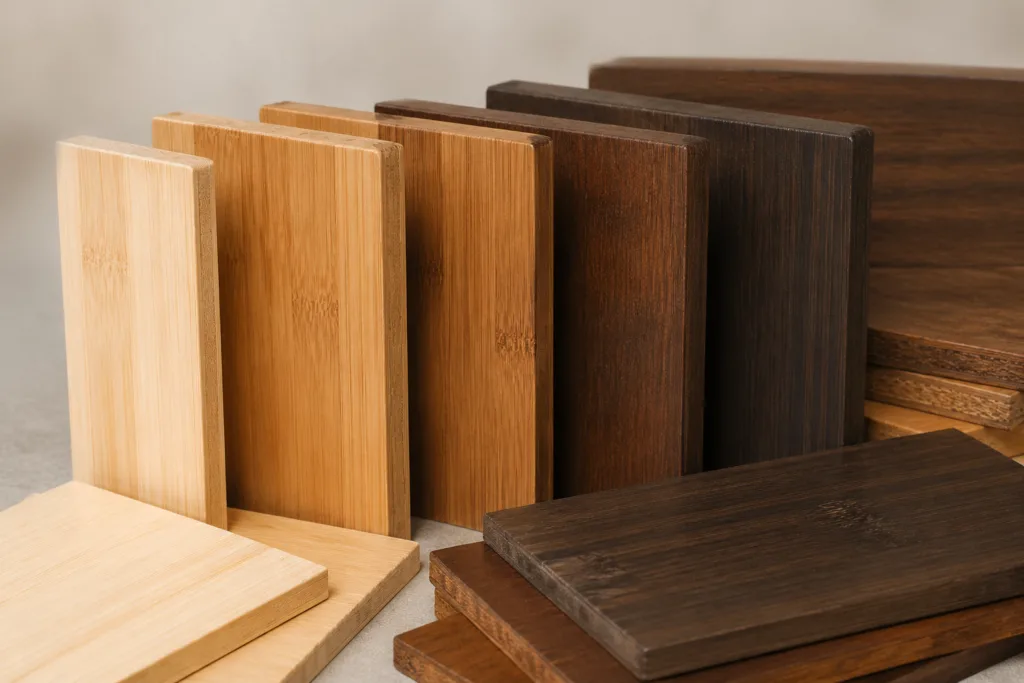
Carbonization is an eco-friendly process that darkens bamboo and some woods by heat-treating them, changing their color from the inside out. This method does not involve surface coatings but alters the internal sugars, resulting in rich brown or caramel tones without paint or stain chemicals.
- Process of carbonizing bamboo and wood: Material is exposed to high steam or direct heat in controlled environments. For bamboo, this replicates kiln-baking—an approach often used to create darker cutting boards or shelving.
- Visual and structural impacts of carbonization: Produces an even, deeply-penetrating caramel or coffee hue. The process also softens fibers slightly, making items feel smoother but possibly a bit less hard-wearing compared to raw or stained wood. For some retail shelving projects, the muted color creates a luxurious, spa-like ambience. Rain Chen from Bamboo Wood Art recommends carefully balancing carbonization temperature; overdoing it can make bamboo too soft for high-load applications.
- Maintenance considerations: Carbonized bamboo and wood are more resistant to mold but can scratch easily if not sealed or used in high-traffic zones. Regular gentle cleaning is key to maintaining their signature tone.
Choosing the Right Color Finish for Your Project
Selecting the ideal color finish for bamboo and wood depends on your product’s purpose, aesthetic goals, and environment. The following factors and comparison chart can guide your decision:
- Durability: Paints offer the most surface protection, followed by stains with sealer. Carbonized surfaces excel at resisting humidity but can be softer.
- Aesthetics: Paint hides grain but allows bold design; stains and carbonization preserve or enrich natural beauty.
- Environment: Carbonization uses no chemicals; water-based paints and natural oils are safest for food-contact goods. For kitchenware, review FDA standards for wood surfaces.
| Finish Type | Color Options | Grain Shown? | Best For | Durability |
|---|---|---|---|---|
| Paint | Unlimited | No | Decor, Kids Items | High |
| Stain | Natural Tones | Yes | Furniture, Tableware | Moderate to High (with sealer) |
| Carbonization | Brown/Coffee/Carmel | Yes | Boards, Spa, Organizers | Moderate |
Retailers can further optimize shelf appeal by pairing color customization with smart packaging; see our guide on customizing packaging for bamboo and wood goods for ideas.
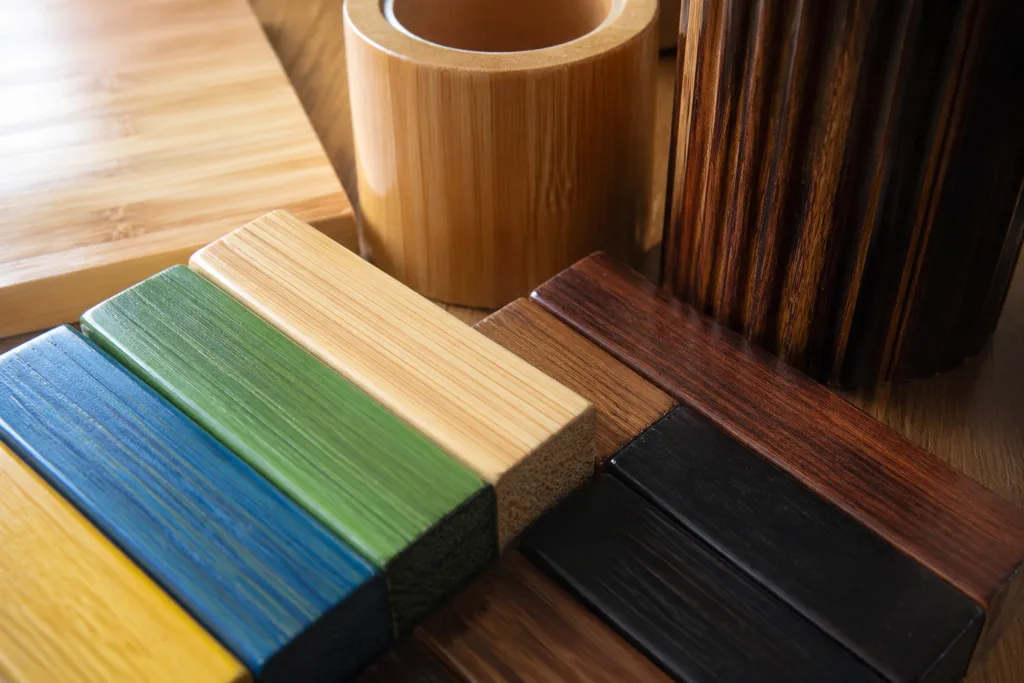
Color Customization: Paints, Stains, and Carbonization
Bamboo and wood finishes, color treatments, and surface customization bring together creativity and craftsmanship for businesses and households alike. Choosing paints, stains, or carbonization affects not only how your product looks, but also how it performs and lasts over time. Practical considerations—like traffic levels, cleaning needs, and environmental safety—should always guide your selection. For high-volume or custom projects, manufacturers offer sampling and prototype runs so you can evaluate finishes firsthand before committing to production. Whatever your vision, thoughtful color customization ensures your bamboo and wood products stand out and stay beautiful for years to come.
Frequently Asked Questions
Can I paint bamboo and still see the grain?
Most paints fully cover bamboo grain, but diluted or semi-transparent paints can allow the texture to show through slightly.
Which is more durable: stain or carbonization?
Stain with a protective sealer usually provides more surface durability than carbonized bamboo, which may be softer but is more moisture resistant.
Is carbonized bamboo food safe?
Yes, if left uncoated or finished with food-safe sealers. Always verify finishes meet food safety standards when used for kitchenware.
Why does bamboo take stain differently than wood?
Bamboo’s cellular structure and high silica content absorb stains more unevenly—vertical vs. horizontal grain affects results the most.
How do I maintain carbonized bamboo surfaces?
Wipe gently with a damp cloth and avoid harsh scrubbers. Use mineral or natural oils occasionally to restore sheen.
What finish is best for products used outdoors?
Paints (especially oil-based or outdoor-rated) offer superior weather resistance; stains with exterior sealers also work well. Carbonized finishes are less suited to direct sun and rain.