Introduction: Why Small-Space Storage Demands Smart Shelf Choices
Finding the right shelf can make or break the organization of a small space. When every square meter counts—whether in homes, hospitality, or retail—selecting shelving that’s engineered for efficiency transforms not just how much you can store, but the overall usability and feel of the room. This is where the debate of bamboo corner shelf vs narrow shelf becomes crucial. Each design fits distinct scenarios; understanding their advantages and limitations means better decisions for sourcing, procurement, and functional layout planning.
For readers comparing product options or planning their next sourcing decisions, a useful next step is to discover quality bamboo shelves from our manufacturer catalog. This resource highlights Bamboo Wood Art’s capabilities in custom bamboo shelving, design variations, finish options, and supplier practices essential for buyers and sourcing professionals seeking the right manufacturer partnership.
Bamboo Corner Shelf vs Narrow Shelf: Core Comparison
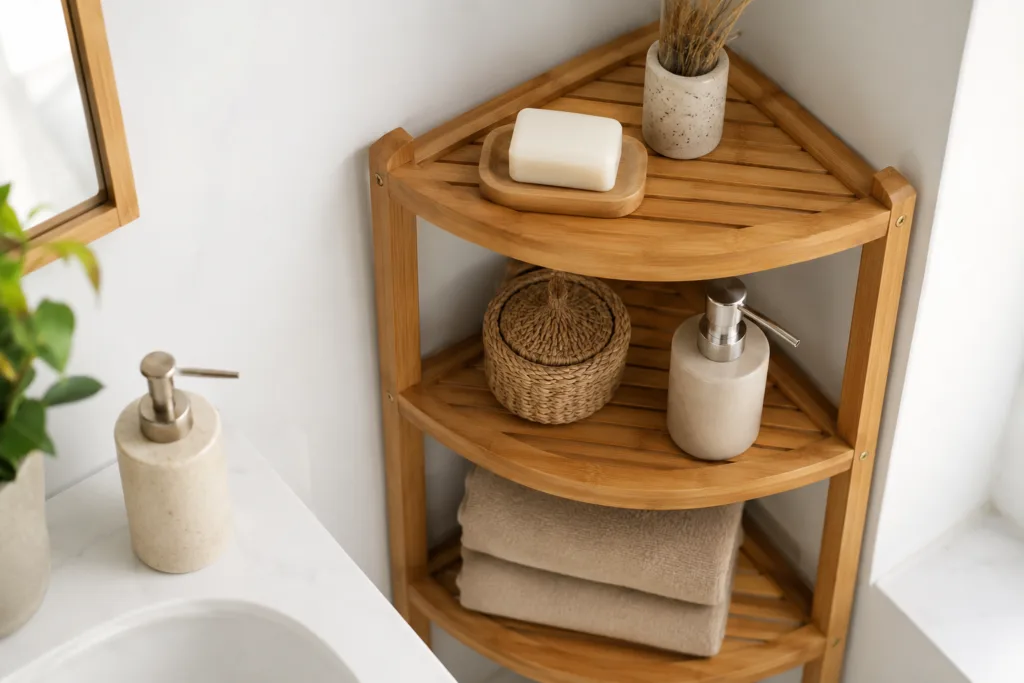
The challenge of organizing small areas
Efficient storage starts by acknowledging every small room has unique obstacles: wasted corners, narrow passageways, and limited wall space. The right shelf design can recover otherwise dead zones and upgrade functionality for users, staff, or customers.
Overview: Bamboo Corner Shelf vs Narrow (Slim) Bamboo Shelving
Bamboo corner shelves are triangular or wedge-shaped units tailored to fit snugly in the intersection of two walls, utilizing angles that standard racks cannot. Narrow bamboo shelves are typically tall and slim, running parallel to walls or fitting within tight gaps between furniture or appliances. Each excels in different small-space use cases.
Purpose of this head-to-head comparison
This guide offers detailed, manufacturer-informed advice for procurement teams, retailers, and designers choosing between bamboo corner shelves and narrow bamboo shelves to maximize storage in constrained environments—emphasizing practical selection logic over trend-based or purely decorative considerations.
Core Differences: Corner Shelves vs Narrow Shelves
Design and spatial footprint
Corner shelves are engineered to reclaim unusable corners, presenting a radial or triangular format. They minimize protrusion into walkways by integrating with wall angles. Narrow shelves, on the other hand, have a substantially smaller width and longer vertical profile, ideal for lining single walls or slotting into gaps beside appliances, doors, or beds.
Access and reachability (usability logic)
Bamboo corner shelves may present deeper storage at the rear corner but can limit reach for smaller or heavy items. Narrow shelves allow full access along the entire shelf edge but may crowd the passage if too deep, emphasizing the need for balanced design dimensions in small spaces.
Layer/level utilization and load distribution
Corner designs tend to support a wider platform per level, spreading weight diagonally, while narrow shelves frequently rely on a tall and slim frame, with load focused closer to the vertical supports. Proper bamboo fabrication and joinery are essential to maintain stability, especially for high-load or tall-narrow applications.
When to Choose a Bamboo Corner Shelf
Ideal room and space scenarios
- Unused bathroom corners, where wall space is often interrupted by fixtures
- Kitchen nooks, making the most of counter or meal prep area corners
- Entryway corners, solving the footwear, keys, or bag drop dilemma without blocking traffic
Pros: maximizing unused angles, visual openness, floor footprint
- Recovers wasted corner space with minimal visual clutter
- Keeps walkways open by pushing mass outward into the least-trafficked area
- Offers broad shelf layers for grouping items such as toiletries, spices, or small décor
Limitations: accessibility, item type suitability
- Smaller or frequently used items may be hard to reach if pushed deep into the back corner
- May be less suitable for heavy loads unless well-braced; always check join construction and bamboo thickness in manufacturing specs
When to Choose a Narrow (Slim) Bamboo Shelf
Ideal placement: tight corridors, limited wall space, beside furniture
- Plugging vertical gaps in bathrooms or kitchens
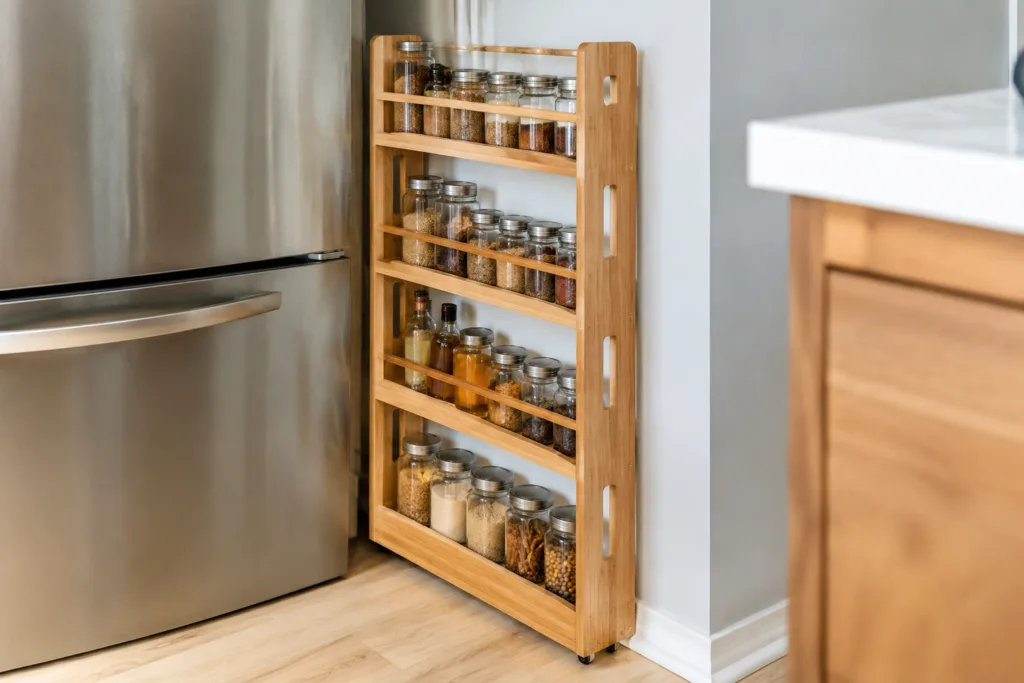
- Between a fridge and a wall
- Beside beds for books, lamps, or nighttime essentials
- In entryways along a wall without intruding into the room’s functional space
Pros: vertical use of space, easy reach along all layers, modular potential
- Makes the most of height where width is lacking
- Full access to each layer along the length of the shelf
- Easily configured as modular—can combine multiple units or add to existing shelving systems
Limitations: stability, capacity per layer, floor clutter
- Stability can be an issue for very tall/narrow designs—anti-tip hardware or wall mounting is recommended
- Limited width may not suit wide item types
- Open shelving at foot height sometimes collects dust or clutter if not actively managed
Storage Efficiency & Access Trade-offs
Capacity calculations: corner vs narrow layouts
Corner shelves typically deliver more surface area per shelf but may have dead zones (hard-to-reach back corners) for flat items. Narrow shelves excel in stacking small, similarly sized items upward, though each individual shelf footprint is less. Therefore, choose corner shelves for grouped, bulkier storage; choose narrow shelves for high-turnover, small-item vertical stacking.
Ease of retrieving/placing items by location and shelf type
Everyday-use or high-frequency items are best placed on narrow, waist-height shelves. Corner shelves function well for items accessed less frequently, or where grouped access (e.g., a set of toiletries or grouped pantry jars) is valued more than single-object speed.
Examples: toiletries, kitchen spices, shoes, books, décor
- Toiletries: Use corner shelves in compact bathrooms; narrow shelves beside vanities for regular reach.
- Kitchen spices: Narrow shelves maximize spice accessibility; corner shelves house grouped jars or small appliances out of the main workflow.
- Shoes: Corner units for entryways with pooled storage; narrow shelves for vertical shoe stacking beside entry doors.
- Books/décor: Both perform well; the choice depends on visual openness (corner) versus maximum vertical stacking (narrow).
Room-by-Room Application Scenarios
Bathroom: fitting shelving to tight corners and gaps
Bathrooms present unique moisture, space, and access constraints. Bamboo’s natural resilience to humidity, especially if properly finished, makes corner shelving an efficient choice for wasted shower or vanity corners. For slim wall gaps, opt for narrow vertical units that keep daily essentials within arm’s reach and minimize clutter around sinks or toilets.
Kitchen: making small food prep and storage areas work
In condensed kitchen layouts, reclaiming angles with a bamboo corner shelf can store less-frequently used cookware or display serving pieces. When routine access matters, a narrow bamboo shelf beside a refrigerator, cooker, or in a pantry alcove ensures spices, condiments, or utensils remain organized and accessible. For a look at the broader versatility of bamboo storage, Bamboo Wood Art’s wide range of bamboo products for storage and organization includes examples tailored to these niche uses.
Entryway: organization without overcrowding
The fight against entryway clutter is perennial. Corner bamboo shelves collect shoes, baskets, or key trays without intruding on pathways. Narrow shelving—ideally with enclosed bottom layers—keeps daily items handy by the door but requires thoughtful sizing to avoid tripping hazards.
Small Bedroom: optimizing vertical space and aesthetics
Bedrooms benefit from either shelf style depending on layout: corner units for bedside catch-alls or display, slender vertical shelving for books or small electronics. Here, matching finish and joinery quality with room decor has both practical and aesthetic impact. Bamboo Wood Art has seen custom bedroom shelving projects succeed when emphasis is placed on surface finishing—use UV or lacquer-resistant coatings for durability in active family spaces.
Case specifics: moisture-resistance (for bamboo), stability in active areas
Proper finishing is non-negotiable for longevity in bathrooms or kitchens. Moisture-resistant coatings protect the bamboo, preserving color and structure. In active rooms or where children may be present, stability features—like anti-tip hardware for narrow shelves—are priority product selection criteria.
Fast Decision Table: Which Shelf Suits Your Space?
| Room Type | Recommended Shelf | Benefits | Key Considerations |
|---|---|---|---|
| Bathroom Corner | Bamboo Corner Shelf | Maximizes unused area, open floor | Needs proper finish; grouped items best |
| Kitchen Gap | Narrow Bamboo Shelf | High-frequency reach, modularity | Check load/stability, fit with appliances |
| Entryway | Depends on angle | Corner for pooling, narrow for vertical stacking | Floor footprint, avoid trip hazards |
| Small Bedroom | Narrow or corner (by wall shape) | Vertical book/utility storage or nightstand | Finish match, anti-tip for tall units |
Key decision factors
- Room shape and dimension constraints
- Type and volume of objects to be stored
- Frequency and ease of access required
- Layer width and load capacity needs
- Stability and durability priorities (especially for retail, hospitality, or small children)
Manufacturer/Procurement Considerations
Customization and finish options: corner vs narrow models
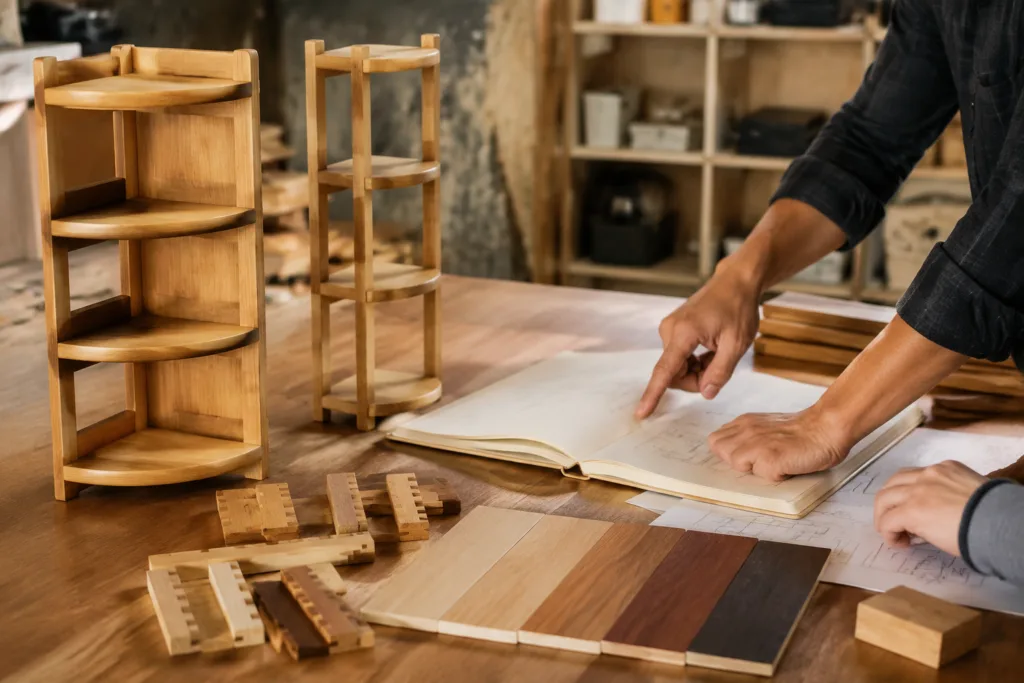
From a manufacturer’s perspective, both shelf types offer extensive custom possibilities—select shelf count, angle radius, overall dimensions, surface texture, and color finish for branding/retail presentation. UV, lacquer, or oil finishes enhance moisture resistance and visual appeal. For tighter commercial or project fit, request design drawings prior to bulk production, especially when optimizing for non-standard corners or ultra-narrow wall gaps.
Sourcing and MOQ implications
Some suppliers may set higher minimum order quantities (MOQs) for complex corner units due to fabrication and joinery requirements. Narrow shelf formats, especially standard-width modular systems, may support lower MOQs or faster lead times due to manufacturing process streamlining.
Durability and cleaning for different environments
Specify smooth, sealed finishes for kitchens and bathrooms to prevent moisture ingress and simplify cleaning. For retail displays (e.g., for books, shoes, or beauty products), prioritize scratch resistance and consistent bamboo grain appearance.
Retail and packaging suitability
Corner shelves often ship disassembled for compactness, with flat-pack-friendly triangular or sector formats. Tall narrow shelves demand stable packaging—minimize warping or damage in transit with edge-protective inserts. For detailed box and visual presentation, see our insights into custom wood product options for shelving and racks as well.
Bamboo Corner Shelf vs Narrow Shelf
Choosing between a bamboo corner shelf and a slim bamboo shelf is rarely a matter of one being universally superior. Site conditions, object frequency, and room flow all play a role. Most buyers benefit from assessing both shelf types within their intended context—sometimes, the best solution involves a mix, strategically installed for maximum effect. For creative application inspiration, reference our collection of creative ways to use bamboo in home decor and storage in both residential and display settings.
Conclusion: Matching the Shelf to the Space—Maximizing Functionality & Aesthetics in Small Areas
Bamboo shelving transforms cramped spaces when chosen with precision to layout and usage. Corner units are the undisputed champions of reclaimed angles, delivering clean lines and open walkways. Narrow vertical shelves thrive where access and stackable, modular repetition are needed. The right selection process weighs not only dimensions and object types but also how stability, finish, and commercial presentation will impact daily use and long-term value. Storage—and effective space management—starts with making informed, fit-for-purpose shelf choices that combine function and visual warmth. In small areas, that’s where value truly emerges.
Frequently Asked Questions
What are the main advantages of a bamboo corner shelf in a small bathroom?
Bamboo corner shelves maximize unused corner space, allow grouped storage for toiletries, and help keep floors clear, making them ideal for compact bathrooms with limited wall area.
When is a narrow bamboo shelf preferable to a corner unit?
Narrow bamboo shelves are best for filling vertical gaps, placing alongside appliances or furniture, and offering easy, full-length access to stacked items like books, spices, or shoes in limited wall spaces.
Are bamboo shelves moisture-resistant enough for kitchens and bathrooms?
When finished with high-quality coatings such as UV, lacquer, or oil, bamboo shelves provide solid moisture resistance, but it’s important to confirm finish standards with your manufacturer.
What stability considerations should I keep in mind with narrow bamboo shelves?
Tall and slim bamboo shelves can be unstable if not anchored. Using wall-mount hardware or selecting a broader base improves safety, especially in high-traffic or family areas.
How do I decide which bamboo shelf fits my retail or hospitality project?
Assess the footprint, shelf dimensions, frequency of access, and product type. Corner units work for grouped or display uses; narrow units are ideal for lineups or quick-access vertical needs.
Can these shelves be custom-branded or sized for wholesale procurement?
Yes, most manufacturers, including Bamboo Wood Art, offer custom dimensions, finishes, and branding options to suit unique spatial requirements and retail or GWP projects.