Introduction: Why Material Selection Matters in Desk/Table Top Procurement
When buyers compare a bamboo desk top with a traditional wood table top, the decision is rarely about appearance alone. In bulk purchasing, material choice affects stability, finish consistency, packaging risk, customization range, maintenance expectations, and how well the final product fits a retail or commercial program. A top that looks attractive in a sample can still create avoidable issues later if movement, supply practicality, or finishing limits were not reviewed early.
A useful next step for sourcing teams reviewing material options is to Explore a detailed bamboo vs wood desk top comparison in the broader context of how a manufacturer presents bamboo and wood product categories, customization direction, and practical product development logic. Readers planning the next sourcing step may want to explore that page to better understand how product range and material positioning connect to real manufacturing decisions.
This guide is written for buyers in the comparison and selection stage. The goal is not to declare one material universally better. Instead, it is to show where bamboo often performs well, where traditional wood still makes sense, and what procurement teams should check before moving from sample review to volume order.
Bamboo Desk Top vs Wood Table Top: Core Material Differences
How bamboo is built
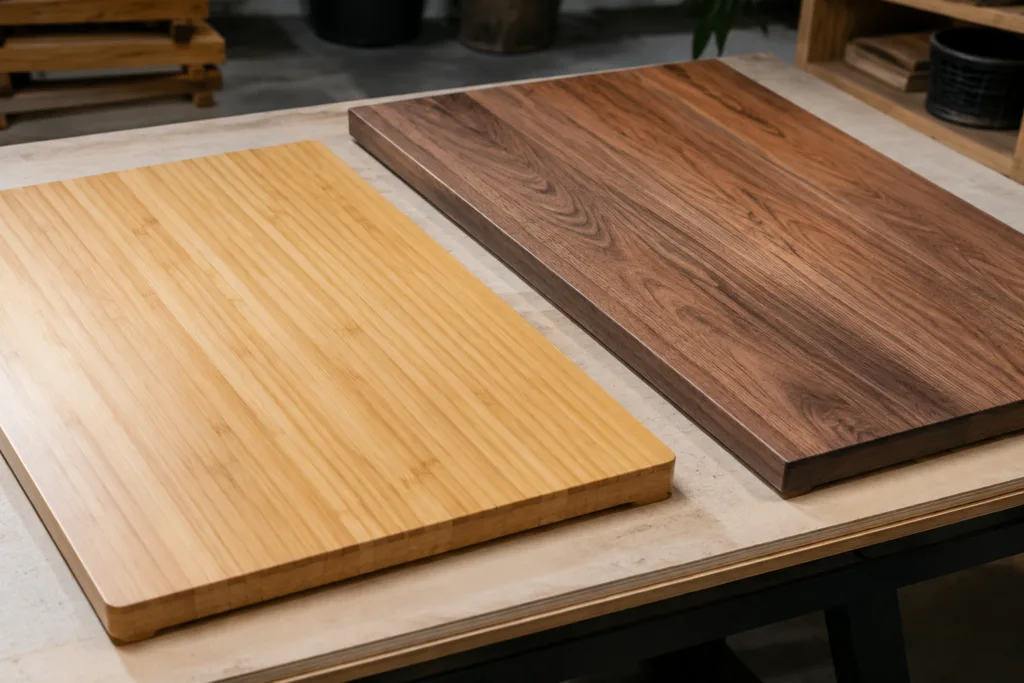
A bamboo desk top is typically made from processed bamboo strips laminated into panels. That structure gives bamboo a distinctive linear grain pattern and a more engineered look than many solid wood tops. Because the material is built from smaller strips, buyers usually assess panel quality by lamination consistency, join lines, tone variation, and finish evenness rather than by the natural board pattern seen in solid lumber.
How traditional wood tops differ
Traditional wood table tops may be solid wood, finger-jointed wood, edge-glued panels, veneer over engineered core, or mixed-construction designs. This means “wood” is not one single comparison point. Hardwood species, grain direction, density, and board width all influence performance and appearance. Buyers should ask what the wood construction actually is before comparing cost or durability against bamboo.
Why this matters in sourcing
At procurement level, bamboo and wood differ in repeatability. Bamboo often gives a more standardized look across batches, while wood usually offers broader variation in grain, color, and visual character. That can be a strength or a challenge depending on the product line. For a clean, modern range, consistent bamboo panels may be easier to manage. For premium rustic or natural collections, wood variation may be part of the value.
Structural Stability and Performance Considerations
Movement under climate changes
All natural-based materials respond to humidity and temperature changes, but they do not respond in the same way. A well-made bamboo desk top often appeals to buyers because its laminated structure can support better visual consistency and, in many cases, more predictable panel behavior. Solid wood tops can expand or contract more visibly depending on species, width, moisture condition, and installation method.
Construction matters more than marketing terms
Stability depends heavily on manufacturing quality. Adhesive control, moisture management, panel pressing, sanding accuracy, and storage conditions all shape the final result. At Bamboo Wood Art, this is usually where professional buyers focus their questions, because a good material can still underperform if panel construction and finishing discipline are weak.
Edge performance and long-term use
Desk tops often fail first at edges and corners. Repeated impact, poor sealing, or weak packaging may cause chips, finish cracks, or visible wear. Buyers should inspect edge finishing on both bamboo and wood samples, especially if the product will be used in offices, student furniture, adjustable desks, or shipped through parcel networks.
Surface Appearance: Grain, Texture, and Visual Consistency
The look of a bamboo desk top
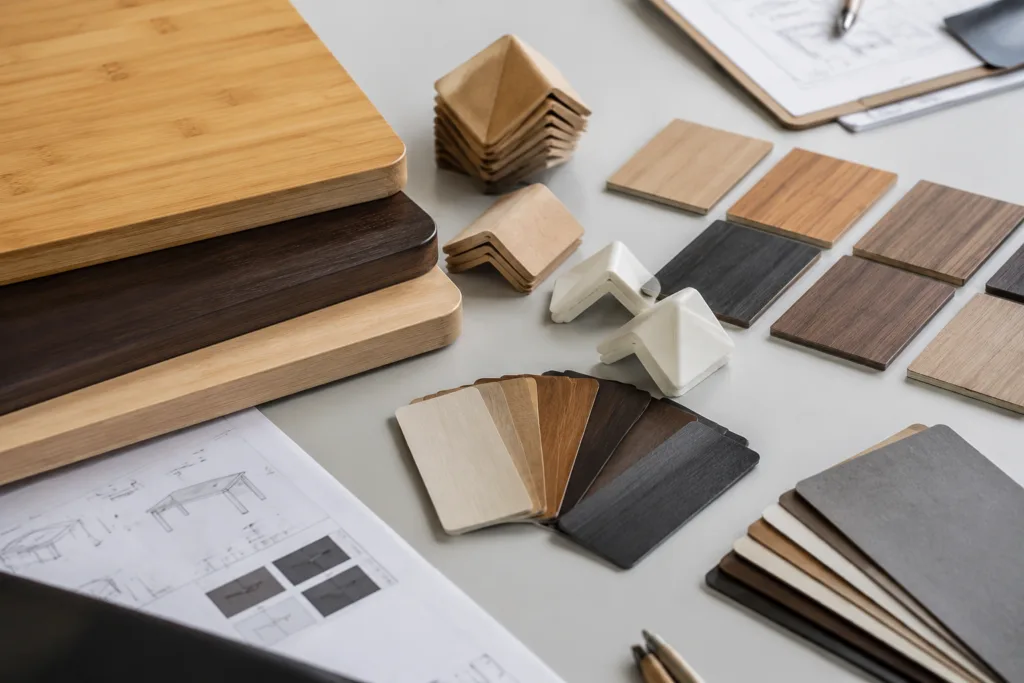
A bamboo desk top usually presents a clean, narrow-grain pattern. Depending on construction and finishing, the surface can look modern, minimal, warm, or slightly technical. For many commercial programs, this visual regularity is useful because it reduces the chance of one piece looking too different from another in the same shipment.
The look of traditional wood
Wood generally offers deeper natural variation. Knots, cathedrals, mineral streaks, grain shifts, and tone changes may all appear. For some brands, that richness supports a more premium or handcrafted identity. For others, it becomes a quality-control challenge if customers expect uniformity.
What buyers should define early
Before approving a material, define how much variation is acceptable. This should include:
- color range tolerance
- grain direction expectations
- knot acceptance or rejection
- join line visibility
- finish sheen consistency
Without these points in writing, sample approval can be misleading.
Load-Bearing Strength, Thickness Options, and Application Suitability
Strength is not only a material issue
Buyers often ask which is stronger: a bamboo desk top or a wood top. In practice, strength depends on more than material family. Thickness, span length, support frame design, mounting points, and intended load all matter. A thin top with poor frame support may fail regardless of whether it is bamboo or wood.
How thickness changes performance
Thicker panels usually improve stiffness and perceived quality, but they also add weight, cost, and shipping volume. For compact laptop desks or small workstation tops, a lighter panel may work well. For long office desks, conference surfaces, or tops with heavy monitor arms, buyers should review deflection risk and support requirements before selecting thickness.
Typical use-fit logic
| Factor | Bamboo Desk Top | Traditional Wood Top |
|---|---|---|
| Visual consistency | Usually more consistent | Often more variable |
| Natural character | Cleaner, more uniform | Richer, more distinctive grain |
| Weight planning | Depends on build and thickness | Depends strongly on species and core |
| Retail line repeatability | Often easier to standardize | May need wider tolerance control |
| Rustic or heritage styling | Usually less suited | Often better suited |
Customization Potential: Sizing, Thickness, and Finish Choices
Cut size flexibility
Both bamboo and wood can be customized, but the efficiency of customization depends on panel construction and factory workflow. Buyers developing private-label programs should ask which standard panel sizes are already optimized in production, because custom dimensions that fight the factory’s material yield can raise cost and lead time.
Edge profiles and shapes
Simple square edges are usually easiest to produce and protect in shipping. Rounded corners, beveled edges, cable cutouts, and ergonomic front curves may all be possible, but every added machining step increases process control needs. A manufacturer-led review is especially helpful when a brand wants visual differentiation without creating weak points.
Finish selection affects more than color
Finish choices shape stain resistance, touch feel, scratch visibility, and repair difficulty. Matte finishes often look modern but may show oil marks differently than semi-gloss finishes. Darker tones can appear premium yet highlight dust or surface wear faster. Buyers comparing bamboo and wood should review finish performance in the context of real end use, not only sample-board appearance.
For teams building a broader development program, it helps to compare how a custom bamboo products manufacturer approaches size control, finish options, and production practicality across related product categories.
Packaging, Transport, and Bulk Safety Concerns
Why good panels still arrive damaged
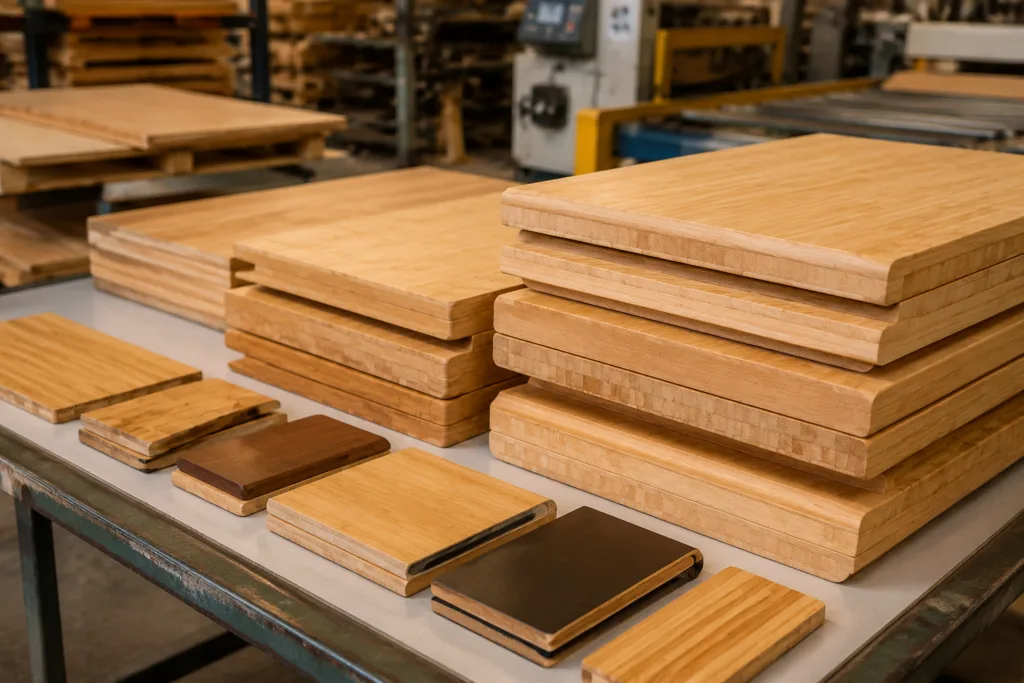
In bulk shipments, material performance is only part of the story. Corners, edges, and surfaces are vulnerable during handling, stacking, and final-mile delivery. Large tops may suffer from compression marks, abrasion, or corner crush if the packaging design is too light for the shipping method.
What procurement teams should review
- corner protection method
- surface interleaf materials
- carton strength and fit
- master carton stacking logic
- pallet layout for container loading
- drop-risk areas for parcel handling
Weight and shipping economics
Panel weight influences freight cost, manual handling, and breakage exposure. A slightly heavier top may feel more premium, but that advantage can weaken if it pushes the product into less efficient shipping tiers or increases damage rates. This is one reason sourcing teams should assess packaging and transport at the same time as material selection.
Furniture Types and Use Scenarios Suited to Bamboo vs Wood Desk Tops
Where bamboo often fits well
A bamboo desk top often suits modern desks, compact workstations, home office products, laptop tables, study desks, and retail lines that need a clean and repeatable look. It is also a practical choice when the brand wants a warm natural surface without heavy rustic variation.
Where wood often fits better
Traditional wood may be better aligned with executive furniture, farmhouse styling, statement dining surfaces, artisanal collections, or ranges where unique grain is part of the selling point. In many cases, wood works better when the customer expects visible natural character rather than consistency.
Hybrid thinking can be useful
Some buyers compare bamboo against solid wood too narrowly. The better question may be which construction best matches the target price, sales channel, and visual promise. A wood-veneer top, edge-glued panel, or mixed-material design may sometimes offer a better commercial balance than either extreme.
Bulk Purchasing Logic: MOQ, Supply Chain, and Manufacturing Practicality
MOQ should be reviewed by finish and specification
Minimum order quantity is rarely just a material issue. MOQ may change based on size, finish color, hardware inclusion, packaging type, and whether the top uses a standard factory process or a custom one. Buyers should ask for MOQ by SKU family, not only by product name.
Lead time risk is often hidden in customization
A standard bamboo desk top in an existing finish may be simpler to schedule than a wood top requiring special stain matching, selective grain sorting, or non-standard edge treatment. But this varies by factory setup. The right sourcing question is not only “what is your lead time?” but “which specification details create the biggest lead time changes?”
How manufacturer capability shapes the answer
Some suppliers are stronger in bamboo panel processing, while others are better set up for wood species selection, stain matching, or mixed-material furniture parts. Buyers comparing sources should review whether the factory operates more like a specialized bamboo workshop or a broader wood products manufacturer with different strengths in grain control, finishing, and construction options.
Retail, Custom Branding, and Product Development Opportunities
Consistency supports retail confidence
For retail programs, consistent appearance can reduce customer complaints, photography mismatch, and return risk. This is one reason many buyers see value in a bamboo desk top for modern retail collections. Product pages, packaging visuals, and catalog images are easier to standardize when surface variation is more controlled.
Wood can support stronger storytelling
Traditional wood often gives brands more room to build a story around species character, visual depth, and handcrafted appeal. That can be valuable in higher-priced collections, but it requires careful expectation setting. If the retail promise suggests uniformity while the actual wood varies naturally, the brand may create unnecessary friction.
Private-label development questions to ask
- Can the finish be matched across related products?
- Can packaging carry brand-specific insert needs?
- Can dimensions be standardized across a collection?
- Can the supplier support sample revisions efficiently?
- Does the material choice fit the intended retail photography style?
Cleaning, Care, and Maintenance: What Buyers Should Plan For
Daily use expectations
Most desk and table tops perform best with simple routine care: dry wiping, prompt cleaning of spills, and avoidance of harsh chemicals. Buyers should not assume end users will follow strict maintenance instructions, so the finish system should match realistic behavior.
What affects maintenance burden
Maintenance depends more on finish quality and surface texture than on whether the top is bamboo or wood alone. High-gloss surfaces may show scratches quickly. Open-grain finishes can trap dust. Dark stains can reveal wear in high-contact areas. A smooth, well-sealed top is usually easier to maintain in office and home settings.
Plan after-sales communication early
If a product is sold through retail or distribution, include simple care guidance in packaging or inserts. This small step helps reduce avoidable complaints tied to water exposure, rough cleaning methods, or unrealistic use conditions.
How to Compare Bamboo Desk Tops vs Traditional Wood Table Tops for Bulk Purchasing: Key Criteria for Sourcing Decisions
Start with the end market, not the sample
The best sourcing decisions begin with the target customer, target price band, and expected product story. A bamboo desk top may be the stronger choice for clean-lined, repeatable, retail-ready programs. A wood top may be the better fit for expressive grain and a more traditional furniture identity.
Evaluate risk in five practical areas
- appearance consistency across batches
- stability under real climate conditions
- finish durability in intended use
- packaging protection through the shipping model
- factory ability to repeat the approved specification
Do not compare only by sample beauty
A strong sample can hide future production issues. Buyers should compare approved samples, specification sheets, packaging plans, and production logic together. In many commercial projects, the best material is the one that balances appearance, repeatability, and supply reliability rather than the one that looks most impressive in isolation.
Key Decision Points for Sourcing: Checklist for Buyers
Material and construction checklist
- Is the top solid, laminated, veneer-based, or mixed construction?
- How much color and grain variation is acceptable?
- What thickness and support structure are required?
- What edge design best balances look and durability?
Commercial checklist
- What is the MOQ by finish and size?
- Which features increase lead time most?
- Can the finish be repeated across future orders?
- How will the product be packaged for its shipping route?
Approval checklist
- Has the surface tolerance been defined clearly?
- Have corner, edge, and underside details been approved?
- Has the buyer reviewed care guidance needs?
- Has packaging been tested against likely handling risk?
Conclusion: Making an Informed Choice Based on Use, Brand, and Commercial Goals
Choosing between a bamboo desk top and a traditional wood table top is usually less about declaring a winner and more about matching the material to the job. Bamboo often supports a clean look, stronger batch consistency, and practical retail standardization. Wood often offers deeper natural character and a broader styling range, especially where grain variation adds value.
For bulk purchasing, the smarter decision usually comes from balancing aesthetics with stability, thickness planning, packaging safety, MOQ logic, and manufacturing repeatability. Buyers who define these criteria early tend to reduce rework later. When the material, finish, packaging, and product story all align, the sourcing decision becomes much more reliable and easier to scale.
Frequently Asked Questions
Is a bamboo desk top always more stable than a wood table top?
Not always. Stability depends on construction quality, moisture control, panel design, and how the top is used and supported. Bamboo often performs well in repeatable panel construction, but a poorly made bamboo top can still underperform, while a well-made wood top can be very stable.
Which option is better for a retail furniture line?
That depends on the brand position. A bamboo desk top often works well for modern, consistent product lines, while wood may suit collections built around natural grain variation, traditional styling, or a more handcrafted visual identity.
Does thickness matter more than material type for strength?
In many cases, yes. Thickness, span, frame support, and mounting design strongly affect how a desk top performs under load. Material type matters, but it should be reviewed together with structure and application.
What should buyers check before approving a bulk order?
Buyers should confirm construction type, finish consistency, acceptable color variation, edge details, packaging method, MOQ by specification, and the production factors most likely to affect lead time or repeatability.
Are bamboo desk tops easier to keep visually consistent across batches?
Often, yes. Many buyers prefer bamboo when they want a more controlled and repeatable appearance, though finish variation and production discipline still matter. Wood generally shows more natural change from piece to piece.
How should buyers think about warranty and lead times?
They should ask what the supplier covers, which conditions are excluded, and what specification details may extend lead time. Warranty language and schedule planning should be tied to the actual product build, finish, packaging, and intended market rather than treated as standard across all desk tops.