Choosing the right bamboo shelf is less about picking a style photo and more about matching the shelf to the room where it will actually work. A bathroom shelf faces humidity and splash risk, a kitchen shelf may need more load capacity and easier cleaning, a bedroom shelf often needs visual harmony and lighter storage, and an entryway shelf has to stay narrow, stable, and convenient for everyday grab-and-go items. When buyers look at bamboo shelving this way, they avoid the most common mistakes: buying the wrong depth, underestimating load needs, or choosing a finish that looks good but does not suit the room.
For brands, retailers, and procurement teams sourcing a room-specific solution, our OEM bamboo shelving and rack manufacturing support can help align structure, surface finish, packaging, and bulk production planning with the end use. At Bamboo Wood Art, we develop custom bamboo and wood shelving with practical choices in sizing, tier count, assembly method, and moisture-aware finishing so the shelf is not just attractive on paper but suitable for the room it is meant to serve.
What a Bamboo Shelf Is and Why Room-by-Room Selection Matters
A bamboo shelf is a storage or display structure made primarily from bamboo, often used as a freestanding rack, corner shelf, wall-mounted unit, or narrow organizer. Buyers sometimes treat all bamboo shelves as interchangeable, but the room changes the requirements dramatically. A bathroom shelf must tolerate humidity and routine wiping. A kitchen shelf may hold jars, spice containers, coffee gear, or small appliances. A bedroom shelf might carry books, accessories, or décor. An entryway shelf usually needs to manage shoes, bags, keys, or mail without occupying too much floor space.
From a manufacturing perspective, these differences affect nearly every part of the product: board thickness, joining method, top-heavy stability, ventilation gaps, finish selection, packaging protection, and even how the shelf is assembled for shipment. If you choose the wrong structure for the room, the product may still look good in a catalog but fail in real use. That is why room-based selection is one of the most important decisions in bamboo shelf sourcing.
Start With the Storage Job, Not Just the Style
Before comparing finishes or colors, define what the shelf needs to store. Lightweight décor needs very different support than stacked bottles, pantry goods, or books. A shelf that only holds towels does not need the same depth or load capacity as one that supports heavy glass jars. The clearer the storage purpose, the easier it is to choose the right size, structure, and tier count.
How Different Spaces Change Your Bamboo Shelf Requirements
Each room creates a different mix of moisture, access, visibility, and weight. The best bamboo shelf for a bedroom may be a poor choice for a bathroom. Similarly, a kitchen shelf that is excellent for countertop organization may feel too bulky in an entryway. We usually recommend that buyers evaluate shelves through four lenses: environment, load, footprint, and appearance.
| Room | Main Requirement | Key Buyer Priority | Common Risk |
|---|---|---|---|
| Bathroom | Moisture resistance and ventilation | Easy-clean, stable, well-finished surface | Warping or mold from trapped moisture |
| Kitchen | Strength and wipeability | Load capacity and spill resistance | Overloading narrow or lightweight frames |
| Bedroom | Storage balance and visual match | Style, height, and tier count | Buying more shelf than the room needs |
| Entryway | Compact organization | Narrow footprint and quick access | Cluttered circulation or unstable placement |
These differences also explain why bamboo shelf sourcing is not only a design decision but a manufacturing one. The same material can be made into a bathroom rack, kitchen stand, or bedroom organizer, but the dimensions and construction should not be identical.
Bathroom Use: Moisture Resistance, Ventilation, Stability, and Easy-Clean Design
A bathroom is one of the most demanding places for bamboo furniture because moisture changes the performance of natural materials. Bamboo is strong and useful, but it still responds to humidity. When the air stays damp or water sits on the surface repeatedly, the shelf’s finish, joints, and structure all matter more. The USDA Forest Service notes that wood materials exchange moisture with the surrounding air, which influences shrinkage, swelling, and stability; that principle is directly relevant when evaluating bamboo shelving in humid rooms such as bathrooms. For that reason, we treat bathroom shelving as a moisture-management product, not just a storage product.
Good bathroom shelf design usually includes smooth sealed surfaces, enough airflow between boards or tiers, and a structure that can be wiped dry easily. Open designs are often better than closed designs because they help moisture evaporate instead of becoming trapped. If the shelf sits near a sink, shower, or tub, the buyer should also consider splash direction and whether the shelf will be exposed to recurring water contact.
We also recommend checking the placement in the room itself. Even a well-made shelf performs better in a bathroom with reasonable airflow. The EPA’s guidance on moisture control tips for bathrooms and kitchens is a useful reminder that ventilation and fast drying matter as much as the product finish. If a bathroom has weak airflow, choose a shelf that can stay farther from direct spray and can be wiped down routinely.
Bathroom Shelf Features to Prioritize
- Rounded or smooth edges for easier cleaning
- Raised feet or open gaps to reduce contact with standing water
- Stable frame design to prevent wobble on tile or uneven floors
- Moisture-aware coating or finish that is easy to wipe
- Simple assembly and accessible hardware for maintenance
When buyers ask us for a bamboo bathroom storage shelf options, we usually discuss ventilation gaps, finish durability, and where the shelf will sit relative to water sources. A shelf for towel storage may need different proportions than one for toiletries or skincare items. The best choice is the one that matches the bathroom’s airflow, usage pattern, and cleaning routine.
Kitchen Use: Load Capacity, Depth, Access, and Resistance to Stains or Spills
Kitchen shelving faces a different set of demands. Instead of humidity alone, the main concerns are weight, frequent handling, spills, and fast access. A bamboo shelf in the kitchen may hold condiments, mugs, jars, small appliances, cutting boards, or pantry items. Because these items can become heavy quickly, the shelf’s structure must be more robust than a decorative bedroom shelf.
Depth matters especially in the kitchen. Too shallow, and bottles tip or larger containers hang over the edge. Too deep, and you lose countertop space or make items hard to reach. Buyers should also think about how the shelf will interact with daily movement. A shelf near prep space should not block workflow, and a shelf beside a stove or sink should be easy to clean after splashes.
Load capacity should be treated conservatively. If the shelf will hold ceramic jars, stacked cans, or a coffee machine, the structure needs stronger connections and better balance. We usually recommend testing not only the static load but also how the shelf behaves when items are placed on one side rather than evenly distributed. Real kitchen use is rarely perfectly balanced.
For buyers who want a purpose-built countertop format, our bamboo kitchen counter shelf solutions are designed around access, spacing, and practical load planning. In production, we pay close attention to edge finishing and surface smoothness because kitchen shelves are cleaned often and tend to show wear faster than shelves in lower-use spaces.
What Kitchen Buyers Should Check Before Approving a Shelf
- Depth that fits the containers you plan to store
- Frame strength and connector quality for heavier items
- Finish resistance to oils, mild stains, and frequent wiping
- Clear access to back-row items without removing everything in front
- Bottom clearance if the shelf sits over appliances or around cords
For kitchen use, surface treatment is not only about appearance. A smoother, properly finished bamboo shelf is easier to wipe after spills, while rough edges or poorly sealed joints can collect residue. Buyers should ask how the shelf is sanded, what finish is used, and whether the product can be cleaned with a damp cloth without degrading quickly.
Bedroom Use: Storage Purpose, Visual Match, and Height or Tier Choices
In the bedroom, the shelf often plays a calmer role. It may hold books, folded clothing, baskets, aromatherapy items, lamps, or décor pieces. The most important factors are usually appearance, proportion, and whether the shelf contributes to a restful space rather than making it feel crowded. Bamboo works well in bedrooms because it offers a natural tone that can feel warm, light, and visually relaxed.
Tier count is especially important here. A three-tier shelf may be ideal for books and décor, while a two-tier design may feel cleaner in a smaller room. Taller shelves can provide more storage, but they can also dominate the wall or look too heavy if the room is compact. Buyers should measure wall height, ceiling clearance, and the surrounding furniture before choosing a vertical format.
For bedroom projects, many buyers prefer a shelf that complements a bed frame, dresser, or wardrobe rather than competing with them. If the room already has strong colors or dark wood, a lighter bamboo shelf may soften the look. If the bedroom is minimalist, clean lines and a simple grain pattern are often the best fit. We often help clients refine these visual choices during sampling because the same shelf can read very differently depending on finish tone and nearby furniture.
If your project is centered on display or bedside storage, consider our bamboo shelving for bedroom storage. That type of product is usually chosen not only for capacity but also for visual balance, proportion, and the way it supports a calm interior style.
Entryway Use: Narrow Footprint, Quick-Grab Storage, and Decorative Practicality
An entryway shelf has one job above all others: keep everyday items organized without getting in the way. This space is often narrow, high-traffic, and shared by shoes, bags, umbrellas, keys, and mail. A good entryway shelf should have a small footprint, enough stability to handle daily use, and enough open access that people can quickly drop or retrieve items as they come and go.
Unlike a bedroom shelf, entryway storage is usually seen by visitors immediately. That means the shelf should look tidy even when in active use. Open shelves can work well if the items are intentionally organized in trays or baskets. Shelves with hooks, lower racks, or a small top surface can be especially useful in compact homes or apartment hallways.
For compact circulation areas, our entryway organizer rack for compact spaces is often selected because it combines practical storage with a smaller footprint. From a manufacturing perspective, entryway shelves should be checked for stability on uneven floors, corner contact points, and packaging protection because narrow frames can be more vulnerable during transport if they are not packed properly.
How to Choose the Right Number of Tiers for Your Storage Needs
The number of tiers should follow the type of storage, not simply the desire for “more space.” A two-tier shelf is often enough for toiletries, small kitchen goods, or decorative bedroom items. A three-tier shelf gives more flexibility for sorting items by height or use frequency. Four or more tiers can be effective in narrow vertical spaces, but they require stronger construction and a more careful stability check.
Here is a practical way to think about it:
- Two tiers: best for light storage, low visual impact, or smaller rooms
- Three tiers: balanced for most bathroom, kitchen, or bedroom uses
- Four tiers or more: best when floor space is limited and vertical storage is the priority
If you are a buyer planning private label or bulk production, ask whether the tier spacing can be adjusted. A taller bottle, basket, or book collection may require more vertical clearance between shelves. Tier count alone is not enough; usable spacing between shelves is what determines whether the product works in the real room.
How to Evaluate Dimensions: Height, Width, Depth, and Clearance
Measuring a bamboo shelf sounds simple, but many sourcing problems start here. Buyers often measure only the visible space and forget about door swing, baseboards, outlet placement, or the need to open drawers nearby. A shelf should fit the intended area with room for airflow, cleaning, and safe everyday use.
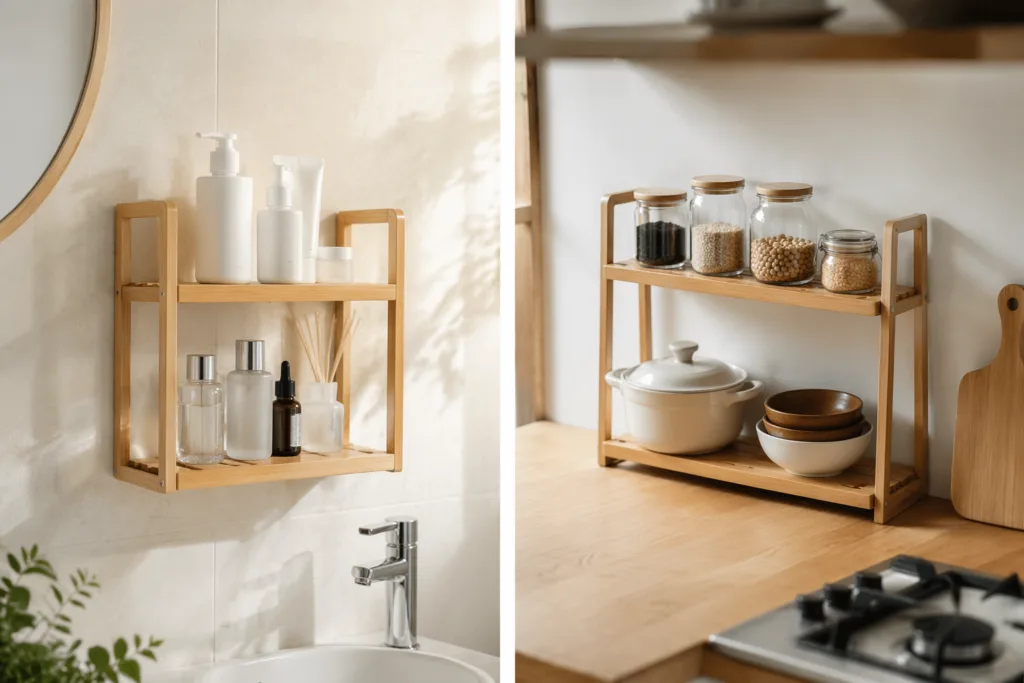
We advise checking four dimensions carefully:
- Height: Make sure the top tier does not feel too tall for the room or block mirrors, windows, or wall features
- Width: Confirm it fits the allotted wall or counter area without crowding other furniture
- Depth: Ensure the shelf will hold the items you need without stealing circulation space
- Clearance: Leave room for cleaning, door opening, and access to items on surrounding surfaces
Depth is often the most overlooked measurement. A shelf that is too deep can make a small room feel cramped, while a shelf that is too shallow can fail to hold the intended products securely. In manufacturing terms, this is where sample review is helpful. An early sample lets the buyer see the shelf in scale, not just on a drawing. If you want a practical sample review process, our article on how to evaluate a bamboo shelf sample explains what to check before production approval.
How Much Weight a Bamboo Shelf Should Support for Each Room
Load capacity is one of the most important technical decisions, but it should always be tied to use case. A bedroom shelf for décor and folded textiles does not need the same strength as a kitchen shelf carrying jars or appliances. A bathroom shelf may not carry much weight, but it still needs stability when bottles are placed unevenly or when a person reaches for items quickly. An entryway shelf may support light daily items, yet it can be stressed repeatedly by bags, keys, and shifting placement.
We recommend buyers ask manufacturers about both maximum load and recommended working load. Maximum load is the upper limit under ideal conditions, while working load is the safer number for daily use. The working load is usually the more useful figure for procurement decisions because it reflects real-world behavior, not just a short-term test.
Material hardness also matters. Bamboo can perform very well in shelving applications, but the product’s strength depends on board construction, joint design, and how stress is distributed across the frame. For buyers comparing materials, it can also help to review a bamboo hardness compared with maple and walnut when evaluating whether a bamboo shelf suits the intended load and finish expectations. Hardness is not the only factor in quality, but it is one useful piece of the selection process.
Freestanding vs Corner vs Narrow Bamboo Shelving: Which Structure Fits Which Space
The structure should match the room layout. A freestanding bamboo shelf is versatile and easy to place, but it needs enough floor area. A corner shelf is a smart option when you want to use dead space in a bathroom or bedroom. A narrow shelf works well in entryways, hallways, or beside appliances where width is limited.
Here is a simple comparison:
| Structure | Best For | Buyer Advantage | Main Caution |
|---|---|---|---|
| Freestanding | Flexible placement in most rooms | Easy to move and style | Needs stable footing and enough floor space |
| Corner | Bathrooms and compact rooms | Uses unused space efficiently | Must fit corner angles and wall layout accurately |
| Narrow | Entryways and tight passage areas | Space-saving and practical | Can become unstable if overloaded or too tall |
For buyers weighing product structure against room layout, the difference between OEM and ODM can also matter. If you need a shelf adapted to a specific footprint or use scenario, our overview of OEM vs. ODM for bamboo products can help clarify how much customization is needed before production begins. In custom shelving, structure and room fit are often more important than cosmetic changes.
Surface Finish, Edge Smoothness, and Durability Considerations
Surface finish affects both appearance and performance. A smoother finish is easier to clean and feels more refined in the hand. In humid or high-touch spaces, the finish also helps protect the material from routine wear. However, a shelf should not be so heavily coated that it loses the natural character buyers expect from bamboo. The right finish is one that supports daily use while preserving the visual appeal of the grain.
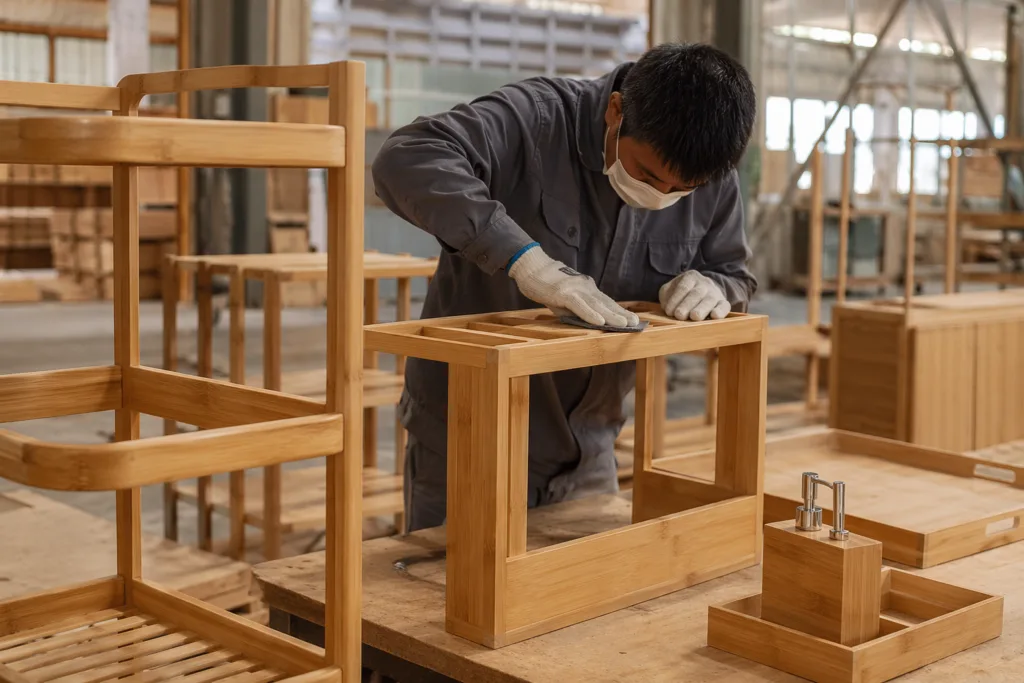
Edge smoothness is just as important as the main surface. Rough edges can catch fabric, scratch hands, or make a shelf seem unfinished even when the overall design is attractive. In our production work, sanding quality and edge treatment are two of the first things we check during sample review and QC. Buyers should also ask whether the finish is consistent across visible and hidden surfaces, especially if the shelf will be placed away from a wall or viewed from multiple angles.
Durability is usually a combination of finish, board quality, fastening method, and storage environment. Good design reduces risk, but proper use and care matter too. Even a strong shelf will last longer if it is kept dry, not overloaded, and cleaned with appropriate methods. If a buyer expects frequent cleaning or more demanding use, the finish specification should be discussed before tooling or mass production.
Style Matching: Natural, Modern, Minimalist, Warm Wood-Tone, and Mixed-Material Interiors
Style matters because the shelf will live inside a room, not just on a spreadsheet. Bamboo has a distinct visual identity that can feel natural, bright, and calm. It can also fit into modern and minimalist interiors because the grain tends to read as clean and orderly. In warmer rooms, bamboo can soften the look of black metal, white tile, or painted walls. In mixed-material interiors, it can help connect wood, fabric, and ceramic elements.
When choosing style, think about what the shelf should do visually. Some buyers want it to blend in quietly. Others want it to act as a subtle accent. A shelf with a lighter finish may feel more airy in a bathroom or entryway, while a slightly richer tone may better match bedroom furniture. The best style choice is usually the one that supports the room’s existing palette rather than forcing a new direction.
At Bamboo Wood Art, we often advise buyers to review both the product image and the surrounding room context before finalizing a finish. A shelf that looks neutral in isolation may feel too light or too dark once placed beside tile, flooring, or cabinetry.
Common Buying Mistakes to Avoid When Selecting a Bamboo Storage Shelf
Many sourcing problems are avoidable if buyers slow down at the specification stage. The most common mistake is choosing based on appearance alone. A shelf may look elegant, but if it lacks depth, stability, or the right tier spacing, it will underperform. Another common issue is assuming that all rooms have the same moisture exposure. A shelf that works fine in a dry bedroom may not be suitable for a damp bathroom corner.
Other frequent mistakes include ignoring packaging needs, overlooking assembly complexity, and not confirming load expectations with the supplier. Buyers should also avoid vague instructions like “make it sturdy” or “keep it natural.” Those phrases are too open-ended for reliable production. Instead, give the manufacturer a room use case, target dimensions, finish preference, and expected load range.
As a manufacturer, we find that clear specifications reduce sample revisions and improve bulk consistency. A small amount of extra planning up front usually saves time later in production and reduces the chance of costly misalignment between buyer expectations and final goods.
Quick Decision Table by Room and Use Case
| Room | Recommended Shelf Type | Priority Features | Typical Buyer Focus |
|---|---|---|---|
| Bathroom | Open or corner shelf | Ventilation, easy-clean finish, stability | Humidity resistance and compact fit |
| Kitchen | Counter shelf or freestanding rack | Load capacity, depth, spill resistance | Access and daily durability |
| Bedroom | Display shelf or book shelf | Visual match, tier spacing, balanced height | Storage plus décor harmony |
| Entryway | Narrow organizer rack | Small footprint, quick access, stability | Space efficiency and daily convenience |
How We Plan Bamboo Shelf Production for Buyers
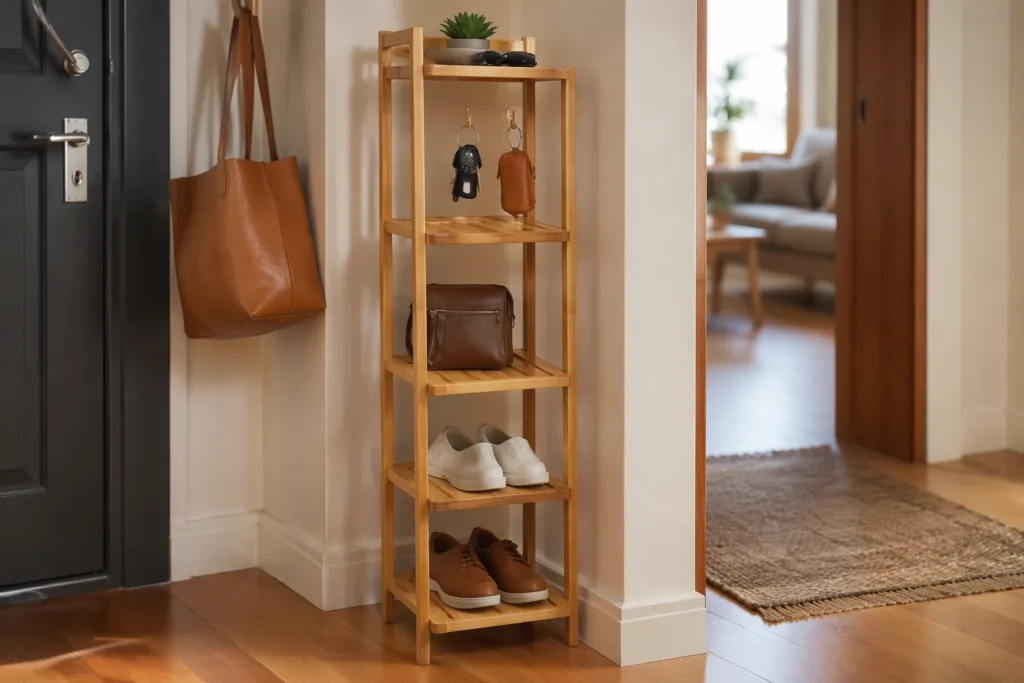
When a buyer comes to us with a shelf project, we start by asking where it will be used and what it must hold. That determines the basic structure, then we refine the dimensions, finish, and packaging. If the shelf will be sold as a retail item, we also consider how it will photograph, how it will be packed for shipping, and how easily the customer can assemble it. Those details affect returns and customer satisfaction just as much as the shelf itself.
We also think about consistency across batch production. Bamboo has natural grain variation, so color and texture should be managed through material selection and finishing controls rather than assumed to be identical. If you need a product with private label packaging, we can align the shelf design with branding requirements without losing the material’s natural appearance. For many projects, the most valuable step is not a more complex design but a more precise specification.
Our production mindset is simple: select the shelf for the room first, then validate the finish, load, and packaging around that use case. That approach produces better results than starting with a generic shelf and trying to make it fit every environment.
Conclusion
The right bamboo shelf is the one that fits the room, the storage job, and the buyer’s expectations for durability and style. Bathroom shelves need moisture-aware design and ventilation. Kitchen shelves need stronger load support and easy cleaning. Bedroom shelves should balance storage with visual calm. Entryway shelves should stay compact, stable, and practical for daily use. If you choose by room first, then verify tier count, dimensions, load capacity, and finish, you will usually end up with a shelf that performs well in real life and feels appropriate in the space.
For sourcing teams and brands, the best results come from clear specifications, sample approval, and manufacturing support that understands the difference between a decorative shelf and a shelf built for a specific room. That is where a manufacturer-informed selection process adds real value.
FAQs
Can bamboo shelves be used in humid rooms?
Yes, bamboo shelves can be used in humid rooms if the design, finish, and placement are chosen carefully. We recommend open or ventilated structures, wipeable finishes, and installation away from direct water spray whenever possible. Good airflow is important because moisture buildup can affect stability over time.
How do I measure the right size for a bamboo shelf?
Measure height, width, depth, and the clearance around doors, outlets, and nearby furniture. Do not only measure the open wall or floor space. Also check how far the shelf can extend without interrupting movement or cleaning. If the shelf will hold baskets or bottles, make sure the internal spacing is enough for those items.
What load capacity is enough for a bamboo shelf?
The right load capacity depends on what the shelf will store. Light décor needs much less support than jars, books, or small appliances. Ask for both maximum load and recommended working load, and use the working load as the safer planning number for daily use. Distribute weight evenly when possible.
Is a corner bamboo shelf better than a freestanding one?
It depends on the room layout. A corner shelf is useful when you want to use unused space in a bathroom or compact bedroom. A freestanding shelf is more flexible and easier to move, but it needs enough floor space and stable footing. The best choice is the one that fits the room without blocking circulation.
What finish is best for a bamboo shelf in the kitchen?
For kitchens, a smooth, wipeable finish is usually the most practical choice because it helps with cleaning after spills and daily handling. The finish should protect the surface without feeling overly heavy or plastic-like. The key is a balance between durability, easy maintenance, and a natural look.
What should I check in a sample before approving production?
Check the dimensions, stability, surface smoothness, edge finishing, joinery, finish consistency, and how the shelf feels under load. Also inspect packaging, because good packaging reduces transit damage and keeps the product presentation consistent. A sample should represent the real production quality, not just the design concept.