Choosing a bamboo tea canister is not just a style decision. For buyers, the right container depends on the tea format, how often it will be opened, how much tea needs to be stored, and whether the canister is meant for kitchen storage, retail display, or gifting. A canister that works well for loose leaf tea may feel inconvenient for tea bags, while a decorative countertop jar may not provide the access speed or sealing performance needed for daily use. That is why the best sourcing decisions start with the use case, not the finish.
For projects that need custom dimensions, logo work, packaging, or private label development, our OEM bamboo tea canister manufacturing support helps buyers match product structure to tea type, lid fit, and daily handling needs. At Bamboo Wood Art, we can advise on bamboo body construction, inner liner options, sealing structure, and sample approval so the final canister fits both the brand position and the real storage requirement.
What a bamboo tea canister is and why tea type matters
A bamboo tea canister is a tea storage container made with a bamboo exterior or bamboo-based body, usually designed to protect tea from light, dust, odor, and excess moisture. In B2B sourcing, the important question is not whether the canister looks natural; it is whether the structure supports the tea format inside. Loose leaf tea often benefits from easier scooping and a wider opening. Tea bags may need faster access and stackable storage. Daily countertop use usually requires a balance of visual appeal, convenience, and reliable closure.
Tea is sensitive to its storage environment. If the container is too large, the headspace can increase exposure to air. If the opening is too narrow, daily use becomes annoying. If the lid fit is loose, moisture resistance drops. For dry goods, practical airtight or moisture-resistant storage matters because it helps reduce the impact of humidity and oxygen on product quality, especially when the jar is opened frequently. Industry guidance on dry-food packaging emphasizes tight storage and barrier performance for preserving contents, which is why we treat lid design and capacity as core selection points rather than cosmetic details alone. See the general principle of airtight, moisture-proof storage for dry goods when evaluating tea containers.
Different tea storage needs: loose leaf tea vs tea bags vs daily countertop use
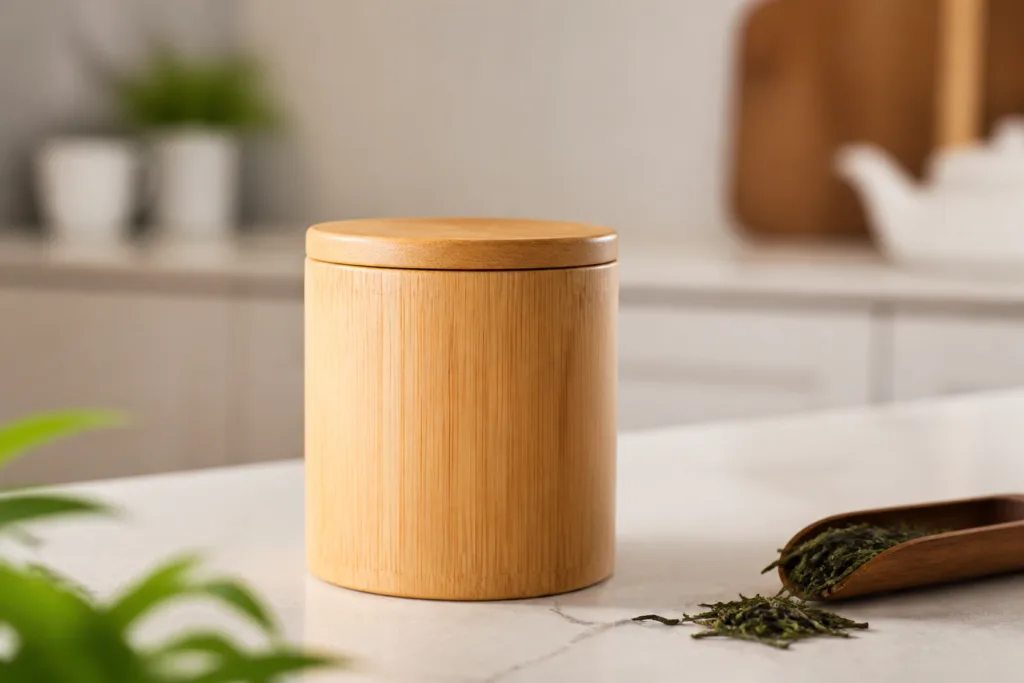
The first step is defining the tea scenario. Loose leaf tea and tea bags may share the same kitchen, but they behave differently in storage and use. Loose leaf tea tends to be handled with scoops or measuring spoons, so buyers often need a canister with a mouth that makes retrieval easy without spilling. Tea bags are usually packed in a way that favors speed, stacking, and clear visibility. Daily countertop storage, meanwhile, often needs a container that looks clean, opens quickly, and fits the rhythm of repeated use.
| Use case | Main priority | Recommended canister traits |
|---|---|---|
| Loose leaf tea | Easy scooping and portion control | Wide mouth, stable lid fit, moderate capacity, smooth inner surface |
| Tea bags | Fast access and organized stacking | Rectangular or round format, easy-open lid, visible storage layout, practical depth |
| Daily countertop use | Convenience and appearance | Compact footprint, balanced height, attractive finish, durable handling points |
From our manufacturing perspective, buyers often try to solve all three use cases with one generic jar shape. That is usually where sourcing problems start. A canister can be beautiful, but if the inner size, mouth opening, and lid action do not match the tea type, the product will underperform in the real kitchen.
Best canister features for loose leaf tea
Loose leaf tea is one of the most demanding applications for a bamboo tea canister because the product must be opened frequently and handled gently. Buyers should focus on three details first: capacity, mouth size, and scooping comfort. Capacity should match the consumption pattern, not just the tea volume. A 100g tea may need a different canister than a 100g herbal blend because leaf shape, fluffiness, and compression vary. If the container is too deep or too narrow, it becomes difficult to reach the bottom without spilling or crushing the leaves.
A wide-mouth opening is usually preferred for loose leaf tea because it allows a spoon or scoop to enter cleanly. The inner wall should be smooth and easy to wipe, especially if the tea is aromatic or oily. In some projects, an inner liner or inner lid helps improve moisture resistance and odor control. When buyers ask us for a loose leaf tea storage canister, we usually discuss whether the user will pour, scoop, or both. That answer determines the mouth size, lid structure, and whether a spoon slot or inner cover is useful.
Loose leaf tea selection checklist
- Choose a capacity that matches weekly use, not just package size.
- Prefer a wide mouth if the tea will be scooped by hand or with a spoon.
- Check that the rim and lid align smoothly after repeated opening.
- Use a finish that is easy to clean and does not feel rough at the opening.
- Consider an inner lid if the tea has a strong aroma or needs stronger protection.
Best canister features for tea bags
Tea bags usually need faster access than loose leaf tea. The main concern is not scooping but retrieval speed and organization. For this reason, tea bag storage often works better with a shape that lets users see and reach the contents quickly. A canister with a slightly wider internal footprint can help the bags lie flat or stack in a stable way. If the canister is too tall and narrow, the user may need to dig through the contents each time, which is poor for daily convenience.
For tea bag applications, visibility can also matter more than buyers expect. In retail or hospitality settings, a clear layout helps staff identify flavors and restock efficiently. This is why some buyers prefer a storage jar with a more structured opening and a lid that opens and closes smoothly without requiring extra force. When the project needs both protection and speed, a airtight tea storage canister design can be a practical direction, especially if the tea bags will sit on a counter and be opened many times per day.
For tea bags, the biggest mistake is choosing a canister based only on outside appearance. If the container is visually elegant but slow to use, staff or family members will leave it open more often, which reduces storage quality. A well-designed tea bag canister should support fast one-hand access, simple restocking, and easy cleaning.
What matters most for countertop storage
Daily countertop use brings different priorities into the picture. A countertop tea canister becomes part of the kitchen environment, so it has to balance appearance, usability, and durability. Buyers often want the canister to complement other tableware or kitchen accessories, but the product still needs to survive repeated handling. That means the surface finish should feel smooth, the lid should be comfortable to lift, and the base should remain stable when placed on a hard surface.
Countertop products also need a clear visual identity. This is where bamboo works well for brands that want a natural, warm, and premium-looking material without overcomplicating the design. If the project is retail-facing or hospitality-facing, buyers should examine whether the canister fits the brand’s display language and whether the exterior finish is consistent across the order. For brands that want a gift-ready presentation, we often suggest a more polished surface, stronger color consistency, and package protection that supports shelf display and shipping at the same time.
At Bamboo Wood Art, we see countertop tea storage as a product-development problem as much as a visual one. A great-looking canister still needs stable lid action, repeatable production, and practical size choices. When those parts work together, the product feels premium in everyday use rather than fragile or decorative only.
How to choose the right capacity
Capacity is one of the most important buying decisions because it affects freshness, storage convenience, and product positioning. For loose leaf tea, smaller canisters can be better when the tea is used quickly and stored in smaller batches. Larger canisters may suit high-frequency households or hospitality counters, but only if the tea will not sit too long after opening. For tea bags, capacity should reflect how many pieces are typically used in one cycle, plus some headroom for easy retrieval.
There is also a distinction between single-tea storage and mixed-tea storage. A single-tea canister may be optimized for one flavor and one opening pattern. Mixed storage, such as a tea bar or office pantry, may need multiple smaller canisters rather than one large one. This is not just an organizational preference; it affects moisture exposure and freshness retention. More empty space inside the canister generally means more air exposure, so selecting the right internal volume can help improve practical storage performance.
Capacity guidance by usage pattern
- Daily personal use: compact capacity, easy handling, quick opening.
- Family use: medium capacity, balanced access, stable countertop footprint.
- Retail display: capacity that supports visible presentation and controlled refill cycles.
- Hospitality or office use: larger or multi-unit storage, easy restocking, durable lids.
Opening size and retrieval method
The opening design determines how the canister behaves in daily use. A wide-mouth design is generally better for loose leaf tea and hand access, while a narrower opening can help control exposure if the contents are not frequently accessed. Some buyers want a scoop-friendly opening that allows a spoon to enter without scraping the finish. Others prefer a hand-access design that lets them lift tea bags quickly without reaching too far inside.
For gifting or premium retail, the opening method should feel smooth and intentional. A lid that binds, rattles, or misaligns can make even a beautiful product feel low quality. During sample review, we check not just whether the lid fits, but how it feels in repeated use. Buyers should test opening speed, lid return, and whether the canister stays stable when one hand is used to retrieve contents.
When a buyer requests a canister with extra access convenience, a tea jar with inner lid protection can be a good solution because it adds another barrier while still allowing practical access. That approach is especially useful for products meant to sit on a countertop and be used daily.
Lid structure and sealing performance
Lid structure is where many tea canisters succeed or fail. A good-looking lid that is loose, noisy, or inconsistent across production lots creates returns and customer complaints. Buyers should ask how the lid is built, whether the fit depends on compression, friction, or another mechanical detail, and whether an inner liner or gasket is used. The goal is not to promise laboratory-level hermetic sealing unless the structure truly supports it, but to achieve a reliable fit that reduces routine moisture and odor exposure.
From a manufacturing standpoint, the lid must also tolerate natural material variation. Bamboo and wood both change slightly with humidity, machining, and finishing. If tolerances are too tight, lids may become difficult to open. If tolerances are too loose, the product loses practical protection. We usually recommend testing at least two or three sample iterations when the product is intended for long-term retail or repeated household use.
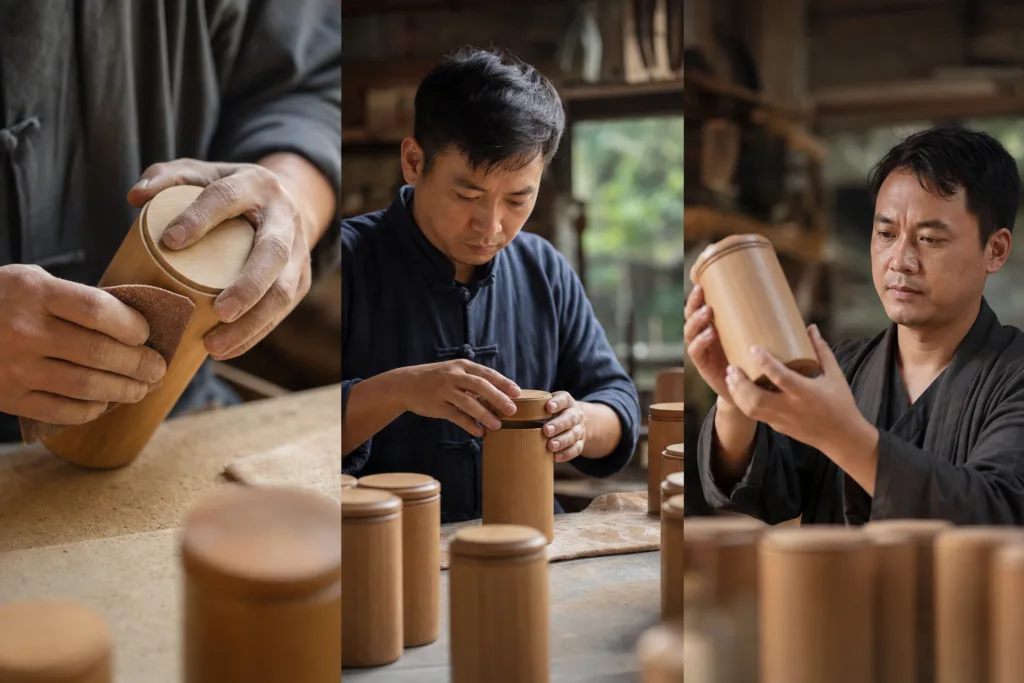
For tea storage products, fit consistency matters as much as the design itself. If the canister is meant to support premium positioning, the lid should close with a clean feel, sit evenly, and maintain its function through bulk production. Buyers sourcing for food-adjacent use should also consider whether the interior materials and coatings are appropriate for direct contact or indirect contact with tea. In these cases, food-contact materials and coating choices should be reviewed carefully, including whether the interior components are suitable for the intended application and market expectations. Regulatory context from the FDA on food-contact materials and FDA safety review is useful when buyers are evaluating liners, finishes, or seal materials for tea storage use.
How to judge light protection, odor protection, and freshness retention
Tea is affected by light, odor, air, and moisture. A bamboo tea canister can help with these factors, but the level of protection depends on the full structure, not just the material. If the tea is sensitive to light, a more opaque body or a darker finish may be preferable. If it is odor-sensitive, the inner fit and material selection matter more. If freshness retention is the priority, the buyer should look at opening frequency, headspace, and whether the closure reduces air exchange well enough for the use pattern.
For example, a canister used for daily opening on a countertop may never be truly airtight in the strictest sense, but it can still be highly practical if the lid closes well and the opening size is appropriate. A rarely opened storage jar for a reserve tea may justify a tighter seal or an inner cover. This is why we avoid generic claims and instead match the structure to the usage scenario.
Gift-type bamboo tea canister vs everyday-use tea canister
Gift products and everyday products are not the same. A gift-oriented bamboo tea canister needs strong presentation value, refined finishing, and packaging that protects the product during transit while still looking premium when opened. Everyday-use tea canisters should prioritize convenience, durability, and easy cleaning. A buyer trying to combine both requirements may need a slightly more premium structure with balanced visual detail and practical lid operation.
Gift applications often benefit from sets, coordinated finishes, or enhanced packaging inserts. In contrast, everyday use may favor a more compact format with straightforward labeling and minimal handling friction. When the product is intended for retail gifting, a gift-ready tea canister set can support a stronger shelf story, but the internal fit, closure quality, and shipping protection still need to perform like a functional storage product, not just a decorative box.
Gift vs everyday selection
| Aspect | Gift-use canister | Everyday-use canister |
|---|---|---|
| Visual style | More refined and coordinated | Simple and durable |
| Packaging | Presentation-focused | Protection-focused |
| Opening frequency | Lower | Higher |
| Priority | Brand impression | Practical convenience |
Material and finish considerations
In bamboo tea canister sourcing, material and finish influence both performance and brand perception. The bamboo body should have stable machining, even sanding, and consistent wall thickness. Surface treatment should not leave rough edges or visible machining marks near the rim. If the canister will be engraved, the logo area should remain clean and legible after finishing. For wood-bamboo combinations or inner inserts, the buyer should check whether the final look fits the intended market position.
Finish selection is also tied to use. A matte finish may feel more natural and understated, while a smoother sealed finish may be easier to wipe down. If the product is intended for kitchen display, resistance to fingerprints and minor moisture exposure becomes important. If the canister is for tea bags or dry blends, the interior should be free from strong odors from coatings or adhesives. The manufacturing team should clarify whether the product is designed for direct contact, indirect contact, or container-only use so the buyer can confirm the right specification.
When buyers need a more tailored product, our experience at tea jar with inner lid protection design development shows that the right finish is often a balance between appearance, cleanability, and sealing fit. Even a small change in coating thickness can affect lid tolerance, so finish choice should be confirmed during sampling rather than assumed from photos.
Common sourcing and use mistakes to avoid
One common mistake is buying the canister before defining the tea type. Another is choosing the wrong capacity because the listed volume sounds convenient. Tea buyers also sometimes overlook lid fit consistency, which is especially risky in bulk production. A sample may look excellent, but if the manufacturer does not control tolerance, the production run can feel different from the approved sample.
Other common mistakes include ignoring the packaging plan, selecting a finish that feels attractive but is hard to clean, and assuming that all bamboo products behave the same under humidity. Bamboo is a practical material, but it still needs proper drying, machining, and storage control. Buyers should ask about material preparation, moisture control, sanding process, and QC checkpoints before committing to mass production.
Another issue is expecting one canister to serve every purpose. A loose leaf tea jar, a tea bag organizer, and a premium gift item may require different structures even if they share a similar exterior style. Sourcing becomes much easier when the buyer defines the primary scenario first.
Quick selection table by scenario
| Scenario | Best priority | Recommended structure | Risk to avoid |
|---|---|---|---|
| Loose leaf tea | Easy scooping | Wide mouth, smooth interior, balanced capacity | Too narrow or too deep |
| Tea bags | Fast access | Simple opening, stable stacking, clear internal space | Overly tall or cramped design |
| Countertop storage | Daily convenience | Compact footprint, attractive finish, stable lid | Decorative but awkward to use |
| Gift application | Presentation | Refined surface, protective packaging, premium feel | Pretty packaging with weak functionality |
How we approach bamboo tea canister production
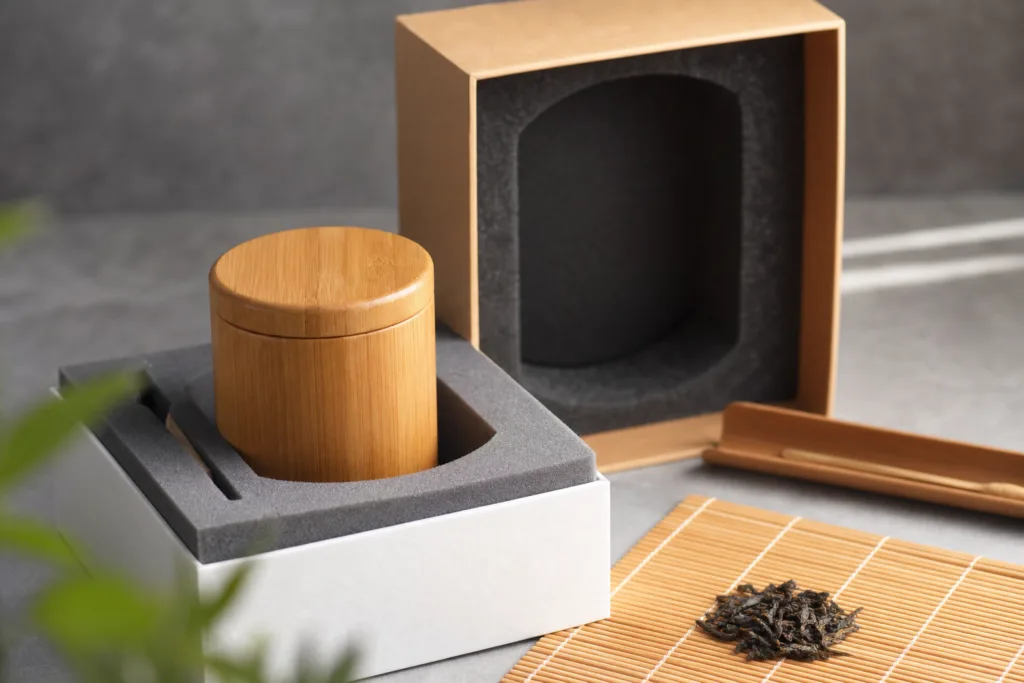
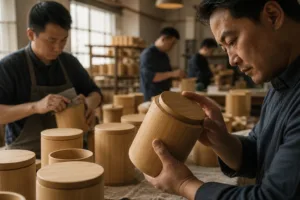
From a manufacturer’s perspective, the best bamboo tea canister is the one that matches the buyer’s actual use case and production target. We usually start with tea type, fill volume, opening method, and whether the canister needs logo decoration, a private label package, or a matching set. Then we confirm the material stack, finish direction, lid tolerance, and shipment protection. This process reduces surprises during sampling and bulk production.
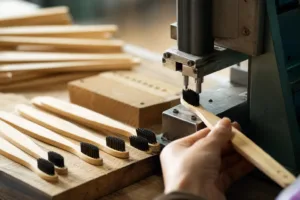
For custom projects, we check the full path from design to delivery: material selection, cutting or shaping, sanding, surface treatment, assembly, and QC. If the canister is for retail, we also review carton strength, insert design, and whether the outer packaging protects the lid during transport. That is how we keep the product aligned with the buyer’s quality and branding goals.
Buyers evaluating new suppliers should ask practical questions: How does the factory control moisture in bamboo parts? How are lid fits checked? Can the supplier maintain color consistency across a batch? What is the sample approval workflow? Can packaging be adjusted for shelf display or shipping cartons? These are the questions that matter more than broad sustainability slogans or generic product descriptions.
Conclusion
Choosing the right bamboo tea canister comes down to matching the container to the tea and the usage scenario. Loose leaf tea usually needs easier scooping and a wider opening. Tea bags often need speed, stacking, and simple access. Countertop use demands a balance of appearance and daily handling. Gift applications add packaging and presentation requirements. Across all of these, lid fit, moisture protection, capacity, finish quality, and production consistency should guide the purchase decision.
If you are sourcing a bamboo tea canister for retail, hospitality, or private label development, define the use case first, then confirm the structure with samples. That approach leads to fewer surprises, better functionality, and a product that feels right on the shelf and in daily use.
FAQs
How do I choose the right size bamboo tea canister for loose leaf tea?
Start with how quickly the tea will be used after opening. A canister should hold a practical working amount without leaving excessive empty space. If the tea is scooped often, choose a size that allows easy access and does not force the user to reach too deep inside. Matching capacity to usage frequency is usually more important than matching the printed weight on the tea bag package.
Is a bamboo tea canister suitable for tea bags?
Yes, as long as the shape and opening support fast access and organized storage. Tea bags usually benefit from a canister that allows stacking or easy grabbing without digging. A structure with a smooth lid action and enough internal width can make daily use much more convenient.
How important is an airtight lid for tea storage?
Very important, but the right level of sealing depends on the use case. For everyday countertop use, a reliable close fit that reduces moisture and odor exposure is often enough. For longer storage or premium tea, buyers may want an inner lid or a tighter structural fit. The key is to test the closure in real use, not just rely on appearance.
Can a bamboo tea canister be used for gifting?
Yes. Gift versions usually focus more on appearance, packaging, and presentation, while still needing practical protection and easy use. A gift canister should feel refined, but it should also open cleanly and keep the tea protected during transport and display.
What should I check in a sample before placing a bulk order?
Check lid fit, opening comfort, surface smoothness, capacity accuracy, finish consistency, and packaging protection. If the project is custom, review logo placement and whether the sample reflects the final production method. A good sample should represent the real batch as closely as possible.
How do I maintain a bamboo tea canister safely?
Keep it dry, avoid soaking unless the structure is specifically designed for it, and wipe the interior clean with a dry or slightly damp cloth as appropriate. Tea canisters should be stored away from strong odors and excessive humidity. Good daily care helps preserve both the material finish and the tea inside.