Wholesale Bamboo Baskets: Understanding MOQ, Sampling, Lead Times, and Packaging for Effective Sourcing
For sourcing managers and procurement professionals, understanding the wholesale bamboo baskets sourcing process is fundamental to making confident, profitable decisions. The variables of MOQ (Minimum Order Quantity), sampling, lead times, and packaging can quickly separate a successful order from costly mistakes. This guide aims to demystify those process details, equipping importers, wholesalers, retailers, and procurement teams with actionable insights drawn directly from the manufacturing floor — not just the sales desk.
For buyers looking to evaluate the depth of product range, customization options, and supplier capability before making sourcing decisions, our dedicated wholesale bamboo basket manufacturing page offers a more focused resource. Reviewing this page is a practical next step to assess category offerings, manufacturing strengths, and the extent of bespoke product development available through Bamboo Wood Art.
Introduction: Why Sourcing Process Clarity Matters
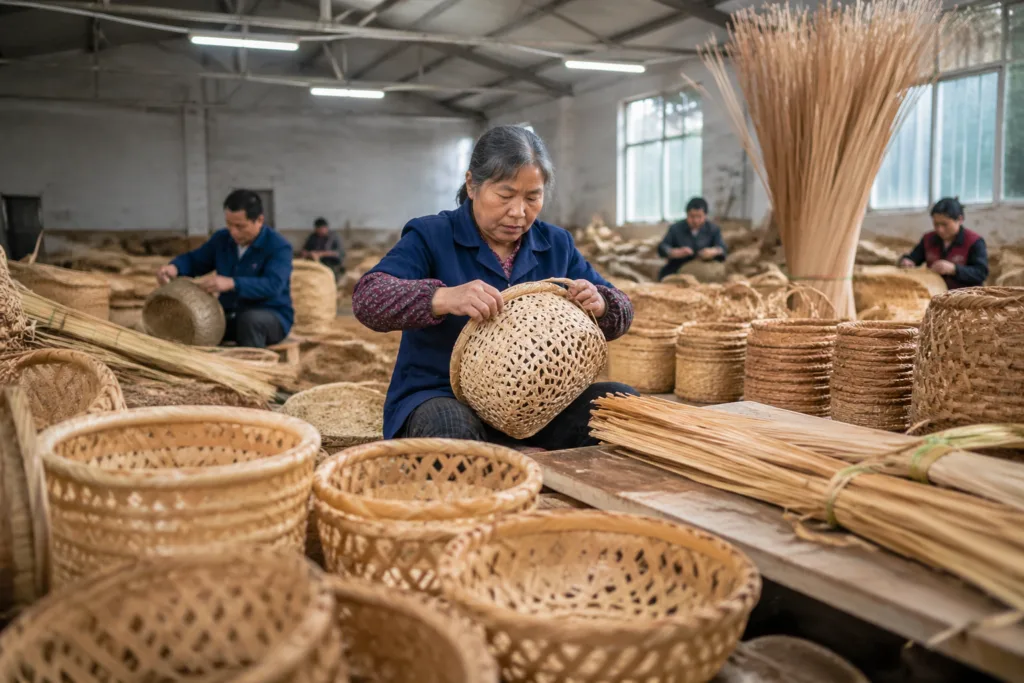
Whether you’re sourcing baskets for retail, hospitality, storage, or gifting programs, mastering the key steps in the wholesale bamboo basket supply chain streamlines communication, reduces risk, and helps you confidently compare manufacturers and proposals. This article is designed for importers, sourcing managers, wholesale buyers, brand owners, and teams tasked with cost-effective bulk purchasing. We’ll cover the pivotal decision points — in-stock versus custom orders, how MOQ is determined, what to check during sampling, lead time planning, packaging and transport considerations, consolidation and mixed-SKU orders, and a practical prep checklist to bring to your next supplier conversation. The focus here is on demystifying the process and clarifying what shapes your options and costs.
In-Stock Wholesale vs. Custom-Made Bamboo Basket Orders
Defining In-Stock and Custom-Made Orders
There are two principal avenues for sourcing wholesale bamboo baskets: choosing from a supplier’s in-stock collection, or requesting custom-made production. In-stock baskets are pre-manufactured designs, typically held in inventory in limited quantities and standard finishes. Custom orders, meanwhile, are manufactured to buyer specifications — whether size, structure, finish, branding, or packaging.
Typical Buyers and Use Cases
- In-Stock Wholesale: Ideal for buyers with urgent needs, smaller volumes, or broad style flexibility — including seasonal retailers, local distributors, and promotional campaign managers.
- Custom Orders: Well-suited for brand owners, multi-store retailers, or buyers with unique sizing, color, lining, or function requirements. Especially relevant for private label projects and curated gifting lines.
How Choice Affects Timelines, Flexibility, and Cost
| Order Type | Lead Time | Minimums | Customization | Cost per Unit |
|---|---|---|---|---|
| In-Stock | Short (immediate to 2 weeks) | Lower (often from 100–300 units) | Very limited | Lower (but fixed design) |
| Custom-Made | Longer (30–60 days+) | Higher (often 300–1000 units) | High (shape, color, finish, lining) | Varied (flexible, includes tooling/setup) |
Decision Factors
- Timeline urgency: In-stock fits short lead, custom fits planned launches.
- Design control: Custom enables brand-building, in-stock offers speed.
- Budget structure: Upfront costs may be higher for custom but offset by tailored market fit.
MOQ Explained: How Size, Structure, and Lining Affect Minimum Order Quantity
What Is MOQ in Wholesale Bamboo Baskets?
MOQ (Minimum Order Quantity) is the smallest quantity a manufacturer can economically produce or sell in a single order. For bamboo baskets, this threshold reflects the production setup required — from weaving templates to finishing and packaging shifts — rather than purely inventory.
Key Factors That Influence MOQ
- Basket Size: Large baskets require more material and labor; higher MOQs can help manufacturers manage efficiency.
- Weave Type/Complexity: Intricate or fine weaving builds cost and often means higher MOQ thresholds.
- Internal Lining: Baskets with fabric or plastic liners usually require dedicated cutting and sewing, raising the required minimum.
- Finish and Color Options: Custom colors or multi-step finishes add complexity; undyed natural products may be available in lower MOQs.
Standard vs. Custom MOQ Levels
Manufacturers typically publish a “standard MOQ” for common models (such as 300 or 500 units). When buyers request adjustments (such as custom logos, a different lining, or non-standard dimensions), a new MOQ is calculated reflecting the batch efficiency and setup costs. Understanding understanding MOQ requirements in bamboo manufacturing ensures requests match practical production realities.
How to Assess Your Fit
Prepare your forecast volumes, intended SKUs, and any custom features before inquiry. If your volume falls short of standard MOQ, discuss batch consolidation or mixed models to unlock better unit cost and feasibility (see section below on batch mixing).
The Sampling Stage: What to Confirm Before Committing
Why Sample Orders Matter
Ordering samples allows buyers to validate product quality, suitability, and consistency before a full production commitment. Sampling protects both the buyer and manufacturer from costly fit or quality mismatches.
What Should Samples Confirm?
- Dimensions: Check all internal and external measurements meet your application needs.
- Weave Quality: Inspect for uniformity, tightness, and absence of defects.
- Finish & Color: Validate colorfastness, uniform application, and resistance to scratches or fading.
- Durability: Test structural stability and weight tolerance, especially for baskets intended for retail loads.
- Functional Fit: Will the basket perform for your market (e.g., handle comfort, weight of expected contents)?
- Packaging Concept: Review whether packaging adequately protects the sample and matches final sales channel requirements.
Best Practices: Communication & Sampling Mistakes to Avoid
- Supply precise written requirements: size, material, color, finish, liner, packaging style.
- Ask for photos of sample prototypes before shipping to save time and cost, particularly for multi-stage samples.
- Build in some flexibility for minor natural variation (a reality with bamboo fibers).
- Confirm which attributes are sample-only (potentially changing in mass production) versus locked-in for scale production.
For a clear walkthrough of the prototyping and testing phase, see prototyping and sample orders for custom bamboo baskets.
Lead Time Fundamentals: What Determines Production and Delivery Schedules
Typical Lead Times for Wholesale Bamboo Baskets
- In-stock orders: Usually dispatched within 1–2 weeks, subject to inventory.
- Custom orders: Generally require 30–60 days from confirmation, sampling, and production to shipping readiness.
Key Factors Influencing Lead Time
- Raw Material Availability: Natural bamboo harvest cycles can affect supply of certain grades or colors.
- Production Complexity: Multi-step finishing or intricate weaves take longer than basic models.
- Order Quantity: Higher volumes may be grouped for weaving and finishing, impacting completion time.
- Peak Ordering Periods: Lead times often extend before holidays or gift seasons when global demand spikes.
Stages in a Typical Sourcing Timeline
- Order inquiry & confirmation
- Sampling and approval
- Production batch scheduling
- Quality control & inspection
- Packing and shipping (sea, air, courier)
For tips on planning around seasonal production bottlenecks, refer to planning lead times for inventory during peak seasons.
Transportation & Packaging: Impact on Cost, Product Protection, and Sourcing Efficiency
Main Packaging Methods
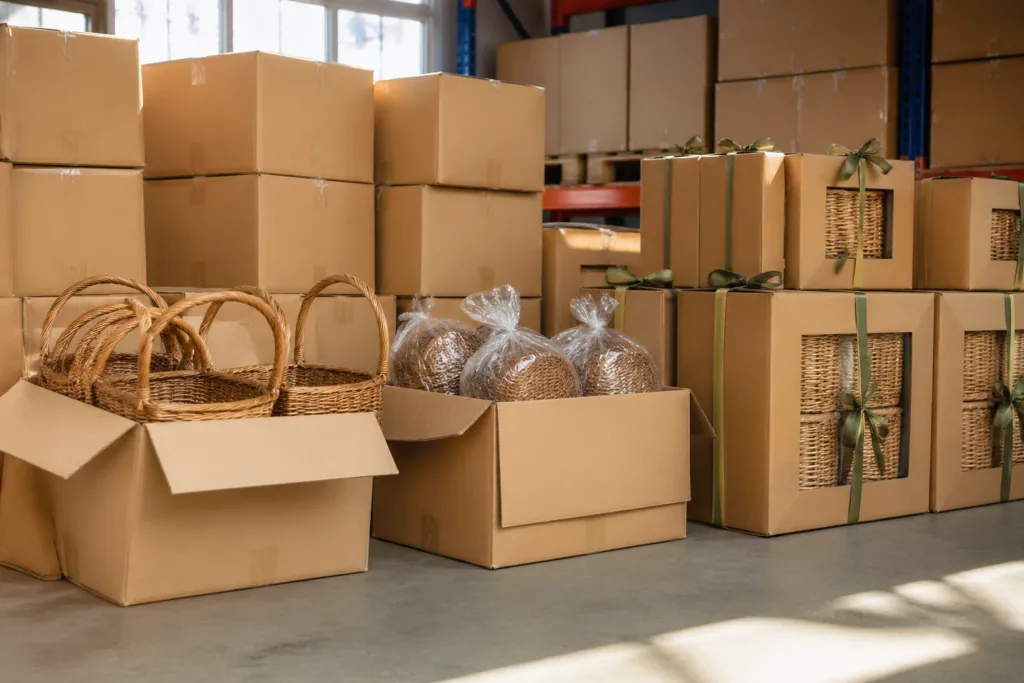
- Bulk Packaging: Multiple baskets nested, saving space but with less protection.
- Individual/Polybag Packaging: Each basket in its own sleeve; boosts protection but adds material/labor cost.
- Retail-Ready Packaging: Custom boxes or sleeves designed for resale, adding marketing value and shelf appeal.
- Custom Pack-Out: For gifting or brand programs — tailored to presentation specs, including inserts or extras.
How Structure and Finish Affect Packaging
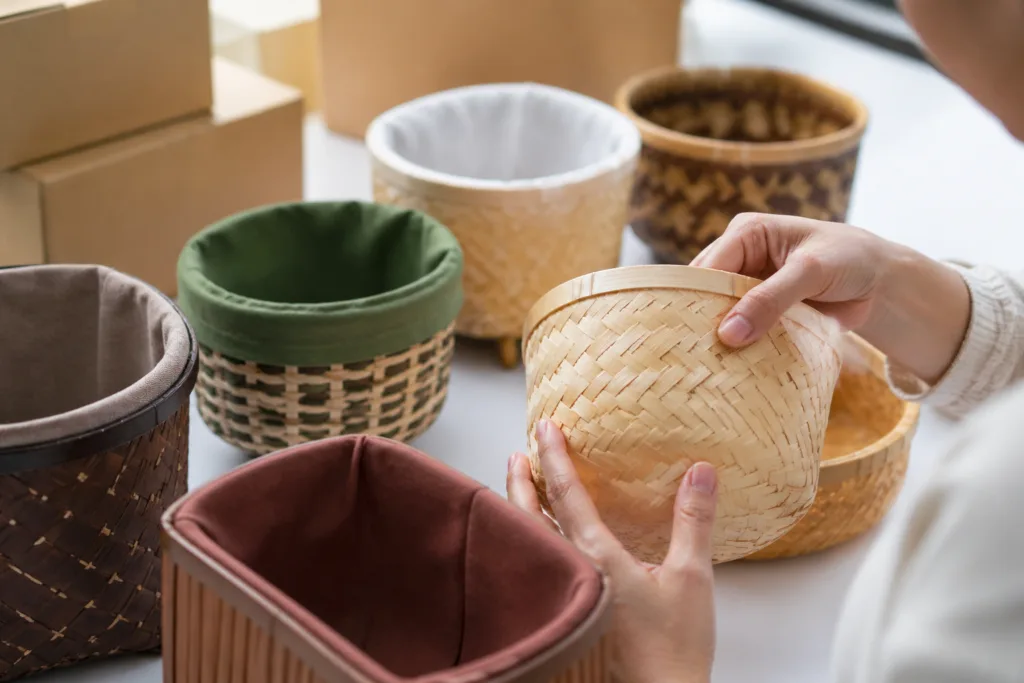
Large or open-weave baskets often require more padding to avoid deformation. Baskets with delicate finishes, such as painted or lacquered surfaces, need abrasion-resistant wrap and sometimes separated packing. Manufacturers with extensive experience, such as Bamboo Wood Art, can recommend optimal pack units based on basket type and logistic route to minimize in-transit damage and landed cost.
Transport Modes and Cost Considerations
- Sea Freight: Lowest unit cost for high volume, but slowest transit (weeks).
- Air Freight: Fast but expensive — economic for urgent or lightweight orders only.
- Courier/Express: Best for samples, prototypes, or small specialty runs.
Packaging Design for Retail, Gifting, or Special Projects
The type and quality of packaging should align with your final sales channel: retail, direct-to-consumer, or corporate gifting. High visual appeal may justify higher packaging investment, while pure utility channels may prioritize cost and compactness. For advanced shelf-ready packaging approaches, see customizing packaging for retail shelf appeal.
Batch Consolidation and Mixed Models: When and Why It Makes Sense
Order Consolidation and Mixed SKU Sourcing Explained
Batch consolidation allows buyers to group similar basket models, finishes, or sizes into one production run, potentially reaching the MOQ threshold for combined SKUs. This approach is particularly valuable for distributors and retailers seeking range without committing deep inventory to any single SKU.
Advantages and Limitations
- Advantages: Greater variety per shipment, tested new SKUs with lower risk, and often better price breaks on combined volume.
- Limitations: Not all models or finishes can be combined. Customized work (color, lining) sometimes requires separate setups; manufacturers may specify minimums per SKU even within batch consolidation.
Manufacturer Policies: What to Ask
- Confirm which models and finishes are combinable within one production run.
- Clarify minimum run lengths per SKU and combined order minimums.
- Ask for pricing tiers for mixed versus single-model orders.
- Request packing layouts for mixed-SKU shipments to anticipate warehousing needs.
Pre-Inquiry Preparation Checklist for Buyers
Information to Finalize Before Contacting a Manufacturer
- Complete basket specifications (size, shape, material, weave, lining, finish, branding if any)
- Planned order volume by SKU or overall
- Intended application and marketing channel
- Target market(s) and compliance/certification requirements
- Desired packaging and shipping modes
- Customization requests by priority (must-have vs. nice-to-have features)
The Value of Clarity and Transparency
The more precisely you can define requirements and context, the faster and more accurately a manufacturer can respond with viable solutions and realistic timelines. It streamlines sampling, minimizes the risk of overlooked details, and sets the stage for effective negotiation.
Wholesale Bamboo Baskets: Understanding MOQ, Sampling, Lead Times, and Packaging for Effective Sourcing
This guide walked through the core decision points and process elements every bulk bamboo basket buyer should understand. Successfully sourcing wholesale bamboo baskets is shaped as much by process clarity as by design or cost. By understanding the impact of MOQ, sampling, lead time planning, packaging options, and the nuances of batch and SKU management, procurement teams can better match their needs with supplier strengths, minimize risk, and build more resilient supply programs.
Approaching sourcing as a collaborative effort with manufacturers, rather than simply ticking sourcing checklists, often leads to better-tailored products and smoother logistical outcomes. For all buyers, whether importing for retail, private label, branding, or contract gifting, this approach is key to sustainable, efficient, and market-aligned basket sourcing. To review specific product solutions, category directions, and tailored manufacturing capabilities, further exploration of Bamboo Wood Art’s dedicated resources is encouraged.
Frequently Asked Questions
What is the typical MOQ for wholesale bamboo baskets?
MOQ usually ranges from 300–1000 units depending on design complexity, size, finish, and customization. Simple in-stock models may be available at lower MOQs.
Can I order a mix of basket styles and still meet the MOQ?
Many manufacturers offer batch consolidation, letting buyers mix SKUs to meet overall MOQs — but each model may have a minimum, and not all combinations are possible.
How long does it take to receive a custom bamboo basket order?
Custom orders typically require about 30–60 days for sampling, production, QC, and shipping, with timelines extending during peak seasons or for highly customized designs.
Is sampling recommended before placing a full order?
Yes, sampling validates key factors like size, weave, durability, and finish before committing to large production — it’s essential to mitigating risk and setting clear expectations.
How does packaging choice impact landed cost and protection?
Packaging affects unit freight cost and product safety; compact bulk saves cost but offers less protection, while custom or retail-ready packs enhance presentation and reduce damage risk.
What details should I finalize before contacting a manufacturer?
Finalize basket specifications, target volume, application, required certifications, packaging needs, and any key customization requests to streamline supplier communication and decision-making.