Introduction to Incoterms 2026
Incoterms 2026 mark a new milestone in international trade by revising the global rules that clarify responsibilities between buyers and sellers. These guidelines are especially vital in the bamboo and timber industry, where shipments frequently cross borders and involve many hands. Whether you are sourcing bamboo for furniture, construction materials, or eco-friendly products, the right Incoterm ensures you know exactly who handles loading, insurance, customs, and costs. Understanding these terms is essential for predictable deliveries and cost control in your business.
As a bamboo products manufacturer, Bamboo Wood Art offers flexible custom sourcing and bulk order options for international buyers.Explore our bamboo products manufacturer capabilities.
Key Changes in Incoterms 2026
The 2026 update introduces more detailed guidance on digital trade documentation, sustainable packaging, and clearer distinctions between transport modes. For bamboo and timber buyers, these changes simplify the import process and highlight environmental concerns. Notably, new provisions around sustainability encourage suppliers to use certified wood, minimize plastic, and document carbon footprints. As digital platforms become standard for paperwork, buyers benefit from faster processes and improved transparency.
FOB (Free On Board) Explained
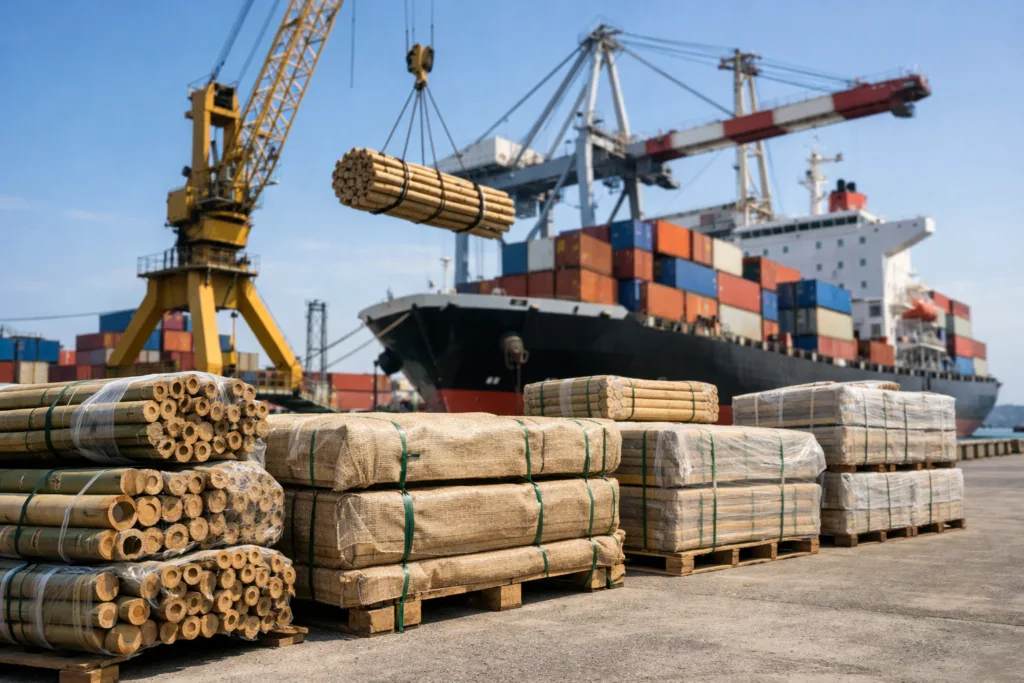
FOB (Free On Board) means the seller delivers your bamboo or timber goods onto the vessel at the agreed port. The risk passes to you once the cargo is safely loaded—so you handle insurance, ocean freight, and import customs. FOB is popular for bulk timber and processed bamboo shipments, especially when buyers have trusted logistics providers or want to negotiate competitive sea freight rates. It offers visibility and control once the cargo leaves the port, but you must account for possible port charges and arrange pickup.
FOB in Bamboo Timber Trading
Bamboo Wood Art, for example, uses FOB for large container shipments. Buyers arrange shipping lines, select transit times, and oversee unloading. This works well for clients with established logistics partners, but less so for newcomers unfamiliar with port procedures. FOB is best suited for buyers who want flexibility and are comfortable with customs clearance.
Advantages and Risks of FOB
- Pros: Greater logistics control, often lower overall costs.
- Cons: Requires expertise in international freight and import taxes.
EXW (Ex Works) Explained
EXW (Ex Works) is the most basic Incoterm—goods are made available at the seller’s facility, and buyers handle everything from pickup to delivery. For bamboo and timber shipments, sellers simply prepare the goods for handover, which means buyers must organize all transport, loading, and export documentation. EXW can be cost-effective if you already have logistics partners in place, but it demands a thorough knowledge of export rules.
EXW in Practice: Bamboo and Timber
Suppose you’re buying bamboo cutting boards or timber planks from a Chinese factory. Under EXW, you manage export permits, arrange transport, and handle all subsequent customs procedures. While this gives you full supplier-side control, it can be tough for small businesses to manage regulatory paperwork and loading logistics.
Buyer Responsibilities Under EXW
- Collect goods at the manufacturer’s location
- Arrange export clearance
- Cover all transport and insurance costs
DDP (Delivered Duty Paid) Explained
DDP (Delivered Duty Paid) shifts the burden to the seller—they manage everything until your bamboo or timber goods arrive at your address, including export, import, and local duties. For buyers, DDP removes the stress of customs clearance and logistics arrangements. This is common for sample orders or for smaller businesses who lack freight experience. Sellers may charge higher prices to cover risk, but the convenience is unmatched.
DDP for Bamboo and Timber Imports
Imagine sourcing bamboo trays for a café. With DDP, all documentation, taxes, and delivery are handled by your supplier—goods arrive without the need for you to deal with complexities. It’s ideal for private label and retail buyers who value hassle-free deliveries.
Seller Responsibilities Under DDP
- Prepare export documentation
- Arrange international transport
- Cover import duties and local delivery costs
Comparing FOB, EXW, and DDP
| Incoterm | Seller’s Responsibility | Buyer’s Responsibility | Best Use |
|---|---|---|---|
| FOB | Delivery at port, loading goods | Freight, insurance, import clearance | Bulk bamboo/timber for experienced buyers |
| EXW | Goods ready at factory | All transport, export, import, customs | Direct, flexible trade relationships |
| DDP | All logistics and duties up to buyer’s location | Receive goods, minimal involvement | Small orders, new buyers or seamless delivery |
Which Incoterm Should Bamboo Timber Buyers Choose?
The right term depends on your experience, shipment size, and logistics preferences. If you want maximum convenience, DDP is perfect. Seasoned buyers preferring control often opt for FOB. EXW can be cost-efficient but best left to those with advanced logistics knowledge.
Practical Tips for Bamboo and Timber Buyers
Before deciding on FOB, EXW, or DDP, evaluate your logistics capacity, customs expertise, and risk appetite. Always confirm which party handles documentation, insurance, and last-mile delivery. Incorporate clear Incoterm clauses in contracts to avoid misunderstandings. When negotiating, ask for breakdowns on packaging, transport, and local taxes, especially with sustainable bamboo. It’s also smart to monitor lead times and check supplier credentials. For more practical guidance, see Shipping Bamboo Globally: Logistics and Customs Explained.
Negotiation Pointers
- Clarify who pays port and documentation fees
- Ask for certifications on sustainable timber
- Request packaging samples to assess handling risks
Monitoring Lead Times and Supplier Quality
Lead times can dramatically affect profit margins and downstream supply chain reliability. For peak seasons, plan well in advance. Learn more in Lead Times: Planning Your Inventory for Peak Season.
Brand Voice Insight: Precision Manufacturing for Incoterms
In bamboo and timber trade, details like proper kiln drying, food-safe adhesives, and anti-mold treatments matter for quality. At Bamboo Wood Art, we select mature bamboo—typically 4–6 years old—to maximize durability and minimize warping during transit. Precise sanding and robust packaging help goods survive international shipping regardless of Incoterm chosen. As Rain Chen, a seasoned craftsman, advises: “Make sure packing and labeling align with your Incoterm, so shipments clear customs smoothly.”
Conclusion
Incoterms 2026 deliver clearer rules and more sustainable trade practices for bamboo and timber buyers worldwide. By mastering the new changes and choosing between FOB, EXW, and DDP, buyers secure both cost control and delivery reliability. Always negotiate terms based on your logistics experience and demand transparent agreements to ensure smooth international transactions.
Frequently Asked Questions
What does FOB mean for bamboo timber buyers?
FOB means the seller delivers goods onto the vessel, and buyers handle insurance, freight, and import clearance. It’s ideal for experienced importers.
Is EXW suitable for first-time bamboo buyers?
EXW is best for buyers with strong logistics knowledge. First-timers may struggle with export paperwork and transport arrangements.
How does DDP simplify bamboo timber procurement?
With DDP, sellers handle all logistics and customs duties, so buyers focus on receiving their goods hassle-free.
Are there extra fees for sustainable packaging under Incoterms 2026?
Yes, updated Incoterms encourage sustainable packaging and certified wood; check with suppliers for added costs.
Should I negotiate Incoterms or use supplier standard?
It’s wise to negotiate based on your logistics and risk preference. A supplier’s default might not best suit your needs.
How do Incoterms affect customs delays?
Incoterms define responsibility for paperwork. Choosing DDP lowers customs delays, while FOB or EXW requires buyer expertise.