A bamboo steamer set is one of those kitchen products that can work across multiple sales channels at once: it is useful for home cooks, visually appealing for gift buyers, and easy to merchandise in retail assortments when the configuration is chosen well. For buyers, the challenge is not whether the product has demand, but which bundle format, size, and accessory mix will create the strongest sell-through in the channel they serve.
For brands planning a retail assortment, our bamboo steamer manufacturing and customization support helps turn that decision into a practical production plan. At Bamboo Wood Art, we can align material selection, tier count, lid structure, liner options, logo application, insert cards, and retail-ready packaging so the final bamboo steamer set fits the target buyer, price point, and shelf position instead of just looking attractive in isolation.
Why bamboo steamer sets perform well in gift and retail channels
Bamboo steamer sets sell because they solve a simple problem in a format that feels thoughtful. They are useful for cooking dumplings, vegetables, buns, fish, and reheating foods, but they also carry a natural, handcrafted look that makes them easy to present as a kitchen gift. That combination of function and presentation is especially valuable for retailers and private label brands because it gives the product a broad audience without requiring a complex story.
From a merchandising perspective, the bamboo steamer set also benefits from strong shelf readability. A buyer can usually understand the product quickly through the number of tiers, the visible bamboo construction, and the supporting accessories included in the box. That lowers decision friction in retail and helps e-commerce listings communicate value in a few product photos and bullet points.
We also see that bamboo works well for this category because it supports a natural, premium-feeling appearance at a relatively accessible cost structure. For many retail buyers, the goal is not only to buy a kitchen item, but to buy a product that looks giftable, performs reliably, and can be bundled into a higher perceived value package without overcomplicating production.
What buyers want in a bamboo steamer set
When end customers evaluate a bamboo steamer set, they usually make a fast judgment based on three things: usefulness, presentation, and perceived value. Retail buyers should think through all three before ordering a configuration.
Usefulness
Home cooks want a steamer that feels easy to use, sized appropriately, and versatile enough for common recipes. Too small, and it feels limited. Too large, and it may seem awkward for casual cooking. For this reason, the most successful configurations are often those that feel immediately practical, especially for buyers who are new to steaming at home.
Presentation
Gift buyers respond to packaging, natural materials, and visual completeness. A plain steamer can sell, but a well-packed set with a clean printed sleeve or structured gift box communicates more value. If the product is intended for gifting, presentation should be planned at the same time as the steamer structure, not as an afterthought.
Perceived value
Perceived value comes from the right balance of size, tier count, and accessories. A set with no accessories may still sell to experienced cooks, but a set with liners, chopsticks, or a sauce dish can feel more complete for gift shoppers. The key is to match the bundle to the channel so the added components increase value rather than create clutter.
Best-selling bamboo steamer set configurations
In retail and gifting, configuration often matters more than raw product size. A bamboo steamer set that is beautifully made but mismatched to the shopper’s expectations may underperform. The most common configurations each appeal to different use cases and price tiers.
| Configuration | Best For | Sales Appeal | Buyer Consideration |
|---|---|---|---|
| Single-tier set | Entry-level buyers, small households, beginners | Simple, affordable, easy to understand | Best when the goal is value and first-time use |
| Double-tier set | Most retail and gift buyers | Balanced capacity and strong perceived value | Often the most versatile channel performer |
| Multi-piece larger set | Premium gifting, family cooking, higher basket value | More complete, gift-ready, higher ticket | Needs clear merchandising and storage planning |
Single-tier sets
Single-tier sets are the easiest to explain and often the easiest to price competitively. They work well for customers who are trying steaming for the first time, for compact kitchens, and for retailers looking for an entry product. For a brand testing the category, a single-tier set can be a useful low-risk starting point.
However, single-tier sets can feel less generous as gifts unless they include strong packaging or accessories. If the target buyer expects a more complete kitchen gift, a single-tier version may require a better box presentation or a more premium finish to justify its position.
Double-tier sets
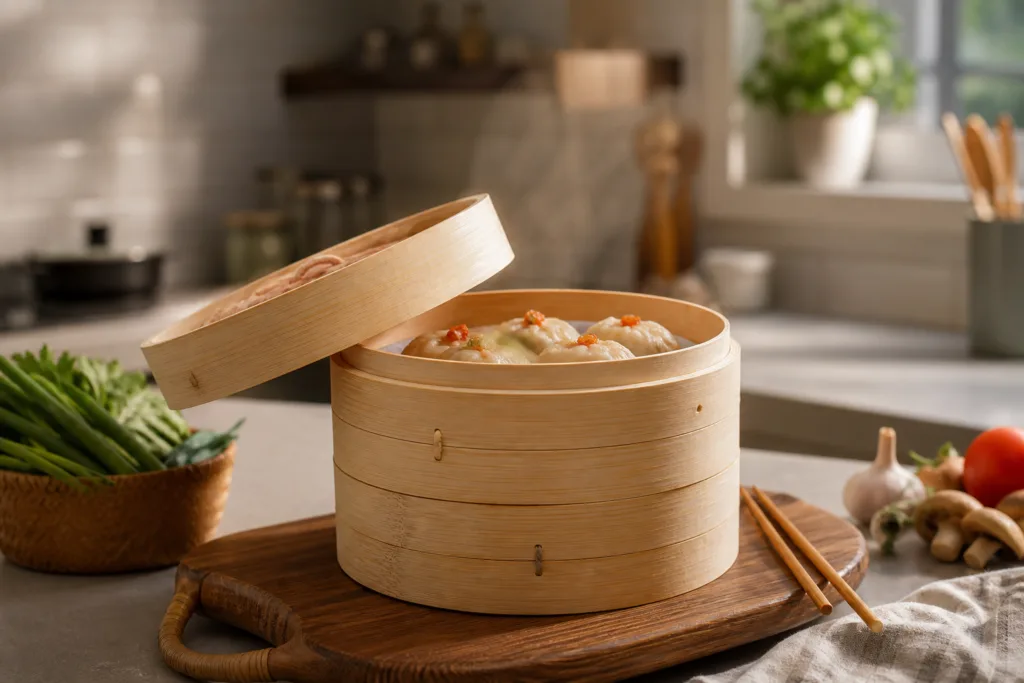
The double-tier format is often the strongest all-around choice because it offers flexibility. Home cooks can steam multiple foods at once, gift buyers see more value, and retailers can position it as a practical upgrade over the entry-level version. If you are unsure where to start, a well-made two-tier bamboo steamer set usually gives the best balance of usefulness, presentation, and commercial appeal.
For many private label programs, the double-tier format is also easier to merchandise because it signals that the product is serious enough for regular cooking but still compact enough for most kitchens. That middle-ground position is often what drives repeatable sell-through.
Larger combinations
Larger sets can work well for premium gifting, family cooking, or higher-end retail assortments. These may include bigger diameters, extra tiers, or bundled accessories. The opportunity here is higher perceived value, but the buyer should be careful not to make the product look bulky or difficult to store. If the package feels too large for the shelf or too complex for the user, conversion can weaken.
Which accessory bundles perform best
Accessories are one of the easiest ways to improve conversion, but they need to be chosen carefully. A bundle should support cooking and create a clearer retail story, not just increase the item count. In our manufacturing work, the accessories that usually help most are the ones that solve a real convenience problem.
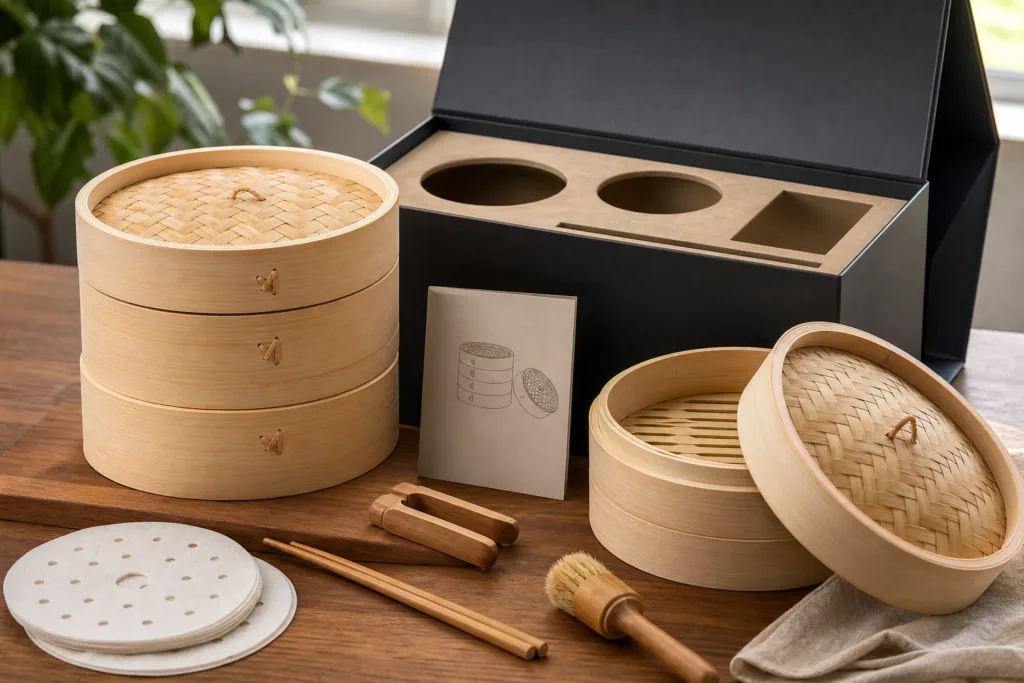
- Linters or liners: These help reduce sticking and make the set feel ready to use. A bamboo steamer set with cotton liners is especially appealing for buyers who want convenience and for gift packs that should feel complete on arrival.
- Tongs or cooking chopsticks: These add practical value and improve the cooking experience. They are particularly useful for gift sets or beginner-friendly bundles.
- Sauce dishes: Small accessories can support dim sum positioning and make the product feel more like a serving experience.
- Recipe or use cards: These help new users understand steaming basics, which reduces hesitation and may lower customer confusion after purchase.
Not every accessory needs to be included in every set. In some channels, too many items can make the offer look busy or force the price higher than the market expects. The best bundle is the one that matches the target shopper’s level of experience and the retail price band you are trying to hit.
Bamboo steamer gift set vs dumpling steamer set
Positioning changes how the same product is perceived. A bamboo steamer gift set suggests a broader kitchen-gifting occasion, where presentation and completeness matter. A dumpling steamer set usually signals more specific cooking use and may appeal to shoppers who already know what they want.
If the product is positioned as a gift, the packaging, print design, and included accessories become more important than technical details alone. If it is positioned as a dumpling steamer set, the retailer should emphasize capacity, food-use convenience, and ease of cleaning. The product itself may be similar, but the customer expectation is different.
That is why we often recommend deciding the channel story before finalizing the bundle. The wrong positioning can make a useful product feel too generic, while the right positioning can make the same structure feel more premium and more giftable.
Bamboo steamer for home cooks: what feels practical
Home cooks want a bamboo steamer set that feels intuitive from day one. They are usually looking for a product that fits common cookware, offers enough space for a family meal or side dish, and does not require a steep learning curve. For this reason, practical size and simple instructions matter as much as appearance.
When a bamboo steamer for home cooks is too specialized, it may perform poorly even if the material quality is good. A set that is easy to stack, easy to lift, and easy to clean is more likely to earn positive feedback. This is also where handle options can matter. For some buyers, a bamboo steamer with carry handles adds convenience and a clearer premium signal, especially when the product is intended for gifting or frequent use.
We also advise buyers to consider whether the set should include simple instructions on water level, steaming time, and lining use. These small details improve the customer experience and help reduce returns from first-time users.
Kitchen gift set bamboo: packaging drives the first impression
For gift-oriented programs, the package is part of the product. A kitchen gift set bamboo concept should feel ready to give without requiring the buyer to repackage it. This means the carton, sleeve, insert, and visual layout should work together.
A retail box can serve several purposes at once: protect the product in transit, explain the contents, and create a stronger unboxing moment. For e-commerce, packaging must also reduce damage risk and help the item survive parcel handling. For physical retail, shelf appeal matters even more, because the package must attract attention in a crowded assortment.
Packaging also affects perceived quality. A well-sized insert, stable internal layout, and clear product window or clean printed panel can make a bamboo steamer set look more refined. A loose or poorly fitted package, by contrast, can undermine a good product even before the customer opens it.
Retail assortment logic: entry, mid-tier, and premium
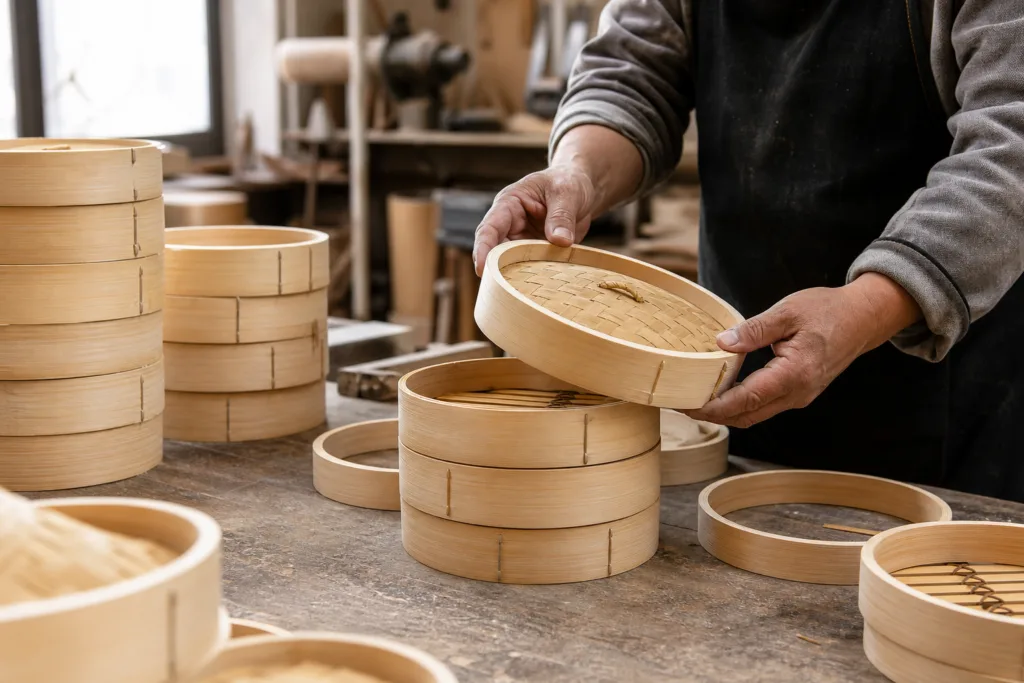
Retail buyers often do better when they build a small ladder of options rather than choosing a single SKU. A three-step assortment helps capture different customer budgets and shopping intents.
- Entry-level: Single-tier, minimal accessory set, simple packaging, focused on value and basic use.
- Mid-tier: Double-tier, practical accessories, stronger graphics, the most likely core seller.
- Premium: Larger or more complete sets with better packaging, more accessories, and stronger private label presentation.
This structure works well because it gives shoppers a clear choice. The entry-level option provides a price anchor, the mid-tier item often becomes the default purchase, and the premium version increases average order value. From a manufacturer’s perspective, the mid-tier bamboo steamer set often becomes the volume driver, while the premium version supports margin and gifting occasions.
How packaging increases shelf appeal and gift appeal
Packaging can change how a buyer interprets the same physical product. A plain steamer placed in simple packaging can look like a commodity. The same product in a structured, branded box with good print quality can look far more intentional. For retail buyers, that shift can influence both shelf performance and online conversion.
Clear packaging should answer basic shopper questions quickly: what is included, what size is it, how is it used, and who is it for? If those answers are obvious, the product is easier to sell. For gift buyers, a neat box also reduces the need for repacking and makes the product feel more suitable for occasions such as housewarmings, holidays, and cooking-themed gifts.
At Bamboo Wood Art, we often help buyers think about whether packaging should be built for display, shipping protection, or both. The right answer depends on the channel. A retail display pack may need stronger shelf presence, while an e-commerce pack may need more internal protection and less empty space.
Material, size, and lid design choices that affect satisfaction
Even when the bundle is attractive, the product still has to perform well. Material consistency, sizing, and lid fit are some of the most important factors for customer satisfaction.
Material consistency
Bamboo should be selected and processed with care so the final set looks balanced and performs reliably. Variations in color or grain are normal, but excessive inconsistency can weaken the perceived quality of a retail batch. Buyers should review sample photos and physical samples carefully before approving mass production.
When food-contact product safety and packaging compliance are part of the project, it helps to think in terms of material control and documented product use. The U.S. Food and Drug Administration’s guidance on Food-contact materials and packaging compliance is a useful reference point for buyers evaluating the broader responsibilities of food-contact product sourcing.
Size selection
Size should match the intended use case. Small sets may be attractive for dim sum serving or compact kitchens, while larger sizes suit family cooking and premium gift bundles. The wrong diameter can create dissatisfaction even when the steamer is otherwise well made. Retailers should therefore match size to the most likely customer scenario rather than assuming bigger always sells better.
Lid design
The lid should fit securely without feeling overly tight, and it should support steam circulation in a way that aligns with the product’s purpose. A well-formed lid adds to both function and appearance. When the lid is poorly aligned or too loose, the whole set can feel less refined, even if the body construction is sound.
OEM and private label customization options for buyers
For OEM/ODM buyers, customization is often the difference between a basic commodity and a retail-ready product. The most useful customization choices usually include logo placement, packaging artwork, insert cards, and bundle structure. These options let brands create a recognizable line without redesigning the core product from scratch.
At Bamboo Wood Art, we typically advise buyers to start with the element that has the strongest customer-facing impact. For some programs, that is the outer sleeve. For others, it is a laser logo on the lid or a printed insert that explains the product story and care instructions. The best choice depends on the market, price point, and how much brand recognition the buyer wants to build.
If the customer is aiming for private label retail, a simple and clean system often works best: consistent logo placement, clear product naming, and packaging that can scale across multiple sizes or bundle formats. Too much visual complexity can make the line harder to manage at the shelf and harder to reproduce in bulk production.
Common mistakes retail buyers make
Several avoidable mistakes come up repeatedly when buyers source bamboo steamer sets for retail or gifting.
- Choosing the wrong tier count: A configuration that is too basic may feel underpowered for gift buyers, while an oversized set can feel too specialized for casual cooking.
- Ignoring packaging early: Packaging affects freight, shelf appeal, and customer perception. Leaving it until the end often creates problems.
- Adding accessories without a reason: Accessories should solve a use problem or improve presentation. Extra items only add value when they support the product story.
- Skipping sample evaluation: The difference between a good-looking sample and a production-ready SKU can be significant, especially for alignment, fit, and finish.
- Underestimating channel expectations: E-commerce, gift stores, and grocery or specialty retail each require different packaging and value cues.
One practical way to reduce risk is to use a buyer checklist for a high-quality bamboo steamer before confirming the final order. A checklist helps buyers compare fit, finish, lid performance, accessories, and packaging in a structured way instead of relying on a quick visual impression.
Cleaning, care, and post-purchase instructions
Instruction quality matters because it affects the customer’s first use and long-term satisfaction. Buyers should consider how care information will appear on the packaging or insert card. Simple guidance on soaking, drying, avoiding long-term moisture exposure, and cleaning after use can help reduce product misuse.
When products touch food, it is also important to give realistic cleaning advice rather than vague claims. FDA guidance on cleaning and sanitizing food-contact surfaces can help buyers frame care instructions in a way that reflects good food-contact hygiene practices without overpromising. For retail brands, clear care messaging can reduce confusion and support a better user experience.
How to choose the right bamboo steamer set for your channel
The best buying framework is simple: define the shopper, define the occasion, and define the retail role of the SKU. A bamboo steamer set for gift buyers should look complete and attractive on arrival. A set for home cooks should feel easy to understand and useful for everyday meals. A set for retail should have clear tiering so the assortment can support multiple price points.
As a practical starting point, we recommend the following:
- For gifts: Prioritize packaging, accessory completeness, and a clean visual presentation.
- For home cooks: Prioritize usability, simple tier count, and convenient accessories like liners or tongs.
- For retail assortments: Build a clear entry, mid-tier, and premium ladder to support different budgets.
- For private label: Keep branding consistent and plan packaging early so samples and bulk production stay aligned.
The strongest programs usually do not try to do everything at once. Instead, they choose one clear market position and then build the configuration around that position.
Frequently asked questions
What bamboo steamer set configuration sells best in retail?
For many retail programs, the double-tier bamboo steamer set is the most balanced choice because it feels more useful than a single-tier version and more approachable than a large premium bundle. It gives shoppers clear value without making the product feel too specialized.
Is a bamboo steamer set better as a gift or as a kitchen tool?
It can work well as both, but the packaging and accessories determine how it is perceived. If the set is boxed attractively and includes useful additions, it performs better as a gift. If it is presented simply and emphasizes cooking use, it can work as an everyday kitchen tool.
What accessories help a bamboo steamer set feel more complete?
Liners, tongs, chopsticks, sauce dishes, and recipe cards are the most practical accessories because they improve usability or presentation. The best choice depends on whether the set is aimed at new home cooks, gifting, or a more specialized dim sum audience.
How important is packaging for a bamboo steamer set?
Packaging is very important because it affects shelf appeal, shipping protection, and gift value. Good packaging helps the buyer understand the product faster and can make the same steamer look significantly more premium.
What should OEM buyers confirm before bulk ordering?
OEM buyers should confirm the tier count, size, finish, logo placement, packaging layout, sample approval details, and quality checkpoints before mass production. This reduces the risk of mismatch between the approved sample and the final order.
How can retailers reduce returns on bamboo steamer sets?
Clear care instructions, correct sizing, stable packaging, and realistic product descriptions help reduce returns. Buyers should also make sure the product is positioned honestly so customers know whether it is best for gifting, home cooking, or specific dim sum use.